

Aflame: Learning from Silence
Pico Iyer
 English
A warm, faith-informed guide to reconnecting with people in divided times: return to your true self, see others past your judgments, and use touch and empathy to lighten the loads they carry.
1 min 05 sec
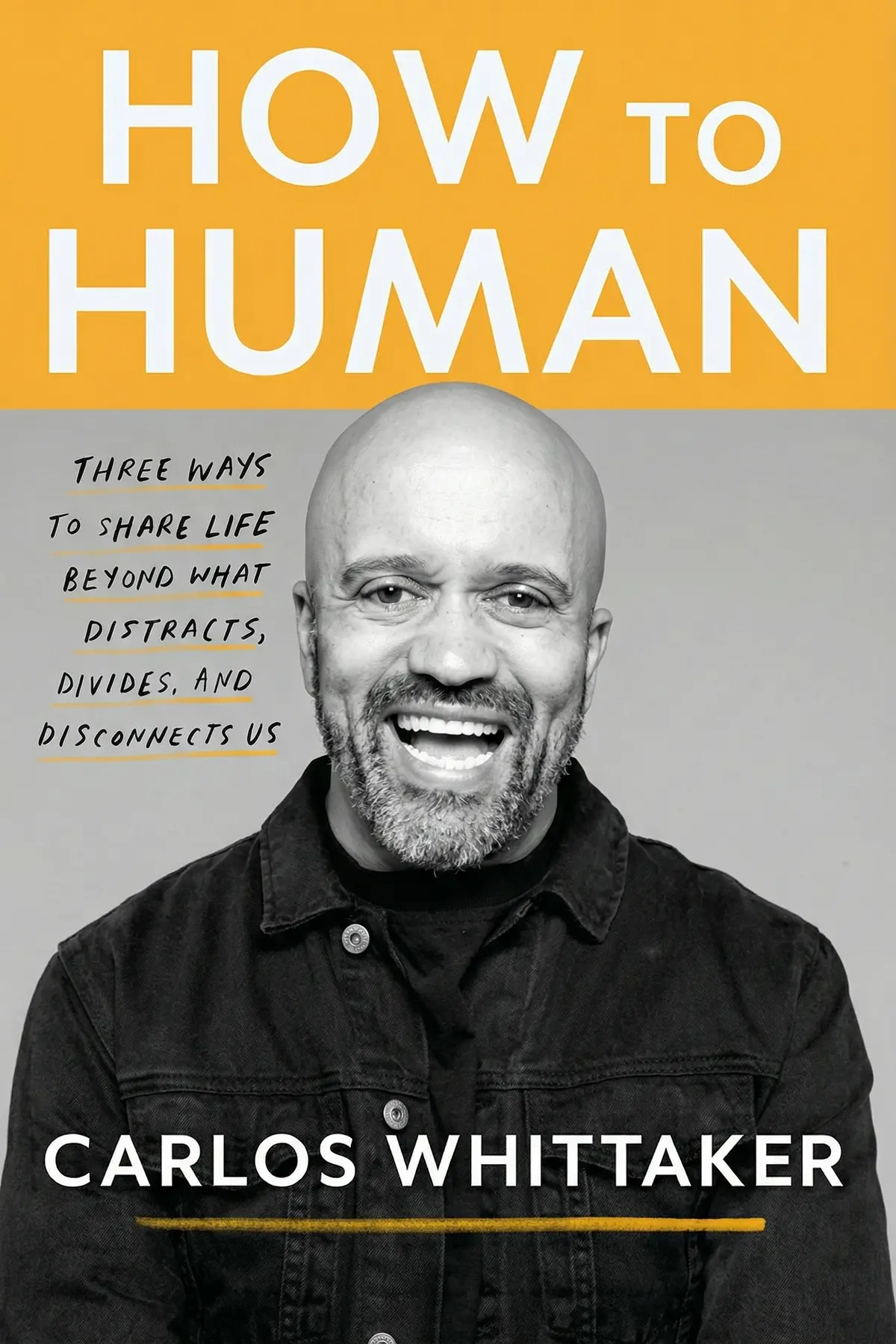
If the last few years have left you guarded around people who think differently, Carlos Whittaker says you are less far gone than it feels. In How to Human, the author, podcaster and speaker argues that humanity has drifted off course after a pandemic, political turmoil and social conflict, but only by a few degrees. The tools for steering back are already inside each of us.
Everyone, he insists, carries built-in instincts to help, to connect and to be their best self. That includes the person who annoys you most. His way back has three moves, taken in order: become your true, compassionate self, see other people for who they really are, and free those around you through touch and empathy. Each move is small, and each prepares the next.
Keep one difficult person in mind as you listen. Whittaker never asks you to like them. He asks you to look at them without blinders, and he offers practical ways to do it, from a test about jumping for joy to a stranger’s invitation into a chariot.
1 min 41 sec
A plane spends most of its flight slightly off its route and still lands where it should. Whittaker sees the same pattern in a divided world, and it changes how much repair we really need.
1 min 35 sec
Everyone tells you to be true to yourself, and almost nobody explains how. Whittaker offers a strange, childlike question that points straight at what you have lost along the way.
1 min 41 sec
Children, research suggests, show more kindness toward people who look different from them than adults do. So where does that kindness go, and what would it take to get it back?
1 min 51 sec
An ancient road in the desert, a royal official and an unexpected invitation show the difference between noticing someone and truly seeing them. Most of us stop at the first.
1 min 57 sec
Baby monkeys left without contact stopped behaving like monkeys, and some stopped eating altogether. Whittaker uses that unsettling research to show why touch is one of the key ways we can free the people around us.
1 min 49 sec
Sympathy keeps a safe distance and empathy refuses to. Whittaker admits the second hurts, and argues that the hurt is exactly what makes it a gift to the person beside you.
1 min 10 sec
Whittaker’s book is a map for small, steady steering. It does not ask you to sit down with someone who might harm you, to connect with every person on Earth, or to agree with everyone you meet. It asks you to turn good intentions into actions, because saying you are compassionate changes nothing on its own.
The order matters. You begin inside, setting aside the unhelpful lessons you picked up growing up, and checking when you last jumped for joy. You then carry that recovered self into real conversations, especially with people who differ from you, and you listen to learn about them rather than to win them over. Finally, with a welcome hug or by staying with someone in a hard feeling, you help them carry what they carry.
Whittaker admits there are many more ways to human than these. His point is that these are enough to begin, and that each one turns a few degrees. Think back to the person you held in mind at the start. You may never like them. But if you get in the chariot even once, you have already moved, and a few degrees held long enough decide where a whole flight lands.
A pandemic, political turmoil and social conflict have left many people guarded, tired and quick to judge. Carlos Whittaker argues that humanity has drifted off course, but only by a few degrees. Like a pilot who keeps adjusting the heading, we can steer back with small corrections, using instincts for compassion and connection that he believes everyone carries. His route has three steps, taken in order. First, be human: dig beneath old wounds and borrowed opinions to find your true self, and recover the compassion you had as a child. Second, see other humans: do more than wave at people who differ from you, and sit beside them long enough to know who they are. Third, free those around you, through respectful touch and through empathy that shares the weight of hard feelings. Whittaker, a Christian, uses Jesus as his main example of good humaning, but he presents him as a model anyone can learn from as a historical figure. The book offers simple practices, from a question about jumping for joy to a biblical story about climbing into a stranger's chariot, and it never asks readers to like or agree with everyone.
People worn down by division who want practical ways to reconnect with others.
Team leads and parents who want to show more compassion and empathy at work and at home.
Christian and non-religious readers who are open to Jesus as a model of living well.
Carlos Whittaker is an author, podcaster and global speaker whose audiences range from parents to businesses and non-profits. He uses his large social media following, which he calls the Instafamilia, to build community and connection, and he is known for creating spaces online and in person where people can talk about difficult topics. His books, including How to Human and Kill the Spider, explore how people can do more for others when they are connected to God and care for themselves. He lives in Nashville, Tennessee, with his wife Heather and their three children.
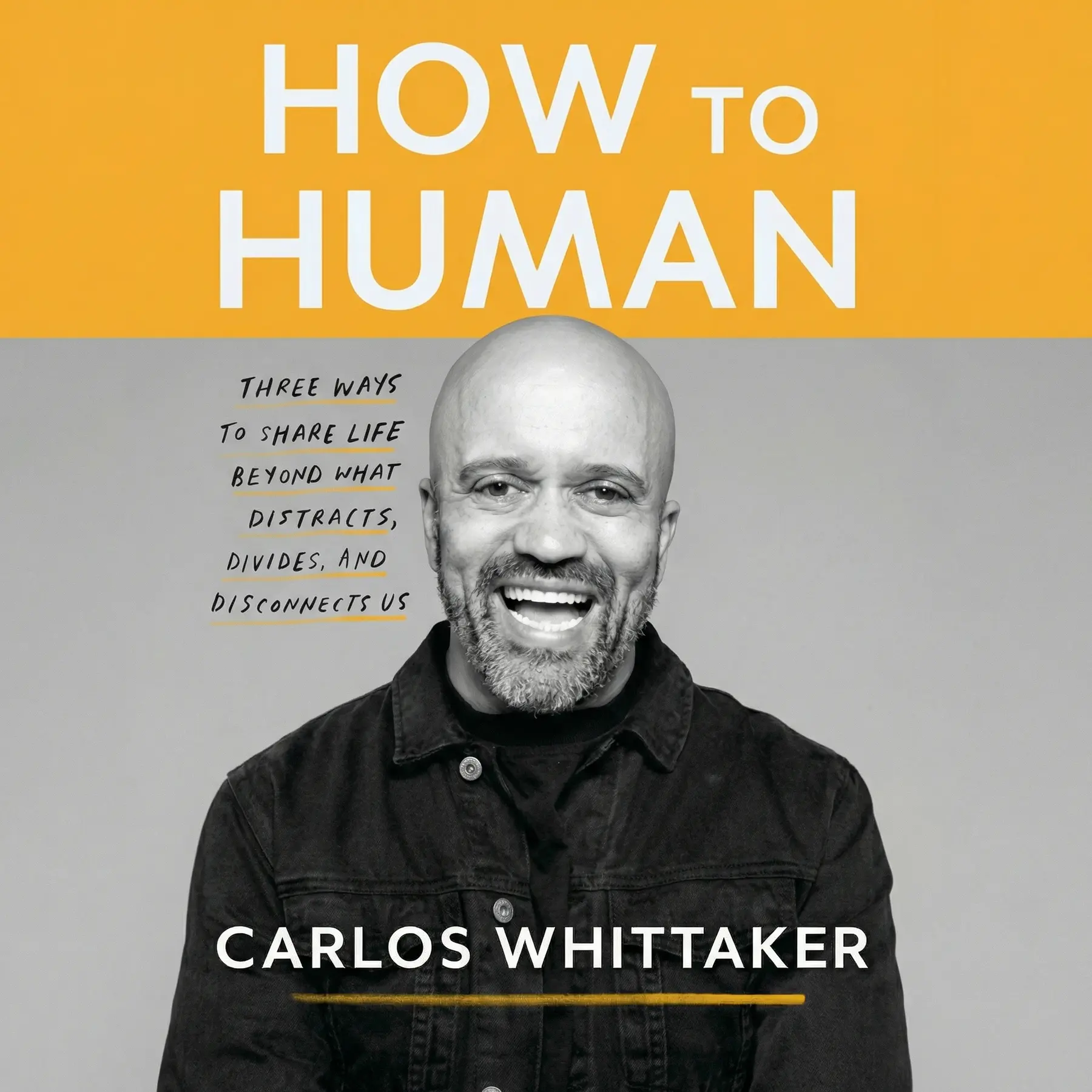
Listeners find this book to be both life-changing and inspirational, valuing the author's hands-on teaching approach and profoundly moving anecdotes. The narrative is thoughtfully organized and simple to track, ensuring an immersive experience. Listeners characterize the content as touching—evoking both tears and laughter through its humor. They cherish the core theme of humanity, with one listener highlighting how it motivates them to truly notice people.
This book feels like a much-needed deep breath in a room full of smoke. Carlos moves past the surface-level 'be kind' tropes and dives into what it actually looks like to restore our collective humanity. I was particularly moved by the 'walk with people, don't stand on issues' mantra, which feels like the exact antidote to the toxicity of my current social media feeds. The writing is incredibly accessible, almost like you’re sitting across from him at a coffee shop. While some might find the heavy emphasis on his personal Instagram stories a bit much, I think it provides the necessary proof of concept for his ideas. He uses Jesus as a blueprint for empathy without being preachy, making it digestible for anyone. I laughed, I definitely cried, and I walked away feeling more hopeful than I have in years. It’s a beautifully structured call to action for a weary world.
Show moreAs a longtime follower of 'Los' on social media, I went into this expecting a collection of his greatest hits, but I found something much deeper. He frames the chaos of the last few years through a lens of 'be, see, and free' that actually offers practical steps instead of just vague inspiration. In my experience, if you aren't familiar with his online presence, the constant references to his 'instafamilia' might feel a little insular at times. However, the heart behind the message is undeniable. He tackles division with a level of vulnerability that most public figures avoid. I appreciated how he encourages us to look past political labels to find the human underneath. It’s an engaging, funny, and deeply convicted read. It’s not a theological textbook, and it doesn’t try to be; it’s a manual for genuine connection.
Show moreCarlos Whittaker has a way of cutting through the noise that is just so refreshing. I didn't know much about him before picking this up, but his warmth radiates from every page. This isn't just a book about being a 'good person'; it’s about the hard work of active love and freeing others from the boxes we put them in. The way he uses Jesus as the ultimate human example is brilliant because he focuses on character and actions rather than just dogma. Truth is, I teared up more than once reading his stories about crossing cultural divides. It’s written in a very punchy, modern style that keeps you moving through the chapters quickly. If you’re tired of the constant outrage culture and need a roadmap back to compassion, this is it. It’s heartwarming, convicting, and incredibly timely.
Show moreFinally got around to finishing this and I'm genuinely blown away by how much I needed these words. Carlos isn't just giving us a list of rules; he’s inviting us into a different way of existing. The stories he shares are raw and move at a pace that keeps you hooked from start to finish. I loved the emphasis on seeing people as they are, not as we want them to be. It’s a life-changing perspective shift if you’re willing to actually do the work he suggests. Some might find the humor a bit cheesy, but it balances out the heavy emotional weight of the topics he covers. It’s the kind of book you want to buy ten copies of and leave on people’s porches. In a world that feels like it’s falling apart, this is a beautiful, sturdy bridge.
Show moreAfter hearing so much buzz about this book, I had high expectations, and Carlos absolutely delivered. This is essentially a roadmap for reclaiming our souls from the polarization that’s consumed us lately. The way he weaves Scripture into the narrative feels organic and powerful, showing Jesus as a model for empathy that transcends religious boundaries. I found myself highlighting so many passages about 'freeing' others by simply acknowledging their humanity. Look, the book is emotional; you will probably cry, but they are the good kind of tears. It’s a well-structured, inspiring read that feels like a warm hug for your heart. He doesn’t offer easy answers, but he offers a better way to live. This is easily one of the most impactful books I’ve read this year.
Show moreThe chapter on 'seeing' others was worth the price of the book alone. Carlos has a gift for taking complex social tensions and boiling them down to simple, human moments. I was struck by his vulnerability regarding his own mistakes and how he’s learned to listen better. While some reviewers mention his focus on Instagram, I felt those stories provided a necessary context for his 'be, see, free' philosophy. It shows that these ideas actually work in the real world (or the digital one, at least). The prose is vibrant and easy to digest, making it a great choice for a book club discussion. It’s a stirring reminder that we have more in common than we think. If you’re feeling cynical about the state of the world, read this. It’s the hope-filled kick in the pants we all need.
Show morePicked this up after seeing a recommendation online, and I’m glad I did. The structure—Be, See, Free—is easy to follow and provides a clear framework for the author’s message. Carlos is an engaging storyteller, though his prose can be a bit wordy and repetitive in the middle sections. I personally found the anecdotes about his community-led 'miracles' to be the highlight, even if they felt a little disconnected from my own non-famous reality. He tackles heavy stuff like political riots and racial injustice with a gentle but firm hand, which is a rare balance to find these days. It’s a great read for anyone wanting to lower their blood pressure and actually look their neighbor in the eye again. Just be prepared for a lot of talk about Instagram, as that’s clearly his primary world.
Show moreEver wonder why it's so easy to hate people online but so hard to do it in person? Carlos explores that gap with a lot of grace and zero pretension. I appreciated that he didn't shy away from the messiness of the last few years, even though revisiting the pandemic era can be exhausting. His writing style is conversational—sometimes a bit too casual—but his points about 'walking with people' are profound. My only real gripe is that some of the practical advice felt tailored to people with large digital platforms. I wanted a few more tips for the average introvert who doesn't have thousands of followers to mobilize. Regardless, the core message is vital. It’s a convicting look at how we’ve lost our way and a hopeful guide on how to find it again.
Show moreI struggled with the theological foundation Carlos presents at the beginning of the book. He makes a broad claim that humans are inherently good, which runs counter to the biblical perspective of original sin that I personally hold. While I understand he's trying to be inclusive, it felt like a significant stretch of Scripture to make his point. Frankly, the book leans very heavily into his life as an influencer, which made it hard to relate to as someone who isn't living under a digital microscope. The stories about 2020 felt a bit like rehashing old trauma I’ve already processed, and I didn’t find much new perspective there. That said, his focus on radical empathy is commendable. The 'walk with people' concept is great, but the execution of the book felt a bit more like a self-help pep talk than a deep dive into the human condition.
Show moreNot what I expected. I was looking for a more profound philosophical or spiritual exploration of humanity, but this felt more like a long series of Instagram captions strung together. The constant focus on his social media journey and his 'tribe' made it feel more like a brand-building exercise than a book for the general public. Also, his take on human nature being inherently good just doesn't sit right with me from a theological standpoint. It felt like a 'choose your own adventure' version of faith where the hard parts are smoothed over for the sake of a positive vibe. While the message of loving others is obviously good, the delivery was too 'self-help' and wordy for my taste. If you already love his social media, you’ll probably love this, but it didn’t click for me at all.
Show moreWhittaker argues that humanity has drifted off course, but only by a few degrees, after years of pandemic, political turmoil and social conflict. Like a pilot adjusting a plane’s heading, we can steer back through small corrections. He offers three steps in order: be human by returning to your true, compassionate self, see other humans for who they really are, and free those around you through respectful touch and empathy.
No. Whittaker is a Christian and uses Jesus and Bible stories as his main examples, such as Jesus sparing a woman caught in adultery and Philip climbing into an Ethiopian official’s chariot. He says clearly, though, that readers can treat Jesus simply as a historical figure and still find a strong model of honesty and compassion. He also supports his points about touch with scientific studies.
It comes from the Bible story of Philip, who joined an Ethiopian court official in his chariot and helped him understand the prophet Isaiah. The official differed from Philip in race, culture and sexuality, so a polite wave would have been easy. For Whittaker, getting in the chariot means truly engaging with people who differ from you: sitting with them, talking, and noticing who they are below the surface.
Start with yourself through journaling, therapy, walks in nature or any practice that helps you reflect, and ask when you last jumped for joy. Notice when you decide someone does not deserve your compassion. Have a real conversation with someone very different from you and listen to learn, not to change their mind. Offer welcome touch, like a hug, and feel with people when they struggle.
Whittaker says sympathy is feeling for someone, while empathy is feeling with them, sharing their sadness, anger or frustration. Empathy is harder because you take on uncomfortable emotions yourself. He argues that this is exactly why it helps: sitting in a hard feeling with someone shows them their emotions are normal and lightens the burden they carry, freeing them to be more fully themselves.
Pico Iyer

Richard Wiseman

Alcoholics Anonymous World Services





William B. Irvine


Andrew D. Thompson
AUDIO SUMMARY AVAILABLE
Get the key ideas from How to Human by Carlos Whittaker, plus 5,000+ more nonfiction titles.









