
13 min 09 sec
Available in: English
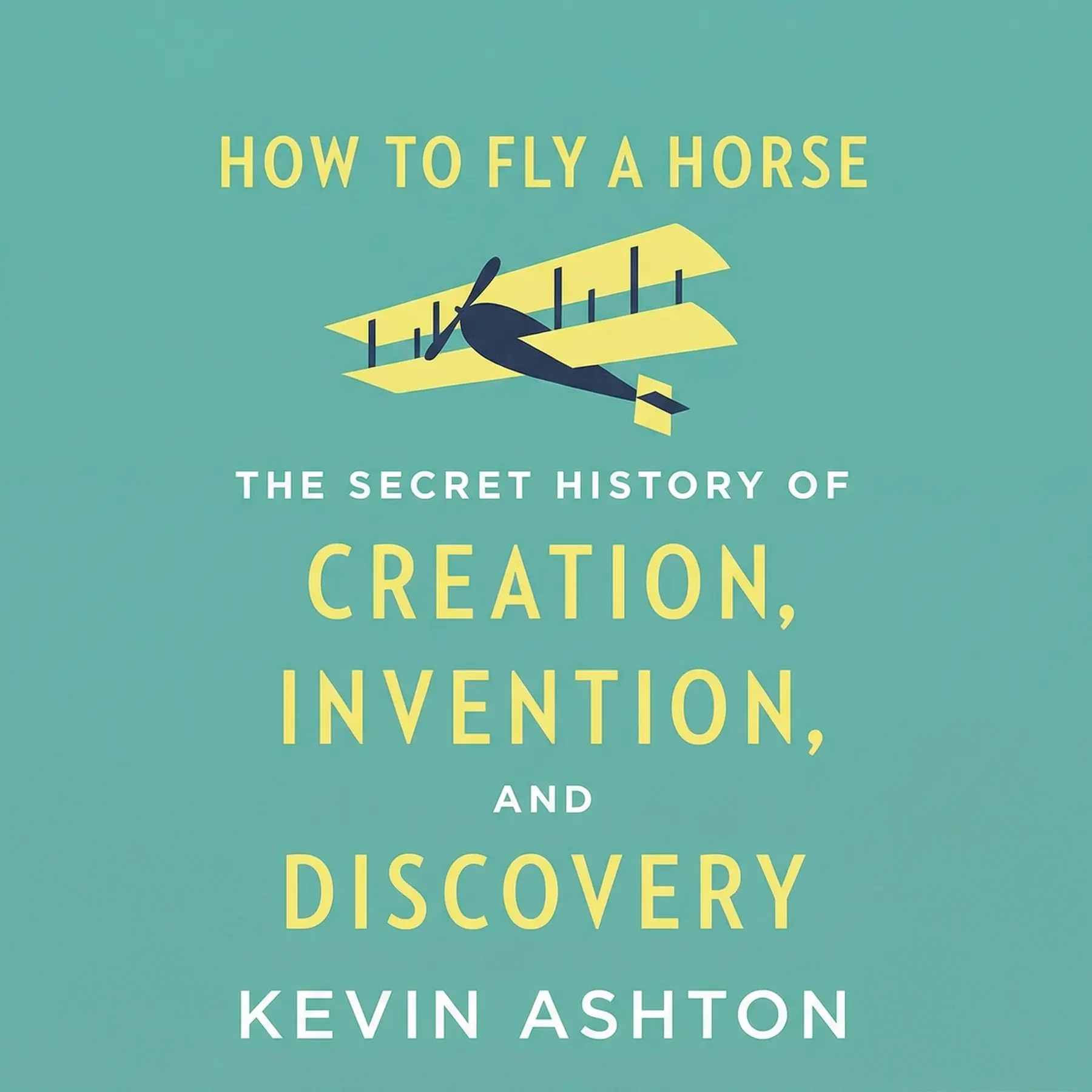
How to Fly a Horse: The Secret History of Creation, Invention and Discovery
By Kevin Ashton
Shows that creativity is ordinary problem solving, not rare genius. Anyone can create by taking small steps, building on other people's work, working steadily, learning from failure and asking a team to show you.
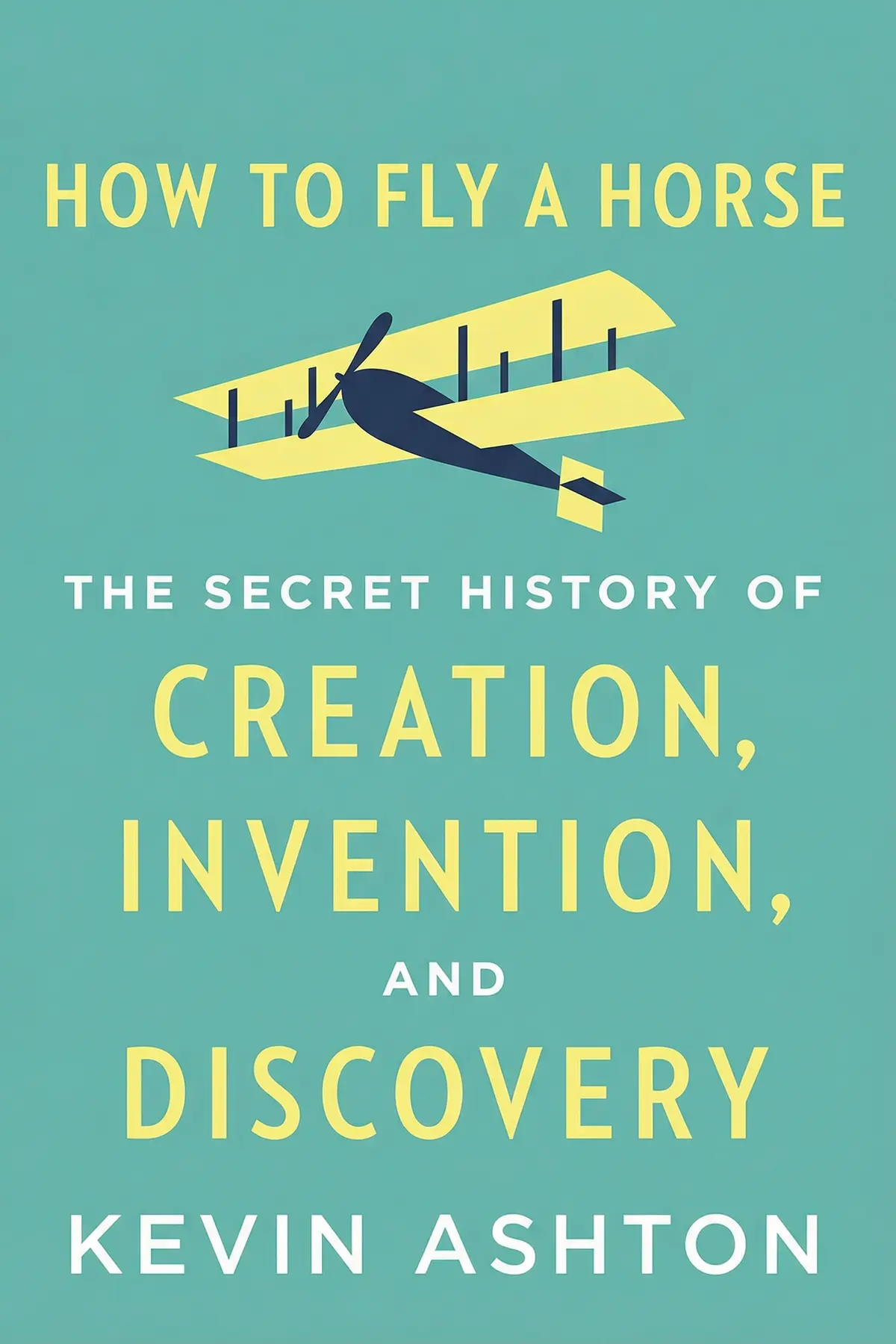
Table of Content
1. Introduction
58 sec
If you have ever looked at a famous painting or a young billionaire’s company and decided that kind of creativity belongs to other people, Kevin Ashton thinks you have been misled. In How to Fly a Horse, Ashton, the technologist who gave the Internet of Things its name, argues that creation is ordinary thinking about a problem. It happens one small step at a time, and it is done by people building on the work of others.
That idea runs through every story he tells. Archimedes in his bath, a 12-year-old enslaved boy on the island of La Réunion, a composer who played Bach every morning and a newcomer at an aircraft plant all made something new the same plain way. They asked a question, worked, failed and asked again. What follows is a method you can use on your own stuck problem, and a clear reply to the voice that says you are not the creative type.
2. Stop waiting for a flash of genius
1 min 50 sec
The famous cry of Eureka is usually told as a single moment of brilliance. The real story behind it, and a simple experiment with a candle and some tacks, point somewhere far more encouraging for the rest of us.
3. Build on ideas that ordinary people left behind
2 min 02 sec
An enslaved 12-year-old changed where one of the world’s best-loved flavors could be grown. His breakthrough rested on knowledge passed down a long chain, and every new solution carries a hidden debt of its own.
4. Reach big inventions through a chain of small questions
1 min 59 sec
The iPhone looks like a leap no ordinary mind could make. Followed question by question, it turns out to be a series of modest fixes, and a clown on a unicycle shows what can stop you from seeing them.
5. Show up to work before inspiration arrives
1 min 36 sec
One of the great composers of the twentieth century refused to wait for his muse. His daily routine started with someone else’s music, ended ten hours later, and ran for years.
6. Treat failure and rejection as directions
1 min 41 sec
One novelist regularly throws away 300 pages on the way to a good book. An inventor in 1912 ignored every warning about his design. Between them lies the gap between failing usefully and failing fatally.
7. Get better ideas from your team with two words
1 min 51 sec
A newcomer told his boss that the company’s new airplane was flawed. The reply could easily have been a dismissal. Instead it helped produce America’s first jet fighter, and the habit behind it is easy to copy.
8. Conclusion
1 min 12 sec
What Ashton offers in the end is permission. The people we call geniuses did what Duncker’s volunteers did with a candle and a box of tacks: they worked a problem, dropped what failed and kept going. Edmond needed a botanist and a naturalist before him. Jobs reasoned that a stylus is easy to lose, and that step led him to the finger. Stravinsky needed ten hours a day, and King needs a bin for 300 pages. None of it calls for a special kind of mind.
Strange ideas deserve the same chance. Ashton points to Judah Folkman, who changed cancer treatment with his view that tumors form within the blood supply of the patient’s own body, and who was rejected at first because the idea seemed so far outside the mainstream. When an idea of yours feels too odd to share, take that as a sign you may be onto something, and give it the same careful testing and persistence as any other.
So begin with the problem in front of you. Ask the small question, borrow what others have already solved, and listen when the results say no. When someone doubts you, show them. Every creator in history did this same ordinary work, and your link in the chain is waiting to be added.
About this book
What is this book about?
Many people look at a great painting or a fast-growing tech company and decide that creativity belongs to a gifted few. Kevin Ashton argues that this belief is a myth, a common fallacy which holds that only a few people have creative genius. In How to Fly a Horse, Ashton shows that the people we call geniuses worked the way everyone thinks when facing a problem. Archimedes needed a long stretch of thought after his famous bath. A 12-year-old enslaved boy named Edmond changed the vanilla trade using knowledge handed down from a botanist and a naturalist. Steve Jobs reached the iPhone through a series of small problems and fixes. Igor Stravinsky worked ten-hour days, and Stephen King throws away hundreds of pages. The reader gets a practical picture of how new things are made: ask small questions, look past what you expect to see, put in the hours, treat rejection as information, and work in small teams that ask each other to demonstrate ideas. It also offers a reason to take your strangest ideas seriously.
Book Information
Who it's for
Professionals doubting their creativity
Professionals who believe they are not the creative type and want a practical way to start.
Stuck on product problems
Founders and makers stuck on a hard product problem who need a step-by-step way through it.
Team leads wanting ideas
Team leads who want new ideas from their people instead of silence or endless debate.
About the Author
Kevin Ashton
Kevin Ashton was born in 1968 in Birmingham, in the United Kingdom. He co-founded the Auto-ID Center at MIT, which created a worldwide standard for RFID, or radio frequency identification, and other sensors. He led early work on RFID networks and gave the Internet of Things its name. He has also led technology start-ups, and his articles on innovation and technology have appeared in Quartz, Medium, The Atlantic and the New York Times.
Ratings & Reviews
Ratings at a glance
What people think
Listeners find the book an enjoyable and immersive experience, filled with valuable insights that help clarify fresh ideas. They value the impressive sampling of creative history and its ability to inspire, with one listener noting how it encourages people to go out and create. The storytelling quality is well-regarded; one listener describes it as a pleasant gathering of historical anecdotes. However, opinions are divided regarding the book's pacing and writing approach.
Top reviews
Samuel
Finally got around to reading Ashton's take on innovation, and it was a breath of fresh air. Instead of the usual "you're born with it" nonsense, the book treats creativity as a gritty, daily labor that anyone can master if they have the stamina. I was particularly struck by the story of Edmond Albius, the enslaved boy who revolutionized vanilla pollination. It serves as a powerful reminder that genius often flourishes in the most unexpected places despite massive obstacles. While the writing occasionally veers into the melodramatic, the underlying message is incredibly empowering for anyone stuck in a rut. You won’t find a step-by-step manual here, but you will find the motivation to stop waiting for a lightning bolt of inspiration. It’s a beautifully curated collection of historical triumphs that makes the impossible feel attainable through sheer persistence.
Show moreNit
As someone who always felt like I lacked the "creative gene," reading this felt like a massive weight being lifted off my shoulders. Ashton argues that creating is a fundamental human trait, like walking or talking, and that we’ve been lied to about the nature of genius. The way he breaks down the myth of the lone inventor is brilliant and much needed in our current celebrity-obsessed culture. Not gonna lie, I got a little emotional reading about the collective efforts of billions of people that brought us into the modern age. It’s an incredibly optimistic book that encourages you to just start doing the work instead of waiting for the perfect idea to strike. The chapter on organizational rituals was also eye-opening for my own professional life. This is the kind of book you want to buy for your friends who are afraid to chase their dreams.
Show moreYanin
Rarely do I find a non-fiction book that is this entertaining while still providing a deep dive into the history of human progress. From vanilla pollination to the intricacies of computer chips, Ashton shows us that the world is built on billions of tiny, creative acts. The book is an empowering revelation that reminds us that our primary niche as a species is "the niche of the new." I loved how he tackled the myth of Mozart and showed the grueling work that actually went into those compositions. It’s a beautiful, well-researched piece of writing that makes you want to go out and build something immediately. While it might be a bit optimistic for some, I think we need more books that celebrate the collective potential of the human race. It’s an essential addition to any library focused on innovation and the history of ideas.
Show moreNuk
The core thesis here is simple but effective: creativity is the result of hard work, not a high IQ or some mystical "eureka" moment. Ashton methodically dismantles the myths surrounding figures like Mozart, proving that even the greats were just people who worked harder than everyone else. I appreciated the deep dive into research showing that IQ and creative output are largely uncorrelated. To be fair, the book can feel a bit repetitive by the middle chapters as he hammers home the same point using different anecdotes. The comparison to Woody Allen’s prolific work schedule was a highlight for me because it grounds the abstract concept of "art" in reality. If you can ignore some of the more flowery prose, there is a wealth of practical wisdom buried in these pages. It’s a solid read for anyone trying to understand the actual mechanics of how new things are made.
Show moreEleni
Kevin Ashton delivers a compelling argument against the cult of the "creative genius" by focusing on the mundane reality of trial and error. His account of the Wright brothers and the "Skunk Works" team at Lockheed Martin illustrates how small, dedicated groups can outperform massive bureaucracies. I found the discussion about how organizations naturally resist new ideas to be particularly poignant and relatable for anyone working in a corporate environment. One minor gripe is that he occasionally dismisses the value of planning a bit too aggressively, which might not sit well with everyone. Still, the stories are so well-researched and engaging that it’s easy to overlook the occasional hyperbole. It’s a great companion piece to books like "Linchpin" or "On Writing" because it emphasizes the "doing" over the "dreaming." This is definitely a book I’ll be returning to when I need a kick in the pants.
Show moreBank
Picked this up on a whim after seeing the TED talk, and it’s a nice collection of historical stories that keep you moving through the pages. The author has a knack for finding "secret histories" that illustrate how modern life was built by the many, not just the few. I loved the section on the creation of Coca-Cola and how it tied back to the broader theme of incremental improvement. In my experience, some of the digressions felt a bit random and didn't always support the main point as strongly as they could have. However, the overall message that we should all "create anyway" despite the inevitable rejection is a powerful one. It’s a very quick read due to the engaging prose, though it lacks the academic rigour some might be looking for. Perfect for a weekend read if you’re looking for a boost in confidence.
Show moreChanpen
The chapter on workplace rituals and how they stifle or encourage innovation was worth the price of the book alone. Ashton explains that the transactions between individuals in a group are what truly determine the creative output of an organization. It’s a refreshing take that moves away from the "hero" narrative and looks at the systems we inhabit every day. I did feel that his disdain for meetings and planning was a little over the top, as some projects literally cannot function without them. Still, his point about "satisficers" versus those with the drive to weather negative feedback was incredibly insightful. The book encourages you to be the person who pushes through the "no" to get to the "yes." It’s a motivating, if slightly flawed, exploration of why we make things and why we should keep doing it.
Show moreSing
Truth is, I used to believe in the "lightbulb" moment until this book methodically took that belief apart piece by piece. The story of the painter who iterated thousands of times before reaching a masterpiece really stuck with me because it highlights the necessity of failure. Ashton's writing is energetic and fast-paced, which makes the historical data feel much more accessible than your average textbook. I appreciated how he addressed the fact that most people reject new ideas initially, helping me understand why my own suggestions are sometimes met with resistance. There were a few moments where the narrative felt a bit disjointed, jumping from South Park to the discovery of DNA in a way that felt slightly jarring. Overall, it’s a very persuasive argument for the power of persistence over talent. It’s a must-read for anyone who feels stuck in their creative process.
Show moreNina
Ever wonder why some business books feel like a twenty-minute presentation stretched into three hundred pages? This book has some truly fascinating historical accounts, such as the discovery of DNA and the treatment of Rosalind Franklin, but the pacing is uneven. I found myself skimming through the latter half because the "effort equals creativity" argument started to feel like a broken record. Frankly, it’s a bit of a jumble that tries to be a history book and a motivational guide at the same time without fully committing to either. The section on South Park’s production was fun, yet it felt slightly disconnected from the more serious historical analysis found in earlier chapters. It’s not a bad book, but it definitely could have been trimmed down to be more impactful. If you enjoy Gladwell-style storytelling, you’ll probably like it, but don't expect a revolutionary roadmap.
Show moreVilaiporn
Look, I wanted to like this more, but it often felt like a series of repetitive anecdotes masquerading as deep sociological insight. The author repeatedly claims that anyone can be creative, but he completely ignores how factors like class and race impact a person's ability to actually manifest that creativity. Telling someone that "lack of time is just an excuse" feels incredibly tone-deaf when you consider the economic realities most people face daily. His mention of Rosalind Franklin felt like a hollow attempt at inclusivity, especially since he then minimizes her struggle by saying she'd just be happy to know her work helped people. The writing is also quite melodramatic, using literary cliches that made it hard for me to take the research seriously. It’s basically pop psychology that prioritizes "vibe" over a nuanced understanding of the creative process. If you’ve read any other popular business books lately, you’ve heard these arguments before.
Show moreQuestions about this book
What is the main idea of How to Fly a Horse?
Kevin Ashton argues that creativity is not the gift of a rare genius. It is the everyday process of working out how a problem can be solved, which everyone does. New things come from small questions answered one at a time, from building on the work of many forgotten people, and from steady work and repeated failure. Anyone willing to do that work can create something new.
How did Steve Jobs design the iPhone, according to Kevin Ashton?
Ashton describes a chain of small problems and fixes rather than a single flash of insight. Jobs asked why existing smartphones did not work. Clumsy keyboards led to a big screen with a pointer. The pointer was first a mouse, but nobody wants to carry one, so a stylus followed. A stylus is easy to lose, so the final answer was to use the fingers.
What does show me mean in How to Fly a Horse?
Show me is a habit Ashton recommends for teams: when someone proposes a new idea or criticizes a plan, ask them to demonstrate it instead of just describing it. This brings ideas into the open and tests them right away. At Lockheed, Hall Hibbard said it to newcomer Kelly Johnson, who fixed the P-80 Shooting Star with a twin tail, helping create America’s first jet fighter.
How can I apply the ideas in How to Fly a Horse?
Write your problem in one line and work through it in small questions. Look for who has already solved part of it. Set a regular routine for creative work rather than waiting for inspiration, as Stravinsky did. Treat failure and rejection as information about what to change, unlike Franz Reichelt, who ignored his data. And when an idea feels too strange, test it instead of dropping it.
Readers also enjoyed




AUDIO SUMMARY AVAILABLE
Listen to How to Fly a Horse in 15 minutes
Get the key ideas from How to Fly a Horse by Kevin Ashton, plus 5,000+ more nonfiction titles.
- 5,000+ titles
- Listen as much as you want
- 7-day free trial
- Cancel anytime









