The Power of Fun: How to Feel Alive Again
Catherine Price
 English
 ไทย
Shows why smartphones are so hard to put down and what constant checking costs your attention, memory and sleep. It then sets out a staged 30-day plan for using the phone on purpose instead of by reflex.
1 min 03 sec
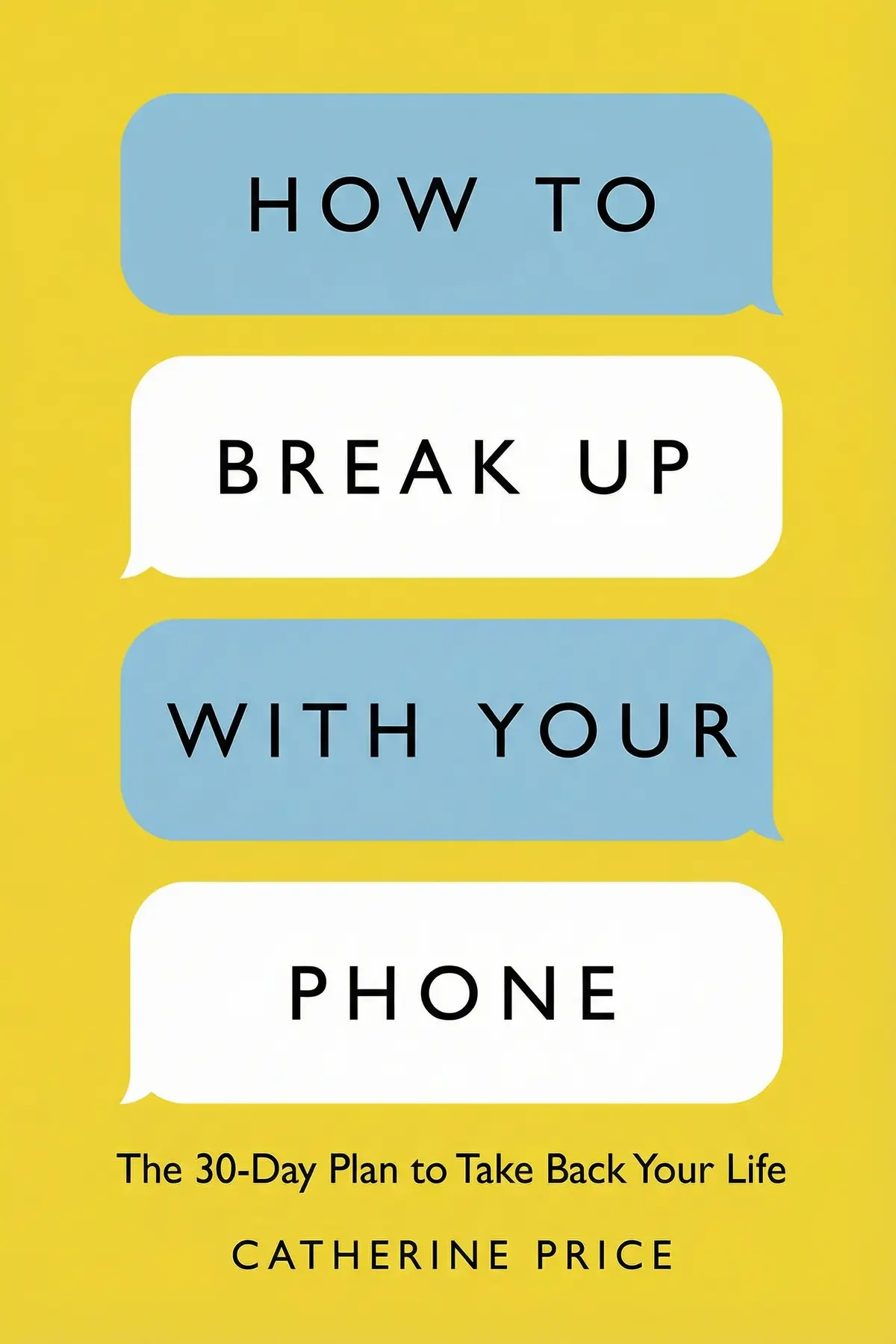
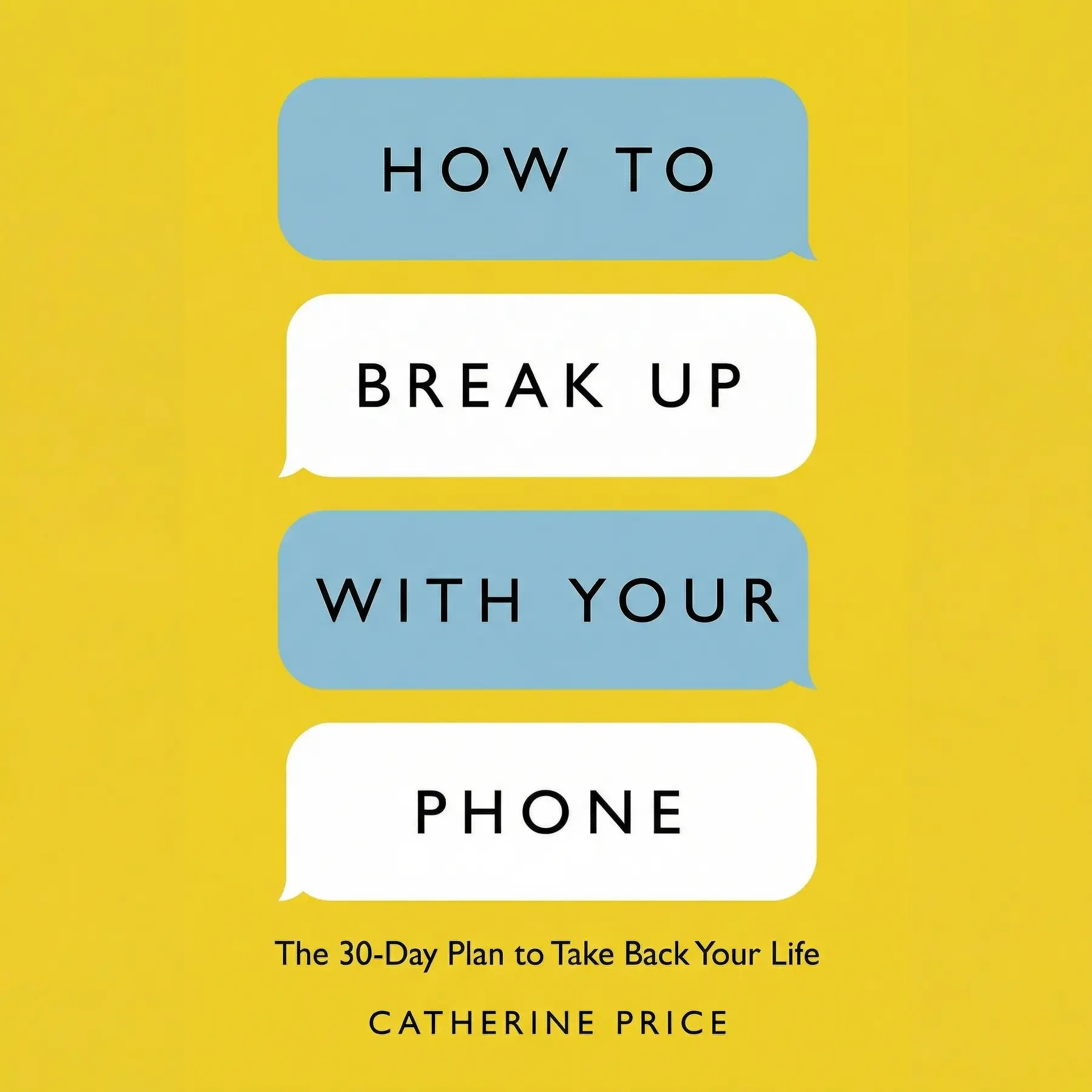
If your hand finds your phone at every red light, queue and pause, Catherine Price has news that should come as a relief: the apps on that screen are built to make you reach. In How to Break Up with Your Phone, the health and science journalist treats the pull as a genuine addiction. She also offers a 30-day plan to loosen it without throwing the phone away.
Her case is that phones exploit brain systems that once helped hunters survive, and that we pay for it in attention, memory and sleep. Getting free depends on preparation more than on grit: a clear reason, an honest number, fewer hooks on the device and a plan for the hours you win back.
Follow her argument and you will understand why one more scroll is so hard to refuse. You will see what it takes from your evenings and mornings, and you will know exactly what to change on day one, day ten and day twenty.
1 min 26 sec
Most people believe they check their phone now and then. The real count, and the hours it adds up to each week, tends to surprise even heavy users, and a short online test makes the picture personal.
1 min 33 sec
The Likes and messages on your screen do not always arrive when people send them. A start-up founder’s algorithms reveal who decides the timing, and why that moment is chosen with such care.
1 min 43 sec
Losing a name moments after hearing it at a dinner party feels like bad luck. Price traces it to how few things the mind can hold at once, and to what a single glance at a screen takes away.
1 min 33 sec
A late reply to one message seems harmless. A Harvard study suggests that the sleep you lose this way adds up faster than most people expect, and the damage can match a whole night awake.
1 min 44 sec
Removing an app costs hardly any effort, and the decision is never permanent, because if you feel like it you may come back weeks or even months later. Price explains what has to be in place before the first app goes.
1 min 41 sec
Every ping and buzz on your phone was put there for a reason, and it was never yours. The first half of the program targets those cues one by one, starting with simple observation.
1 min 44 sec
Two full days without a phone sounds impossible to many people, and the urge to look something up arrives within hours. One plain object kept nearby, a notebook, helps you resist reaching for the phone.
1 min 10 sec
Price turns a vague guilt into a design problem with a workable fix. Nothing in her plan asks you to give the phone up. It asks you to see the device clearly: a tool shaped by people like Ramsay Brown to catch a brain built to notice everything. You pay for it in four hours a day, in names forgotten at dinner and in melatonin that never arrives at midnight.
Once you see that, small changes carry real weight. Charge the phone outside the bedroom tonight, and buy a plain alarm clock that does nothing but ring, so the phone stays away from your first waking minutes as well as your sleep. Switch off notifications and delete the social apps you open without deciding to. Then write down what you would do with a spare hour, whether a walk, a recipe or a call to a friend, before that hour shows up.
Price sets a generous bar for success. Even if you drift back toward the screen, the weeks apart leave friendships renewed and skills begun. The phone will still be there on day thirty-one, and what matters is that you pick it up on purpose.
Most people sense they spend too long on their phones, yet every quiet moment still ends with a hand in a pocket. Catherine Price, a health and science journalist, treats that pull as a real addiction. Her claim is that apps are designed to produce it, and that it is not a failure of character. Price explains how dopamine and the brain's natural appetite for distraction make phones so gripping. She shows how one start-up times the delivery of Likes to keep users scrolling, and why constant glances weaken working memory and the move into long-term memory. She also explains why a screen in bed delays the hormone that prepares the body for sleep. The second half of the book is practical. It covers finding a clear reason to cut back, measuring your real use with tracking apps, deleting social media apps without deleting your accounts and planning what to do with the hours you win back. A 30-day program then moves step by step from tracking and pruning apps to a full weekend with the phone switched off. Readers finish with a working set of phone rules and a monthly habit for keeping them.
Office workers and students who lose hours to scrolling and want their focus back.
People who sleep badly and fall asleep, or wake up, with a phone in their hand.
Parents and partners tired of phones at the dinner table who want practical house rules.
Catherine Price is a health and science journalist whose articles have appeared in The New York Times, The Washington Post and The San Francisco Chronicle. Besides her 30-day plan for a healthier relationship with the smartphone, she wrote The Power of Fun, which inspired her TED talk, as well as Vitamania and 101 Places Not to See Before You Die. With Jonathan Haidt she co-wrote The Amazing Generation, a handbook for tweens. She also publishes a newsletter called How to Feel Alive.
Catherine Price
Listeners find this title accessible and value the practical, sequential plan for ending their phone dependency. The content is informative, life-altering, and skillfully authored, with one listener mentioning that it clarifies difficult topics without being judgmental. Listeners characterize the work as profoundly relevant, eye-opening, and occasionally frightening, with one review pointing out that it provides a day-by-day guide for the process.
Wow. I didn't realize how much of my life was slipping through my fingers until I read the chapters on time loss. This book is a practical, life-changing guide for anyone who feels like their brain has been turned into mush by social media algorithms. The writing style is incredibly accessible, breaking down complex neurological concepts without making the reader feel like they're in a biology lecture. I loved the lightness and freedom I felt after completing the tech fast. It's not just about the phone; it's about the psychological space we reclaim when we aren't constantly reactive to pings and buzzes. This should be required reading for the modern human. Five stars for the clarity, the lack of pretension, and the actionable steps that actually work.
Show moreAfter hearing about digital detoxing for years, I finally found a guide that works for the long term. Price is a science journalist, and it shows in the way she cites her sources and explains the 'surveillance-based enterprise' of modern tech. The book isn't just a list of tips; it's a fundamental shift in how you view your relationship with your devices. I especially loved the concept of 'phubbing' and how much it harms our actual, face-to-face relationships. The 30-day breakup isn't about ending the relationship forever, but about setting healthy boundaries. Since finishing the book, I’ve reclaimed hours of my day that used to be lost to mindless scrolling. It’s easily the most relevant book I’ve read this year for my mental health.
Show moreEver wonder why you feel so drained after an hour of scrolling? This book answers that question and then gives you the tools to stop the cycle. I found the 30-day agenda to be a brilliant way to ease into a new lifestyle. It wasn't about a sudden, painful withdrawal, but a gradual transition toward consciousness. The writing is clear, informative, and surprisingly non-judgmental for such a heavy topic. I particularly liked the section on building back your attention span through 'music baths' and meditation. It’s scary to think about how much of our lives we lose to these devices, but Price offers a way out that feels totally doable. Highly recommend for anyone feeling digitally overwhelmed and looking for a bit more peace in their daily life.
Show moreThis book delivers a punchy wake-up call that most of us desperately need in the age of constant scrolling. Price does a fantastic job explaining how apps are literally designed to hijack our dopamine systems, turning our pocket screens into slot machines. The first section provides the scientific 'why' behind our addiction, while the second half offers a structured 30-day plan to reset. I found the 'What do you want to pay attention to?' question particularly haunting and effective. It isn't about becoming a Luddite or throwing your phone in a lake; it’s about reclaiming your focus. Some of the suggestions felt a bit common sense, like turning off notifications, but having them organized into a daily schedule made a huge difference for my discipline. My attention span already feels less fragmented and I'm noticing a real shift in my daily habits.
Show moreFinally got around to reading this, and the 30-day plan is actually manageable rather than being an all-or-nothing approach. I really appreciated the focus on consciousness over abstinence. Price isn't telling you to quit the internet; she's teaching you how to be mindful of your habits. The chapters on how our phones kill our memory and sleep were particularly scary, but they provided the necessary kick in the pants to change my behavior. I’ve started charging my phone in the kitchen instead of the bedroom, and my sleep quality has improved significantly. The book is short, punchy, and provides plenty of resources for further reading. It's a great toolkit for anyone feeling 'phoned out' and exhausted by the digital noise and surveillance of modern apps.
Show moreAs someone who works in tech, seeing the inner workings of 'persuasive design' laid out like this was eye-opening. Catherine Price explains how we are essentially being manipulated by teams of engineers whose only goal is to keep our eyes on the screen. It's a menacing reality, yet she presents it in a way that feels empowering rather than hopeless. The practical steps, like stripping your home screen of everything but the essentials, have made my phone a lot less tempting. I did find her stance on online relationships a little dated and dismissive, but the core advice on reclaiming attention spans is gold. It’s a quick read that packs a lot of information into a small package and provides a workable guide for the average user.
Show moreThe first half provides the 'why' and the second half provides the 'how,' which makes for a very satisfying reading experience. I went into this thinking it would be another preachy 'tech is evil' rant, but I was pleasantly surprised by how balanced it actually is. Price treats the reader like an adult, acknowledging that smartphones are useful and even necessary in the modern world. My only real gripe is that the 30-day plan can feel a bit repetitive toward the end, but the results are hard to argue with. I’m spending much less time on social media and more time reading actual books again. If you’re looking for a practical, step-by-step guide to digital wellness that explains complex subjects clearly, this is it.
Show moreWhile the science presented here is solid, I struggled with the author’s occasionally judgmental tone regarding how we use technology to connect. To be fair, Price acknowledges that smartphones are tools, but she creates a harsh divide between 'real life' and digital interactions that doesn't quite sit right with me. The 30-day agenda is useful, but as someone living alone, my phone is my primary window to the world. Following her advice to the letter felt isolating at times. That being said, the 'WWW' (What for? Why now? What else?) check-in strategy is a total game changer for stopping mindless scrolling. It’s a decent starting point if you’re feeling overwhelmed, but you really have to pick and choose what fits your specific lifestyle rather than following it blindly.
Show moreLook, this is a helpful manual, but your mileage will vary depending on how much you rely on your phone for work. I enjoyed the first half's exploration of brain chemistry, even if some of the 'facts' are common knowledge at this point. The 30-day plan is a bit hit-or-miss; some days I felt genuinely challenged, while others felt like busywork. I also think the 'breakup' metaphor is a bit dramatic for what is essentially just a habit-tracking exercise. However, the author's emphasis on intentionality is valuable. If you want to become more deliberate about your technology use, this provides a solid framework. Just don't expect a revolutionary philosophical text—it’s very much a self-help guidebook with a specific focus on behavior modification.
Show moreHonestly, I found the tone a bit patronizing and much of the information felt like a rehash of articles I’ve already read online. We all know social media makes us depressed and that multitasking is a myth—do we really need another book telling us we're addicted to dopamine? The author assumes everyone uses their phone the exact same way she did, which makes the advice feel narrow-minded and somewhat privileged. I was hoping for deeper insights into the ethics of tech companies, but it mostly stayed on the surface. While the 30-day plan might help some people who have zero self-control, it felt repetitive and simplistic to me. If you’ve already done a basic digital detox or have read anything about the attention economy, there isn't much new here to discover.
Show moreCatherine Price argues that compulsive phone use is a real addiction, and that apps are designed to cause it by triggering dopamine. She says the habit costs attention, memory and sleep. Her answer is not to abandon the phone. She offers a 30-day plan that builds awareness, removes the most addictive apps and alerts, and fills the freed time with offline activities, so you end up using the phone deliberately.
Price introduces Ramsay Brown, who started a company called Dopamine Labs that creates algorithms for social media apps. One method holds back Likes and messages and does not show them right away. The algorithm learns a user’s habits, predicts when that person is about to leave, and releases the stored feedback at that moment. The sudden approval triggers dopamine, and the user keeps scrolling.
Price explains that blue light from screens makes the brain think it is still day, which delays melatonin, the hormone that prepares the body for sleep. She cites a 2008 Harvard Medical School study finding that ten nights of six hours can leave alertness as poor as a full night awake. Constant glances also crowd working memory, which can hold only a few items, and that blocks the transfer of information into long-term memory.
The first two weeks focus on the phone. You track your use, notice how checking makes you feel, take a break from social media, turn off notifications, delete nonessential apps, charge the phone outside the bedroom and set phone-free zones and hours. The second half focuses on you, with a pause-and-breathe habit, concentration exercises, a two-day trial separation, an email cleanup and a monthly check-in to keep the new rules.
No. Price recommends deleting the apps from your phone, not the accounts. Warnings about lost data can be ignored, she says, because the data stays in the cloud if you reinstall. The accounts remain available on a computer, so you can still use social media when you consciously choose to, ideally opening the browser only for a specific task and a set amount of time.





William B. Irvine


Andrew D. Thompson


Deepak Chopra

AUDIO SUMMARY AVAILABLE
Get the key ideas from How to Break Up with Your Phone by Catherine Price, plus 5,000+ more nonfiction titles.