
14 min 18 sec
Available in: English
The Power of Fun: How to Feel Alive Again
Catherine Price shows why the fun that really restores you needs playfulness, connection and flow at once, how to find where yours comes from, and how to make room for more of it.
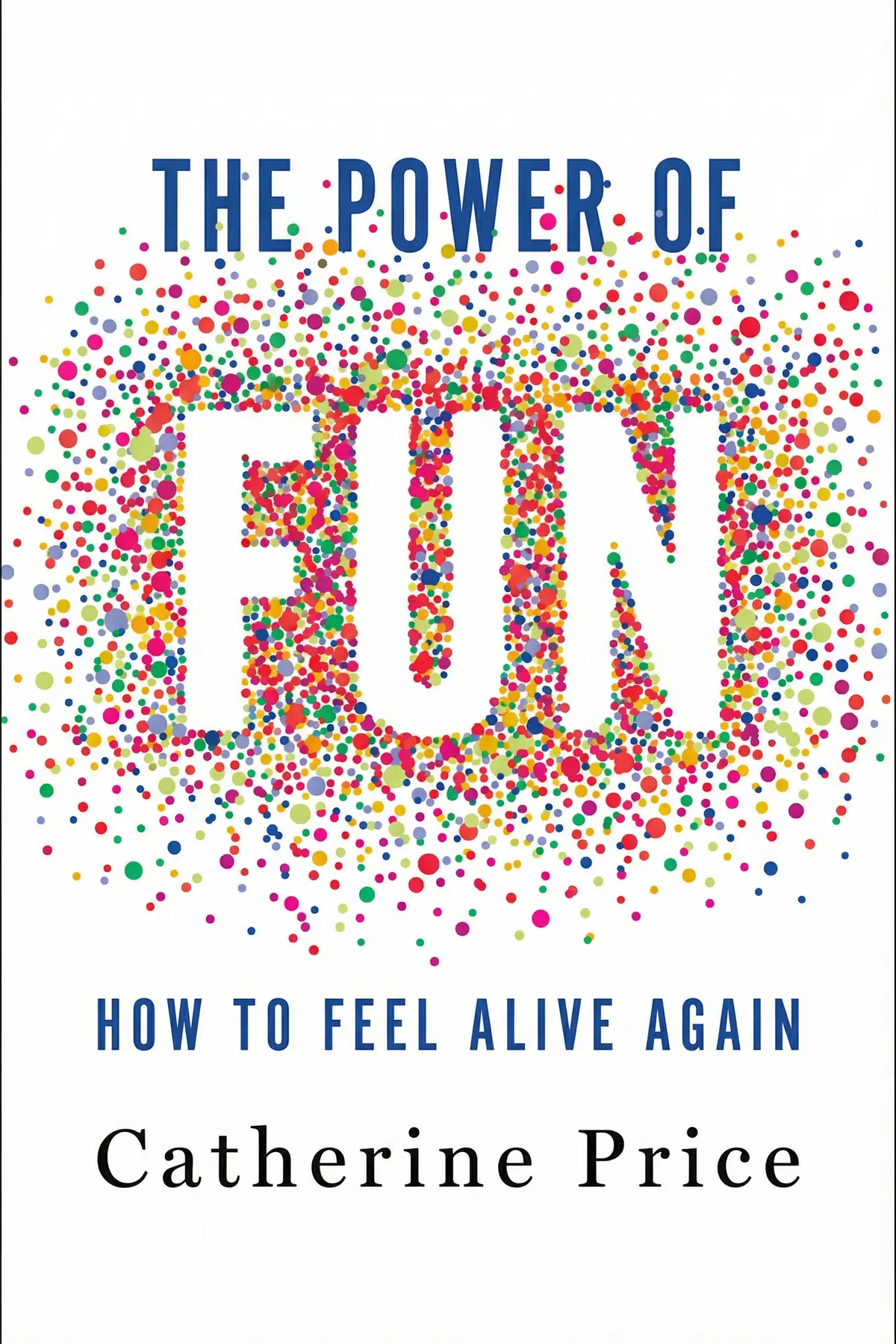
Table of Content
1. Introduction
55 sec
If your free time has become a blur of scrolling, streaming and recovering from the week, you may be resting without ever feeling alive. In The Power of Fun, health and science journalist Catherine Price argues that the cure is a particular kind of fun she names True Fun, which shows up only when connection, flow and playfulness coincide. She built that definition from her own memories and the stories of more than 1,500 volunteers around the world.
Her case is that this electric state is good for your health and relationships, and that it can be cultivated on purpose. The path runs from the recipe, to why it matters, to a simple audit and a five-part plan she calls SPARK. By the end you will know which people and settings light you up, what quietly drains the fun from them, and how to give the good ones a regular place on your calendar.
2. Spot the three ingredients of real fun
1 min 50 sec
A dinner, a film and a roller coaster can all be called fun, yet only some moments stay with you for years. Price found a precise test for telling them apart, and two habits that wreck it.
3. Fun pays off in body and brain
1 min 47 sec
Feeling guilty about pure enjoyment is common, and screens make it worse. Price gathers evidence suggesting the price of skipping fun shows up in your nerves, your heart and even your lifespan.
4. Measure the fun you already have
1 min 45 sec
An audit is the last thing anyone links with fun. Yet ten statements, one hour with a notebook and a few letters in a journal can reveal patterns in your life you have never noticed.
5. Find the people and places that make you feel alive
1 min 50 sec
Some friends, hobbies and rooms reliably bring you to life while others leave you cold. Price gives you three names for these forces, and a warning about trusting your old dislikes too much.
6. Clear space, then fill it with passions
1 min 46 sec
Guilt, resentment over chores and a cluttered schedule leave little room for anything playful. Price starts her action plan with a signed note to yourself, then shows what to put in the space you free up.
7. Attract fun and break a few small rules
1 min 45 sec
Many of the happiest moments people shared with Price had something slightly improper about them. She explains what kind of mischief helps, and how even a quiet person can become the one others want around.
8. Keep fun on the calendar for good
1 min 35 sec
A burst of good intentions fades the moment work gets busy again. Price closes with four supports that keep fun from slipping away, plus a box to reach for on gray days.
9. Conclusion
1 min 05 sec
Price’s argument moves fun out of the reward pile, the thing you allow yourself once real work is done, and into the core of a healthy life. True Fun has a recipe, playfulness, connection and flow arriving together, and once you know it you can see why an evening of streaming leaves you flat while a silly dinner with friends stays with you for years. The audit shows where that recipe already works for you, and SPARK gives it room, fuel and a regular slot.
The easiest start is the Fun Journal. For one week, mark each good moment with P, C or F and watch which people and places keep showing up. Then put one of those magnets on next week’s calendar, and keep your phone out of reach while it happens. If guilt gets in the way, write and sign the permission slip. And when you must choose between buying something and seeing someone, choose the person.
Nothing here needs much money or a new personality. It needs attention to the moments when you feel most alive, and the nerve to make room for more of them.
About this book
What is this book about?
Many adults spend their free hours on screens and errands, then wonder why rest never feels like living. Health and science journalist Catherine Price set out to define fun precisely and found little research to help. She drew on her own experiences and the stories of more than 1,500 volunteers. Her conclusion was that the fun worth chasing, which she calls True Fun, happens when playfulness, connection and flow occur together. Price argues this is far more than a treat. Play, she reports, boosts a brain protein linked to nerve growth. Some experts compare the health risks of loneliness to those of heavy smoking. And deep engagement is part of the ikigai studied on Okinawa, an island with many centenarians. The main enemies of True Fun are distraction, above all from phones, and judging yourself in the moment. The book turns that diagnosis into a practical program. Readers rate themselves on a ten-statement baseline, maintain a Fun Journal, and pinpoint what attracts them, what brings them fun, and which things drain it away. Then a five-part plan called SPARK helps them clear space, chase passions, attract fun, rebel in harmless ways and keep going for life.
Book Information
Who it's for
Busy professionals feeling flat
Busy professionals whose free time drains into phones and streaming and leaves them flat.
Burned out or disconnected
People feeling burned out or disconnected who want a practical, low-cost way to feel more alive.
Wanting memorable time together
Couples and friends who want to plan time together that they will actually remember.
About the Author
Catherine Price
Catherine Price is a health and science journalist whose work has appeared in The Washington Post, The San Francisco Chronicle and The New York Times. She wrote How to Break Up with Your Phone, a 30-day plan for a healthier relationship with smartphones, and The Power of Fun led to her TED talk on the subject. Her other books include Vitamania and 101 Places Not to See Before You Die, and she co-wrote The Amazing Generation, a handbook for tweens, with Jonathan Haidt. She also publishes the newsletter How to Feel Alive.
Ratings & Reviews
Ratings at a glance

What people think
Listeners find the work engaging and mentally stimulating, portraying it as a source of numerous ideas that could be life-changing. Additionally, they value the sense of connection it provides and its overall worth. Feedback on readability is varied; while some consider it a simple read, others suggest it resembles a research paper. Listeners also express conflicting opinions concerning the book's length and scientific accuracy.
Top reviews
Sai
Finally got around to reading this, and frankly, it's one of the most persuasive self-help books I've ever finished. Catherine Price has a masterful way of weaving dense research into a narrative that feels like a conversation with a hilarious, very smart friend. I haven't laughed this much while reading a nonfiction book since Mary Roach. Her stories about her own "fun failures" are gold. This isn't just about finding a hobby; it’s about a total mindset shift. I’ve started implementing the Digital Sabbath, and the difference in my anxiety levels is staggering. It’s rare to find a book that offers both deep scientific insight and such practical, life-changing advice. If you feel like you’re just going through the motions, read this immediately.
Show moreYaowares
Wow, I didn't realize how much I was letting my phone hijack my capacity for genuine joy. The Power of Fun is a manifesto for anyone who feels like their spark has gone out. Price’s definition of fun—playfulness, connection, and flow—is something I now find myself looking for every day. The book is evidence-based and beautifully written, making the case that fun is a health requirement, not a guilty pleasure. I loved the SPARK acronym and the specific advice on how to attract more fun by being more "interruptible." It’s engaging, thought-provoking, and high value for the money. This is the kind of book you want to buy for all your friends so you can go out and have "True Fun" together. Absolutely brilliant.
Show moreSomsri
The distinction between "Fake Fun" and "True Fun" was a total lightbulb moment for me. I’ve spent so many nights mindlessly watching Netflix and wondering why I still felt empty. Price explains that without playfulness and connection, we’re just consuming. I loved her personal anecdotes about her own struggle to find hobbies, like her journey into learning the guitar or birdwatching. It made the advice feel much more relatable. While some parts of the book felt a little repetitive, especially the focus on the three pillars of fun, the overall message is vital. It’s not just about being silly; it’s about reclaimed attention. Our lives are what we pay attention to. That’s a powerful thought to carry around. I’ve already started my own "delight" list because of this.
Show moreWorawit
Ever wonder why you feel exhausted after a weekend of "relaxing" on the couch? This book provides the scientific answer, and it’s probably because you aren’t actually having fun. Price does a deep dive into the physiology of joy and the cortisol-reducing power of genuine connection. The truth is, I didn’t realize how much my perfectionism was killing my ability to play. I really enjoyed the chapter on "rebelling" against routine. It’s not a quick read—it actually takes some focus to get through the data-heavy sections—but the payoff is worth it. It’s a workbook for the soul. I’m giving it four stars instead of five only because the middle section dragged a bit with the definitions of interests versus passions.
Show moreNarumon
Picked this up during a particularly burnt-out month, and it actually helped me shift my perspective on leisure. The author's voice is witty and self-deprecating, which keeps the research from feeling too dry. I especially liked the "not to-do" list idea. It’s such a simple way to protect your time from the vampires of online shopping and endless scrolling. We treat fun like a luxury, but Price argues it’s a necessity for health. The writing style is varied, with some short, punchy chapters and others that dive deep into the concept of flow. It’s a solid investment for anyone feeling like a ghost in their own life. You might not agree with every scientific point, but the actionable tips are gold.
Show moreWatcharaporn
This book isn't just about being silly; it's a well-researched argument for reclaimed attention. Catherine Price is essentially asking us to fight for our lives. She calls our phones "weapons of mass distraction," and she isn't wrong. I appreciated the specific prompts for discovering new interests, like thinking back to what we enjoyed as children. It’s a very practical guide once you get past the initial chapters of definitions. The focus on "connection" really resonated with me, especially after years of pandemic-induced isolation. My only gripe is that it feels a bit like she’s trying to maximize fun as a productivity metric, which is a little counter-intuitive. Still, it’s an eye-opening read that makes you want to put the phone down and actually live.
Show moreSangduan
As someone who spends way too much time scrolling through social media, the sections on "fake fun" hit home. Catherine Price makes a compelling case for why our phones are basically weapons of mass distraction. That said, if you’ve already read her previous book about breaking up with your phone, a lot of this will feel like a retread. The first half is quite academic, detailing the science of why we’re miserable and distracted. Personally, I found the "fun journal" prompts a bit tedious—almost like filler to pad out the page count. To be fair, the SPARK framework is a useful tool for anyone who has forgotten how to be silly. It’s a decent read with some good takeaways, but it definitely could have been about fifty pages shorter without losing any impact.
Show moreSomsak
I wanted a list of activities, but instead, I got a philosophical dissertation on why my hobbies aren't fun enough. Look, I appreciate the research, and the author is clearly passionate about the psychology of flow. The quotes from Mihaly Csikszentmihalyi were insightful, though they contributed to the book’s overall dense, textbook-like atmosphere. I liked the idea of "micro-dosing" connection by making brief phone calls or trying new things, but the narrative often got lost in definitions. It’s a bit of a mixed bag. On one hand, it’s thought-provoking and makes you re-evaluate your screen time. On the other hand, it’s a lot of wax and wane about the nature of play without enough concrete examples of what to actually do. It’s fine, just a bit of a slog at times.
Show moreOn
After hearing about Catherine Price on a podcast, I expected something a bit more vibrant and, well, fun. This book is definitely informative, but the tone is surprisingly dour for the subject matter. It felt more like a prescription than an invitation. I’m a parent, and I bought this to help me engage more with my kids, which it did to an extent. The advice on setting limits for email and practicing a digital Sabbath was the highlight for me. However, the constant emphasis on how "dead inside" we are without True Fun became a bit depressing. If you’re looking for something that feels like Big Magic, this isn’t quite it. It’s more of a manual for digital detox disguised as a book about play.
Show moreGrace
Why does a book about enjoyment feel so much like a grueling chore? I picked this up hoping for a spark to revive my energy, but I found myself wading through what felt like a long-winded research paper instead. Price defines "True Fun" as the intersection of playfulness, connection, and flow, which is a solid enough premise. However, she repeats this exact phrase so many times that it starts to feel like a hypnotic chant rather than a helpful guide. Frankly, the irony of a book on fun being this dry is hard to ignore. It’s heavy on theory and light on the actual "how-to" that I was craving. I did appreciate the warnings about "fake fun" and our screen addictions, but I could have gotten that from a ten-minute article. It felt like homework when I was looking for a recess.
Show moreQuestions about this book
What is True Fun according to Catherine Price?
Price defines True Fun as the moment when playfulness, connection and flow happen together. Playfulness is doing something for its own sake, connection is sharing the experience with someone or something, and flow is absorption so deep you lose track of time. She reached this definition by studying her own experiences and those of more than 1,500 volunteers. Passive activities like streaming rarely qualify, and distraction and self-judgment are the biggest obstacles.
What does SPARK stand for in The Power of Fun?
SPARK is Price’s five-part action plan. S is making space, mentally and physically, starting with a signed permission slip to prioritize fun. P is pursuing passions, interests and hobbies. A is attracting fun by seeking the absurd and practicing presence. R is rebelling in harmless ways against conventions, traditions or your own adulthood. K is keeping at it with fun squads, planning and always having something to look forward to.
How do you do a fun audit?
Price suggests three exercises. First, score ten statements such as I prioritize fun and I have enough fun from one to five; a total under thirty shows where to work. Second, spend an undistracted hour writing detailed accounts of three past moments of True Fun and one imagined future event. Third, keep a Fun Journal, marking activities with P, C or F for playfulness, connection and flow, and review it weekly.
Why does Catherine Price say phones get in the way of fun?
Price points out that the typical American adult was already spending four hours daily on a phone before COVID-19, which adds up to about sixty days a year. That constant distraction divides attention, which makes flow impossible and weakens playfulness. It also damages connection, because people who are only half present are not truly with each other. Her advice throughout the book is to put the phone away and make eye contact.
Featured in
Readers also enjoyed

59 Seconds: Change Your Life in Under a Minute
Richard Wiseman





A Guide to the Good Life: The Ancient Art of Stoic Joy
William B. Irvine


A High-Performing Mind: Strengthen Your Mind and Live Your Best Life
Andrew D. Thompson


Abundance: The Inner Path to Wealth
Deepak Chopra
AUDIO SUMMARY AVAILABLE
Listen to The Power of Fun in 15 minutes
Get the key ideas from The Power of Fun by Catherine Price, plus 5,000+ more nonfiction titles.
- 5,000+ titles
- Listen as much as you want
- 7-day free trial
- Cancel anytime









