

15 min 25 sec
Available in: English
How to Be Enough: Self-Acceptance for Self-Critics and Perfectionists
Shows self-critics and perfectionists why harsh inner talk backfires. It explains how to keep high standards while trading criticism for kindness, rules for values, avoidance for tiny steps and comparison for honest self-expression.
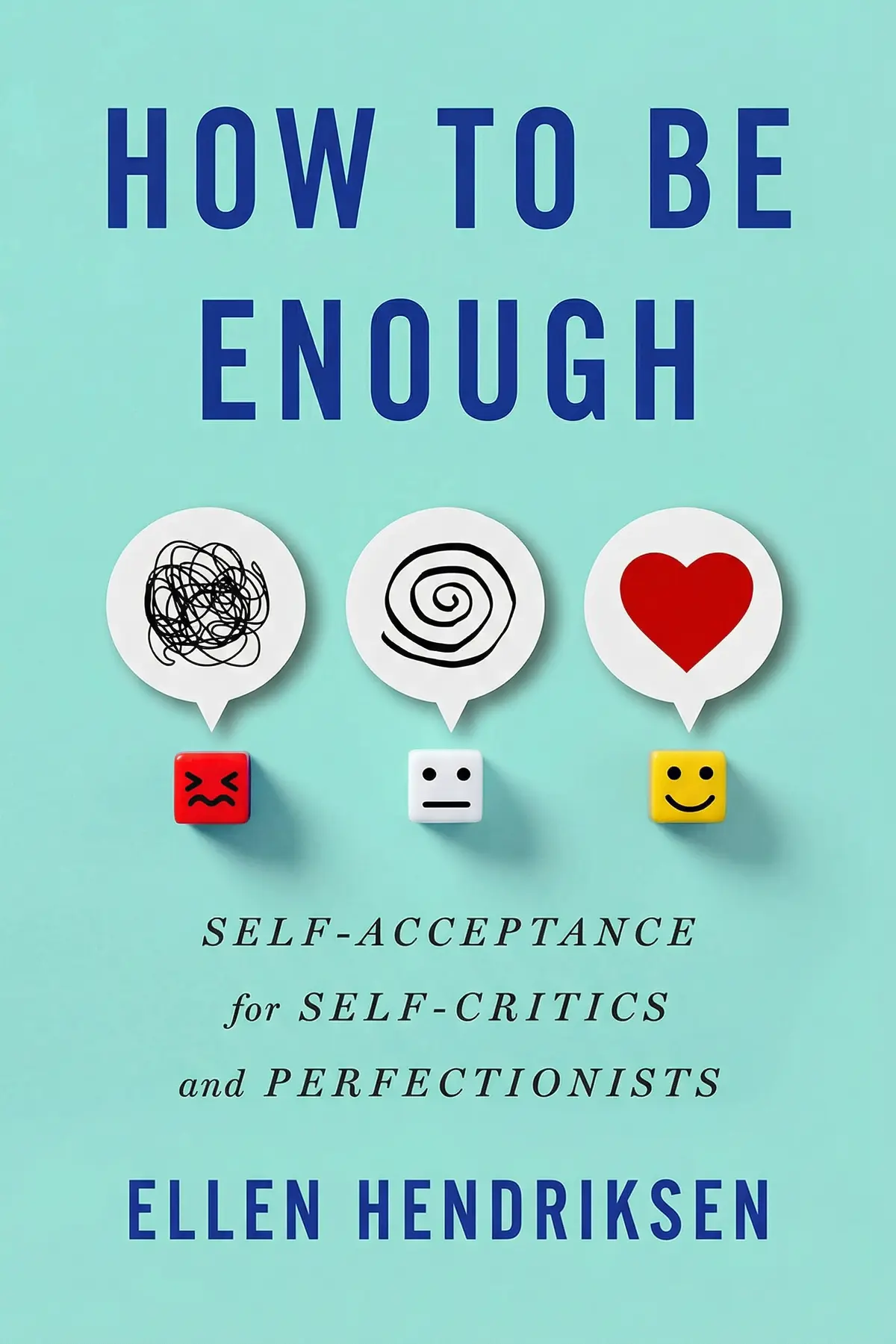
Table of Content
1. Introduction
1 min 11 sec
If you rewrite emails five times, wave off every compliment and still feel behind, your standards may not be the real problem. In How to Be Enough, clinical psychologist Ellen Hendriksen argues that perfectionism is less a hunger for excellence than a constant sense of never measuring up, and that this feeling blocks the very goals it claims to serve.
Hendriksen works at Boston University’s Center for Anxiety and Related Disorders, and her focus is perfectionism and social anxiety. Her case is that you can keep your high standards and let go of the impossible ones, and that kindness toward yourself is what makes the difference.
Along the way you meet a software developer who stays late fixing flaws nobody else sees, a host who cannot accept praise for her dumplings, a designer tweaking projects through the night and an employee worn out by his permanent smile. Each one shows a habit you may recognize, with a small, concrete way out: a sentence to change, a step to shrink, an expression to let show.
2. Spot the critic hiding inside your high standards
1 min 34 sec
A trait most employers would love sits at the root of the problem. Hendriksen traces how ordinary care about good work turns into a voice that keeps moving the target and never lets you arrive.
3. Harsh self-talk fails you, so choose kindness
1 min 39 sec
A gifted developer polishes code nobody has complained about, and a generous host talks her guests out of their compliments. Both believe their self-criticism keeps them safe. Their friends and colleagues experience something else entirely.
4. Kindness gets more done than harshness
1 min 54 sec
Most perfectionists suspect that going easier on themselves would make them sloppy. Hendriksen argues the opposite, and she adds an uncomfortable twist about where the critic points once it gets bored with you.
5. Trade your shoulds for values you choose
2 min 01 sec
Generosity and excellence are admirable, until perfectionism rewrites them as orders you are never allowed to break. A simple look back at your best moments shows which is which, and what to do about it.
6. Start the task you keep avoiding
2 min 12 sec
Clean floors and a freshly organized desktop can be signs of trouble. A designer who worked through the night kept finding new flaws, until her mentor helped her notice what her eyes had been trained to look for.
7. Get curious instead of comparing yourself
1 min 33 sec
Measuring yourself against others can leave you feeling superior one minute and hopeless the next. Hendriksen offers one question that tends to dissolve the comparison before it does its damage.
8. Let your face show twenty percent more
1 min 59 sec
His colleagues admired his constant cheerfulness, while he went home drained and spent the evening scrolling. One modest experiment with his own expressions changed how he felt at work and online.
9. Conclusion
1 min 22 sec
Every person in Hendriksen’s book believed their harshness was doing them a favor. Elena took every small error as proof that she didn’t belong in tech. Michiko thought running down her own cooking made her likable. Kanika kept believing that a single further tweak would at last turn her efforts into something worthy, while Marcus put on a cheerful front at the office no matter his true mood, and that wore him out. Each paid a high price for protection that never arrived.
What the book offers is a different bargain. You keep the care, the effort and the standards that make you good at what you do, and you stop paying for them with your rest, your joy and your relationships. Beneath all the striving, Hendriksen suggests, sits a simple wish to feel safe, accepted and worthy as you already are.
You can start small this week. When you hear I have to, look for the value behind the task and choose it. When a job looms, forgive yourself for yesterday’s delay and make the first step a single sentence. When envy flares, ask what you don’t know about the other person. And in one ordinary conversation, let your face show a little more of what you feel.
High standards can stay. Only the impossible ones have to go.
About this book
What is this book about?
Perfectionism looks like a drive for excellence from the outside. Underneath, clinical psychologist Ellen Hendriksen argues, it is a steady sense of never being good enough. That feeling stalls motivation, raises stress, lowers the quality of the work and pushes other people away. Hendriksen starts from a trait worth keeping: conscientiousness, the care that makes people do things well. She shows how that care tips into harsh self-judgment, why the inner critic feels protective, and what it actually costs. Through the stories of a software developer, a dinner-party host, a graphic designer and an office worker with a permanent smile, she lays out a series of mindset shifts. Criticism gives way to self-compassion. Rigid rules give way to freely chosen values. Avoidance gives way to tiny steps. Comparison and emotional control give way to curiosity and honest expression. Readers get small, specific practices they can try this week, including turning "I have to" into a choice, shrinking a dreaded task into a first step that feels almost silly, and letting their face show a little more of what they really feel. The goal is not lower standards but a life with room for rest, joy and connection.
Book Information
Who it's for
Professionals still feeling behind
Professionals who redo finished work late into the night and still feel behind.
Struggling with self-doubt
People who deflect compliments, procrastinate on big tasks or measure themselves against everyone they meet.
Hard on loved ones
Anyone hard on the people closest to them who wants a kinder voice without lowering the bar.
About the Author
Ellen Hendriksen
Ellen Hendriksen is a clinical psychologist and a faculty member at the Center for Anxiety and Related Disorders at Boston University, where her focus is social anxiety and perfectionism. She earned her Ph.D. at UCLA and trained at Harvard Medical School. Her work has appeared in Harvard Business Review, Scientific American and Psychology Today. She is also the author of How to Be Yourself, about social anxiety and the inner critic.
Ratings & Reviews
Ratings at a glance

What people think
Listeners describe the work as both accessible and easy to relate to, and one listener highlights it as essential reading for anyone struggling with perfectionism. The guidance offered is highly valued, particularly by one listener who points out that it offers entirely new methods for experiencing a richer life. There is strong praise for the caliber of the information presented, as one listener characterizes the text as "chock full of brilliant research."
Top reviews
Elise
As someone who has spent years trying to be 'perfect' and failing miserably, this book felt like a massive relief. Hendriksen doesn't tell you to stop being ambitious; she tells you to stop emotionally bludgeoning yourself in the process. The way she explains how our brains create shortcuts based on past praise was a total lightbulb moment for me. It’s not just about 'trying harder'—it’s about learning cognitive flexibility. I particularly appreciated the Fred Rogers quotes toward the end of the book. They served as a gentle, much-needed reminder that our worth isn't tied to our daily output or performance. This is a must-read for the 'recovering' perfectionists who need a nudge toward kindness. I'm already feeling more enough than I did yesterday.
Show morePranee
Picked this up on a whim and I’m so glad I did. Hendriksen explains perfectionism as a complex mix of nature and nurture, which helped me stop blaming myself for having these traits in the first place. The 'seven shifts' are easy to digest, and the writing is engaging enough to keep you turning pages even through the science-heavy parts. I found the section on 'should-ing' your life away to be particularly convicting. We live in a world that constantly demands production, so having a professional give you permission to rest is invaluable. It’s research-heavy but remains accessible, making it one of the better self-help titles I've picked up this year. It's chock full of brilliant insights.
Show moreWin
After hearing so many good things about Dr. Hendriksen's previous work, I had high hopes for this, and she absolutely delivered. This book is chock full of brilliant research but reads like a conversation with a wise, compassionate friend. I finally understand the link between my anxiety and my constant need for control over every tiny detail. The chapters on 'shifting' your perspective are incredibly helpful for someone like me who tends to be very rigid in my thinking. It’s not about lowering your standards or becoming lazy; it’s about redirecting that energy toward things that actually bring joy. I’ll be recommending this to every 'anal-retentive' friend I have—and I mean that with the utmost love!
Show moreEmma
Dr. Hendriksen writes like a friend who actually understands the 'Type A' spiral. The seven shifts are practical, even if some of the exercises felt a bit like heavy homework I wanted to skip in favor of a nap. I loved the 'inner rulebook' section; it’s terrifying to see how many arbitrary laws I’ve written for my own life that sound like they came from a supervillain HR department. She manages to balance hard science with a lighthearted tone that keeps it from feeling like a dry clinical textbook. There were moments where the puns were a bit too much for my taste, but the core message—that we can turn down the volume on that screaming inner critic—really landed. It’s a solid resource for anyone who feels they are never doing enough.
Show moreNam
Truth is, I never considered myself a perfectionist until I read the chapter on the over-evaluation of performance. I realized I spend more time reliving my social mistakes than actually enjoying my wins. The advice here is actionable and grounded in psychological reality, not just fluffy 'love yourself' platitudes that don't actually work. I especially liked the 'donut' analogy—the idea of being called out on your behavior but still being cared for. My only minor gripe is that some of the case studies felt a little too tidily resolved for my liking. Real life is messier than a 200-page book can capture, but it's a fantastic starting point for changing your internal monologue. Definitely worth picking up if you're your own worst critic.
Show moreSuda
Not what I expected, but in a very good way. I thought this would be another lecture on being more organized, but it’s actually about being more human. The author’s own struggles with perfectionism make her a trustworthy narrator; she’s in the trenches with us. I really connected with the idea of the 'inner critic' acting like an inflexible judge. That image alone will stick with me for a long time. Some of the similes were a bit cheesy (prepare for some pun-induced eye-rolls), but the strategies for building self-acceptance are top-tier and easy to implement. It’s a life raft for anyone currently drowning in their own high expectations and constant need for external validation.
Show moreChamnong
Ever wonder why you’re your own worst enemy? This book breaks it down with a great mix of wit and clinical expertise. The section on 'self-acceptance for self-critics' provides some never-before-seen strategies that go beyond the usual positive affirmations you find on Instagram. I loved the focus on flexibility—understanding that a 'bad' day doesn't make you a 'bad' person. It's a vital distinction that most of us forget. The book could have used a quick summary guide or a workbook at the end for easy reference, but the core content is brilliant. It’s a compassionate and deeply researched look at a very common, very exhausting struggle. I'll definitely be coming back to my highlighted sections.
Show moreGoy
Finally got around to finishing this, and while I appreciate the depth of research, it felt a bit repetitive in the middle sections. The author is clearly knowledgeable as a psychologist, but some chapters dragged on longer than necessary. I did find the distinction between values and goals helpful; focusing on who I want to be rather than just what I want to achieve is a necessary shift for my mental health. However, the tone was a bit dry at times, and I found myself skimming the client anecdotes. It’s a decent guide if you’re new to the concept of self-compassion, but it might feel like a repeat if you’ve read a lot of other self-help titles. It's a good book, just not a life-changing one for me personally.
Show moreWipada
Look, there is some excellent information in here, but I struggled with the framing of certain 'success stories.' Comparing my daily struggles to high-profile figures like Steve Jobs felt a bit alienating because I'm not a tech billionaire; I'm just a person trying to get through the work week without a panic attack. To be fair, the psychological principles regarding cognitive flexibility are sound. The exercises on defining core values were cathartic and helped me see where I was misplacing my energy. But I found the tone a bit too 'therapist-y' in certain spots, which made it harder to stay engaged during the longer chapters. It’s worth a read for the practical tips, but it didn’t quite hit the 5-star mark for me.
Show moreChatchai
Stop holding up narcissists as idols. I was hopeful for a guide on self-acceptance, but using Steve Jobs and Walt Disney as models of 'perfectionism' felt fundamentally wrong to me. Mentioning Disney's treatment of his staff in a single off-handed sentence while asking the reader to relate to his 'suffering' is a massive oversight. If being a perfectionist means being a 'narcissistic despot' to your family and employees, I don't want the advice. The book tries to be compassionate toward the reader, but it simultaneously gives a pass to behavior that is just plain rude and derogatory. I couldn't get past the idea that we should sympathize with these 'geniuses' while they berate the people around them. It felt like an excuse for being a jerk under the guise of high standards. Not for me.
Show moreQuestions about this book
What is the main idea of How to Be Enough by Ellen Hendriksen?
Hendriksen argues that perfectionism is less about striving for excellence and more about never feeling good enough. It grows out of conscientiousness, a healthy trait, but tips into harsh self-judgment that stalls motivation, raises stress and pushes people away. Her answer is a set of mindset shifts that keep high standards while dropping impossible ones, starting with replacing self-criticism with self-compassion.
Why do perfectionists keep listening to their inner critic?
According to Hendriksen, self-criticism feels protective. People criticize themselves first to soften other people’s judgment, keep expectations high to force improvement, or put themselves down to stay humble. Blame can feel like control, since a fault of your own is something you can fix. Some even voice self-criticism hoping for reassurance. Her stories show that this protection rarely works and often damages relationships.
How does How to Be Enough suggest beating procrastination?
Hendriksen treats procrastination as an emotional problem rather than laziness. She cites research showing that forgiving yourself for past procrastination reduces future procrastination. She then recommends cutting tasks into steps so small they seem silly, such as opening the laptop or writing one sentence, and vividly picturing how your future self will feel after you do one small thing right now.
What is the difference between rules and values in How to Be Enough?
Rules sound like I have to, I must or I should, and feel like orders from a strict authority. Values are directions you choose freely because they give life meaning, such as creativity or helping others. Perfectionism often turns values into rules, for example turning generosity into never refusing a request. Hendriksen suggests replacing I have to with what you would choose based on your values.
Who should read How to Be Enough?
It suits self-critics and perfectionists: people who raise the bar each time they reach it, dismiss compliments, procrastinate on important tasks, compare themselves constantly or hide their real feelings at work. It is also useful for anyone who holds partners, children or colleagues to impossible standards and wants to keep caring about quality without the constant judgment.
Readers also enjoyed





A Guide to the Good Life: The Ancient Art of Stoic Joy
William B. Irvine




A High-Performing Mind: Strengthen Your Mind and Live Your Best Life
Andrew D. Thompson
AUDIO SUMMARY AVAILABLE
Listen to How to Be Enough in 15 minutes
Get the key ideas from How to Be Enough by Ellen Hendriksen, plus 5,000+ more nonfiction titles.
- 5,000+ titles
- Listen as much as you want
- 7-day free trial
- Cancel anytime









