
14 min 31 sec
Available in: English
How to Be Alone: The School of Life
A case for time alone as a source of self-knowledge, creativity and calm. It explains why loners get judged unfairly and how to ease into solitude, protect it for children and find your own right amount.
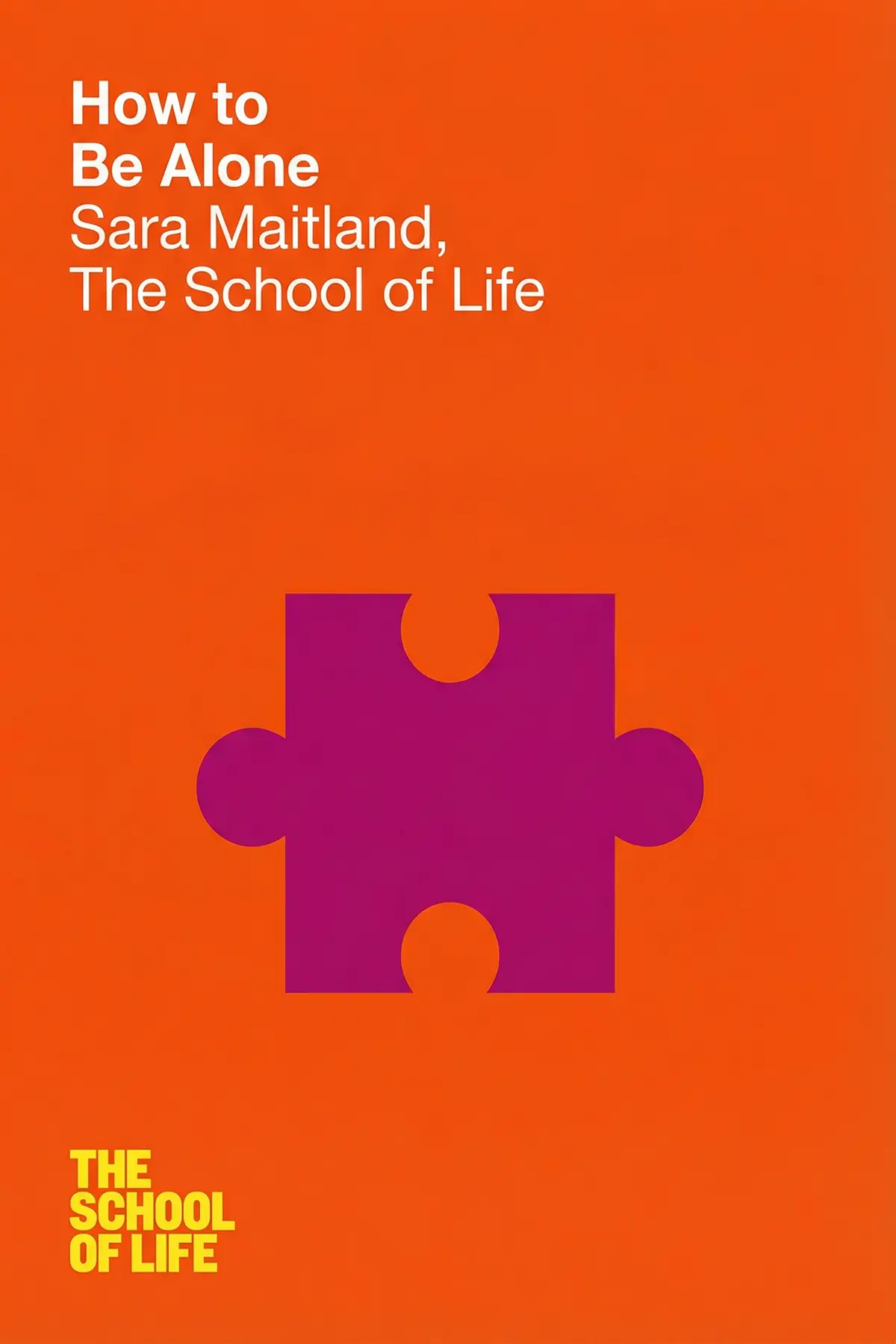
Table of Content
1. Introduction
59 sec
If you feel a little guilty whenever you want an evening to yourself, Sara Maitland makes a reassuring claim: people who truly experience solitude can end up healthier and more relaxed than everyone else. In How to Be Alone, part of The School of Life series, the British novelist takes on the instinct that treats a loner as someone to pity or distrust.
Her argument is that solitude, chosen freely and taken in a dose that suits you, is a source of self-knowledge, creativity and calm, and that the fear around it can be unlearned in small steps. She is not asking anyone to drop their friends or partner.
The examples range from Thoreau’s solitary stretch in the woods at Walden Pond and Virginia Woolf’s A Room of One’s Own to a nun who spent 12 years living by herself in a cave. What it gives you is permission, a few simple exercises, starting with a bath, and a way to judge how much time alone you need.
2. Stop apologizing for wanting time alone
1 min 39 sec
We admire tattoos, bold fashion and unusual lifestyles as self-expression, yet someone who simply prefers their own company makes people uneasy. A philosophy professor traced that reaction to a source far older than modern manners.
3. Time alone shows you who you are
1 min 38 sec
Virginia Woolf thought the shortage of women writers in her day had nothing to do with talent. Her diagnosis, along with a famous cabin in the woods and a film star’s retirement, points to what solitude actually produces.
4. Find something larger than yourself outdoors
1 min 26 sec
Medieval knights and young Aboriginal Australians faced the same requirement before entering adult life. What they were asked to do suggests why some experiences only happen when nobody, not even a dog, comes along.
5. Ease into solitude one bath at a time
1 min 32 sec
Some people insist they crave time alone, yet somehow never take it, and feel oddly annoyed by friends who do. Maitland reads that pattern as a clue, and her remedy starts in the bathroom.
6. Grow short breaks into a solo adventure
1 min 32 sec
A novel, a film or a favorite album feels like perfect time alone. Maitland disagrees, and her alternative costs nothing, fits a crowded week and can grow into a trip you would never have dared before.
7. Recover the daydreams that made childhood calm
1 min 33 sec
Most of us once spent happy hours entertained by nothing but our own heads, then lost the knack somewhere around school. Carl Jung kept a notebook to get it back, and his method needs nothing more than an hour.
8. Give your children safe time on their own
1 min 28 sec
Parents work hard to teach children that being alone is risky. Two childhood experts offer a different approach, and old fairy tales in which young boys or girls face evil by themselves supply another part of the lesson.
9. Find the amount of alone time that suits you
1 min 33 sec
Ask whether someone likes parties and you expect to learn if they are an introvert. The honest answer is usually it depends, and Maitland thinks that reply reveals why personality labels cannot set your solitude for you.
10. Conclusion
1 min 11 sec
Maitland’s book is finally a defense of a right. Societies that prize freedom and individual choice still flinch at someone who chooses to be alone, and she argues that the flinch owes more to our evolutionary past than to any harm in solitude. Thoreau at Walden, Woolf asking for a room, Tenzin Palmo in her cave and Jung with his notebook all point one way: time alone, freely chosen, returns a clearer sense of who you are, room for creative work, and sometimes a feeling of connection to something beyond yourself.
None of this means giving up friends or a partner. It means practice. Begin where it is easy, by taking a bike ride or café visit you already enjoy and stretching it by 15 to 30 minutes, attending to your own experience rather than to someone else’s book or music. When unease shows up, treat it as a small fear to test, the way a long bath tests it. And give the children around you safe, unhurried time to wander on their own.
The neighbor who walks alone down your road may not be lonely at all. He may simply remember something the rest of us forgot as children.
About this book
What is this book about?
Many people quietly want more time to themselves, then feel guilty or uneasy when they take it. Society treats the person who chooses to be alone as someone to pity or mistrust, even while it celebrates individuality in almost every other form. Sara Maitland, a British novelist writing for The School of Life series, argues that this suspicion is unfair and that solitude is good for us. Drawing on figures from Henry David Thoreau and Virginia Woolf to Greta Garbo, a monastic founder and a nun who lived 12 years in a cave, she shows solitude feeding self-discovery, creative work and even a sense of connection with something beyond the conscious mind. The book is also practical. Maitland explains how to spot a hidden fear of being alone and shrink it with small doses, why reading and music do not really count as time alone, how walks, runs and solo trips extend it, and how Carl Jung's daydreaming notebook can recover the ease we had as children. She closes with advice for giving children safe solitude and a firm rejection of one-size rules about how much anyone needs.
Book Information
Who it's for
Craving guilt-free time alone
People who crave time to themselves but feel guilty or uneasy taking it.
Newly alone after loss
Anyone newly alone after a breakup or loss who wants solitude to feel less frightening.
Parents and creatives
Parents and creative workers who want calm, self-knowledge and room to think.
About the Author
Sara Maitland
Sara Maitland is a British writer and academic, born in London in 1950, known for her novels and short stories. Her fiction often leans toward magic realism, she has been described as a feminist writer, and religion runs through much of her work. How to Be Alone appears in The School of Life series, the publishing arm of the organization Alain de Botton founded in London in 2008 to help people understand themselves and find calm.
Ratings & Reviews
Ratings at a glance
What people think
Listeners find the book accessible and articulate, enjoying the optimistic perspective it takes on being solitary. They appreciate the observations shared, with one listener highlighting how the content explores multiple angles including the psychological. The level of guidance provided receives varied responses from listeners.
Top reviews
Parichat
Ever wonder why our society is so terrified of a little quiet time? Sara Maitland tackles this head-on, debunking the myth that those who seek solitude are somehow broken or unlovable. This is one of the most interesting books I've read this year because it treats solitude as a healthy, active choice rather than a passive failure. The way she links silence to self-discovery and a stronger relationship with nature really resonated with my own experiences. Not gonna lie, I was worried it would be too religious, but the spiritual elements are handled with a light, inclusive touch. It’s a beautiful call to reclaim our right to be alone without feeling selfish or pathetic. If you need permission to enjoy your own company, this is the book that gives it to you.
Show moreCamila
Finally got around to reading this and it truly reframed how I view my weekends spent in solitude. This book actually changed almost everything for me. I used to feel a twinge of guilt for turning down plans, but Maitland helped me see that my desire for quiet is a path toward creativity and self-knowledge. The book is incredibly positive and manages to avoid the typical 'self-help' clichés by focusing on the art of being alone properly. I loved the sections on how silence allows us to think more clearly and become more attuned to the world around us. Not gonna lie, it made me want to move to a cottage in Scotland just like her! This is an essential read for anyone who has ever been made to feel 'weird' for wanting space.
Show moreDen
As someone who has always struggled with the pressure to be 'on' socially, Maitland’s work felt like a deep, much-needed exhale. She does a wonderful job of distinguishing between the pain of loneliness and the profound joy of true solitude, which is a distinction that many modern psychological books seem to ignore entirely these days. I particularly appreciated the references to her life in rural Scotland, which added a layer of lived authenticity to her arguments. Truth is, the book isn't a checklist of tasks, but rather a mental shift regarding how we perceive our own company. Some might find her tone a bit too spiritual, but for me, it worked perfectly to illustrate the connection between silence and the divine. It’s a slim volume, yet it carries a significant amount of psychological weight that stays with you long after the final page is turned.
Show moreKiattisak
The chapter on the Desert Fathers was a highlight for me because it connected modern isolation to an ancient, spiritual tradition that feels lost today. Maitland argues that we have pathologized a state of being that was once considered a path to enlightenment and deep self-knowledge. In my experience, the book is most successful when it looks at the historical and creative benefits of being alone. I loved the mentions of Romantic poets and how their best work emerged from quiet reflection rather than constant social interaction. However, the pacing can be a bit sluggish in the middle sections where she repeats her central thesis about the 'stigma' of solitude. It’s a thoughtful piece, but perhaps a bit more academic than I anticipated given the 'How to' title.
Show moreBun
Maitland moves from her remote Scottish home to the history of Romantic poets with an ease that makes for a very pleasant reading experience. I appreciated how she tackled the modern obsession with constant connection, noting that our current paradigm isn't actually making us happier or more fulfilled. The book is well-written and flows naturally, feeling more like a conversation with a wise friend than a lecture. To be fair, there are moments where the narrative gets bogged down in bibliographies and book recommendations, which feels like filler. Still, her insights into how solitude fosters a connection to the divine were quite moving. It’s a solid addition to the School of Life series, even if it’s more about the 'why' than the 'how.'
Show moreAstrid
While the writing is accessible and the tone is gentle, the book spends a bit too much time justifying why one might choose to be alone. I found myself nodding along for the first forty pages, but after that, the repetition started to grate on my nerves. It covers various aspects of the psychological impact of isolation, yet it lacks the 'art' of doing it that the blurb promises. To be fair, she makes some excellent points about how creativity flourishes when we aren't constantly relating to others. I just wish there were more 'how-to' and less 'here is why I am not weird for living in the middle of nowhere.' It’s an okay introduction for those feeling guilty about their introversion, but seasoned loners might find it a bit thin.
Show moreCherry
After hearing so much about The School of Life series, I had high hopes for a revolutionary take on social dynamics, but this was just 'fine.' Maitland is clearly a talented writer, and she handles the delicate balance between autobiography and social commentary quite well. However, the book feels like it’s caught between two worlds: it’s not quite a memoir and not quite a practical guide. The truth is, I enjoyed the historical anecdotes about the Desert Fathers more than the modern psychological statements. It’s an easy read that validates the introverted soul, but it lacks the 'mind-blowing' insights I’ve come to expect from this series. If you're looking for a gentle nudge to spend more time alone, it’s worth a look, but don't expect much in the way of scientific data.
Show moreMax
Frankly, I was expecting a practical manual with concrete habits to improve my daily routine, rather than a philosophical defense of solitary living. The School of Life usually provides more actionable advice, but this felt more like a collection of personal justifications for the author's own lifestyle choices. While the writing is undeniably elegant and easy to digest, it doesn't offer the scientific rigor I was hoping for in a contemporary guide. Maitland spends far too much time trying to convince the reader that being alone doesn't make you 'bad, mad, or sad.' If you already enjoy solitude, you don't need the validation; if you hate it, this likely won't change your mind. It’s a decent read for bibliophiles, though, as her reading recommendations are quite solid.
Show morePracha
To be fair, the bibliography is excellent and points toward some fascinating literature, but the actual content felt like it was trying too hard to convince me that being alone isn't a pathology. I already believe that solitude is healthy, so spending half the book debunking the 'sad and lonely' trope felt like a waste of my time. I wanted more on the psychological mechanics of how to thrive in isolation when you aren't a hermit. The advice level is hit-or-miss, leaning heavily on the author’s personal anecdotes about moving to the woods after her divorce. It’s a quick read, but I didn't walk away with many new tools for my daily life. It’s interesting enough for a lazy afternoon, but don't expect it to change your life or your habits significantly.
Show morePrasarn
Look, this is basically a long-winded personal essay disguised as a self-help guide, and it failed to deliver on its premise. I am a big fan of solitude myself, yet I am looking for scientific and trustworthy answers rather than the mere experience of a 'spiritual' lady living in Scotland. The author seems to have an axe to grind against those who question her lifestyle, making the book feel more like an answer key for her critics than a helpful resource for readers. There are almost no tips on actual habits that make being alone easier or more productive in a modern, urban setting. It is easy to be alone when you live a quarter-mile from the nearest road, but what about the rest of us? This narrative felt very disconnected from everyday reality.
Show moreQuestions about this book
What is the main idea of How to Be Alone by Sara Maitland?
Maitland argues that solitude is healthy and good for us, not a sign that something is wrong. Chosen freely, time alone supports self-discovery, creativity and a sense of connection with nature. She says the social stigma against loners is unfair, traces part of it to our evolutionary need for companionship, and offers practical ways to overcome a fear of being alone without giving up friends or partners.
How do you get comfortable being alone, according to Maitland?
Start by admitting any fear of solitude, which can show up as never quite finding time alone or as irritation with friends who enjoy it. Then take small doses: a long bath instead of a shower, focused on being alone, or noticing your solitude in a shop or on public transport. Maitland cites Anthony the Great and the nun Tenzin Palmo as proof that long solitude can leave people healthy.
Do reading and watching films count as time alone?
Not fully, in Maitland’s view. She values reading, films and music as enriching, but argues they keep us from ourselves because our attention rests on another person’s work. She prefers solitary walks in nature, running treated as a kind of meditation, extending a bike ride or café visit by 15 to 30 minutes, and eventually a challenging but achievable solo trip.
How can parents give children healthy time alone?
Drawing on childhood experts Anthony Storr and Richard Louv, Maitland suggests letting babies gaze around without constant entertainment, giving toddlers supervised space to explore parks or woods, and not shielding kids from slightly scary stories. Fairy tales like The Snow Queen, where a child faces evil alone, teach children they have the strength to handle challenges on their own.
How much time alone does a person need?
There is no fixed answer, Maitland says. The introvert and extrovert labels are hard to test because people behave differently in different contexts, and they are culturally biased, with Japan valuing introversion and the United States extroversion. No psychological theory sets the right amount, so each person should decide for themselves, learn from experience, and respect other people’s choices.
Featured in
Readers also enjoyed

59 Seconds: Change Your Life in Under a Minute
Richard Wiseman





A Guide to the Good Life: The Ancient Art of Stoic Joy
William B. Irvine


A High-Performing Mind: Strengthen Your Mind and Live Your Best Life
Andrew D. Thompson


Abundance: The Inner Path to Wealth
Deepak Chopra
AUDIO SUMMARY AVAILABLE
Listen to How to Be Alone in 15 minutes
Get the key ideas from How to Be Alone by Sara Maitland, plus 5,000+ more nonfiction titles.
- 5,000+ titles
- Listen as much as you want
- 7-day free trial
- Cancel anytime









