

14 min 04 sec
Available in: English
How Not to Worry: The Remarkable Truth of How a Small Change Can Help You Stress Less and Enjoy Life More
By Paul McGee
Shows why worry takes over a brain built to spot predators. Gives a three-step routine of awareness, analysis and action for sorting worries, dropping the baseless ones and acting on what you can influence.
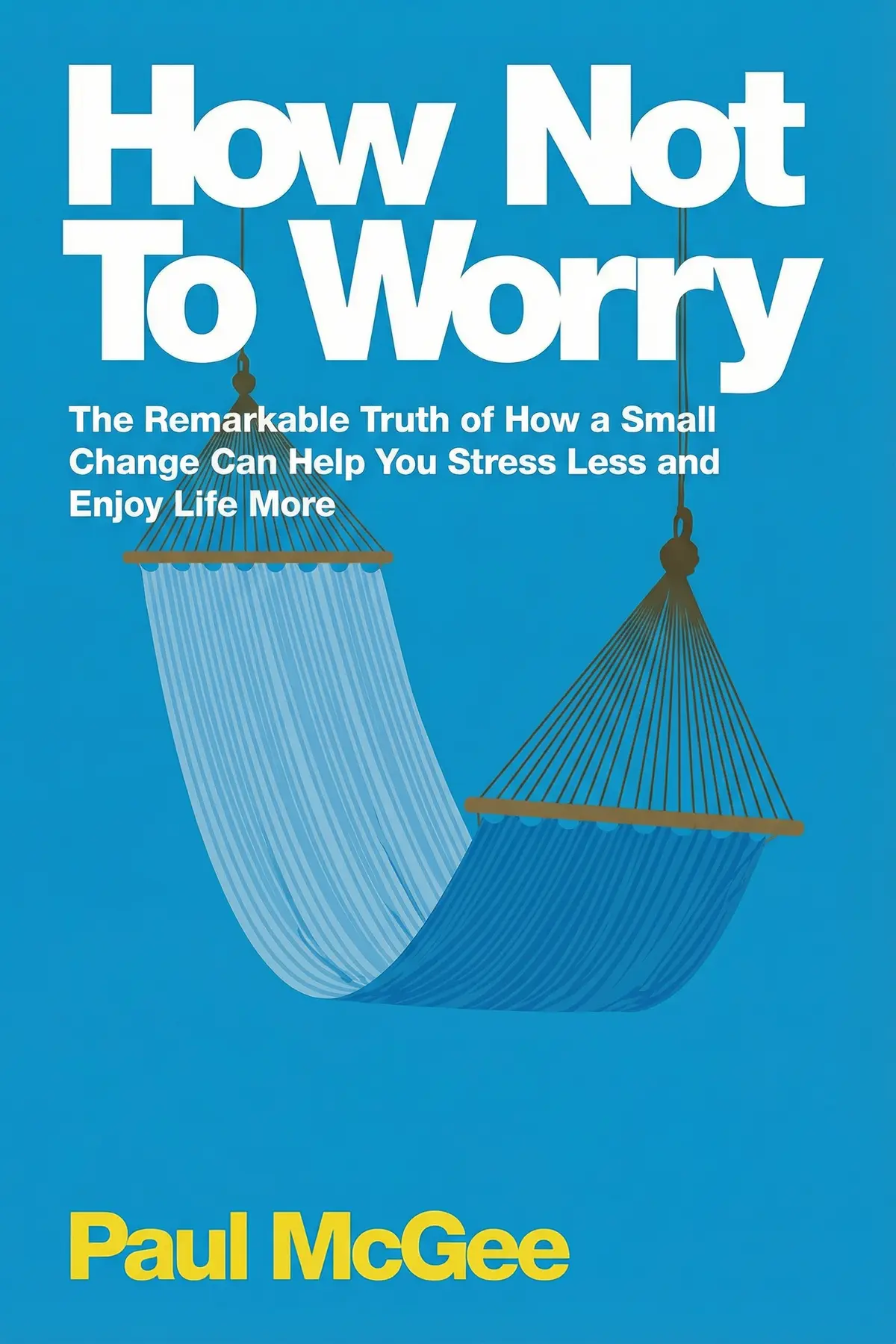
Table of Content
1. Introduction
1 min 00 sec
If worry keeps you awake before a big presentation, Paul McGee’s message is that the problem is old wiring, not weakness, and old wiring can be managed. In How Not to Worry, the UK speaker and life coach explains that brain systems built to spot saber-toothed tigers react to a board meeting in much the same way. They set off a loop of worry, anxiety and stress that harms both health and judgment.
His way out is a sequence of small, logical steps. Become aware of where a worry comes from. Analyze what kind of worry it is. Then act on the parts you can actually influence. Each step hands control back to the rational part of the brain.
Along the way come a barking dog behind a hedge, a night spent salting leaves, and a shy client who gave her presentation as Madonna. What you get is a simple routine for sorting tonight’s worries into those to drop, those to talk through and those to act on.
2. Catch the worry loop before it spirals
1 min 54 sec
A barking dog behind a hedge sent a holidaying couple into full alarm. What actually happened reveals how a single anxious thought can feed itself until it reaches your body, your sleep and your judgment.
3. Understand why your brain treats meetings like tigers
1 min 46 sec
Two friends spent hours in a dark garden fighting an invasion that turned out to be imaginary. Their mistake shows which part of the brain was in charge, and which part should have been.
4. Name where each worry comes from
1 min 31 sec
A child bitten by a dog, a parent’s constant warnings, a racing driver sitting helpless in the pit lane. Each points to a hidden source of worry, and knowing yours changes how you meet it.
5. Sort out the worries that deserve your time
1 min 45 sec
Some worries are echoes, some are fantasies and some are genuinely useful. Treating them all the same is exhausting, and a simple three-way sort tells you which to talk through, which to fact-check and which to keep.
6. Put your effort where you have influence
1 min 44 sec
When one company announced it was closing, its staff split into two groups with very different futures. What separated them was less their skills than one belief about their own power.
7. Make your imagination calm you down
1 min 34 sec
The same mind that can picture a disastrous speech in vivid detail can also borrow a pop star’s confidence. One of McGee’s clients tried it before a presentation she dreaded.
8. Drop the inner critic and ask for help
1 min 40 sec
Worriers often treat themselves in ways they would never accept from anyone else. Three everyday habits keep anxiety fed, and one of them shows up every time you try on a shirt.
9. Conclusion
1 min 10 sec
McGee’s case is reassuring because it takes the blame off the worrier. The brain that frets over a board meeting is the same one that once kept people alive near predators, and it still cannot tell the two apart. What it can learn is to hand the decision to its rational part, step by small step. Remember the barking dog behind the hedge: most of its menace was a picture McGee had drawn in his own head.
The practice is modest. When a worry takes hold at night, catch it before it spirals and ask where it comes from: the present, the future or the past. Decide whether it is historical, hysterical or helpful. Talk the historical ones through with someone, check the numbers on the hysterical ones, and score the helpful ones from zero to ten, starting work on the highest. McGee also recommends exercise, whether a gym session or a long walk, since it improves circulation and releases endorphins, leaving you calmer and readier to tackle a problem than to stew over it.
Many worries, it turns out, are leaves that look like slugs in the dark. Wait for the light, then look.
About this book
What is this book about?
Worry ruins sleep, wears down health and rarely solves anything, yet most people cannot simply switch it off. Paul McGee, a UK speaker and life coach with a background in psychology, argues that the reason lies in old wiring. The parts of the brain that kept our ancestors alive among predators still treat a board meeting or an exam as a threat, and they set off a loop of worry, anxiety and stress that feeds itself. His answer is a set of small, logical steps that hand control back to the rational brain. First, become aware of where a worry comes from and whether it belongs to the past, the present or the future. Next, analyze it as historical, hysterical or helpful, so you know whether to talk it through, check the facts or act. Finally, score how much influence you have and put your energy where it counts. Along the way McGee shows how to use imagination to calm nerves instead of feeding them, why self-criticism and people-pleasing make worry worse, and why asking for help is a strength. Readers get a plain routine they can use the next time a worry keeps them awake.
Book Information
Who it's for
Professionals losing sleep
Professionals who lie awake before presentations, reviews or interviews.
Students and young workers
Students and young employees whose worries about money and success crowd out clear thinking.
Self-critics and people-pleasers
People-pleasers and self-critics who want a simple routine for sorting worries and acting on what they control.
About the Author
Paul McGee
Paul McGee is a UK speaker and author who draws on a background in psychology to give people practical ideas for both work and personal life. His book SUMO (Shut Up, Move On) became an immediate best seller, and his book on self confidence reached the top of the WHSmith business book chart. He has appeared on BBC Breakfast television and has spoken to more than 1,000 organizations.
Ratings & Reviews
Ratings at a glance
What people think
Listeners find that this guide offers a functional strategy for navigating anxiety, although some listeners believe the suggestions can feel redundant or offer few fresh perspectives for those well-versed in the genre. Many enjoy the writer's accessible tone and witty delivery, including one listener who mentioned they were "laughing out loud" at the familiar stories. Furthermore, listeners appreciate the "Hammock Time" reflection sections and journaling prompts that foster active involvement with the content. They also highlight the usefulness of the author’s systems for sorting anxieties, as they bring greater clarity and insight into individual stress triggers.
Top reviews
Rungtip
Paul McGee's dry, sarcastic wit makes a heavy topic like anxiety feel surprisingly manageable and even a little bit funny. I found myself laughing out loud at his anecdotes, which is rare for a self-help book! The way he breaks down 'residual worry' from past traumas really clicked for me in a way other books haven't. It’s refreshing to read something that doesn't promise a magical cure but instead gives you a practical roadmap to handle the messy reality of life. The 'Hammock Time' reflections are a brilliant touch for anyone who usually just skims through advice without actually applying it. Truly a major pat on the back for the stressed-out reader.
Show moreErn
This book provides the kind of clarity that's hard to find in the messy world of overthinking. I loved the idea of having a 'council of advisors' to help gain perspective on a situation; it's a simple mental trick but it really works for gaining influence over your own mind. McGee's writing style is incredibly easy to digest, which is perfect when your brain is already feeling overwhelmed by worry. Not gonna lie, I was skeptical about another 'how to' book, but the focus on taking action and influencing outcomes really resonated with me. It’s an empowering read that shifts the focus from being a victim of your thoughts to being the manager of them.
Show morePacharapol
Wow, I didn't expect to see myself so clearly in these pages. McGee perfectly captures that constant low-level anxiety that comes from trying to please everyone and hide your flaws. The chapter on not letting your self-worth be dictated by others was a major wake-up call for me. I’ve read a lot on this topic, but the humor and the specific 'Hammock Time' exercises made this one stick. It’s practical, it’s funny, and it’s deeply humane. If you’re an inveterate worrier like me, do yourself a favor and pick this up. It focuses on how worrying makes us human while giving us the tools to not let it run our lives.
Show moreGiulia
Categorizing my anxieties into situational or anticipatory buckets was a total game-changer for me. Before reading this, everything just felt like one big cloud of dread, but McGee’s framework helped me identify which triggers were actually within my influence. The book is packed with practical steps, especially the advice on writing worries down to gain clarity. Gotta say, the dry British humor kept me engaged when the subject matter started to feel heavy. It isn't perfect, and some sections definitely drag on longer than they need to, but the actionable advice on progress over perfection makes it well worth the time. It really helps you analyze why you're anxious.
Show moreBig
Picked this up during a particularly stressful month at work, and it really helped ground me. McGee has this way of writing that makes you feel less like a 'hopeless case' and more like a normal human being dealing with normal human problems. The 'Hammock Time' sections at the end of the chapters were great for active engagement; I actually used my journal for once! While some of the advice is definitely stuff you've heard before, the way it's packaged makes it feel more accessible and less like a chore. It’s a practical roadmap that focuses on outcomes rather than just wallowing in the 'why' of it all. Highly recommended for chronic over-analyzers.
Show moreRoongsak
Finally got around to finishing this, and the prompts for reflection were what kept me going through the middle slump. As someone who struggles with perfectionism, the reminder to measure progress from where I started—rather than the distance to the finish line—was exactly what I needed to hear. The author uses a lot of personal stories about his daughter and his own life, which makes the advice feel much more relatable and less academic. Look, it’s not a medical text, but for day-to-day stress management, it’s a very solid guide. I’ve already recommended it to a friend who overanalyzes everything to the point of paralysis.
Show moreWissanu
The structure of this book is actually its strongest point, providing a decent roadmap for those feeling lost in their own heads. I appreciated the way McGee categorizes worries into situational, anticipatory, and residual buckets because it forced me to be honest about where my stress was actually coming from. Personally, I found the 'Hammock Time' reflection questions helpful for slowing down, though I had to skip some of the sillier examples that felt a bit too elementary. It’s a solid entry-level guide. It won’t solve your life’s deepest traumas, but it might give you a slightly better perspective on the small stuff. Just don't expect a revolutionary scientific breakthrough.
Show moreSavannah
Not what I expected from a top-tier self-help book, but it wasn't a total waste either. The conversational tone is hit or miss; sometimes it feels like chatting with a wise friend, and other times it feels a bit condescending. I did get a few good journaling prompts out of it, and the concept of 'false evidence appearing real' is a useful acronym to keep in the back of my mind. However, the author’s sarcasm occasionally masks a lack of depth in the actual solutions provided. It's a light, breezy read that serves as a gentle pat on the back rather than a rigorous psychological tool for those with severe anxiety.
Show moreMichael
Look, I really wanted to like this book given how much I struggle with overthinking. While the conversational writing style makes it an easy afternoon read, the advice felt incredibly repetitive after the first fifty pages. To be fair, some of the personal anecdotes are amusing, but the central thesis of 'stop worrying and start thinking' feels like a gross simplification of clinical anxiety. If you’ve never read a single self-help book in your life, you might find some value here. However, for anyone already familiar with basic cognitive reframing, there is very little new ground broken. It’s a bit like being told to 'just breathe' by someone who doesn't understand why you're gasping for air in the first place.
Show moreManop
After hearing several people recommend Paul McGee, I expected more than just a collection of common-sense platitudes. The truth is, the book relies heavily on a few central phrases that get repeated until they lose all meaning. I appreciated the dry humor, and I didn't mind the reflection sections, but the core message is essentially just 'don't focus on what you can't control.' Frankly, that's easier said than done. It felt more like a transcript of a motivational speech than a deep dive into psychological triggers. It might work for some, but I found myself skimming most of the later chapters because the message hadn't evolved since the introduction.
Show moreQuestions about this book
What is the main idea of How Not to Worry by Paul McGee?
McGee argues that worry, anxiety and stress form a loop driven by primitive and emotional brain systems that cannot tell a real threat, like a predator, from an everyday one, like a board meeting. The way out is to bring in the rational brain through three steps: become aware of where a worry comes from, analyze what kind of worry it is, and act on the outcomes you can influence.
What are historical, hysterical and helpful worries?
Historical worries echo past experiences, such as feeling uneasy on dark streets after being mugged; McGee suggests seeking emotional support and moving on. Hysterical worries are irrational fears, like shark attacks, best handled by checking the statistics and questioning your track record of predictions. Helpful worries concern real problems ahead, such as a performance review, and those are the ones to act on.
How do I stop worrying about things I can't control?
McGee, drawing on Stephen R. Covey, suggests scoring each helpful worry from zero to ten by how much influence you have over its outcome. Rank them and spend your time on the highest scores. A terrorist attack is beyond your control, but a work presentation responds to preparation. He adds that people who feel they hold greater influence over a situation tend to act on it more readily.
How can imagination reduce anxiety according to Paul McGee?
Because the primitive brain reacts to imagined scenes as if they were real, imagination can calm you as well as scare you. McGee’s client Anna overcame her fear of public speaking by imagining herself as Madonna during a presentation. He also suggests picturing four advisors for areas like work, health and relationships, and asking what they would say about your problem.
Who should read How Not to Worry?
It suits anyone who loses sleep over upcoming events, money or the future and wants a practical method instead of general reassurance. It is especially useful for people who worry about presentations and reviews, who criticize themselves harshly, who try to please everyone, or who find it hard to ask for help. Its steps are short and can be applied to a single worry tonight.
Readers also enjoyed





A Guide to the Good Life: The Ancient Art of Stoic Joy
William B. Irvine




A High-Performing Mind: Strengthen Your Mind and Live Your Best Life
Andrew D. Thompson
AUDIO SUMMARY AVAILABLE
Listen to How Not to Worry in 15 minutes
Get the key ideas from How Not to Worry by Paul McGee, plus 5,000+ more nonfiction titles.
- 5,000+ titles
- Listen as much as you want
- 7-day free trial
- Cancel anytime









