

A River in Darkness: One Man’s Escape from North Korea
Masaji Ishikawa
 English
 ไทย
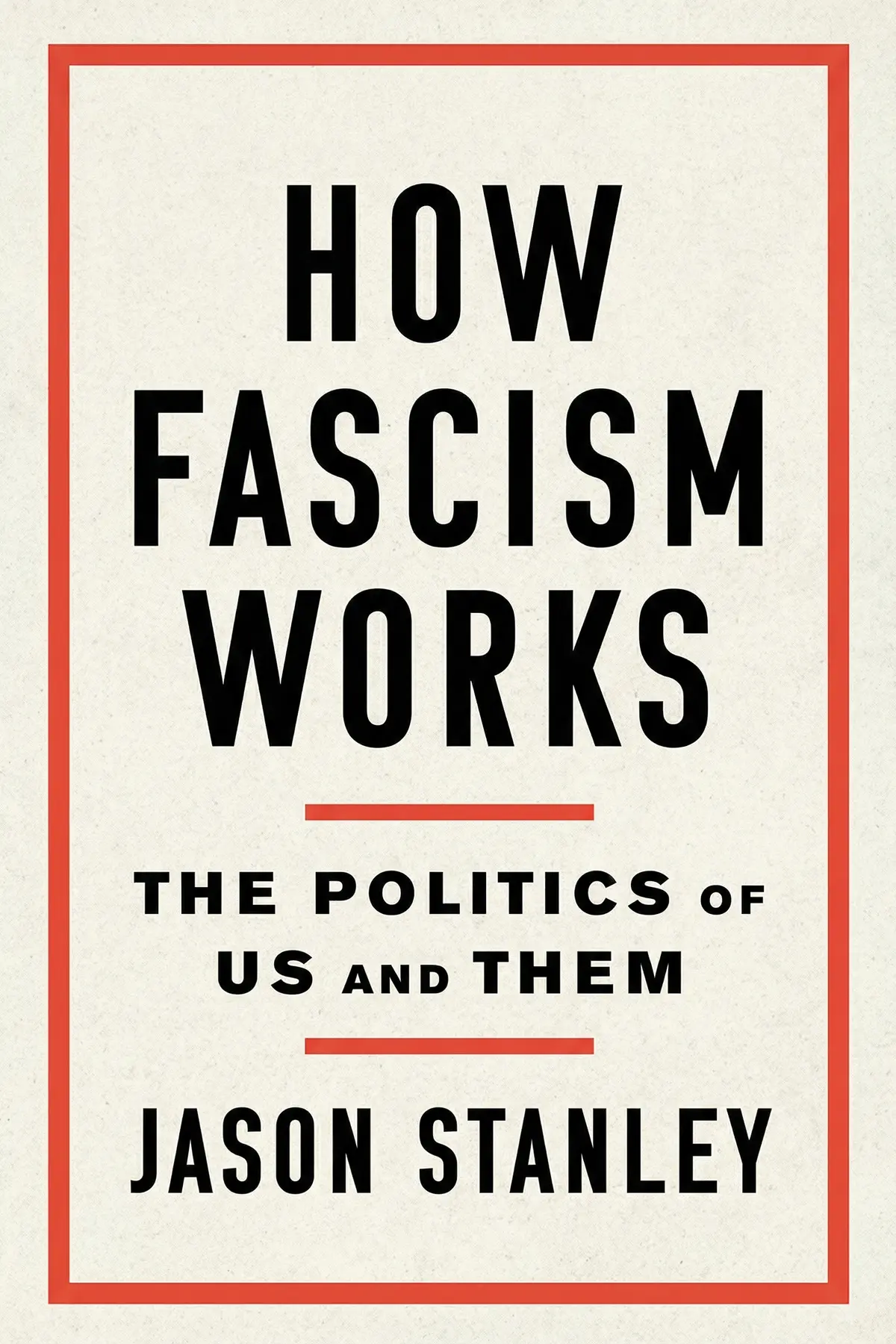
Explains how fascist politics advances in stages, from nostalgia for an invented golden age to attacks on truth and solidarity. It also shows which signs to watch for so you can name these tactics early.
1 min 07 sec
Many people sense that politics around them is sliding somewhere dark, yet they struggle to say exactly what is happening or why. In How Fascism Works, philosopher Jason Stanley offers a way to name it. Fascist politics, he argues, follows a recognizable sequence, and it always begins by splitting a nation into us and them.
A glorious invented past comes first, then an enemy who supposedly stole it. From there the sequence moves to an assault on shared truth, a manufactured sense of grievance and, finally, the wearing away of everything that lets different people stand together. Stanley writes openly from a liberal perspective, and he reads the present through fascisms of the past, from Mussolini’s Italy to Nazi Germany. His throughline is stark: deliberately deepening social divisions leads toward the collapse of solidarity itself. Each stage below comes with the signs that reveal it, so the next speech, slogan or headline that reaches you can be checked against the pattern.
2 min 13 sec
A leader promising to bring back better days sounds harmless, even comforting. Stanley shows how that one nostalgic story carries a picture of the leader as father and a line around who truly belongs.
2 min 17 sec
A forged document from 1903 fed widespread antisemitism in the early 20th century, even though not everyone took it literally. Its real power reveals what modern misinformation is often designed to do.
2 min 02 sec
Calls for equal treatment can be retold as an attack on the people who already hold power. A presidential veto from 1866 shows how old this reversal is, and how much anger it can produce.
1 min 56 sec
Few emotions move people faster than the urge to protect children. Stanley traces how that urge has been turned against outsiders, and then against democracy itself.
2 min 11 sec
Voters in one American state were sure their taxes were paying for the cities. The official numbers told a different story, and the gap between the two reveals what the heartland myth is really for.
2 min 08 sec
The worst outcomes of this politics never arrive all at once. Stanley follows the small steps in between, from who gets help after a disaster to the laws that weaken unions.
1 min 17 sec
Stanley’s book is finally an argument about solidarity. Each stage he traces, from the dream of a golden age to the slogan over a camp gate, works by teaching people that some of their neighbors are not really part of the nation. The nostalgia, the doubt, the grievance and the heartland myth are different tools for the same job: making it easier to stop caring what happens to them. What looks like strength is, in his telling, a society coming apart.
That gives the listener something practical. When a speech promises a return to better days, look for who has been written out of them. When a debate shrinks to a chant, or a single crime label covers a whole community, slow down and ask what the words are hiding. And when a story about who pays for whom shows up, check the figures, the way the real numbers in Minnesota overturned a story many voters believed.
None of this requires agreeing with every view in the book. It requires noticing the pattern early, while what is unacceptable still feels unacceptable. Stanley’s warning is that the baseline moves one small step at a time, and the moment to name a step is before it starts to feel normal.
Many people feel that politics is shifting under their feet but cannot say exactly what is changing or where it leads. Philosopher Jason Stanley offers a framework for naming it. Writing from an openly liberal perspective, he argues that fascist politics follows a recognizable pattern, and that the pattern always begins by dividing a nation into us and them. Stanley traces the stages through examples from past and present. Mussolini sold Italy a return to Roman glory, and the forged Protocols of the Elders of Zion spread doubt that fed Nazi ideology. After the Civil War, Andrew Johnson used the language of equal rights to veto civil rights protections. A myth about rural taxpayers took hold in Minnesota in 2014 even though the numbers showed the opposite. Throughout, he shows how a golden-age story, attacks on universities and experts, moral panics and the myth of a pure heartland wear down unions, safety nets and other ties that join different people together. The book gives readers a vocabulary for what they are seeing, and a set of warning signs to check speeches, slogans and headlines against before the unthinkable starts to feel normal.
Readers uneasy about today's politics who want clear words for what they are seeing.
Students of history, philosophy or political science looking for a short map of how fascism has worked.
Citizens, organizers and teachers who want warning signs they can spot in speeches and headlines.
Jason Stanley is an American philosopher, born in 1969, known for his work in the philosophy of language and epistemology. He taught at Yale University from 2013 to 2025, after posts at Rutgers, the University of Michigan and Cornell, and in 2025 joined the Munk School of Global Affairs and Public Policy at the University of Toronto. His earlier book How Propaganda Works applied those tools to politics and won a PROSE Award. He has written for The New York Times, The Washington Post and The Guardian.
Listeners find the work does a superb job of explaining how fascism works, utilizing clear and concise writing that makes it an essential listen for Americans. The historical content earns high praise, with one listener highlighting how the author masterfully integrates a wide historical swath of material. Its readability and argument accuracy are well-regarded, as one listener mentions it triggers numerous "ahhh-haa-of-course" moments. The caliber of the writing is also lauded, with one listener describing the work as a masterpiece of concise, insightful prose. Reactions to the book's intensity and political leaning are varied; some find it terrifying, while others criticize the author's strong political stance.
Jason Stanley has produced a masterpiece of political philosophy that feels incredibly accessible for the average reader. The way he weaves together historical precedents from Nazi Germany with modern events in countries like Hungary and the US is nothing short of brilliant. I found myself having constant moments of clarity as he explained how the "mythic past" is weaponized to create division. The prose is concise and sharp, avoiding the dense jargon often found in academic texts. It is a terrifying read, certainly, but one that feels absolutely necessary for anyone concerned about the current state of global democracy. This book is a call to action against the normalization of rhetoric that dehumanizes our neighbors.
Show moreAfter hearing several interviews with Stanley, I finally picked up the book and found it even more relevant than I imagined. He masterfully integrates a wide historical swath of material, showing that fascist tactics aren't just a relic of the 1930s but a recurring virus. The chapter on victimhood was a major "aha" moment for me; it explains how dominant groups can be convinced they are being oppressed when they are actually just being asked to share power. It’s a slim volume, but it packs a heavy emotional punch because it forces you to look at the normalization of extremism in your own backyard. Frankly, it should be required reading for every voter before the next election cycle begins.
Show moreThe chapter on the dismantling of public welfare and unity was particularly striking to me because it connects economics to identity in a way I hadn't considered. Stanley argues that destroying the social safety net is a key step in creating the divisions necessary for fascist politics to take root. This book is a superb job of explaining how the "othering" process works in real-time. It’s one of those rare books that makes you see the world differently as soon as you put it down. The writing is clear, the arguments are logical, and the historical context is integrated masterfully throughout. It’s definitely a scary read, but ignoring these patterns is a much more frightening prospect for our future.
Show moreTruth is, this book acts as a mirror for our current democratic crisis and what it reveals is deeply unsettling. Stanley does not pull any punches when describing how fascist politics dehumanizes segments of the population to limit empathy among the majority. I found the section on "sexual anxiety" and the patriarchal hierarchy to be an eye-opening addition to the usual discussions about ultranationalism. The author’s personal connection to the subject, as the son of refugees from Nazi Germany, adds a layer of urgency to the text that you don't always get in academic writing. This is a masterpiece of concise, insightful prose that everyone should spend a few hours with to understand the stakes of our current moment.
Show moreThis is an essential guide for anyone trying to navigate the confusing and often aggressive rhetoric of the modern political era. Stanley identifies ten specific strategies, such as anti-intellectualism and sexual anxiety, that authoritarian leaders use to dismantle democratic norms. To be fair, the book is much stronger on identifying these patterns than it is on explaining the underlying economic reasons why they become popular in the first place. I would have appreciated a deeper dive into the role of late-stage capitalism in fueling this resentment. However, as a manual for recognizing the "us versus them" tactics currently flooding our news cycles, it is undeniably superb and very easy to get through in a few sittings.
Show moreGotta say, the prose here is remarkably concise and avoids the usual fluff you get in political science books. Stanley breaks down complex social psychological evidence into a framework that anyone can understand without needing a PhD. I particularly liked how he addressed the concept of "law and order" being used as a tool for hierarchy rather than actual justice. My only real complaint is that it felt a little repetitive by the end, as if the same points were being hammered home across different chapters. Still, the core message about the dangers of complacency is vital. It’s a quick read that provides a lot of intellectual ammunition for understanding the world right now.
Show moreIn my experience, books on political theory tend to be dry, but this was a page-turner that I finished in two days. Stanley’s focus on the "mythic past" explains so much of the current nostalgia-based politics we see globally today. He shows how leaders invent a pure, fictional history to justify excluding anyone who doesn't fit their narrow definition of the nation. While I think he occasionally ignores legitimate grievances of the working class in favor of focusing on rhetoric, his analysis of how propaganda functions is incredibly sharp. It’s an important read for Americans who think "it can't happen here." The warnings about the erosion of the rule of law are particularly timely and well-argued.
Show moreEver wonder why certain political patterns keep repeating across different countries like Hungary, India, and the US? This book provides the blueprint for those tactics, explaining that fascism is a method of achieving power rather than just a specific government structure. Stanley is at his best when he describes how anti-intellectualism is used to discredit universities and the press to create a vacuum for a single leader’s truth. To be fair, the book is quite short and I wanted more on how to actually resist these movements. However, as a diagnostic tool, it’s incredibly effective. It’s clear, concise, and provides enough historical context to make the modern comparisons feel grounded and serious.
Show moreWhile the author's passion is undeniable, the book often feels like it is trying to fit every modern policy he dislikes into a single fascist box. Look, there are definitely parallels to be drawn, but some of the comparisons felt a bit stretched and lacked the historical nuance I was expecting from a Yale professor. The truth is that the book functions better as a long-form op-ed than a rigorous scholarly work. That said, the sections on the erosion of truth and the creation of "unreality" are chillingly accurate to our current situation. It’s worth reading to understand the terminology being used today, even if you find the author’s personal political bias a bit distracting at times.
Show morePicked this up hoping for a rigorous historical analysis but found instead a very contemporary polemic centered mostly on the Trump era. Personally, I think the book would have been more effective if it spent more time on the 20th-century movements it frequently references as a baseline. The breadth of the ten strategies is commendable, but the depth is lacking in areas where I wanted more granular detail on the rise of Orban or Erdogan. It feels like a book written in a hurry to meet a specific political moment. It’s not a bad book by any means, and many of the observations about propaganda are spot on, but it didn't quite live up to the massive hype for me.
Show moreStanley argues that fascist politics follows a recognizable sequence built on dividing a nation into us and them. It begins with a myth of a glorious past and a natural enemy, then attacks universities, experts and shared truth, stirs up grievance and moral panic, glorifies a pure heartland, and wears down unions and safety nets. Each stage makes once-unthinkable measures feel normal.
Unreality is Stanley’s term for a political climate shaped by misinformation and conspiracy theories. Its goal is not always to make people believe falsehoods but to spread doubt so nobody knows what or whom to trust. His example is the forged Protocols of the Elders of Zion from 1903, which fueled antisemitism and Nazi ideology even among people who did not take it literally.
He argues that fascist movements cast cities as corrupt and the heartland as pure, giving left-behind communities a simple villain for complex problems. Nazi propaganda praised farmers and Hitler attacked Vienna. In Minnesota in 2014, candidates claimed cities drained rural tax money, yet the state’s cities actually paid in more than they received, and rural areas got more spending per person.
Stanley’s main advice is to name these tactics when they appear. Ask who is left out of any promised return to better days. Notice when a complex debate shrinks to slogans, or when a crime label is stretched over a whole group. Check claims about who pays for whom against real figures, and value institutions such as unions that bring different people together.
Masaji Ishikawa

John Rawls



Miles Taylor



Tracy Rosenthal

Jessica Valenti

Yanis Varoufakis
AUDIO SUMMARY AVAILABLE
Get the key ideas from How Fascism Works by Jason Stanley, plus 5,000+ more nonfiction titles.









