

14 min 03 sec
Available in: English
How Am I Doing?: 40 Conversations to Have with Yourself
By Corey Yeager
A therapist's guide to talking with yourself on purpose. Short, honest questions help you stop feeling guilty about self-care, find the feeling under your anger, learn from mistakes and go into important moments with a clear intention.
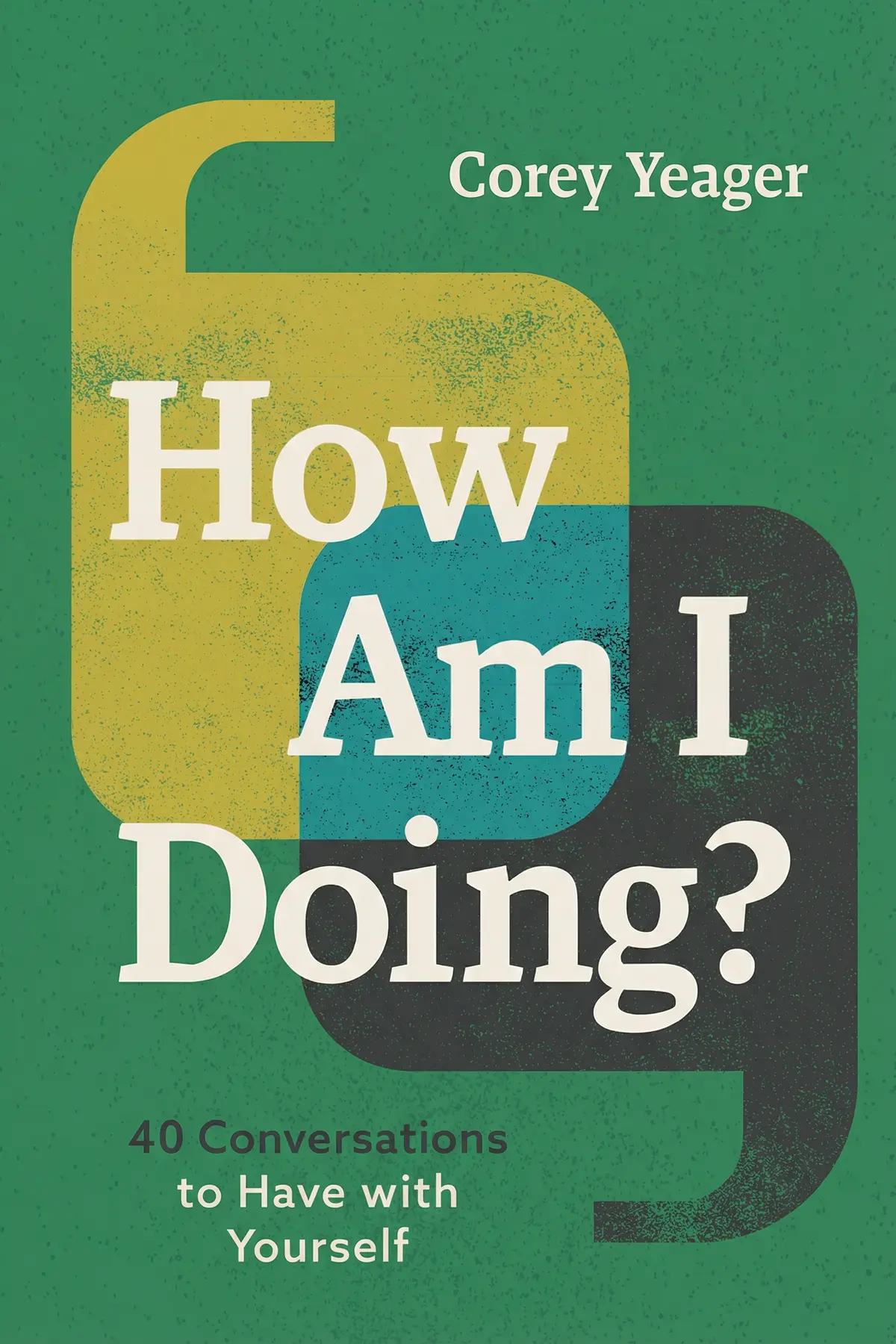
Table of Content
1. Introduction
1 min 02 sec
Most of us check in on our friends far more often than on ourselves. That gap shows up as foggy decisions, stalled dreams and moods we cannot explain. In How Am I Doing?, therapist Corey Yeager, who once served as team therapist and life coach for the Detroit Pistons, argues that speaking with yourself does you as much good as confiding in a friend or a therapist. Those inner conversations, he says, are a safe place to find out who you really are.
The book offers 40 questions to ask yourself, and we look at eight of them here. The throughline is simple. Honest questions put to yourself, whether in a mirror, a journal or a quiet moment, give you the clarity to put yourself first, read your real feelings, learn from what went wrong and act with intention. Along the way you pick up small tools you can use at once: a weekly log, a mirror conversation, an anger journal, a letter to your past self and a 23-second pause.
2. Put yourself first without the guilt
1 min 21 sec
Ask people who matters most and they name a parent, a partner or a mentor. A therapist says that answer is wrong, and his reason has more to do with the people you love than with you.
3. Turn a wild dream into this week's tasks
1 min 33 sec
Almost everyone carries a dream they never say out loud because it sounds too strange. Yeager thinks most of them can be reached, but only after one test that many dreamers skip.
4. Let your reflection settle hard choices
1 min 21 sec
Most people avoid mirrors, afraid of blemishes or of looking vain. Yeager sees the mirror as a decision tool instead, and he shows how one look in it can settle a painful clash between work and family.
5. Admitting a weakness costs less than hiding it
1 min 31 sec
Covering up a flaw feels safer than confessing it. Yeager’s story of a nervous cook and a Michelin-star partner shows how much hidden effort that cover can cost, and who you shut out by keeping it.
6. Find the feeling hiding under your anger
1 min 31 sec
A cancelled dinner date can ruin an entire workday, and it seems obvious what the feeling is. Yeager suspects most anger is a cover for something else, and he offers a way to find out what.
7. Use your past as a teacher, not a wound
1 min 33 sec
Given a time machine, almost everyone knows which moment they would rewrite. Yeager accepts that the past is fixed, yet he insists one part of it can still change, starting with a letter you write yourself.
8. Learn from a mistake in four honest steps
1 min 37 sec
Owning the error, apologizing and promising to do better feels like the full repair. Yeager calls it only the surface, and explains why the same mistake keeps coming back for people who stop there.
9. Use twenty-three seconds to set your intention
1 min 22 sec
Most people waste the short gaps before big moments by watching the clock or scrolling. Yeager argues that less than half a minute is enough to change how the next hour goes.
10. Conclusion
1 min 12 sec
Yeager’s 40 questions add up to a habit, not a set of answers. Each one asks you to stop, turn toward yourself and tell the truth about who matters, what you want, what you are hiding, what you really feel and what the past actually gave you. Someone who does this regularly decides from clarity. Guilt, anger and regret lose their grip on the choice.
You can start small. Keep the weekly log of when you put yourself first and when you did not. The next time irritation rises, pause and look for the disappointment or sadness beneath it, and write the moment down if it truly is anger. Before the next moment that matters, give it 23 seconds and an intention. When you need a straight answer, ask the person in the mirror.
The book closes on advice that sounds light: laugh more. Laughter lifts your mood, and the book adds that it helps the immune system and lowers stress.
The question in the title is one you can ask yourself on any day. What changes things is answering it honestly.
About this book
What is this book about?
Most people talk to themselves and feel a little odd about it. Therapist Corey Yeager argues that this inner voice is as healthy as a talk with a friend or a counselor. Used well, it is a safe place to work out who you are and what you want. How Am I Doing? is built around 40 questions to ask yourself. They cover who matters most in your life, which dreams are worth chasing, what you are hiding, what your anger is covering and what your past has actually given you. The questions covered here come with simple practices: a weekly log of when you put yourself first, a conversation with your reflection, a journal of angry moments, a letter to your past self, four steps for learning from a mistake and a 23-second pause before the moments that count. Readers get a set of small, repeatable habits for self-awareness. These tools help you decide more clearly, handle hard feelings and stop carrying regret into the future.
Book Information
Who it's for
Always putting others first
People who put everyone else first and feel guilty taking time for themselves.
Professionals under pressure
Professionals who snap under pressure or keep repeating the same mistakes and want a simple way to see why.
Stuck on old regrets
Anyone stuck on an old regret or a dream they have never dared to plan.
About the Author
Corey Yeager
Dr. Corey Yeager is a licensed marriage and family therapist with a PhD from the University of Minnesota, where his research focused on African American relationships. He served as team therapist and life coach for the Detroit Pistons and appeared as an expert in the documentary series The Me You Can't See. Earlier he directed educational equity for the Office of Black Male Student Achievement in the Minneapolis Public Schools and worked as a therapist at the Hennepin County Juvenile Detention Center.
Ratings & Reviews
Ratings at a glance

What people think
Listeners find the book very approachable and value the inclusion of stimulating exercises alongside practical, grounded suggestions.
Top reviews
Nathan
Dr. Yeager has such a calming presence that even through the written word, you feel like you’re sitting in a room with a trusted coach. I opted for the audiobook version which he narrates himself, and his voice adds an authentic layer of intimacy that makes the 40 questions feel like a real dialogue. Look, the question about who is the most important person in your life really hit home for me—I’m so used to putting everyone else first that answering 'I am' felt almost transgressive. The way he blends sports analogies with deep psychological work makes the concepts easy to digest without feeling like he's talking down to the reader. It is an excellent resource for anyone in the Black community looking for a relatable perspective on mental health. I’ve already bought two extra copies to give as gifts to my brothers this year.
Show morePhimwan
Wow, the exercise about finding your locus of control hit me right when I needed it most. I’ve been feeling so overwhelmed by things outside of my influence lately, and Dr. Yeager’s 40 conversations helped me narrow my focus back to what I can actually change. The book feels less like a textbook and more like a series of gentle nudges toward a better version of yourself. I especially loved the focus on the 'backstage' of the mind; it really helped me understand why I react to certain stressors the way I do. Gotta say, the layout of the book is beautiful and makes the process of self-reflection feel less like a chore and more like a gift to yourself. If you are struggling with your internal dialogue, please pick this up. It’s a fast read but the impact lingers long after you finish the last page.
Show moreAnawin
This book is a solid entry point for anyone who feels intimidated by the high-brow language often found in the psychology section. Dr. Yeager uses his background with the Detroit Pistons to ground his advice in a way that feels incredibly approachable and down-to-earth. The structure is built around forty specific questions that serve as a roadmap for self-discovery, which I found much more helpful than a vague narrative. While some of the prompts felt a bit like common sense to me, the 'Tell Your Story' activities forced me to actually sit down and confront my own habits. To be fair, it’s a quick read, but the real value comes from how much time you’re willing to spend with the reflection exercises. It’s the kind of guide I wish I’d had when I was graduating college and felt completely lost about who I was supposed to be.
Show moreAom
Ever wonder if you’re actually as self-aware as you think you are? This book definitely challenges that assumption. The chapter on what makes you feel 'alive' was particularly poignant for me because it asked me to look at my physical reactions—like my heart rate and energy spikes—rather than just my thoughts. Dr. Yeager’s writing style is punchy and direct, which I appreciated during my morning commute. Not gonna lie, I skipped a few of the journaling prompts because I’m just not the type to write things down, but even just thinking about the answers provided a lot of clarity. The book is short, but the questions are weighty enough that you shouldn't rush through it in one sitting. It's a wonderful tool for anyone entering a major life transition or just feeling stuck in their current routine.
Show moreKae
As a guy who usually finds self-help books a bit too 'fluffy' or abstract, I appreciated the directness and the sports-world context Dr. Yeager brings to the table. He speaks a language that feels familiar, using the frame of being 'coachable' to talk about mental health and personal growth. The chapters are quite short, which makes it perfect for someone with a busy schedule or a short attention span. Personally, I found the section on 'untruths you tell yourself' to be the most challenging and rewarding part of the whole experience. It’s not necessarily reinventing the wheel when it comes to psychology, but it presents the information in a way that feels very fresh and relevant for today. This is a great resource for men who might otherwise avoid the 'therapy' label but still want to do the work.
Show moreAstrid
Finally got around to reading this during a particularly messy transition at work, and the timing couldn't have been better. Dr. Corey Yeager has a way of stripping away the jargon to get to the root of human behavior. The book is essentially a collection of forty prompts that act as a mirror, showing you parts of yourself you might have been ignoring or hiding 'backstage.' While I felt that some of his personal stories were a little disconnected from my own reality as a woman, the core messages about awareness and intentionality are universal. It’s a very accessible book that doesn't demand you have a PhD to understand how your brain works. It’s a worthwhile investment for your mental health, especially if you’re looking for a low-pressure way to start your own self-healing journey.
Show moreMax
Frankly, if you have already spent significant time in therapy or have a shelf full of self-help books, you might find this a bit repetitive. The 40 conversations are designed to be accessible, which is great for beginners, but I found myself skimming several chapters because the questions felt like things I had already explored years ago. I did appreciate the analogy about the 'front stage' versus the 'backstage' of our subconscious, as it provided a clear mental image of how our hidden thoughts drive our public actions. Truth is, the author’s personal anecdotes sometimes took up more space than the actual advice, which made the book feel more like a memoir-lite at times. It is a decent refresher, but don’t expect groundbreaking psychological theories if you’re already well-versed in the genre.
Show moreYulia
To be fair, the 'Tell Your Story' sections are a bit of a mixed bag depending on your personal background. Some of the activities, like the one about getting 'unstuck' by writing down ten choices, were incredibly practical and helped me regain a sense of control over a bad work situation. However, other questions felt a bit loaded, almost like there was a right or wrong answer the author wanted me to arrive at. The tone is very encouraging, which is nice, but it occasionally verges on being a little too 'positive vibes only' for my taste. It’s an easy, approachable read that would probably work well for someone who is skeptical about traditional therapy. I think it’s a 3.5-star book that does a good job of opening the door to self-reflection without being too overwhelming or academic.
Show moreYuwadee
Not what I expected, as it felt more like a guided journal than a deep psychological text, but it had its moments. The 40-question structure is a clever way to break down the massive, intimidating question of 'how am I doing?' into bite-sized pieces that are easier to handle. Some questions, like the ones about your mistakes and what healing you seek, are heavy and require a lot of emotional labor. Others felt a little bit like filler to get to that round number of forty. To be honest, I think the author’s voice is the strongest part of the book—he’s very likable and clearly cares about his clients. It’s a solid 3-star read for me, mostly because I wanted a bit more 'why' behind the questions and a little less 'how to' in the activities.
Show moreNitaya
I really wanted to like this, but I couldn't get past how much time was spent on the author's own life stories instead of the actual reflection work. It felt like I was listening to a very long motivational speech where the speaker keeps circling back to their own accomplishments. Some of the questions provided were way too open-ended, while others were simple 'yes or no' prompts that didn't really lead to a deeper understanding of my subconscious. In my experience, a workbook should focus primarily on the reader's journey, but here the balance felt off. I DNF’d around question fifteen because I wasn’t feeling engaged with the subjects anymore. It might be a good fit for a total novice, but for me, it just lacked the depth I was looking for in a self-reflection tool.
Show moreQuestions about this book
What is How Am I Doing? by Corey Yeager about?
Therapist Corey Yeager argues that holding a conversation with yourself does you as much good as confiding in a friend or a therapist. The book offers 40 questions to ask yourself, covering self-care, dreams, vulnerability, anger, regret, mistakes and intention. Several of these come with a simple practice, like a weekly log or a talk with your mirror, and the conversations are meant to bring clarity and confidence for better decisions.
What does Corey Yeager say about anger?
Yeager sees anger as usually a secondary emotion covering disappointment or sadness, because anger is easier to release. He suggests stopping whenever you feel agitated and asking what you really feel and why. When it truly is anger, write the situation in a journal. After enough entries, look for a common theme, which is likely the root cause you can then work to reduce.
How do you learn from a mistake according to How Am I Doing?
Yeager says apologizing and promising to do better only scratches the surface. He proposes four steps. Be honest about exactly what happened. Understand why it happened, looking back days or even months. Forgive yourself and ask forgiveness from anyone you hurt. Then feel grateful for the lesson. Looking at the root cause, he argues, is the right way to handle a mistake, since a promise to do better is no guarantee.
What is the 23 seconds idea in How Am I Doing?
Yeager argues that even 23 seconds is enough to set an intention, which means lining yourself up with your goals and values before acting. A speaker about to face 500 people can use those seconds to plan how to connect with the audience. Someone waiting for family to arrive can take a deep breath and settle their feelings so they are ready to engage.
Readers also enjoyed

59 Seconds: Change Your Life in Under a Minute
Richard Wiseman

ADHD an A-Z: Figuring It Out Step by Step
Leanne Maskell





AUDIO SUMMARY AVAILABLE
Listen to How Am I Doing? in 15 minutes
Get the key ideas from How Am I Doing? by Corey Yeager, plus 5,000+ more nonfiction titles.
- 5,000+ titles
- Listen as much as you want
- 7-day free trial
- Cancel anytime









