


14 min 10 sec
Available in: English
House of Huawei: The Secret History of China's Most Powerful Company
By Eva Dou
How a telephone-switch startup from Shenzhen became the world's top telecom vendor. It also explains how the drive and the state ties that built Huawei made it the center of the US-China tech standoff.
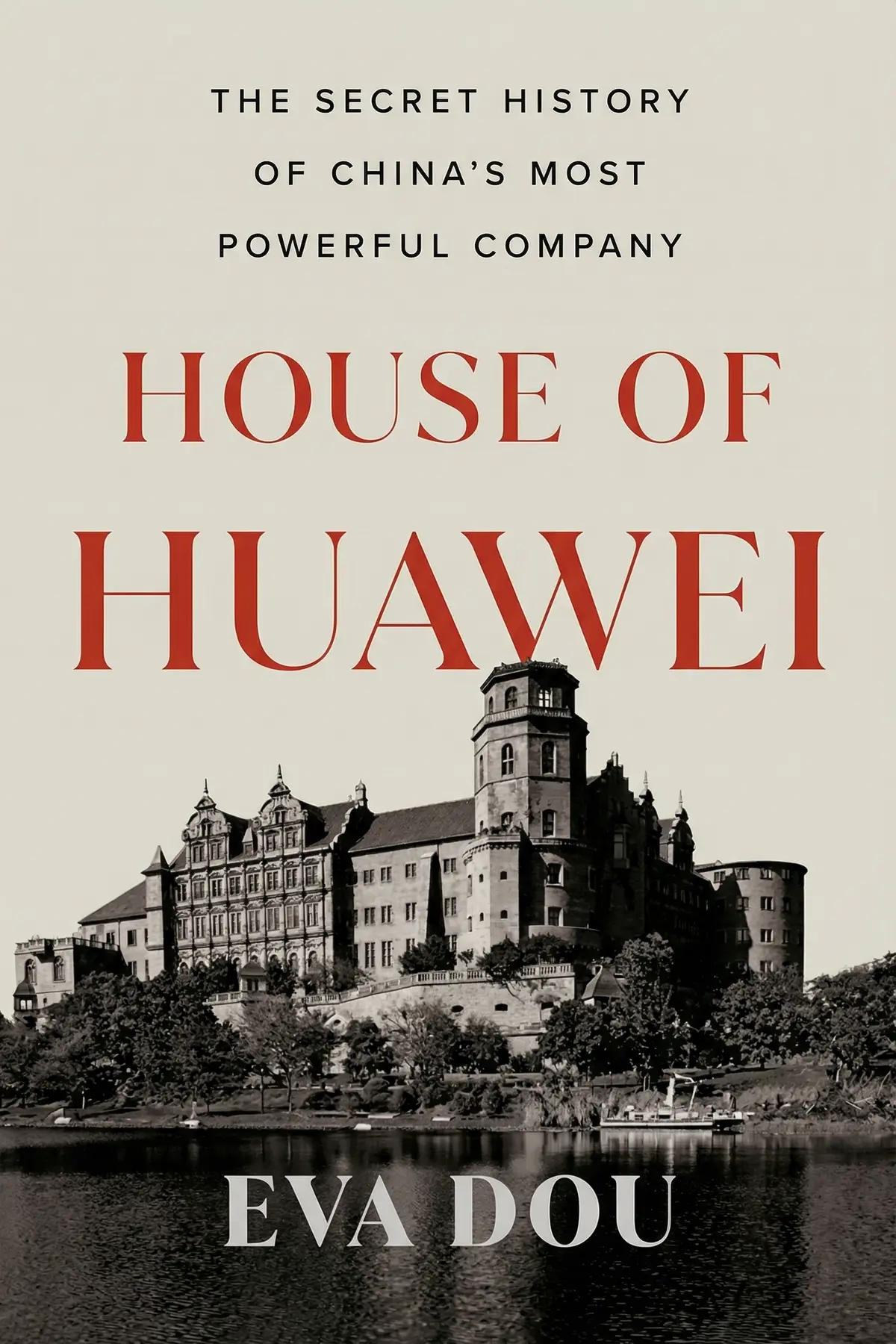
Table of Content
1. Introduction
1 min 06 sec
Most of us use technology every day without asking who built it or which government it answers to. In House of Huawei, Washington Post journalist Eva Dou shows why that question now sits at the center of world politics, through the story of a Shenzhen startup that grew into the world’s top telecom vendor. Her account opens with an arrest. In December 2018, Huawei’s chief financial officer, Meng Wanzhou, was detained at Vancouver’s airport and faced extradition to the United States on fraud charges. She was also the daughter of the founder, Ren Zhengfei.
To explain how a business became a diplomatic crisis, Dou goes back decades. Her throughline is this: the fearless, military-style drive and the close fit with the Chinese state that built Huawei at home are the same traits that made it a target abroad. Trace that thread and the headlines about chips, 5G bans and spying turn into one connected story about how companies, governments and trust collide.
2. See how a switch maker became a national project
2 min 10 sec
A construction worker from a poor province walked into a half-built city and saw opportunity everywhere. What he started there soon mattered to China’s leaders as much as to his customers, and that link never went away.
3. Win markets by going where rivals refuse to go
1 min 58 sec
Western giants owned the global telecom market, and a newcomer from Shenzhen had no obvious way in. Huawei found one, along with typhoid, gunfire and a hippopotamus, and the choice left a trail that would matter later.
4. Spot the hidden cost of an exhaustion culture
1 min 40 sec
For years, the mattresses under the desks were a badge of honor at Huawei. Then young employees started dying, the country noticed, and the company had to explain what those mattresses really meant.
5. Learn what inviting an investigation can cost
2 min 09 sec
Hoping to prove it had nothing to hide, Huawei asked the US government to look into it. Washington said yes. Around the same time, a bank found a name it did not expect on a small company’s board.
6. See how one arrest made a company leverage
2 min 03 sec
A finance chief steps off a plane in Canada and becomes the center of a three-country standoff. Within days two more people are detained, and months later a presidential statement and new US export controls threaten the chips Huawei depends on.
7. Read every tech ban as a cold war move
2 min 02 sec
Cut off from American chips, Huawei should have faded. Instead it surprised everyone with a new phone, and nobody outside the company can say exactly how. Dou’s answer to the bigger questions is uncomfortable for both sides.
8. Conclusion
1 min 02 sec
Dou’s history works like a mirror held up to the whole US-China rivalry. A man from the poor hills of Guizhou built a company that matched his country’s ambitions, and the traits that made it great at home, a soldier’s discipline, a readiness to work where others would not and a natural closeness to the state, made it suspect everywhere else. Huawei never had to change its character to alarm Washington. It only had to succeed abroad.
The story leaves habits worth keeping. When you read about a technology ban, look past the single company to the two governments behind it, each convinced the other uses its firms as tools. When a culture runs on exhaustion, expect the costs to surface eventually, as they did at Huawei in 2006. And remember Skycom: a shortcut taken in one market can be found years later by people with the power to act on it.
Meng’s flight home in 2021 ended one standoff. The smartphone of 2023 showed that the larger one was far from over.
About this book
What is this book about?
In December 2018, Huawei's chief financial officer, Meng Wanzhou, was detained at Vancouver's airport, and a Chinese company suddenly became a diplomatic crisis. Journalist Eva Dou sets out to explain how that happened, and why Washington came to see the firm as a threat. Her account starts with Ren Zhengfei, a man from the poor hills of Guizhou who served in the military and joined the Chinese Communist Party. In 1987 he founded Huawei in Shenzhen. Dou follows its exhausting, army-style culture, its early foreign business in countries like Iraq and Iran, the employee deaths of 2006, a congressional report that called Huawei a security threat, a shell company hiding deals in Iran, and the surveillance technology used in Xinjiang. Then come Meng's arrest, China's retaliation, the US export controls that cut Huawei off from American chips, and the deal between two presidents that sent her home. The book gives readers a clear history of a company that ranks among the most important in the world, plus a way to understand today's technology disputes as steps in a growing contest of distrust.
Book Information
Who it's for
Tech and trade watchers
Professionals who follow tech and trade news and want the story behind Huawei headlines.
Leaders expanding abroad
Founders and managers expanding abroad who want to see how home-market habits can backfire.
Curious about US-China rivalry
Readers curious about the US-China rivalry and the fight over chips and 5G.
About the Author
Eva Dou
Eva Dou is an American journalist who grew up in Detroit and graduated from the Missouri School of Journalism in 2012. She reported on China for The Wall Street Journal before joining The Washington Post in February 2020. House of Huawei, published in 2025, was shortlisted for the Financial Times and Schroders business book prize.
Ratings & Reviews
Ratings at a glance
What people think
Listeners find the writing to be meticulously documented and an engaging read. However, the speed of the narrative has drawn some criticism, with several listeners characterizing the work as incomplete.
Top reviews
Tod
Eva Dou has delivered a powerhouse of a business biography that feels as much like a spy thriller as a corporate history. The depth of research regarding Ren Zhengfei’s early days in the military and the eventual move to the Shenzhen Special Economic Zone provides a context that is often missing from Western headlines. It’s a dense read, sure. However, the way Dou connects the 'wolf culture' of the 1990s to the current 5G geopolitical stalemate is masterfully handled. I was particularly gripped by the sections on the UK’s 'Cell' and how Huawei allowed foreign governments to look under the hood. It’s rare to find a book that balances technical nuance with human drama so effectively. Essential for anyone trying to understand the technological rift between the East and West.
Show moreRania
Finally got around to reading this, and the section on the 'wolf culture' and extreme work pressure was eye-opening. Dou manages to capture the sheer grit required to build a tech giant from nothing in a developing economy. I was fascinated by the early history of Shenzhen and how it shaped the company's DNA. The book is incredibly thorough. It covers everything from the early days of selling switches to the high-level diplomacy of the Biden and Trump eras. Every page feels backed by rigorous fact-checking. It’s a dense, rewarding read for anyone who actually wants to understand the complexity of modern China.
Show moreGun
After hearing so much about 'House of Huawei' on tech podcasts, I’m glad the actual book is as balanced as people said. Wow. The level of detail regarding the internal trade unions and shareholding structure was something I hadn't found elsewhere. It provides a much clearer picture of how the company actually functions compared to the soundbites we get on the news. Dou avoids the trap of simple villainy, instead showing a company navigating a very thin line between corporate success and state service. It’s a long book, but it’s an essential case study in 21st-century global complexity. Highly recommended for business students and policy geeks alike.
Show moreKwan
Ever wonder how a single company became the focal point of a global trade war? This book offers a compelling roadmap of that journey. Dou does an excellent job detailing the Skycom/Iran situation and the subsequent high-stakes arrest of Meng Wanzhou in Canada. While the prose is sharp and the facts are meticulously organized, I did feel the pacing slowed significantly in the middle chapters. Some of the data on regional telecom switches felt a bit like an info dump. To be fair, though, the analysis of the facial recognition tracking of Uyghurs in Xinjiang was chilling and necessary. It’s an objective look at a company that is neither a pure hero nor a simple villain. Definitely worth your time.
Show moreWyatt
Picked this up because I wanted to understand the 5G drama, and I wasn't disappointed by the level of detail provided. The narrative flows from the hardship of Ren’s childhood in Guizhou straight into the high-tech campuses of modern Shenzhen. I found the reporting on the internal 'mattress culture' where engineers slept at their desks to be particularly revealing of the company’s success. The book manages to stay neutral, which is no small feat given the subject matter. My only gripe is that it occasionally feels like a collection of very high-quality news reports rather than a singular, cohesive story. Still, for a journalist’s account, it is top-tier work.
Show moreYongyut
As someone who works in tech, I appreciated the nuanced look at Ren Zhengfei's military past versus the Western interpretation of his service. Dou doesn't just parrot the 'spy' narrative; she digs into the nuances of Chinese corporate law and Article 11. The writing style is straightforward and professional. I liked how the book didn't shy away from the darker side, like the employee suicides and the intense overwork. It’s a sobering reminder of the human cost of rapid innovation. The ending felt slightly abrupt, likely because the story of Huawei is still being written in real-time, but it’s a solid 4-star effort.
Show morePakpoom
Truth is, the book does a great job illustrating how Huawei became a symbol for China's technological rise. It is an outstanding journalistic account. Dou takes the reader from the firm’s humble origins up through the conclusion of the trial in Canada with impressive clarity. I appreciated the balance. She shows how Huawei was both a victim of geopolitical maneuvering and a willing participant in some questionable state activities. The prose is functional and clear, which helps when dealing with complex topics like semiconductor supply chains. Some sections are definitely slower than others, but the overall package is very strong.
Show morePisit
The research here is undeniably impressive, but I found the middle sections to be quite a slog to get through. Dou has clearly scoured every public record available, yet the lack of original interviews with current Huawei leadership makes the book feel a bit 'flat' at times. It’s a lot of reporting on noted facts without enough of the 'why' behind the scenes. Look, if you want a comprehensive timeline of the U.S. sanctions and the Meng Wanzhou extradition, this is the definitive source. But if you’re looking for a deep psychological profile of the leadership, you might leave feeling a little unsatisfied. It feels more like a detailed archive than a living history.
Show morePornpimon
Not what I expected, as it reads more like a chronological compilation of news reports than a narrative with deep internal access. Truth is, it’s hard to write a book about a company as secretive as Huawei. Dou does her best with the available material, but you can tell she was hitting walls with primary sources. The chapters on the African Union servers and the Le Monde exposé were highlights for me. However, the book struggles with pacing, often getting bogged down in the minutiae of 1980s telephone switches. It’s an interesting topic, but the execution feels a bit incomplete. Good for reference, but not exactly a page-turner.
Show morePriya
Frankly, this felt like an unfinished project. I understand that the author is a respected journalist, but the book reads like a long series of Washington Post articles stitched together. There is very little new information here if you have been following the news for the last five years. The pacing is quite off, with some minor events getting twenty pages while major shifts are summarized in three. It also feels dated already, missing the most recent developments in Huawei’s chip breakthroughs. I was hoping for more insider analysis and less of a data dump of publicly available records.
Show moreQuestions about this book
What is House of Huawei by Eva Dou about?
It tells the history of Huawei, from Ren Zhengfei founding it in Shenzhen in 1987 to sell telephone switches, through its rise to the world’s top telecom vendor, to the 2018 arrest of his daughter Meng Wanzhou and the US sanctions that followed. Dou shows how the company’s tough culture and close ties to the Chinese state helped it grow and also made Washington see it as a security threat.
Why was Meng Wanzhou arrested?
Meng, Huawei’s chief financial officer, was arrested in Vancouver in December 2018 on bank fraud and wire fraud charges. They traced back to Skycom, a shell company Huawei used to hide its business in Iran, whose board listed her name. China soon detained two Canadians. Meng spent almost three years under house arrest before the US dropped the charges in 2021 after talks between Joe Biden and Xi Jinping.
Why does the US consider Huawei a security threat?
Lawmakers feared Beijing could use Huawei equipment to spy on the United States. A 2012 House intelligence committee report concluded that Huawei and ZTE could not be trusted to stay free of foreign state influence. Huawei’s work in sanctioned countries, its founder’s party and military background, and its surveillance technology in Xinjiang, including a feature that flagged Uyghur faces, added to the concern.
Who should read House of Huawei?
It suits readers who want to understand the US-China tech rivalry through one concrete company: professionals following news about chips and 5G, founders thinking about entering foreign markets, and managers interested in what an exhausting work culture costs. Dou’s account turns scattered headlines about bans, arrests and sanctions into one connected story.
What is the main lesson of House of Huawei?
The habits that made Huawei succeed at home, a military-style drive, a willingness to work in countries rivals avoided and closeness to the Chinese state, became liabilities abroad. Dou also notes that governments in both the United States and China force tech firms to help them and stay silent, which is why mutual distrust runs so deep that she suggests the label new cold war fits.
Featured in
Readers also enjoyed




A Warning
Miles Taylor

Alibaba: The House That Jack Ma Built
Duncan Clark




Abolish Rent: How Tenants Can End the Housing Crisis
Tracy Rosenthal
AUDIO SUMMARY AVAILABLE
Listen to House of Huawei in 15 minutes
Get the key ideas from House of Huawei by Eva Dou, plus 5,000+ more nonfiction titles.
- 5,000+ titles
- Listen as much as you want
- 7-day free trial
- Cancel anytime









