
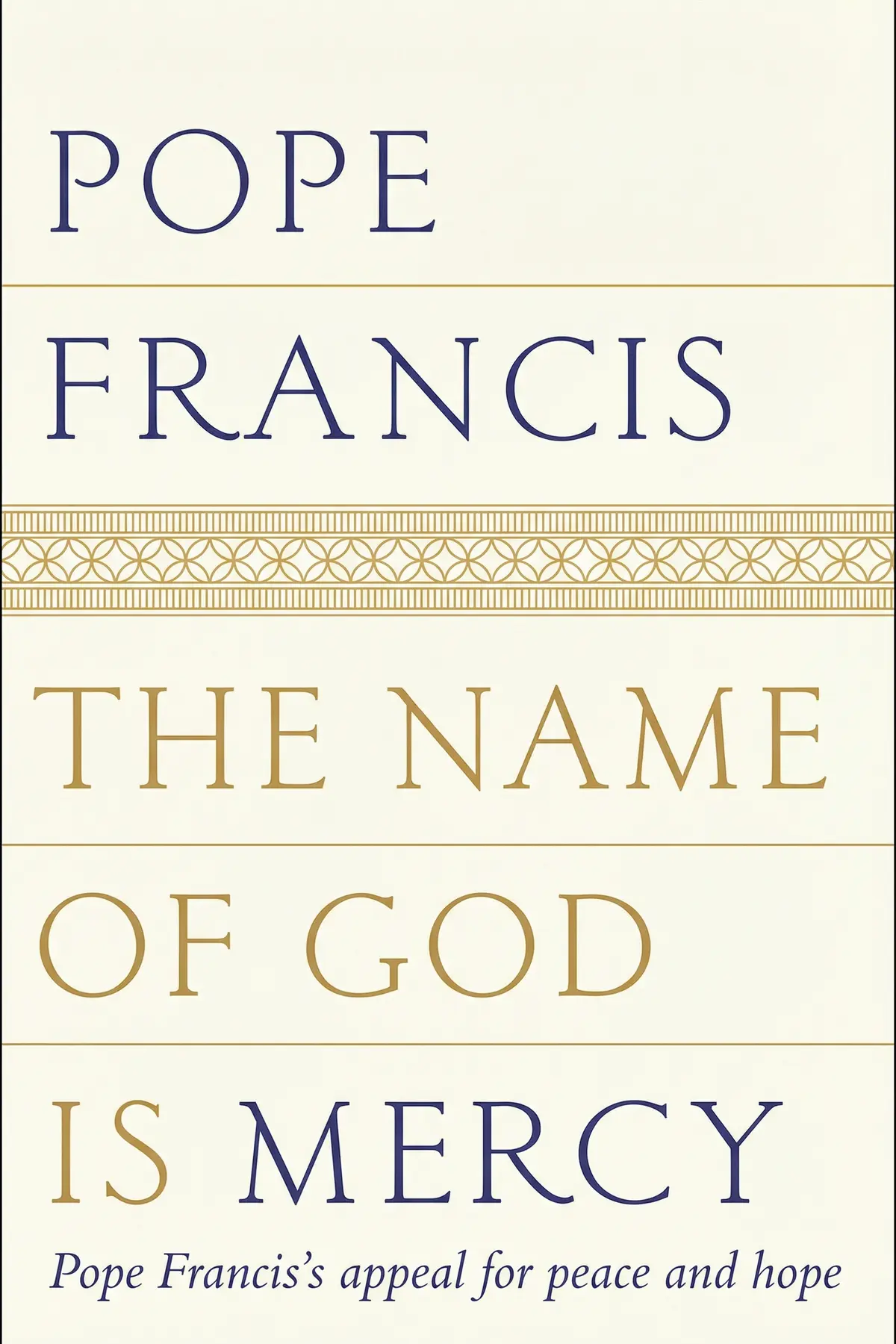
The Name of God is Mercy
Pope Francis
 English
Follows Jorge Bergoglio from an immigrant household in Buenos Aires through Argentina's Dirty War to the 2013 conclave, and shows how each stage shaped the priorities of his papacy as Pope Francis.

1 min 01 sec
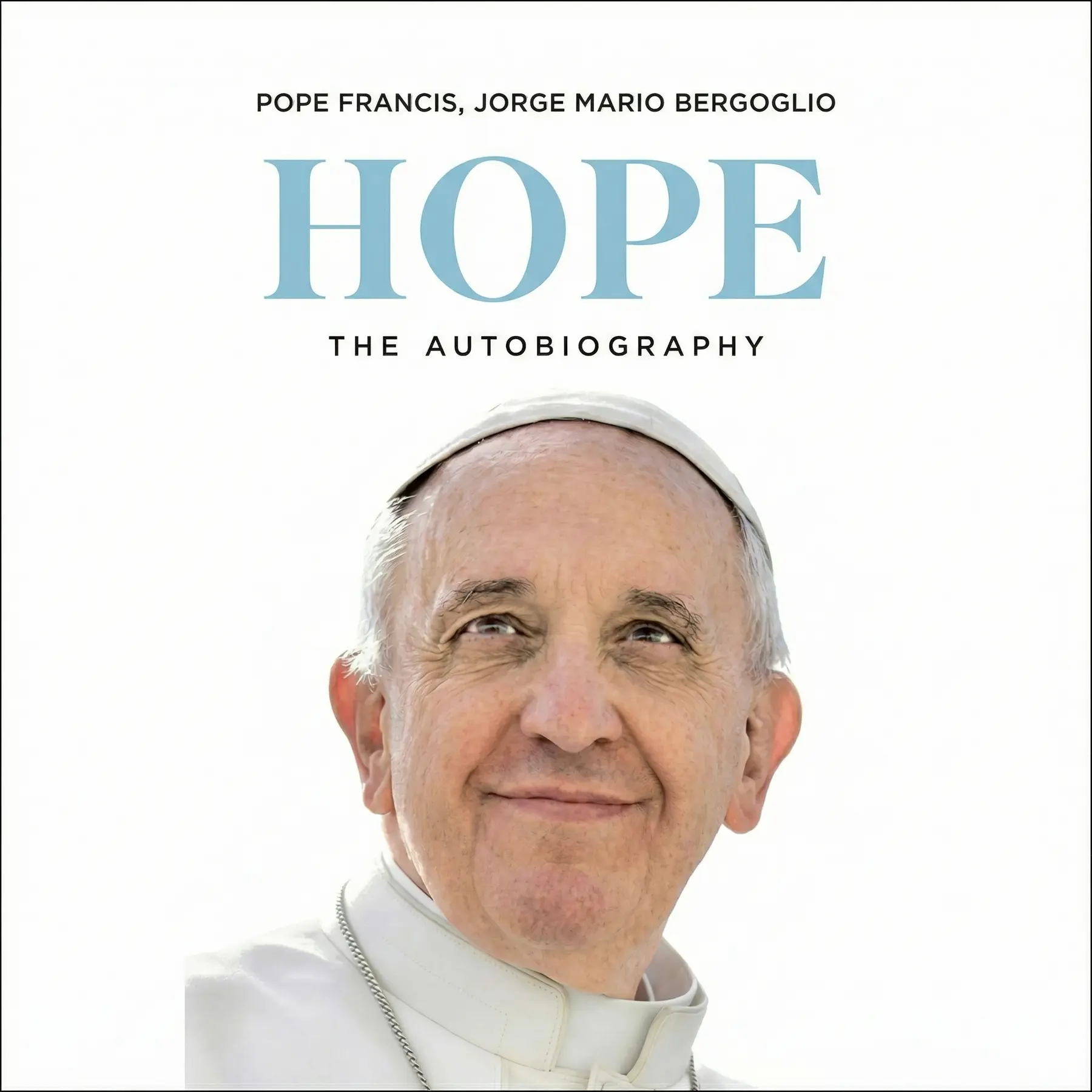
Hope can sound naive when the news is grim, yet Pope Francis built his out of some very grim material. In Hope, his autobiography, the man born Jorge Mario Bergoglio starts before his own birth: in 1927 his father’s family planned to sail on an Italian liner that sank off Brazil, and they stayed behind only because they could not sell their belongings in time. Francis read that near miss as providence, and the habit of finding God in ordinary events runs through the whole book.
His story makes the case that hope is built from roots, from neighbors and from refusing to look away from people at the margins, and that it was tested by illness and dictatorship long before it reached the Vatican. Follow it from a crowded house in Buenos Aires to the Sistine Chapel and the choices of an unusual papacy start to make sense. So does a way of keeping hope practical when the world feels dark.
1 min 48 sec
A family’s failure to sell their personal possessions in time kept them off a ship where hundreds died. Decades later, the family’s migrant experience would inform a new pope’s stance on migration, and his first papal trip went to Lampedusa.
1 min 56 sec
A rag football, a carnival costume and a woman the whole neighborhood knew by a nickname. Small childhood scenes in Buenos Aires turned out to hold the future pope’s idea of who belongs in a church.
1 min 38 sec
He was on his way to a spring picnic with friends when he stepped into a church on impulse. What happened inside took a few minutes, and he still waited years to act on it.
1 min 48 sec
Mothers in white headscarves walked in silence past the presidential palace while a young Jesuit hid a friend’s banned books. His choices then explain a decision he made about the Vatican’s archives decades later.
1 min 55 sec
Surgeons drained his lungs and he went back to the seminary changed. The illness made him question the quiet scholarly life he had chosen, and that doubt explains where he chose to live as pope.
1 min 48 sec
He arrived in Rome as a possible kingmaker with a flight home already booked. Two stuck ballot papers, a speech and a whispered sentence later, he had a new name and a program to go with it.
1 min 44 sec
He preferred a bruised and dirty Church to a safe one behind closed doors. That preference shows in appointments, a canonization and reforms that treat tradition as a foundation rather than a fortress.
1 min 03 sec
Francis’s autobiography adds up to a claim about where hope comes from. In his telling, it grows out of memory: a ship his family missed, a football made of rags, a woman who called a bishop she knew from childhood, a friend who vanished and whose library he hid. Each memory pushed him toward people, and the papacy was the same reflex at a larger scale, from Lampedusa to the guesthouse to the canonization of Romero.
The book supports some plain habits. Keep the names of people from your own past who lived at the edges, and let them shape how you treat strangers now. When fear or illness tempts you to withdraw, move toward community, as he did after nearly dying in 1957. And when an institution you belong to has failed, as parts of the Church did during the Dirty War, say so and open the records.
His story turns on a whisper in the Sistine Chapel. Remember the poor was not a new instruction for him. It was the street he grew up on.
Most people know Pope Francis from his years in Rome: the humble manner, the attention to the poor, the push to open up the Church. In his autobiography, he goes back to where those habits came from. The story starts before his birth, when his father's family almost boarded an Italian liner that sank off Brazil. It moves through a crowded immigrant neighborhood in Buenos Aires, a sudden certainty in a confessional at sixteen and a lung illness that nearly killed him. It also covers the Dirty War, when he used his priesthood to help people past military checkpoints and hid the books of a friend who later disappeared. Then comes the conclave of 2013, which he entered with a plane ticket home already booked. Readers get a clear account of how memory, neighbors and hardship turned into a program for the Church: welcoming migrants, giving women more authority, reckoning with abuse and failure, and a Church that goes out into the streets. Along the way Francis offers a grounded idea of hope, one built from staying close to people.
Readers curious about the man behind the papacy and how his past shaped his choices.
People looking for a grounded idea of hope that holds up in hard times.
Leaders, teachers and church members thinking about how institutions stay close to the people they serve.
Jorge Mario Bergoglio was born in Buenos Aires in 1936 to a family with Italian roots. He joined the Jesuits, was ordained in 1969, led the order in Argentina from 1973 to 1979, became Archbishop of Buenos Aires in 1998 and a cardinal in 2001. Elected pope on 13 March 2013, he took the name Francis. He was the first Jesuit pope and the first from the Americas, known for his humility, his stress on mercy and his concern for the poor. He died on 21 April 2025.
Pope Francis
Listeners find this autobiography to be an engaging and profoundly emotional spiritual journey that offers excellent perspective on the life of Pope Francis. The writing is high quality and listeners view it as a lovely experience, while one listener mentions that it offers guidance on how we should live. The work’s worth is highly regarded, with one review calling it fascinating about a great man.
Picked this up because I was curious about the man behind the title, and I was absolutely floored by the vulnerability Francis shows when discussing his time in Argentina. He doesn't shy away from the trauma of the repressive government or the psychiatric help he needed afterward to process the experience. It makes his message of mercy feel earned rather than just preached from a distance. The prose is surprisingly accessible and lacks the stuffiness you might expect from a Vatican publication. While some theological sections dragged slightly, his insistence on seeing everyone as brothers by creation is incredibly powerful. It’s a compelling look at a leader trying to modernize an ancient institution through radical humility and humor.
Show moreWow, I didn’t expect a papal memoir to be so deeply personal and full of such genuine warmth. Francis has this way of talking about tradition not as a stagnant statue, but as something that must grow and move forward. His quotes on indifference being a form of aggression really hit home for me. I also appreciated the specific anecdotes about his refusal to live in the luxury of the papal apartment, opting for community instead. It's a refreshing take on what it means to lead with a heart for the marginalized and the forgotten. This is a beautiful guide for anyone looking to find a sense of hope in an increasingly cynical world.
Show moreLooking back at his journey from Buenos Aires to the Vatican, you see a man defined by a single word: mercy. This book isn't just a list of clerical achievements; it’s a spiritual roadmap that emphasizes the value of human connection over doctrine. He argues that hope begins with "you" and turns into a revolution when it finally becomes "us." I found his critique of "clericalism" and those who hide behind rigid traditions to be particularly sharp and necessary for the modern age. The chapter on education being an act of hope was also a highlight for me. Even if you aren't religious, the wisdom here regarding how we treat our neighbors is worth your time.
Show moreFinally got around to reading this testament of faith and I’m genuinely glad I invested the time. Francis writes about how tradition is about having both roots and wings, which is such a lovely image for the Church’s future. His discussion on the "scandal of peace" and why we shouldn't be neutral in the face of war is incredibly timely. I also loved the bit about him preferring to stay in a guest house rather than the isolated palace. It shows he truly practices what he preaches regarding the dangers of spiritual isolation. This isn't just for Catholics; it’s for anyone who wants to see a more compassionate version of humanity.
Show moreThis book serves as a beautiful roadmap for how to live with intention and deep empathy for others. Francis describes his life as a series of steps toward being "believable" rather than just being a "believer." I was particularly struck by his defense of migrants and his call for a "revolution of tenderness" in our daily interactions. The way he describes his election as being taken from the "end of the world" is both humble and poetic. It’s clear he views his role as a servant-leader, which is something many world leaders could learn from. It’s a captivating, multilayered read that left me feeling much more optimistic about the future.
Show moreAs someone who left the Catholic Church years ago, I found this autobiography surprisingly moving and culturally relevant. Francis comes across as a very progressive figure, focusing on the "vow of poverty" and criticizing the greed of modern mega-churches. He explicitly mentions that trans women are daughters of God, which is a massive, fire shift in tone from his predecessors. I particularly loved the chapter on humor being essential to a healthy spiritual life. The truth is, his message about the Church needing to evolve rather than stay stagnant is exactly what people need to hear. It’s a layered story that successfully balances personal history with heavy-hitting social commentary on indifference.
Show moreNot what I expected from a religious leader, frankly, but in the best way possible. I loved his "hot takes" on everything from global politics to the environment, showing he’s very much in touch with the modern world. He makes a point to say that homosexuality is a human fact and that the Church cannot remain indifferent to injustice. It’s amazing to see a Pope use his platform to stand up for minorities and immigrants so consistently. There were some chapters that felt a bit like filler, but the overall message of "diversità riconciliata" is beautiful. It makes the Papacy feel a lot more human and a lot less like a distant, cold monarchy.
Show moreAfter hearing so much about Francis’s stance on tradition, reading his own words provided a lot of much-needed clarity. He is very clear that he wants a Church that goes to the "ends of the earth" rather than one that is self-referential. His critique of those who insist on the old Latin mass as a form of "clericalism" was quite bold and interesting. Personally, I found the book to be a bit long-winded in the theological sections toward the end. However, his heart for the "invisible" people of society shines through every single page. It’s a moving journey of faith that feels both ancient and incredibly modern at the same time.
Show moreThe pacing in this autobiography is undeniably strange and took me quite a while to get used to. We get a massive amount of detail regarding his family origins in Piedmont and his youth as a chemist. Then, it feels like his fifty years as a priest are glossed over in favor of his specific time as Pope. It’s a bit frustrating because those middle years are where most of the political navigating happened. However, his chapters on the horrors faced by people in Iraq and Palestine were incredibly eye-opening and empathetic. To be fair, it’s still a fascinating read, even if the structural balance feels a little lopsided for a casual reader.
Show moreLook, I wanted to love this, but it felt quite meandering and lacked a cohesive narrative thread at times. The mix of childhood memories and dense doctrinal discussion didn't always blend well for me as a reader. While the parts about his struggle in Argentina were gripping, they were buried under long sections of "whatever-ness" that felt repetitive. I respect his humility and his stance on the poor, but as a biography, it’s a bit of a slog. If you're a die-hard fan of his theology, you'll probably enjoy the deep dives into Ezekiel. For a casual reader, though, it might be a bit too much "pope-speak" and not enough narrative drive.
Show moreHope is Pope Francis’s autobiography. It follows Jorge Bergoglio from his Italian immigrant family in Buenos Aires through his calling to the priesthood, a near-fatal illness, Argentina’s Dirty War and the 2013 conclave that elected him. Its running idea is that his hope and his priorities as pope, from migrants to the poor, grew directly out of these memories and experiences.
He grew up in Flores, a working-class immigrant neighborhood where Jewish, Muslim and Christian families lived side by side. He credited it for his commitment to interfaith dialogue and for his concern for the poor. A sex worker he knew there, La Porota, later found him as a bishop, and he held a special mass for the city’s sex workers and prayed for her every year after her death.
As a Jesuit priest, he used his position to help people through military checkpoints and hid banned writings on seminary grounds. When Esther Ballestrino de Careaga, his former lab colleague, was targeted, he concealed her Marxist library. She was kidnapped in 1977. As pope, he acknowledged the Church’s failures in that period and ordered the Vatican archives opened to researchers.
During the celebrations after his election in March 2013, Cardinal Hummes embraced him and whispered a reminder not to forget the poor. In that moment Bergoglio decided to take the name of Francis of Assisi, the saint devoted to the marginalized. The choice signaled his priorities: the poor, mercy over judgment and openness to people traditionally kept outside Church circles.
The book suggests keeping alive the memory of people at the edges of your own early life and letting it shape how you treat strangers. It points toward moving closer to community in hard times, as Francis did after his illness. And it models institutional honesty: admitting failure and opening records instead of protecting reputation.


Barack Obama


Masaji Ishikawa


Ben Macintyre

Daniel Goleman



James Shapiro
AUDIO SUMMARY AVAILABLE
Get the key ideas from Hope by Pope Francis, plus 5,000+ more nonfiction titles.









