21 Lessons for the 21st Century
Yuval Noah Harari
 English
 ไทย
Explains how cooperation around shared stories made humans dominant, how famine, plague and war were largely tamed, and why modern faith in human experience may yield to algorithms that already predict personality test answers better than a spouse.
1 min 07 sec
If headlines about artificial intelligence leave you uneasy without knowing quite why, start with one number: in 2010, obesity killed about three times as many people as hunger and malnutrition combined. In Homo Deus, historian Yuval Noah Harari uses facts like this to argue that humanity has largely beaten its oldest enemies and is now reaching for godlike goals.
His deeper case is that our species rose by cooperating around shared stories, and that today’s ruling story, liberal humanism, rests on free will and an inner self that modern science is taking apart. Algorithms are moving into that gap. Some systems already guess how a person will fill out a personality questionnaire more accurately than that person’s husband or wife can.
Follow Harari’s argument and a vague worry about technology turns into a clear question about who gets to decide, along with a few tests to run on your own habits this week.
1 min 57 sec
A few centuries ago, a single famine could wipe out a large share of a country. Today the numbers point somewhere unexpected, and that change quietly rewrites what our species thinks it should want.
1 min 34 sec
We keep more than 90 percent of large animals domesticated, and most people seem fine with the suffering this causes. Harari tests the usual answers, finds them weak, and points to a talent you can watch at work in any election.
1 min 40 sec
Medieval kings marched across Europe for a shared belief, and nobody would do that for a pope today. Harari argues the old force never left, and his definition puts some unlikely groups among the faithful.
1 min 42 sec
People once prayed when famine came. Now they fund research to prevent it. Harari shows what made that shift possible, and the hidden condition every bank loan and new technology depends on.
1 min 37 sec
Ask a nationalist, a socialist and a liberal the same two moral questions and you get three different answers. One of those camps has won almost everywhere, even among the people protesting against it.
1 min 43 sec
Scientists can steer a rat left or right with a signal, and a patient once laughed at a picture she never knew she saw. Both results raise awkward doubts about who makes your choices.
1 min 42 sec
Trading floors emptied first, then even music lovers were fooled. A Yale device and a study of Facebook likes show how far machines already reach into bodies and personalities, often without anyone pressing a button.
1 min 46 sec
One camp wants to wire people up so they can keep pace with machines. Another says humans are just data processors and should make way. Each path carries a price that is easy to miss.
1 min 09 sec
Harari’s book reads like a family history with an uncertain final page. The ape that learned to cooperate through stories beat famine, plague and war, then swapped a divine script for growth and the authority of human feeling. The irony is that the science which gave us that power now questions the beliefs it rests on. If choice is biochemistry and the self is a story the left hemisphere improvises, it gets hard to argue that a human decision should outrank an algorithm that predicts it better.
Harari’s message is that knowing how this history made us gives a firmer sense of where we may be going, and that knowledge can be put to work. Spend one day without your phone, as he suggests, and notice how many small decisions you usually hand to it. When you explain a choice to yourself, remember the patient who blamed the machinery for her laughter.
Crusaders, voters and protesters all followed stories they believed in. Harari leaves open whether the next story will still have humans at its center.
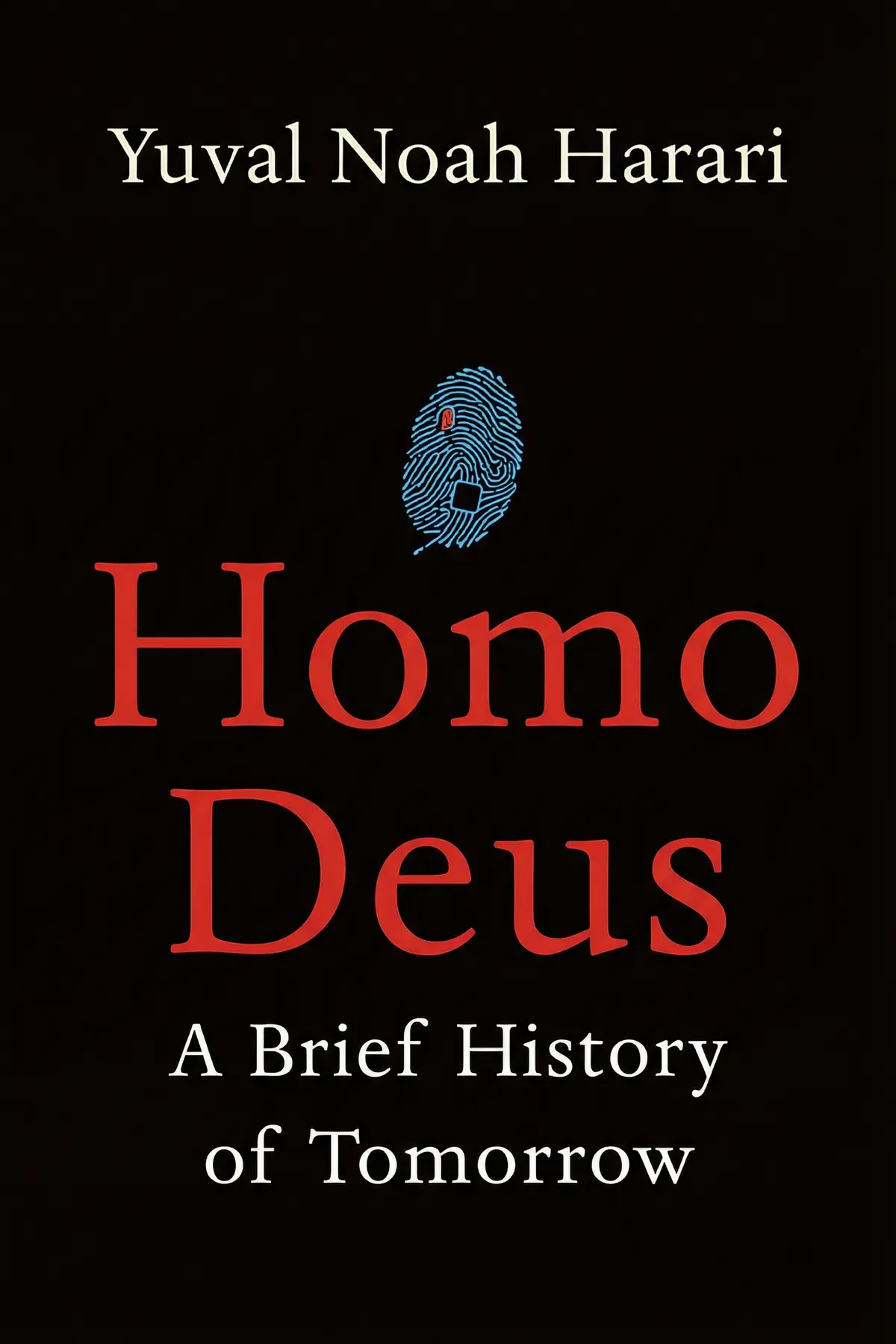
Famine, plague and war once set the limits of human life. Today obesity kills more people than hunger, and diabetes kills more than war. Yuval Noah Harari asks what a species that has tamed its oldest enemies will want next, and what might threaten its rule. His answer starts with cooperation. Humans dominate, he argues, because they organize millions of strangers around shared stories, which he treats as religions whether or not they involve gods. The modern era traded a divine script for growth and power, and placed meaning inside human experience. Liberalism, the most successful version of that faith, depends on free will and an authentic inner self. Harari then shows modern science undermining both, from rats steered by electrodes to split-brain patients inventing reasons for their own laughter. Algorithms already trade stocks, compose music in the style of Bach, manage blood sugar and read personalities from Facebook likes. Readers get a clear frame for the debate about technology, and two possible futures to weigh: merging with machines or stepping aside for data.
Professionals uneasy about artificial intelligence who want a clear frame for what is at stake.
Readers of Sapiens curious where Harari thinks the human story goes next.
Managers and students wondering which parts of human judgment algorithms can and cannot replace.
Yuval Noah Harari was born in Israel in 1976 and earned a doctorate in history at the University of Oxford. He has taught history at the Hebrew University of Jerusalem and is a Distinguished Research Fellow at the Centre for the Study of Existential Risk at the University of Cambridge. His books, including Sapiens, Homo Deus, 21 Lessons for the 21st Century and Nexus, examine free will, consciousness, happiness, suffering and the role of storytelling in human evolution. With his husband, Itzik Yahav, he co-founded Sapienship, a social impact company working in education and storytelling.
Yuval Noah Harari
Yuval Noah Harari
Yuval Noah Harari
Listeners find this title remarkably easy to digest and intellectually stirring, packed with excellent details and high-level insights. In addition, the text offers a deep dive into historical patterns and striking visions of the coming years, presented through an approachable narrative that flows like a compelling story. Listeners also value the captivating concepts that spark fresh perspectives, with one listener pointing out how effectively the writer projects current trajectories to their logical ends.
After finishing Sapiens, I wasn't sure if Harari could top the sheer scale of that narrative, but Homo Deus is a chillingly brilliant follow-up. The way he frames the shift from humanism to 'Dataism' feels like watching a slow-motion car crash—you can’t look away because the logic is so sound. I found the section on how algorithms might eventually know our desires better than we do particularly haunting; the idea of a Kindle reading your facial expressions to gauge your emotions is pure sci-fi turned reality. While some might find his tone a bit arrogant, I think he just refuses to sugarcoat the inevitable. He challenges the very core of our individualist values. It is a profound analysis of history that morphs into a roadmap for a future where we might be obsolete. This isn't just a book; it’s an intellectual earthquake that forces you to rethink every decision you make.
Show moreThe chapter on how we treat animals as mere algorithms or property was a total gut-punch for me. Harari uses history not just to tell us what happened, but to expose the fictions we’ve used to justify our dominance over the planet. It’s a powerful, blunt perspective that many will find uncomfortable. Truth is, his description of the transition from 'healing' the sick to 'upgrading' the healthy is one of the most insightful things I've read all year. The prose is effortless and fascinating, managing to break down complex socioeconomic trends into things even a casual reader can grasp. I loved how he explored the idea that intelligence is decoupling from consciousness. This book will definitely stimulate alternate thoughts about where we are heading as a species. It’s easily one of my new favorites for the sheer bravery of its arguments. Five stars.
Show moreWow. I didn't expect a book about the future of humanity to read as easily as a page-turning thriller. Harari has a unique knack for taking these massive, intimidating concepts—like the decoupling of consciousness from intelligence—and making them feel relevant to your everyday life. I was especially struck by his analysis of modern censorship; the idea that we aren't being starved of information but flooded with irrelevance is so spot-on for 2024. The book provides a profound analysis of history while managing to be totally provocative about the future. It’s the kind of writing that stays with you long after you close the cover. Whether he’s talking about the future of ebooks or the end of the individual, he makes it all feel incredibly urgent. I’ll be thinking about the 'Homo Deus' upgrade for a long time. This is essential reading for anyone curious about our species.
Show moreFinally got around to reading this, and it’s essentially a roadmap for the 21st century that makes you question the very concept of free will. Harari’s bluntness is refreshing. He doesn't care about being 'nice'; he cares about following trends to their natural conclusion. I found his insights into how religion and science are actually 'good bedfellows' because they both value order and power over truth to be mind-blowing. The book is just packed with these little gems of wisdom that force you to look at society through a different lens. If you’re looking for a comfortable read, this isn't it—it’s meant to shake you up. But if you want a book that is highly readable, deeply researched, and genuinely original in its perspective, this is the one. It’s a masterpiece of modern non-fiction that feels more like a warning than a prediction.
Show moreIn my experience, few writers can synthesize history and technology as effortlessly as Harari. Homo Deus is a captivating sequel that explores the terrifying possibility of humans becoming 'superfluous' in the face of superior algorithms. I loved the section on how the rich might eventually afford personalized medicine and genotyping to the point of becoming a different species altogether. It sounds like sci-fi, but the way he lays out the current trends makes it feel almost inevitable. The prose is vibrant and keeps you engaged even during the more dense philosophical stretches. Some people might quibble with his take on extramarital affairs or the death of liberalism, but you can't deny the man has a vision. This book is a brilliant, unsettling, and totally necessary look at the future of the world. It’s definitely one of the best things I've read in years. Highly recommended.
Show morePicking this up was a bit like stepping into a cold shower; it’s bracing and leaves you feeling completely different about your own agency. Harari’s writing is exceptionally accessible, almost like a storybook, yet the implications of his theories are heavy. I appreciated his deep dive into why we value growth above all else and how our modern 'contract' involves trading meaning for power. However, I do think he spends a little too much time rehashing the agricultural revolution and the history of grass lawns before finally getting to the 'tomorrow' part of the title. To be fair, the final third of the book is where the real meat is, especially the discussion on the 'useless class' and the rise of AI. It’s thought-provoking and slightly terrifying. You might not agree with every extrapolation he makes about genetic engineering, but you certainly won't be bored.
Show moreThis book feels like a long, intellectual conversation with a very smart friend who has had just a bit too much coffee. Harari is great at the 'big picture' stuff, connecting the dots between ancient religions and modern silicon-valley ideologies in ways I never considered. I especially enjoyed the discussion on how capitalism defeated communism simply because distributed data processing works better than a centralized system. Not gonna lie, some of his claims about the future of medical science favoring the ultra-rich felt a bit like a Neal Stephenson plot, but he makes a compelling case for why it could happen. My only gripe is that it feels a bit less cohesive than Sapiens; it jumps around between biological algorithms and the history of lawns quite a bit. Still, it’s a highly readable exploration of what makes us tick and what might replace us.
Show moreEver wonder if we're just biological data processors whose time is running out? Homo Deus tackles that question with a mix of historical expertise and bold speculation that is hard to ignore. Harari's central thesis about liberal humanism evolving into 'techno-humanism' is fascinating, even if it feels a little disconcerting at times. The book is written with a juvenile exuberance that makes 400 pages of philosophy fly by. I did find some of the scientific claims a bit shaky, particularly when he discusses the lack of a 'soul' as a definitive proof of his theories. That said, the way he explains the 'discovery of ignorance' as the spark for the scientific revolution was brilliant. It’s a stimulating read that asks more questions than it answers, which is exactly what a book about the future should do. Definitely worth your time.
Show moreTo be fair, while the writing is fluid and the concepts are certainly big, I found myself waiting for the 'tomorrow' promised in the subtitle. Most of the book felt like a retread of his previous work, focusing heavily on how we got here rather than where we are going. By the time we actually got to the AI and genetic engineering bits in the final quarter, I felt a bit exhausted. The ideas about 'Dataism' are interesting, but they didn't feel entirely new if you've already read any modern popular science articles. Frankly, the author’s tendency to extrapolate present trends to their most extreme logical outcomes can feel a bit repetitive after a while. It’s an okay follow-up, and certainly accessible, but it lacks the groundbreaking 'novel' feel that made his first book such a global phenomenon. Three stars for the effort.
Show moreLook, Harari is an incredible historian who can weave a narrative like no other, but as a futurologist, he misses the mark by a mile. This book reads like someone watched a few episodes of Black Mirror after a long weekend and decided to call it science. He focuses on these extreme, almost insane uses of technology—like the rich becoming god-like cyborgs—while ignoring the much more mundane and immediate threats we actually face today. As someone with a background in tech, I found his grasp of cognitive science to be frustratingly shallow. It felt less like a serious inquiry and more like a high-budget sci-fi fanfic about the end of the world. The writing is energetic and easy to digest, which is probably why it's so popular, but the actual substance is mostly just provocative packaging. Stick to his first book if you want actual history.
Show moreHarari argues that humans rose to dominate the planet through flexible cooperation built on shared stories, which he treats as religions. The modern version, liberal humanism, makes individual experience the source of meaning and authority. But it depends on free will and an inner self that neuroscience and psychology now doubt, and algorithms that know us better than we know ourselves may take over our decisions.
He defines religion as belief in a code of moral laws that stands apart from human choice, with no need for gods or superstition. Liberals, nationalists and socialists all treat their moral laws as close to laws of nature, so in his terms they are as religious as Christians or Muslims. Humanism, which locates meaning in human experience, is in his view the dominant religion of modern society.
Harari points to neuroscience describing decisions as biochemical processes in the brain. He cites robo-rats, steered left or right by signals sent through implanted electrodes. He also describes a split-brain patient who giggled at an image only her right hemisphere saw, then invented an explanation about funny machinery, a sign that the left hemisphere constantly fills gaps with plausible stories.
They are the two responses Harari sees to powerful algorithms. Techno-humanism says humans should merge with technology to keep pace, like the attention helmet the US Army is developing for soldiers. Dataism says everything is data and humans are just data processors, so our duty is to build better algorithms and then step aside. Harari warns that each path carries real costs.
Harari suggests spending a day without your mobile device to see how much you already depend on algorithms. His argument also supports treating your confident explanations for your own choices as guesses, sorting your work into what a system could do and what it could not, and watching which technologies get funded and what they reward.
AUDIO SUMMARY AVAILABLE
Get the key ideas from Homo Deus by Yuval Noah Harari, plus 5,000+ more nonfiction titles.