
13 min 29 sec
Available in: English
 ไทย
EnglishไทยHold Me Tight: Seven Conversations for a Lifetime of Love
By Sue Johnson
Shows why couples fight so fiercely over small things, and how spotting the pattern behind those fights and sharing the fear underneath can rebuild trust, heal old hurts and bring back closeness, including in bed.
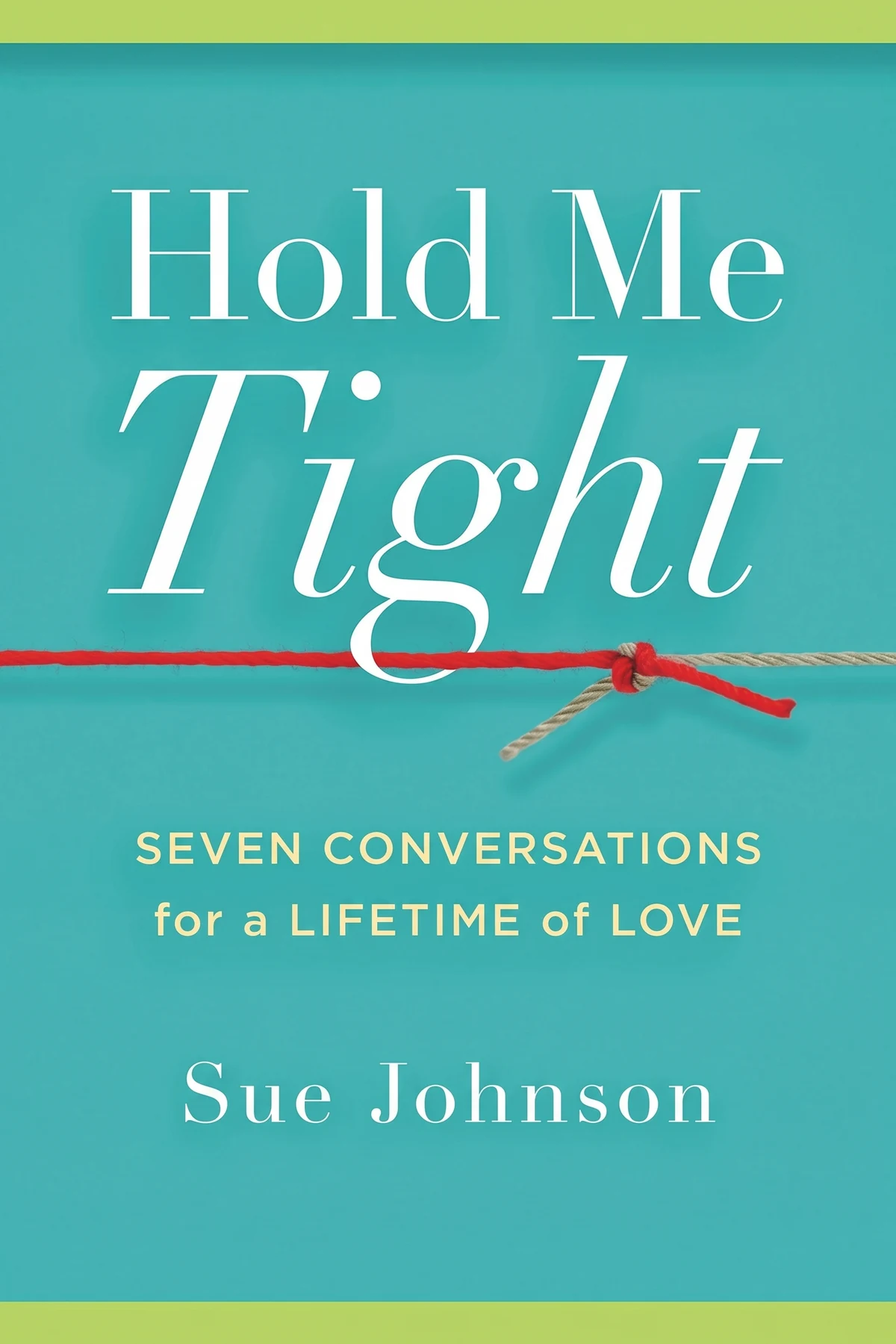
Table of Content
1. Introduction
55 sec
If your arguments with a partner keep flaring over nothing, a pile of dishes or a few hairs in the drain, the fight is rarely about the dishes. In Hold Me Tight, clinical psychologist Sue Johnson, the main developer of Emotionally Focused Therapy, argues that these clashes work like an alarm: one or both partners sense the bond slipping and start to panic. Heard that way, a petty quarrel becomes useful information.
Johnson’s case runs through every part of a relationship. Couples who learn to spot the pattern driving their fights, and to say out loud the fear underneath it, can turn conflict back into closeness. The same skill helps them repair old hurts, revive their sex life and face a frightening world together. Through couples from her therapy room and a revealing moment from her own marriage, she shows what this looks like in practice, from a compliment that goes wrong to the slow work of rebuilding trust.
2. See the fear behind fights about dishes
1 min 36 sec
A towel on the floor should not be able to ruin an evening, yet for many couples it does. Johnson finds the real cause somewhere much deeper, and it explains why partners often react in opposite ways.
3. Stop the blame game before it starts
1 min 32 sec
A kind remark in a therapist’s office turned into a full attack within minutes. What finally calmed Pam and Jim was not an apology, and it is something any couple can try.
4. Old wounds can turn small slights into big fights
1 min 34 sec
One night Johnson saw her husband’s eyelids droop and flew into a rage. He had done nothing wrong. Her reaction reveals hidden sore points that every partner carries, and what to do when one is touched.
5. Trace a fight back to where it turned
1 min 42 sec
An illness and a demanding work project pulled Claire and Peter into the same angry loop. Breaking it took a careful look at something most couples never examine after a fight.
6. Repair the moment your partner was not there
1 min 40 sec
For years, Helen turned away every time Conrad reached for her. The reason lay in a single moment on a staircase, and healing it required something Conrad had never told her.
7. Better sex starts outside the bedroom
1 min 43 sec
Unhappy couples often blame their sex life for most of what is wrong. Twenty years of research suggests they may be looking in the wrong place, and the real fix is less obvious.
8. A close bond helps you heal from trauma
1 min 42 sec
A study of people who lived through the 9/11 attacks found two very different groups eighteen months later. What separated them had little to do with the attacks themselves.
9. Conclusion
1 min 05 sec
What Johnson offers in the end is a new way to hear a relationship. The argument about milk, the sneer at a compliment, the rage at a sleepy face, the refusal of a hug years after a diagnosis: each is a signal that someone feels unsafe with the person they need most. Heard as signals, these moments stop being proof that love has failed and start pointing to what needs repair.
The practice she supports is modest. When a small fight flares, look for the fear beneath it and the cycle you both fall into, then say what you notice without assigning blame. When a raw spot is touched, tell your partner where it hurts and why. And keep the physical bond alive. Johnson points out that mowing the lawn or baking a cake will not mean much if you never hold your partner close, because cuddling builds both physical and emotional connection at once.
A strong bond cannot keep the world’s wounds away. It can make sure that when they come, neither of you faces them alone.
About this book
What is this book about?
Many couples know the feeling: a quarrel over dishes or a towel on the floor turns into something far bigger, and the same bitter exchange plays out again and again. Sue Johnson, the clinical psychologist who led the development of Emotionally Focused Therapy, argues that these fights are rarely about the dishes. They are signs of panic, triggered when one or both partners sense their emotional bond slipping. Drawing on couples from her therapy practice and on her own marriage, Johnson shows how that panic drives partners in opposite directions, how blame takes over, and how old wounds from earlier relationships or childhood make small slights explode. She then explains how couples can trace a fight back to its trigger, repair moments when one partner was absent in a time of need, and see that a better sex life grows from emotional safety. Readers get a way to hear their own arguments differently and concrete moves to try: naming the cycle instead of the culprit, sharing a raw spot openly, and staying present when a partner talks about pain. Johnson also makes the case that a secure bond helps people recover from trauma in a frightening world.
Book Information
Who it's for
Couples repeating one fight
Couples caught in the same argument again and again who want to understand what is really driving it.
Partners hurt by absence
Partners still hurt by a moment when the other was absent, such as during an illness or crisis.
Sex life has cooled
Anyone whose sex life has cooled and who suspects the cause lies outside the bedroom.
About the Author
Sue Johnson
Sue Johnson (1947 to 2024) was a clinical psychologist, couples therapist and author, born in England and based in Canada. She was the main developer of Emotionally Focused Therapy, an approach to couple and family therapy rooted in adult attachment, and founded the International Centre for Excellence in Emotionally Focused Therapy, which trains counselors around the world. She was named to the Order of Canada. Hold Me Tight, her book for general readers, has sold over one million copies in 30 languages.
Ratings & Reviews
Ratings at a glance

What people think
Listeners describe this relationship guide as life-changing, noting that it has reinforced their marriages and assisted them in building lasting, affectionate bonds. They commend its accessible style and actionable guidance, with one listener highlighting how it clarifies attachment theory successfully. Listeners value the work's emotional resonance, which aids couples who feel distant, and they favor the communication techniques that offer prompts for meaningful discussions.
Top reviews
Nannapat
This book genuinely saved my marriage when we were at our absolute breaking point. Frankly, I was skeptical of the 'dancing' metaphors at first, but once we started identifying our own 'Protest Polka,' everything shifted. Sue Johnson explains attachment theory with such emotional depth that it’s hard not to see yourself in every chapter. We stopped attacking each other’s characters and started looking at the underlying fear of abandonment that was driving our fights. It’s a transformative read that provides a clear roadmap for couples who feel like they’ve lost their spark. The 'Hold Me Tight' conversations are now a staple in our household whenever we feel a disconnect growing. If you feel like you're drifting apart, please give this a try before giving up. It creates a level of emotional safety that I didn't think was possible in a long-term relationship.
Show moreJoshua
As someone who has spent years studying the work of John Bowlby and Mary Ainsworth, seeing those theories applied so practically to adult romance was a revelation. Sue Johnson has managed to take the complex world of Emotionally Focused Therapy and distill it into something any layperson can grasp. The focus on 'Demon Dialogues' is brilliant because it removes the blame from the individuals and places it on the negative cycle itself. I particularly appreciated the emphasis on how adult interdependence isn't a sign of weakness, but a biological necessity. The writing is accessible, though the constant nomenclature can feel a bit repetitive if you're reading it all in one sitting. However, the emotional payoff is worth the occasionally dense terminology. This is essential reading for anyone who wants to understand why we hurt the ones we love most and how to stop that cycle for good.
Show moreKwan
Finally, a relationship book that doesn't just give you 'communication tips' but actually goes to the root of the pain! I’ve been through so many counseling sessions that focused on active listening, but those never worked when we were actually angry. Johnson explains why: because your brain is in panic mode. Understanding that my partner's withdrawal was a 'Protest Polka' and not just coldness changed everything for me. It’s an emotional rollercoaster of a book, and I’ll admit I cried through several of the case studies. The focus on creating lifelong loving connections through vulnerability is exactly what was missing from my previous attempts at self-help. It’s not just for couples on the verge of divorce; it’s for anyone who wants to feel truly seen and known by their partner. I feel like the most emotionally intelligent version of myself after finishing this. Absolutely life-changing stuff.
Show moreAudrey
Sue Johnson has a way of making complex psychological theories feel accessible to the average person. I read this as a therapist to see if I could recommend it to my clients, and the answer is a resounding yes. While it’s true that she uses a lot of her own terminology, these 'short cut' phrases actually help couples label their behavior in the heat of the moment. Instead of saying 'you're being mean,' they can say 'we're stuck in the polka.' That shift is huge. The book is rife with wisdom and provides actual conversation starters that lead to real breakthroughs. It addresses the fundamental human need for safety and belonging in a way that is both scientific and deeply moving. I will be referencing this book over and over again in my practice. It is a total revolution in how we look at romantic partnerships and our need for one another.
Show moreTantipat
While the case studies feel a bit heteronormative and heavily focused on traditional monogamy, the core insights about emotional accessibility are gold. I found myself wishing there was more acknowledgement of diverse relationship structures, perhaps something that could be paired with a book like Polysecure to get a fuller picture. That being said, the way Johnson breaks down the 'Freeze and Flee' pattern was incredibly eye-opening for my partner and me. It's not just a book about communication; it's a book about survival and the need for a secure base. To be fair, some of the dialogue examples between couples felt quite harsh and might be triggering for some readers, but they felt authentic to how people actually fight when they're scared. It’s a solid four-star read that I would recommend to anyone willing to look past the slightly dated 'relationship escalator' vibes to find the real psychological meat underneath.
Show moreGai
Ever wonder why you and your partner keep having the same argument over and over again? This book finally gave me the answer. It turns out we were stuck in the 'Demon Dialogues,' specifically a 'Find the Bad Guy' loop that was destroying our intimacy. Sue Johnson’s writing style is clear and encouraging, though I do think the book could have been about fifty pages shorter without losing much impact. There is definitely some 'word glut' where the same concepts are re-explained in multiple chapters, but the practical exercises at the end of each section are very helpful. I liked that she included a glossary for her specific phrases, even if 'Protest Polka' sounds a bit silly at first. It’s a very practical guide that moves beyond the typical 'I feel' statements found in most therapy books. We are definitely communicating better now and feeling more connected.
Show moreWipada
Gotta say, the 'Protest Polka' description was like looking into a mirror. I realized that my tendency to nag was actually just a desperate cry for connection, while my husband’s tendency to shut down was his way of trying to keep the peace. It’s a powerful realization. The book is very readable, though some of the 'exotic' descriptions of international clients felt a bit socially outdated and cringey. If you can ignore those minor 2008-era flaws, the actual psychological advice is top-notch. It’s helped us have much more productive dialogues about our needs without falling into the old traps of blame and criticism. I’ve recommended it to several friends already. It’s a great resource for anyone who feels emotionally disconnected and doesn't know how to bridge the gap. Not perfect, but the insights into adult attachment are worth the price of admission.
Show moreAnchalee
Picked this up after a friend mentioned it helped their marriage, and I'm glad I did. Not what I expected at all. I thought it would be a bunch of cheesy exercises, but it’s actually a very deep look at why we act the way we do in relationships. The chapter on 'Forgiving Injuries' was particularly impactful for us as we’ve been dealing with some long-term resentment. Truth is, it's a bit repetitive in the middle sections, and the writing style can be a little flowery for my taste. But the core message about emotional accessibility and responsiveness is something I think every couple needs to hear. It’s helped us build a more resilient relationship story and move past some of the explosive behaviors that were interfering with our happiness. It’s a solid, helpful guide that I’ll likely revisit when things get rocky again.
Show moreLeah
Look, the core concepts here are revolutionary, but the execution is a slog. I’m a big believer in attachment theory, but this is another case where a brilliant article was stretched into a 300-page book by the publishing industry. The repetition of terms like 'Hold Me Tight conversations' and 'Forgiving Injuries' started to feel like I was studying for a vocab test rather than trying to fix my relationship. Personally, I found the case studies to be a bit extreme; the couples were often so hateful and mean to each other that it was hard to relate to them. If you can get past the constant jargon and the 'dancing' theme, there are some five-star insights buried in here. It just requires a lot of digging through fluff to find the constructive information you actually need. It's okay, but I've read more concise summaries of EFT elsewhere.
Show moreLily
To be fair, I found the dialogue examples in this book extremely difficult to get through. It seemed like every couple Sue Johnson profiled was being actively hateful, name-calling and tearing each other down in ways that felt toxic rather than just 'disconnected.' My husband and I were looking for a way to deepen our already healthy bond, but this felt more like a triage manual for marriages on the brink of divorce. Beyond the negativity, the 'word glut' is real—did we really need a glossary for phrases like 'Demon Dialogues' and 'Protest Polka'? It felt like jargon for jargon's sake at times. I appreciate the underlying focus on attachment theory, as it’s clearly the gold standard for a reason, but the delivery was just too outdated and bogged down by nomenclature for me to actually enjoy it. If you have a peaceful relationship, this might just make you feel stressed.
Show moreQuestions about this book
What is the main idea of Hold Me Tight by Sue Johnson?
Johnson argues that most couple fights, even about trivial things like dishes, are really panicked reactions to a sense that the emotional bond is slipping. Partners often respond in opposite ways, one retreating and one clinging, which drives a downward spiral. Couples heal by recognizing the pattern they share, speaking openly about the fears and old wounds underneath, and staying emotionally present for each other.
What is the sour milk test in Hold Me Tight?
It is Johnson’s quick check on a relationship’s health. A happy couple whose fridge runs out of fresh milk just goes out and buys another carton. An unhappy couple starts arguing about whose fault it is. The test shows how easily small household problems can turn into a blame game, and why spotting that cycle is the first step toward stopping it.
What are raw spots in a relationship?
Raw spots are sensitive points created by painful experiences in earlier relationships or in childhood. When a partner touches one, even innocently, the reaction can be far stronger than the moment seems to deserve. Johnson describes flying into a rage when her tired husband’s eyelids drooped, because a former boyfriend used to fall asleep to avoid talking. Her advice is to tell your partner about these wounds openly.
Does Hold Me Tight say bad sex causes relationship problems?
Johnson argues the reverse: bad sex usually follows emotional disconnection. She cites sexologists Barry and Emily McCarthy, whose research found happy couples credit sex with only 15 to 20 percent of their happiness, while unhappy couples blame it for about 50 to 70 percent of their problems. Partners who feel emotionally safe can read each other better and share insecurities, which improves their sex life.
How can I apply Hold Me Tight in my relationship?
After a fight, trace it back to the moment it turned and notice the pattern you both fall into, as Claire and Peter did. Share the old hurts that make certain moments painful. If a past injury still blocks trust, talk it through while the other partner stays emotionally present. And cuddle often, since Johnson sees physical closeness as a direct way to strengthen the bond.

Readers also enjoyed

AUDIO SUMMARY AVAILABLE
Listen to Hold Me Tight in 15 minutes
Get the key ideas from Hold Me Tight by Sue Johnson, plus 5,000+ more nonfiction titles.
- 5,000+ titles
- Listen as much as you want
- 7-day free trial
- Cancel anytime









