

14 min 13 sec
Available in: English
Harriet Tubman: The Road to Freedom
A biography that takes Harriet Tubman out of legend. It shows how an enslaved girl from Maryland planned escapes, led rescues, spied for the Union and kept serving others for decades with almost no pay.
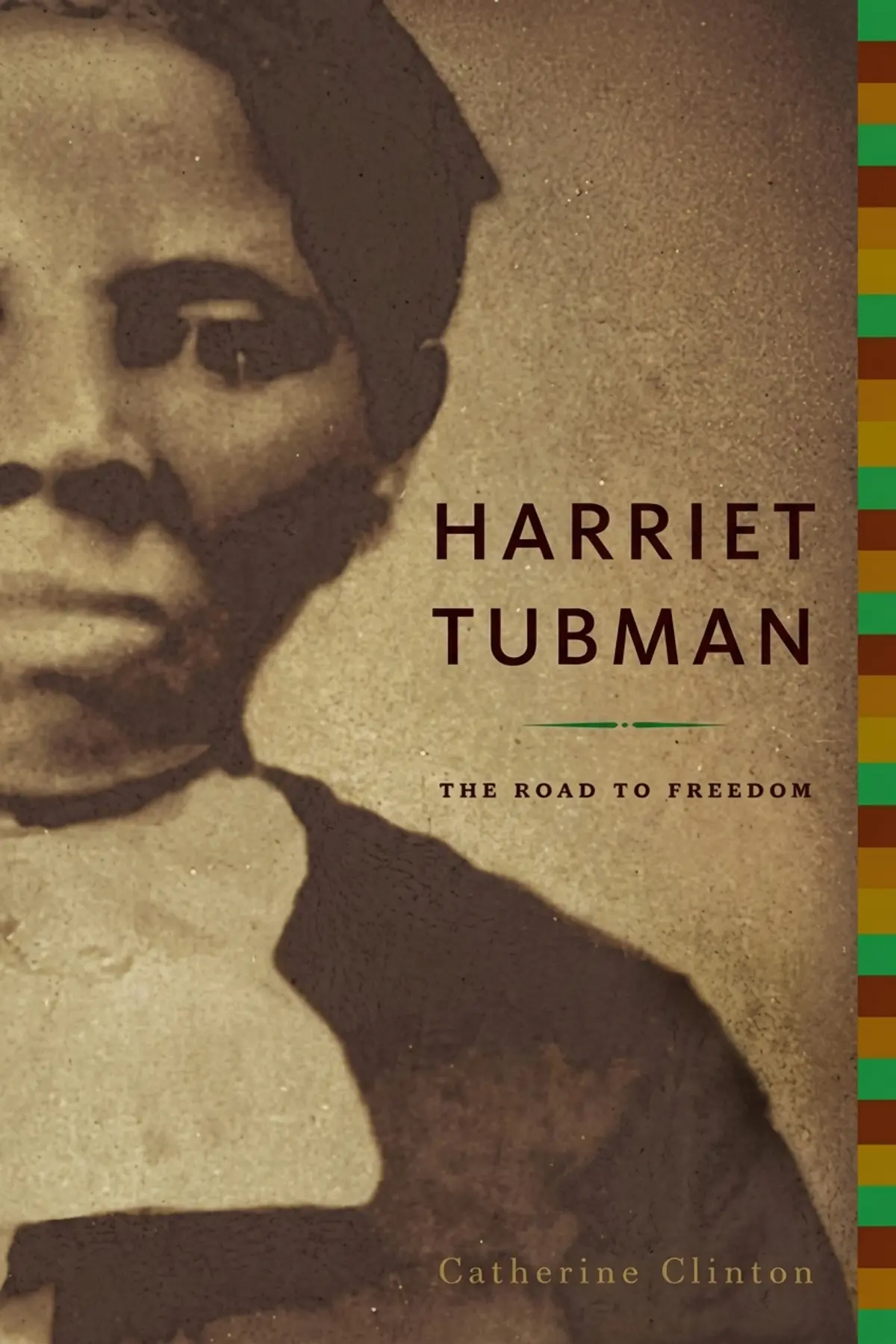
Table of Content
1. Introduction
57 sec
Many people know Harriet Tubman only as a name from a history lesson, more symbol than person. In Harriet Tubman: The Road to Freedom, historian Catherine Clinton recovers the woman behind the legend. Born Araminta Ross into slavery in Maryland, she escaped in 1849 and then chose, again and again, to go back for others.
Clinton’s account follows one thread. Tubman’s bravery was a practice, built from faith, family loyalty and careful planning, and kept up for decades with almost no pay. The story runs from a whipped five-year-old to an Underground Railroad guide called Moses, then to a Union spymaster and finally a voice for women’s votes. Along the way it shows how one person facing a whole legal system chose which risks to take, kept frightened people moving and turned private grief into public purpose.
2. See what a stolen childhood made of her
1 min 52 sec
Her birth date went unrecorded, her sisters were sold and a neighbor whipped her over a crying baby. Clinton shows what those early years took from Tubman, and what they unexpectedly gave her.
3. Recognize when staying becomes the greater danger
1 min 53 sec
Her owner’s death looked like good news. Tubman read it as a warning, and a broken promise about her mother’s freedom gave her one more reason to walk north alone at night.
4. Turn heartbreak into a repeatable rescue plan
1 min 45 sec
On her third trip south, Tubman risked her hometown for a reunion that never happened. How she recovered from that blow explains why she came to be called Moses.
5. Keep your group moving when someone wants to quit
1 min 41 sec
Deep in a swamp with 25 fugitives, one man wanted to go home. Tubman’s answer was shocking, and it sat beside a gentler story about two elderly parents and a wagon.
6. Keep a fallen hero's purpose, drop his plan
1 min 43 sec
John Brown called her General Tubman and then died on the gallows after a failed raid. Within months she was inside a New York courthouse, wrestling a prisoner away from his guards.
7. Put old skills to work in a crisis
1 min 36 sec
Relief worker, bodyguard, spymaster, nurse: during the Civil War Tubman took on all four. The thread connecting them explains how one network helped free 750 people in a single river raid.
8. Keep serving when the recognition comes late
1 min 37 sec
After 15 years of unpaid service, Tubman sold baked goods to get by and lived on a pension of $8 a month. What her friends did next, and what she did with it, closes her story.
9. Conclusion
1 min 09 sec
The Tubman in Catherine Clinton’s book is not the polished figure of legend. She carries lifelong whip scars, a cracked skull and sudden spells of sleep. She fled alone, came back, lost her husband to another woman and kept going anyway. Her courage was a long chain of decisions: when to run, which nights were dark enough, what to do with a man who wanted to turn back, how to move parents too old to walk.
That is the part worth taking into an ordinary week. When something feels bigger than you, an institution or a risk you cannot remove, ask whether you are waiting to feel brave or building a plan. Tubman planned around winter darkness and around the weakest traveler. And she let loyalty to people, her family first, decide which risks were worth taking.
Her government once valued decades of service at $20 a month. Now her face is set to appear on the twenty dollar bill. The whole distance of her life lies between those two facts, along with the reminder that the people who change history rarely wait to be paid for it.
About this book
What is this book about?
Harriet Tubman is famous, yet for a long time she stayed half hidden in legend. Even her birth year is uncertain. Historian Catherine Clinton sets out to recover the real woman behind the myth: Araminta Ross, born into slavery near Bucktown, Maryland, whipped as a child, struck in the head by an overseer's weight and left with lifelong narcolepsy. Clinton follows Tubman's escape to Philadelphia in 1849 and her decision to keep going back. She led rescues in winter darkness, held a pistol on a man who wanted to turn back in a swamp and hid her elderly parents in a specially fitted wagon. She was also inspired by John Brown, she snatched a fugitive from courthouse guards and she ran a Union spy network that helped free 750 people on the Combahee River. The result is a portrait of bravery as a set of decisions about risk, loyalty and planning. It ends with a hard truth: Tubman worked for 15 years without pay and waited until 1899 for a pension of $20 a month.
Book Information
Who it's for
Heard only the legend
Readers who know Tubman's name but not the real story behind the legend.
Students and teachers
Students and teachers looking for a clear, human account of slavery, the Underground Railroad and the Civil War.
Looking for real courage
Leaders and anyone facing long odds who want a real example of planned, sustained courage.
About the Author
Catherine Clinton
Catherine Clinton is an American historian, born in 1952, who specializes in American history, the Civil War, women's history and African-American history. She earned her doctorate at Princeton University and has taught at Harvard and Brandeis. She has written more than 15 books, including Civil War Stories, Half Sisters of History and I, Too, Sing America, so this biography grows out of long study of the very era and people Tubman lived among.
Ratings & Reviews
Ratings at a glance
What people think
Listeners find this biography to be thoroughly researched and full of vital details, offering a rich narrative that holds their attention from start to finish. The work is commended for its excellent writing and deep character portrayal, showcasing Harriet Tubman as a remarkable figure of infinite resolve. Listeners value the historical background provided and describe the account as motivating, with one listener mentioning it effectively portrays a persona defined by courage.
Top reviews
Tern
Wow. It’s hard to wrap your mind around the sheer level of bravery Harriet Tubman displayed throughout her life. Catherine Clinton manages to peel back the layers of myth to reveal a woman of boundless determination who was so much more than just a conductor on the Underground Railroad. The book details her work as a spy and nurse during the Civil War, which I hadn't known much about before. While the narrative occasionally feels a bit academic, the strength of Tubman’s character shines through every chapter. She was truly the 'Moses of her people,' risking everything time and again for the sake of liberty. It is a deeply moving read that makes you reflect on the price of freedom and the power of one person's will.
Show moreSamart
Clinton does an incredible job of placing 'Araminta' Ross within the larger tapestry of the antebellum South. The book doesn't just treat her as a legend; it treats her as a human being who was shaped by trauma, faith, and an unshakable sense of justice. I was particularly struck by the descriptions of her head injury and how it influenced her religious experiences throughout her life. The narrative is packed with significant information about the abolitionist movement, and it’s clear the author put a lot of work into the research. While some chapters are denser than others, the payoff is a much clearer picture of why Tubman remains such a pivotal figure. Inspirational is an understatement for this level of character development.
Show moreGung
How have I gone my whole life without knowing the full extent of Harriet Tubman’s grit? This book is a powerful reminder that heroes aren't born; they are forged in the fire of adversity. Clinton’s detailed narrative keeps you engaged by connecting Tubman’s personal struggles to the broader fight for emancipation. The way she describes Tubman carrying a gun and leading 700 slaves to freedom during the Combahee raid is just mind-blowing. It’s a story of bravery that feels incredibly relevant today. Frankly, this should be standard in every history classroom because it captures the determination required to face down systemic evil. I couldn't put it down once I got past the first few chapters.
Show moreKae
As someone who appreciates history that reads like a story, I found this account deeply engaging and thoughtfully composed. The author manages to provide a wealth of historical context without losing sight of the incredible woman at the center of the storm. I loved learning about the smaller, side characters in her life—those relationships really helped humanize her and explained the network she relied on. While the book is relatively short, it doesn't lack for impact or significant information. It’s an inspirational look at Tubman’s life that avoids the traps of simple hagiography. If you're looking for a biography that combines rigorous research with a readable style, this is the one to pick up.
Show morePete
Picked this up to learn more about Tubman's life beyond the famous stories, and it certainly delivered on that front. The focus on her role in the Combahee River Raid was a particular highlight, showing her tactical brilliance and military significance. Clinton’s writing is crisp, though she sometimes makes abrupt shifts between different historical events that can be jarring. I found the analysis of the Fugitive Slave Law and the social climate of the mid-19th century to be incredibly helpful for understanding the risks she took. It’s a comprehensive look at a woman who refused to be broken by an inhumane system. This should be required reading for anyone interested in American history or civil rights.
Show moreThanakorn
Finally got around to reading this one, and it’s quite a ride through a dark but important part of our history. The writing quality is generally high, capturing the essence of a woman whose life was defined by courage. I enjoyed how the book explored her later years, including her work for women's suffrage, which often gets overshadowed by her earlier exploits. Look, it’s not exactly a light read—the subject matter is heavy and the historical detail is intense—but it’s deeply rewarding. It really highlights how one person's determination can change the course of history for hundreds of others. Definitely a must-have for the history shelf, even if some parts feel a bit clinical.
Show morePrasarn
After hearing several people recommend both Clinton and Larson, I opted for this one first because it seemed more concise. It is a fantastic biography that emphasizes Tubman’s grit and her incredible ability to adapt to any situation. My only minor gripe is that the post-Civil War years felt a little rushed compared to the earlier chapters. However, the way Clinton paints the picture of the Maryland landscape and the secret codes of the Underground Railroad is absolutely gripping. You can almost feel the tension in the air as she describes those night-time escapes. It’s an informative, well-paced book that honors Tubman’s legacy without being overly sentimental or turning her into a caricature.
Show morePranee
The truth is, writing a biography for someone who left no written records of her own is a monumental task. Clinton handles this challenge fairly well, though the academic tone can be a bit distancing. There is a lot of information about the people around Tubman, which is great for context but sometimes makes the main subject feel like a guest in her own book. Still, the sections on her fierce defiance and her 'move or die' attitude on the trail are genuinely thrilling. I appreciate the effort to separate the myths from the facts, even if it means some parts are less 'exciting' than the legends we grew up with. A very solid addition to the field.
Show moreYaowares
This biography is clearly well-researched, but the dry tone made it a bit of a slog at times. Because Tubman was illiterate and left no journals of her own, Clinton has to rely on a lot of 'might have felt' speculation and secondary sources, which sometimes felt like filler. I appreciated the historical context of the Eastern Shore, yet the book occasionally wanders off on long tangents about side characters that distracted me from the main subject. That said, the sections on her original identity as Araminta and her spiritual visions were fascinating. If you want a quick, informative overview of her life, this is a solid choice, but be prepared for a narrative that feels more like a textbook than a thrilling story.
Show morePreeda
I really wanted to love this, but I struggled with the structure and the lack of concrete new information. For a large portion of the first half, the actual details about Harriet are watered down by lengthy descriptions of other people and general historical background. I understand the need for context, but I was looking for a deep dive into her personal psyche and day-to-day experiences. Instead, it felt like the author was stretching thin records to fill a full-length book. Some of the 'she likely thought' phrasing became repetitive and took me out of the moment. It is an okay introduction for a student, but for a casual reader looking for a narrative experience, it might feel a bit hollow.
Show moreQuestions about this book
What is Harriet Tubman: The Road to Freedom about?
Catherine Clinton’s biography recovers Harriet Tubman from myth. It follows her from her birth as Araminta Ross in Maryland, through childhood abuse and a serious head injury, to her escape in 1849. It then covers her rescue missions on the Underground Railroad, her ties to John Brown, her work as a Union spy and nurse, and her later campaigns for Black rights and women’s votes.
Why was Harriet Tubman called Moses?
After her escape, Tubman went back south again and again to lead people out of slavery. She traveled twice a year, often in winter when longer nights gave more cover, and returned with groups that sometimes numbered dozens. By 1854 she had completed five journeys south and led as many as 30 people out of bondage, and admirers started calling her Moses for guiding her people to freedom.
What did Harriet Tubman do during the Civil War?
She helped escaped people at Fort Monroe get food and protection. In 1863 she built a spy network among enslaved people in South Carolina for the Union’s Department of the South. Its information helped Union troops avoid mines on the Combahee River and free 750 people. She also nursed wounded Black soldiers after Fort Wagner and was named an official Matron.
Was Harriet Tubman ever paid for her work?
For 15 years she served the Underground Railroad and the Union Army essentially as an unpaid volunteer. After her second husband, Nelson Charles Davis, died in 1888, she received a widow’s pension of $8 a month. Her friends petitioned the government, and in 1899 her pension was raised to $20 a month, which helped her open the Harriet Tubman Home in 1908.
What can readers learn from Harriet Tubman's life?
Clinton’s account shows courage as planning and persistence. Tubman timed her trips to long winter nights, adapted her plans for travelers who could not walk and held a frightened group together when one man wanted to turn back. She also kept serving for decades without pay or recognition, which offers a model for anyone doing hard work without applause.
Readers also enjoyed
Age of Anger: A History of the Present
Pankaj Mishra

A Promised Land
Barack Obama


A River in Darkness: One Man’s Escape from North Korea
Masaji Ishikawa
1491: New Revelations of the Americas Before Columbus
Charles C. Mann

A Spy Among Friends: Philby and the Great Betrayal
Ben Macintyre

1929: Inside the Greatest Crash in Wall Street History--and How It
Andrew Ross Sorkin


A Biography of Loneliness: The History of an Emotion
Fay Bound Alberti
AUDIO SUMMARY AVAILABLE
Listen to Harriet Tubman in 15 minutes
Get the key ideas from Harriet Tubman by Catherine Clinton, plus 5,000+ more nonfiction titles.
- 5,000+ titles
- Listen as much as you want
- 7-day free trial
- Cancel anytime









