

12 min 02 sec
Available in: English
Hardcore Self Help: F**K Anxiety
By Robert Duff
A blunt, practical guide to recognizing what kind of anxiety you have, calming panic with a counted breath, explaining yourself to loved ones and getting professional help to fight it.
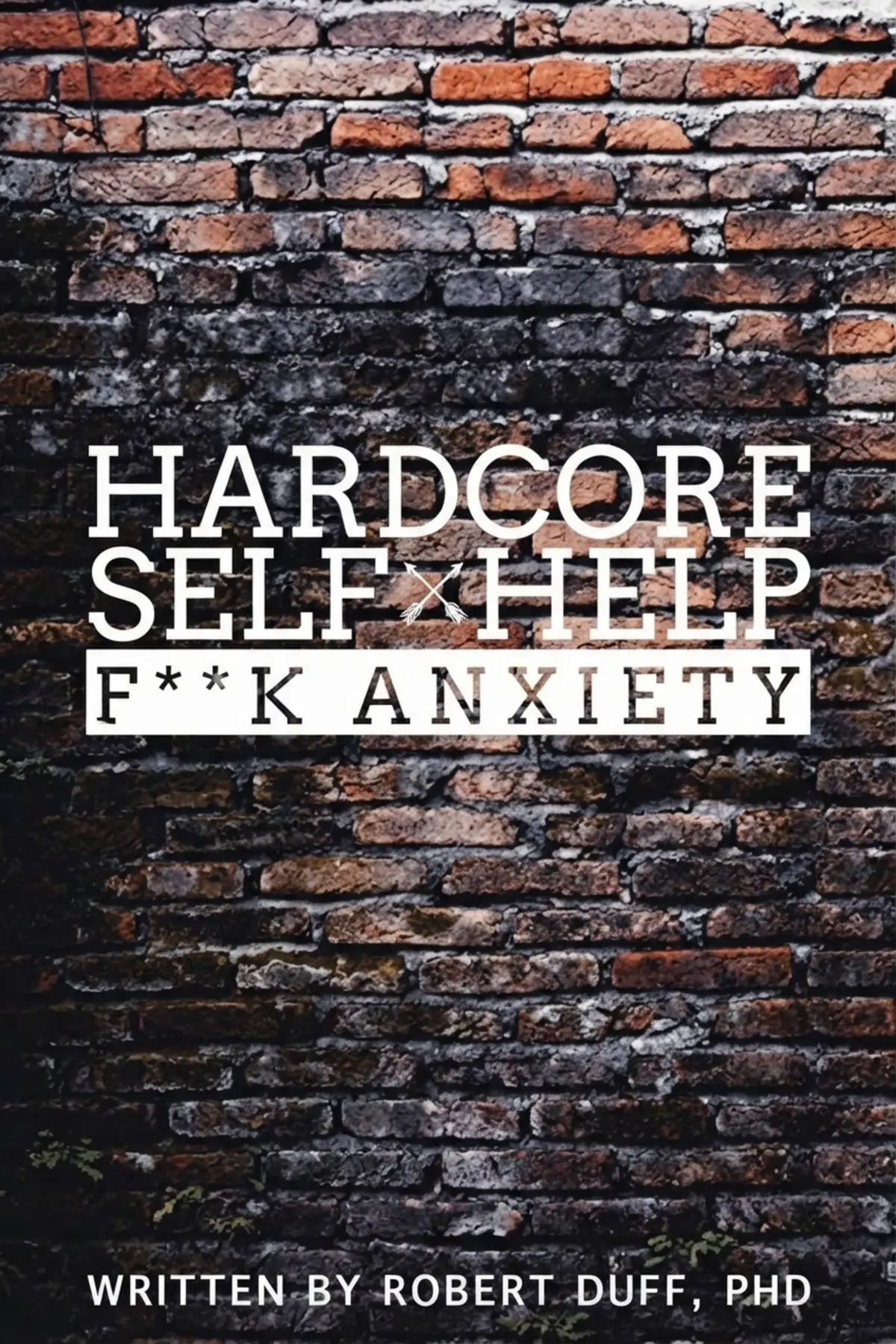
Table of Content
1. Introduction
1 min 04 sec
If anxiety follows you from a sleepless bed into the working day, calm can feel like something only other people know how to find. Psychotherapist Robert Duff starts with a fact you can use tonight: a slow, counted breath can interrupt a panic attack, because the mind cannot follow the breath and its fear at the same moment.
In Hardcore Self Help, his blunt guide for readers who usually avoid self-help books, Duff treats anxiety as an opponent you can study and fight. His case is that anxiety is fed by both your thoughts and your body, that a handful of plain techniques can push it back, and that the fight goes best with a therapist and the people you love on your side.
What follows is a way to recognize the kind of anxiety you live with, a breathing drill to practice before you need it, a letter that helps your family help you, and a trick from Duff’s own life: giving your anxiety a name.
2. Know which kind of anxiety you are fighting
1 min 49 sec
A racing heart in a healthy body, a door opened twelve times before leaving home, a surprise that feels like an attack. These look unrelated, yet they may belong to one family, and knowing which member you face changes everything.
3. Learn how mind and body both trigger panic
1 min 43 sec
One exam can turn into a ruined career in the space of a sleepless hour. Yet some panic attacks need no worrying thought at all, and that difference matters for how you respond.
4. Stop a panic attack with a counted breath
1 min 28 sec
Hollywood rarely gets psychology right, but one movie habit survives a therapist’s scrutiny. The catch is that it works far better when you have rehearsed it on calm days than when you first try it mid-attack.
5. Protect your calm by being harder to reach
1 min 38 sec
Constant messages and late calls with colleagues abroad feel like part of a normal job. Duff sees them as a slow drip that raises the odds of panic, and his fix involves a cafe with no internet.
6. Help the people close to you understand
1 min 33 sec
Family and friends usually want to help, and their help can still make things worse. A single page, written on your terms, can show them what support looks like and when to step back.
7. Name your anxiety and count your wins
1 min 39 sec
Medication alone, Duff argues, will never be enough. He urges readers to find a good therapist and to keep noticing small progress, and from his own life he shares how he turned his anxiety into a character he could eventually throw out.
8. Conclusion
1 min 08 sec
Duff’s book is blunt, and its message holds steady throughout. Anxiety feels like weather that simply happens to you, yet it has sources you can learn and habits you can change. Thoughts that race toward catastrophe, a body primed for alarm, a life with no off switch, loved ones left guessing: each one is a place to push back. None of it, he insists, replaces a good therapist, and none of it works as well in isolation as it does with people who understand you.
A sensible start is modest. Give 15 minutes tonight to the even four-count breath, then try the 4-7-8 pattern for a few minutes, so the drill is ready before you need it. Pick one hour this week when no message can reach you. If someone close to you keeps getting it wrong, write them the letter. And if anxiety has been running your days, book time with a professional to learn what you are actually facing.
Then give it a name. Something with a name can be shown the door, the way Fred finally was.
About this book
What is this book about?
Anxiety follows certain individuals through every single day. It keeps them awake, ambushes them during the day and leaves the people around them unsure how to help. Psychotherapist Robert Duff wrote this book for readers who usually avoid self-help, and he treats anxiety as an opponent you can study and fight back against. Duff explains the main forms anxiety can take, from phobias to PTSD and OCD. He shows how catastrophic thinking, fear of other people's judgment and a body primed for alarm can each start a panic attack. Then he offers plain tools: the 4-7-8 breathing drill, practiced daily so it is ready in a crisis; regular breaks from being constantly reachable; and a letter that helps family and friends understand what you are going through. He is clear that these tools work best alongside a good therapist, and he shares his own way of staying motivated: he gave his anxiety a name, Fred, and watched Fred show up less and less over the years. Readers get a short, usable plan for calming down now and keeping anxiety in check over time.
Book Information
Who it's for
Facing panic or worry
People who live with panic attacks or constant worry and want plain tools, not pep talks.
Professionals always on call
Professionals who stay reachable at all hours and feel the stress building.
Families and self-help skeptics
Partners and family who want to understand an anxious loved one, and readers who usually dislike self-help.
About the Author
Robert Duff
Robert Duff runs a private practice where he offers psychotherapy in person and online, along with neuropsychological assessment, which tests abilities such as memory, attention and reasoning. He writes the Hardcore Self Help series, including books on anxiety and depression, aimed at people who normally dislike self-help. He also hosts a weekly podcast answering audience questions and interviewing guests, and shares psychology and lifestyle videos on YouTube.
Ratings & Reviews
Ratings at a glance

What people think
Listeners find this self-help guide informative and accessible, providing actionable tips via a blunt delivery. They value the humor involved, remarking that the analogies make them laugh out loud, and describe the content as authentic and grounded. The text successfully targets anxiety, enabling individuals to reframe their perspectives and offering quality methods for handling it.
Top reviews
Chloe
This book is like a bucket of cold water for your brain when it’s overheating from stress. I’ve spent years feeling like my own mind was a total douchebag, and finally, someone just says it out loud. Robert Duff takes the scary, scientific weight out of anxiety and replaces it with practical, funny analogies that actually work. It’s a very fast read, which is perfect because who has the attention span for a 400-page textbook during a crisis? The 'F**k Anxiety' mantra might seem crude to outsiders, but for those of us in the trenches, it’s empowering. Highly recommended for anyone tired of the polite, useless advice usually found in this genre.
Show morePensri
After hearing Dr. Duff's podcast, I knew I needed to grab his book to see if the written version was just as helpful. It’s definitely more amped up and vulgar than his soothing audio presence, but the core message remains just as compassionate. He makes the daunting world of finding a therapist or understanding CBT feel totally accessible, even if you’re broke and overwhelmed. I love that he includes links to more in-depth resources, making this a gateway to a larger support system. It’s a short read, but the impact of feeling 'seen' by a professional who doesn't talk down to you is huge. Truly a breath of fresh air in the self-help aisle.
Show morePierre
Ever wonder if a therapist can actually talk like a normal human being? This book answers that with a resounding yes. Robert Duff manages to explain the most complex parts of our psychology using 'spirit weapons' and gaming metaphors that actually make the concepts stick. I finally understood how my thoughts were sabotaging my behaviors because he didn't hide the truth behind five-syllable medical jargon. It’s a no-bullshit guide that respects the reader's intelligence while acknowledging that anxiety makes us feel like total idiots. Whether you are currently struggling or just want to understand your brain better, this is an essential, relatable read. F**k anxiety, indeed.
Show moreRoo
Picked this up during a panic attack because I needed something—anything—to focus on that wasn't my own chest tightening. The straightforward, blunt tone was exactly what I needed to snap out of the spiral and start using the techniques. It’s not a boring textbook; it’s a conversational tool that validates your frustration without being overly precious about your feelings. I love how he describes the brain as a 'douche' because that's exactly how it feels when it's lying to you about reality. This book gave me the courage to actually look into finding a therapist, which is something I’ve put off for a decade. It’s short, it’s crude, and it actually works.
Show moreLek
Finally got around to reading this after seeing it everywhere, and I have to say, the no-BS approach is refreshing. Most self-help books feel like they are written by a Hallmark card, but Duff talks to you like a friend at a bar. He uses metaphors about ninjas and rocket launchers that actually make sense when your brain is spiraling. While the swearing might be a bit much for some, it helps break down the wall of clinical intimidation. The focus on CBT is explained in such a simple way that it actually sticks. I wish there was more depth on long-term management, but for a quick reset, it’s solid.
Show moreRiley
As someone who hates the typical 'breathe in the light' fluff, I found this take on mental health incredibly grounding. Duff treats your brain like a piece of hardware that’s just glitching out, rather than some mystical temple you need to cleanse. The 'triforce of mental douchebaggery' is a hilarious but accurate way to look at how our thoughts and feelings feed into each other. It’s short, punchy, and provides actionable steps without making you feel like a patient in a sterile ward. My only gripe is that it feels a bit light on how to handle work-life balance specifically. Still, it’s a great tool to keep in your back pocket for bad days.
Show moreNongnuch
The chapter on breathing exercises actually made me laugh out loud, which is a miracle considering I was mid-panic when I started it. Most doctors give you these dry instructions that make you focus even more on your racing heart, but Duff’s analogies keep things light. He breaks down the physical symptoms of anxiety in a way that makes them feel less like a heart attack and more like a temporary system error. To be fair, the book is quite short, so don't expect a deep dive into your childhood trauma. It’s a tactical manual for the now, focusing on getting through the next ten minutes rather than the next ten years.
Show moreLook
Look, the advice here isn't exactly groundbreaking if you've been in therapy for more than a few months. It covers the basics like deep breathing and cognitive reframing, which are essential, but the presentation is definitely an acquired taste. The author tries a bit too hard to be 'down with the kids' by using gaming references and constant profanity. While I appreciate the attempt to de-stigmatize mental health, it sometimes feels like a middle-aged guy trying to act edgy. If you are new to the world of anxiety, this is a five-star starting point. For those of us with complex history, it’s a bit too simplistic to offer real relief.
Show moreLena
Frankly, it's a bit of a mixed bag for me. On one hand, the humor is genuinely funny and the 'down-to-earth' vibe makes the medicine go down easier. On the other hand, it feels like the author is trying to sell his YouTube channel and TED talk a little too hard in the middle of the text. I appreciated the sections on cognitive behavioral therapy, but they were over before they really got started. It's a great intro to anxiety for someone who is scared of traditional therapy, but it lacks the weight needed for deep-seated issues. It’s good for a quick laugh and a reminder to breathe, nothing more.
Show moreCharles
Not what I expected based on the hype, to be honest. I found the writing style to be incredibly distracting because the author inserts 'f-bombs' every other sentence just for the sake of it. It feels less like 'hardcore' help and more like a collection of blog posts written by someone who wants to be a cool older brother. The concepts are so basic that you could probably find them on a single infographic on Pinterest. If you have severe, long-term anxiety or PTSD, a book telling you that your body is 'a dick' isn't going to cut it. It might work for a teenager, but I needed something with significantly more clinical substance.
Show moreQuestions about this book
What is Hardcore Self Help about anxiety by Robert Duff about?
Robert Duff, a psychotherapist, explains the main forms of anxiety, including phobias, PTSD and OCD, and shows how both anxious thinking and the body can trigger panic attacks. He then offers practical tools: a daily breathing drill, regular breaks from being constantly reachable, a letter to help loved ones understand you, and professional therapy, supported by tracking your progress and giving your anxiety a name.
What is the 4-7-8 breathing technique for panic attacks?
Duff recommends breathing in while counting to four, holding the breath until seven, then breathing out slowly at eight. He suggests practicing daily for about 15 minutes in a calm place, starting with an even four-second rhythm of in, hold and out, then switching to 4-7-8. Focusing on the breath calms the body and pulls attention away from the cause of the panic.
How do I explain my anxiety to family and friends?
Duff suggests writing them a letter. It lets you set out your feelings fully and lets them take the time to absorb them. Describe how anxiety makes you feel, thank them for their support and acknowledge that living with someone who has an anxiety disorder can be hard. Also tell them you will sometimes need to work through things alone before talking.
Is medication enough to treat anxiety according to Robert Duff?
No. Duff accepts that medication helps some people, but he argues it is never enough on its own. He recommends finding a good therapist who can help uncover the causes of your anxiety, identify which type you have and treat it safely. He warns that untreated anxiety can lead to depression and even suicidal thoughts, so professional help matters.
Why would you give your anxiety a name?
Duff named his own anxiety Fred and began treating it as a person instead of an illness. Bad days became days when Fred was in a foul mood. Seeing anxiety as an outside character made it something he could fight and track. Over the years Fred appeared less often, and that visible progress motivated Duff to push him out for good.
Readers also enjoyed





Alcoholics Anonymous
Alcoholics Anonymous World Services

A Liberated Mind: How to Pivot Toward What Matters
Steven C. Hayes


AUDIO SUMMARY AVAILABLE
Listen to Hardcore Self Help in 15 minutes
Get the key ideas from Hardcore Self Help by Robert Duff, plus 5,000+ more nonfiction titles.
- 5,000+ titles
- Listen as much as you want
- 7-day free trial
- Cancel anytime









