
14 min 23 sec
Available in: English
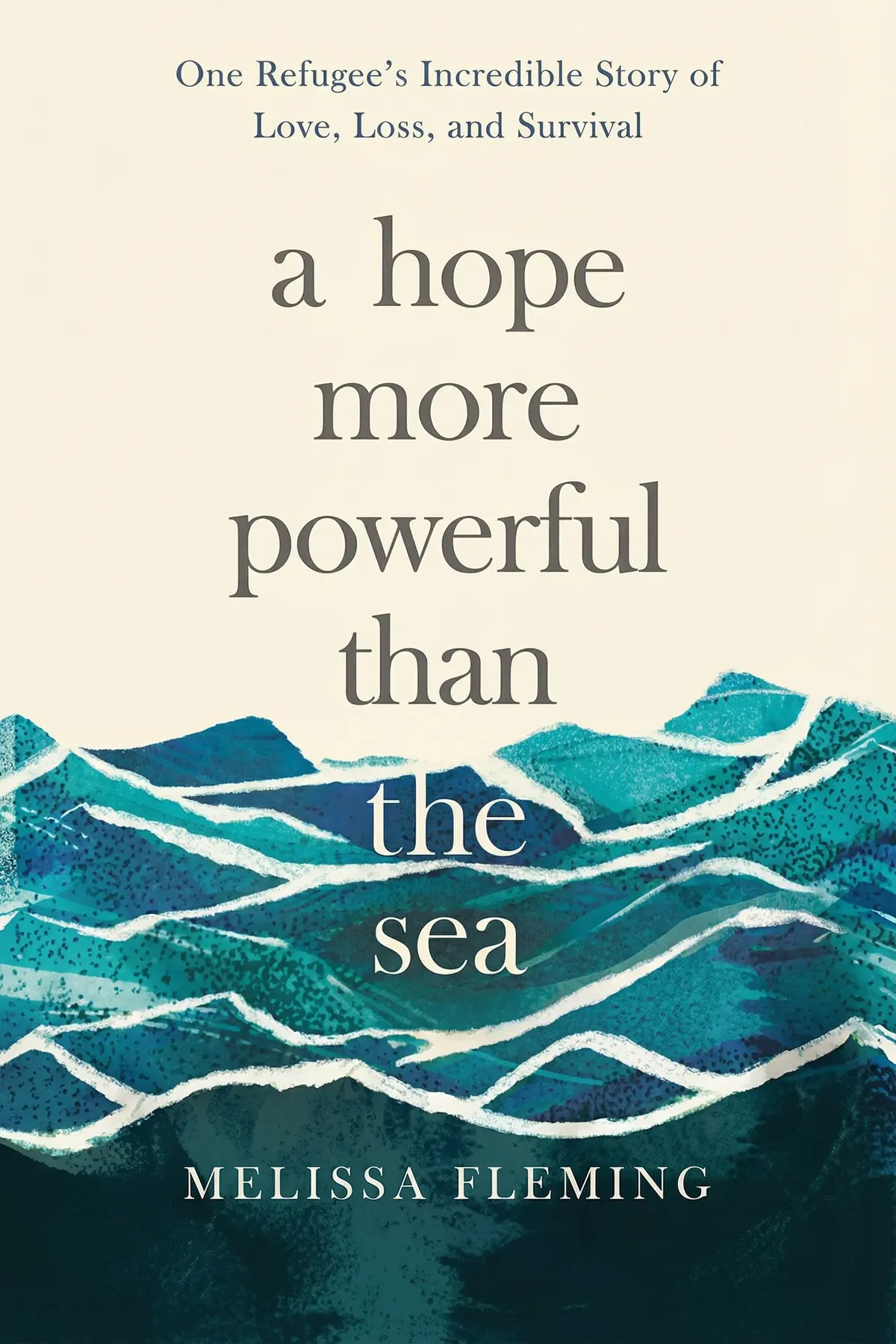
Guantánamo Diary
A Mauritanian engineer's own account, written inside Guantánamo, of how suspicion with no charge behind it carried him through four countries, secret transfers and torture, and why even a court-ordered release did not free him.
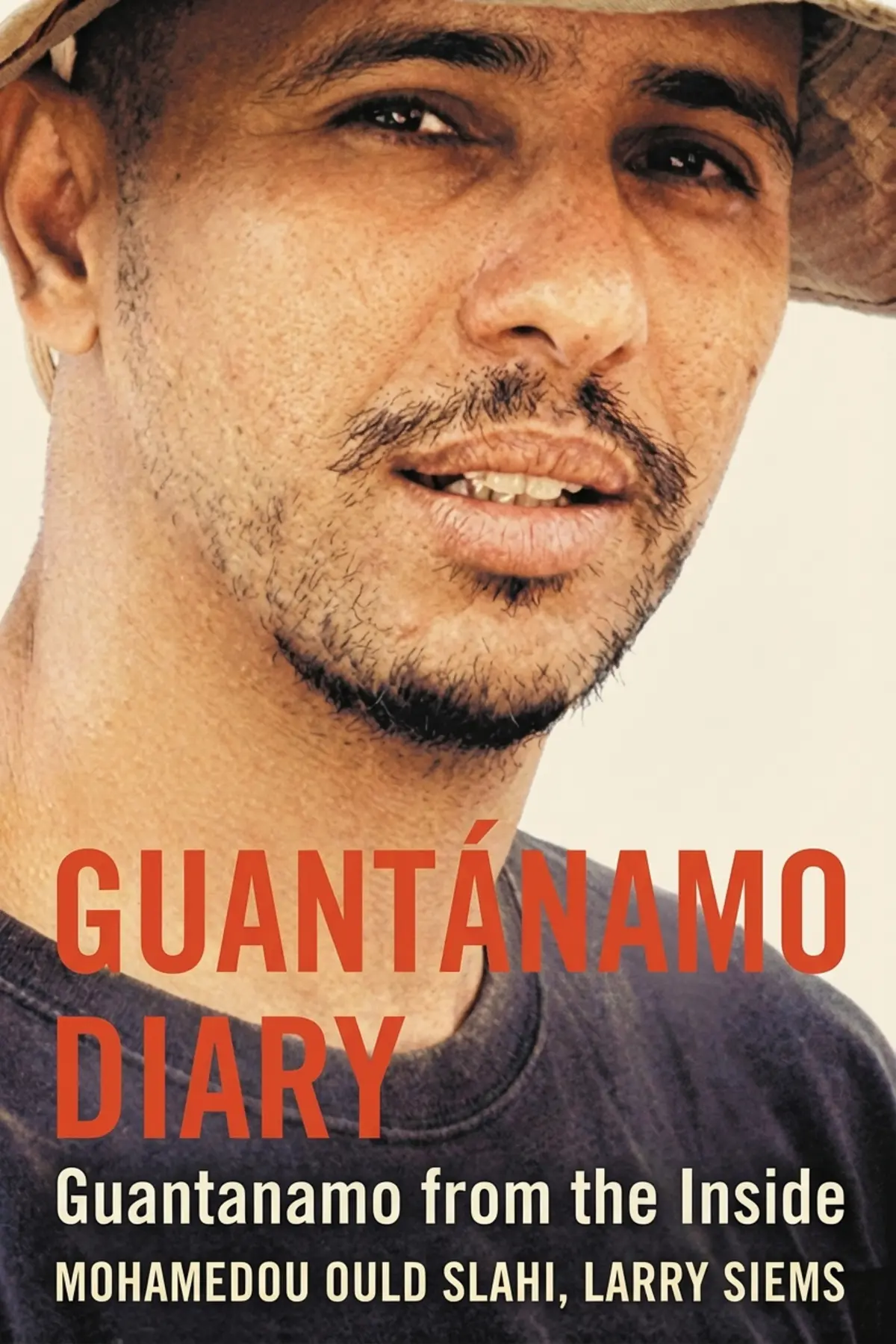
Table of Content
1. Introduction
1 min 11 sec
Most of us know Guantánamo Bay as a name in the news. Few of us know it as the place where one man answered the same questions for years. In Guantánamo Diary, Mohamedou Ould Slahi, a Mauritanian engineer held without charge, tells that story from inside. He wrote the manuscript in custody in 2005, his captors blacked out parts of it, and Larry Siems edited it for publication. Its first lesson is how little it took to begin: Slahi had prayed at a Montreal mosque once used by a man later caught planning to bomb an airport.
From that small fact, a pattern unfolds. Once the authorities decided Slahi was guilty, secret detention and torture produced the confession they expected, and still nothing he said could set him free. Following him from an airport in Dakar to a cell in Cuba shows, through one life, what happens when a government answers to no court and no public. It also explains why Slahi wrote, in the end, to ask ordinary citizens to question that power.
2. Trace how one mosque visit created a suspect
1 min 55 sec
A scholarship student in Germany, a vow made in another era and a few weeks in Montreal. None of it was a crime, yet together they drew the attention of investigators on two continents.
3. Learn how everyday words became suspected code
1 min 56 sec
A man flies home to see his family after twelve years away. Before he reaches the car, he is in handcuffs, and soon his interrogators insist that phone talk of tea and sugar hides a code.
4. See what a secret transfer means for a prisoner
1 min 58 sec
On his country’s national holiday, a man who drove himself to the police station is put on a plane to another country. His family will not learn where he went for a full year.
5. Watch accusations grow while charges never come
1 min 59 sec
The list of crimes against him kept getting longer, including an attack that happened while he sat at home in Mauritania. Meanwhile a letter from his family arrived that his family never wrote.
6. See why torture produces confessions nobody can trust
2 min 04 sec
A fake kidnapping, a boat ride to nowhere and a doctor whose job was to keep him fit for more. By September 2003, Slahi was confessing to crimes no one had even accused him of.
7. A court victory that left the door locked
2 min 03 sec
Books, films with the guards and finally a federal judge ordering his release. Each step looked like the way out, until four days after the ruling, when the government answered.
8. Conclusion
1 min 17 sec
Strip the diary down and one image remains: a man sitting with interrogators, insisting that tea means tea and sugar means sugar. Everything that follows grows from that moment. Once the people asking the questions had decided what the answer was, no plain answer could be accepted, and the system kept pressing until it got the one it wanted. The confession, when it came, was thousands of pages long and worth nothing as truth.
What makes the book last is that Slahi does not ask readers to take his word on everything. He asks them to look at the process: secret flights, a forged family letter, a doctor keeping him fit for more pain, a judge’s release order met with an appeal four days later. Any reader can judge that process without settling every question about his past.
The habit worth keeping is simple. When you hear that someone confessed, ask how the confession was obtained. When a government says a person is too dangerous to charge or release, ask who checks that claim. Slahi wrote his account to urge ordinary Americans to challenge that kind of unchecked authority. A prisoner can only be heard if someone outside the walls is willing to listen.
About this book
What is this book about?
In 2005, a prisoner at Guantánamo Bay started writing down how he got there. Mohamedou Ould Slahi, an electrical engineer from Mauritania, had first been questioned in early 2000. He had never been charged with a crime. His manuscript described arrests and interrogations in Senegal, Mauritania, Jordan and finally the US naval base in Cuba. His captors edited and redacted it heavily before it reached the public. The diary follows a single thread: a man the authorities had decided was guilty. A visit to a Montreal mosque once used by an airport bomb plotter made him a suspect. Phone calls about tea and sugar were read as code. Secret flights carried him to a Jordanian prison and then to Guantánamo, where a special interrogation plan wore him down until he confessed to things he had not done. Readers get a firsthand look at what rendition, coercive interrogation and indefinite detention mean for one human being. They also see why a confession produced this way proves nothing, and how a judge's release order was answered with an appeal. Slahi wrote the book as a plea to Americans to ask whether their government should hold that power.
Book Information
Who it's for
Wanting a prisoner's account
Readers who know Guantánamo only from headlines and want one prisoner's firsthand account.
Studying rendition and interrogation
Students of law, human rights or security policy studying rendition, interrogation and habeas corpus.
Weighing confessions and detention
Anyone weighing whether confessions and secret detention can be trusted.
About the Author
Mohamedou Ould Slahi
Mohamedou Ould Slahi was born in Rosso, Mauritania. He was held at Guantánamo Bay for many years without charge and wrote this diary there in 2005. It was declassified with redactions in 2012 and published in 2015. He was released in 2016, and the book later became the film The Mauritanian. Larry Siems, who edited and annotated it, spent 17 years directing PEN's Freedom to Write and International Programs and wrote The Torture Report.
Ratings & Reviews
Ratings at a glance
What people think
Listeners find this work both enlightening and captivating, highlighting its educational nature and powerful narrative. Reactions to the prose are varied; while some deem it high-quality, others point out the significant amount of redacted text. The book’s flow and emotional resonance also draw mixed feedback, with listeners characterizing it as a sorrowful and tragic history. Listeners value the way characters are presented, with one listener especially emphasizing the protagonist's inner strength and dignity.
Top reviews
Gabriel
The heavy black bars of the government redactions serve as a haunting, silent character throughout this gut-wrenching memoir. It is a metafictional nightmare where the author's story is literally interrupted by the people who tortured him. Larry Siems does an incredible job as an editor, providing footnotes that bridge the gaps where the CIA tried to erase the truth. I found it profoundly eye-opening to see how a man can maintain his dignity while being shuttled between Jordan, Afghanistan, and Cuba. Despite the horrific descriptions of sensory deprivation and sleep deprivation, Slahi’s voice remains remarkably human and even witty at times. This isn't just a book; it's a vital historical document that exposes the deep failures of the American legal system. You will walk away from this feeling both furious and deeply humbled by the author’s resilience.
Show moreValentina
Slahi writes with a surprising amount of grace for someone who spent over a decade in Guantánamo Bay under the most brutal conditions imaginable. I was particularly struck by the Mauritian folktale about the man who was afraid of the rooster because the rooster thought he was corn. It is a perfect metaphor for the absurdity of his detention, where intelligence agents refused to believe he was just a man and not a high-level operative. The book is informative and deeply engaging, moving through his rendition path with a terrifying sense of momentum. Even though the government tried to hide their 'abusive ways' through redactions, Slahi’s spirit shines through the ink. His ability to find humanity in his captors, like the Puerto Rican guards who treated him kindly, is nothing short of miraculous. This is essential reading for anyone who cares about human rights and the reality of post-9/11 justice.
Show moreBun
I was particularly moved by the moments of unexpected kindness Slahi describes, such as his brief time with the all-Puerto Rican platoon. These small glimpses of humanity stand in stark contrast to the lawless horror and brutality that define the rest of his experience. The way the U.S. government fought to keep this diary 'top secret' tells you everything you need to know about what’s inside. It is a thought-provoking look at the degradation of American ideals, especially the use of sexual bait and physical torment. Slahi remains fair and even humorous despite being in a prison of horrors for thirteen years without a single charge. His perspective as a German-educated engineer gives him a unique lens through which to view Western habits and prejudices. This book is a masterpiece of resilience. It is a stinging indictment of a system that chose vengeance over justice.
Show moreTanyaporn
Mohamedou Ould Slahi’s account is more than just a diary; it’s a stinging indictment of the 'war on terror' and its erosion of constitutional values. The book shows in painful detail how the 9/11 attacks forced the U.S. to adopt the very tactics of the enemies they claimed to be fighting. It is eye-opening to see how the government used the legal system to stall his release for years after a judge cleared him. Slahi's voice is the strongest part of the book—he is witty, observant, and heartbreakingly humane despite everything. He captures the stages of a prisoner’s emotions with a level of psychological depth that is truly rare. This document proves that information obtained under torture is meaningless and only serves to degrade the captor. It is a tragic but necessary read for anyone trying to understand the last two decades. We owe it to him to read his story.
Show morePick
Why did it take a six-year legal battle just to allow us to read the words of a man who was never charged with a crime? Mohamedou Ould Slahi’s diary is a tragic account of life in the 'pit of forgotten souls' that everyone needs to read. While the prose can be a bit repetitive due to the nature of his incarceration, the emotional depth is undeniable. The most frustrating part of the book is knowing that a judge ordered his release in 2010, yet he remained locked up for years after. It really makes you question who the real terrorists are when you see the level of systemic abuse described here. To be fair, the writing style is a bit episodic, but the informative nature of the text outweighs any narrative flaws. It is a sobering reminder of what happens when fear overrides the rule of law.
Show moreClara
Ever wonder how a human being maintains their sanity while being subjected to the 'war on terror's' most extreme interrogation techniques? This book provides a visceral, albeit censored, answer to that question through the eyes of a man who was kidnapped and exported across borders. Slahi’s descriptions of the masked interrogators and the sexual humiliation he endured are genuinely stomach-turning. It is a sad and tragic account that highlights the amateurish and superficial knowledge of the personnel running these black sites. Franky, it’s embarrassing to read about the 'comic-book style' morale-building strategies used by the U.S. military. The book is heavily redacted, but you can still feel the weight of every missing word. It leaves you with a bitter taste in your mouth regarding the state of American democracy. Still, his fortitude and lack of bitterness are truly compelling.
Show moreLandon
After hearing about the 'rooster and the corn' folktale Slahi tells, it’s hard not to see the tragic absurdity of the entire American intelligence apparatus. This man was trapped in a cycle of stupidity and violence simply because the 'rooster' refused to believe he wasn't corn. The parallels to Solzhenitsyn's 'The Gulag Archipelago' are striking and deeply depressing for a modern democracy. Slahi’s writing is surprisingly colloquial and visceral, using American expressions to describe the very people who were trying to break him. It is a compelling story of survival, even if the redactions occasionally make the plot points hard to follow. Larry Siems deserves credit for his exasperated footnotes that call out the ridiculousness of the government's censorship. One can only hope that Slahi has been able to reconstruct some kind of life after such an ordeal. Highly recommended for the patient reader.
Show moreRung
Picked this up because I wanted to understand the reality of Gitmo, and I was left feeling both furious and incredibly humbled. The way Slahi describes his family as being the guards and interrogators he lived with is a fascinating look at the Stockholm-like reality of long-term detention. While some people might find the writing style a bit unpolished, I think the raw, colloquial nature of his English adds to the authenticity. There are many insights into prison life here that you won't find in any news report or government briefing. My only real complaint is the sheer volume of redacted material, which sometimes feels like it was done just to hide the government's embarrassment. It is a sad, tragic account of a man who lost his best years to a system that didn't even know why it was holding him. We need more voices like his to speak truth to power. This is a brave, informative work.
Show moreGrace
To be fair, while the historical importance of this document is undeniable, the actual reading experience is often disjointed and frustratingly shapeless. Slahi is an engineer writing in his fourth language, and while his command of English is impressive, the narrative tends to be very episodic and occasionally boring. The constant interruptions from the editor’s footnotes and the massive blocks of redacted text make it hard to maintain any sense of flow. It feels more like a collection of evidence than a polished piece of literature, which I suppose is the point, but it's a tough slog. I appreciate the courage it took to write this under such duress, but as a book, it struggles to hold its own against classics like 'Darkness at Noon.' It is an important cause, but not necessarily great writing. I’m glad it exists for the record, though.
Show moreKofi
Look, I understand this is a vital human rights document, but the heavy editing and the constant footnotes make it almost impossible to get into a narrative flow. The redactions are so excessive that in some chapters you are basically just reading '[REDACTED]' over and over again. It’s incredibly repetitive, with Slahi describing the same cycle of interrogations and sleep deprivation until the details all blur together. I found myself skimming large sections because the pacing was so slow and the content so bleak. While I sympathize deeply with his situation, as a reader, I found the book to be a tedious experience that didn't offer much new insight beyond 'torture is bad.' If you want to learn about the legal case, a long-form article might be more efficient than this 400-page diary. It’s an important testimony, but it was a struggle to finish.
Show moreQuestions about this book
What is Guantánamo Diary about?
It is Mohamedou Ould Slahi’s own account, written in custody in 2005, of how he was arrested and questioned in Senegal, Mauritania and Jordan and then held at Guantánamo Bay without ever being charged. It describes the interrogations, the torture and the false confessions it produced, and his legal fight for release. His captors heavily redacted the manuscript before it reached the public.
Why was Mohamedou Ould Slahi suspected of terrorism?
In 1991 he had sworn loyalty to al-Qaeda while fighting the communist government in Afghanistan, though he says he broke with the group afterwards. In Montreal in 1999 he attended a mosque once used by Ahmed Ressam, who was arrested that December for plotting to bomb Los Angeles International Airport. Investigators later accused him of that plot, of a role in the September 11 attacks and of recruiting hijackers.
What happened to Slahi at Guantánamo Bay?
Under a Special Interrogation Plan he faced forced standing, sleep deprivation, extreme cold, sexual abuse, threats against his family and sessions lasting up to 24 hours. In August 2003 guards staged a kidnapping and moved him to a secret camp inside the base. A doctor treated him so the torture could continue. By September 2003 he was confessing to things he had not done.
Did the courts order Slahi's release?
Yes. After the Supreme Court’s 2008 Boumediene v. Bush ruling gave Guantánamo prisoners the right to habeas corpus, Slahi filed a petition. Judge James Robertson ordered his release on March 22, 2010. The Obama administration appealed four days later, and in November 2010 the appeals court sent the case back for a new hearing, so he remained in custody.
What is the main lesson of Guantánamo Diary?
The book shows that a confession extracted through torture tells you about the interrogation, not about the truth, and that secret detention removes the checks that protect anyone wrongly accused. Slahi offers his testimony as an appeal to Americans, asking them to question whether their government should have the right to detain and treat prisoners in this way.
Readers also enjoyed

Ali: A Life
Jonathan Eig

Abortion: Our Bodies, Their Lies, and the Truths We Use to
Jessica Valenti

A Life Decoded: My Genome: My Life
J. Craig Venter


Adults in The Room: My Battle With Europe’s Deep Establishment
Yanis Varoufakis

A Long Way Gone: Memoirs of a Boy Soldier
Ishmael Beah

All Creatures Great and Small
James Herriot

AUDIO SUMMARY AVAILABLE
Listen to Guantánamo Diary in 15 minutes
Get the key ideas from Guantánamo Diary by Mohamedou Ould Slahi, plus 5,000+ more nonfiction titles.
- 5,000+ titles
- Listen as much as you want
- 7-day free trial
- Cancel anytime









