


A Liberated Mind: How to Pivot Toward What Matters
Steven C. Hayes
 English
 ไทย
Psychologist Catherine Gildiner tells the stories of patients who traced crippling adult problems back to childhood harm. Their cases show how courage and a flexible therapist helped them face the past and build fuller lives.

1 min 04 sec
A stubborn problem in adult life, one that no doctor or sensible fix can touch, often turns out to be a childhood survival strategy that is still running. That is the insight behind Good Morning, Monster, in which psychologist Catherine Gildiner tells the stories of patients she regards as heroic. A pianist came to her with a sexual problem that had no physical cause. In their very first session, he revealed that he had grown up locked in an attic.
The book covers five patients, and three of them are followed here. Peter is the pianist. Danny is a Cree survivor of a Canadian residential school. Madeline is an antique dealer whose anxiety was sinking her business. Their stories include abuse and cultural genocide, told without the most graphic details. Together they show one thing. People heal when they dare to trace present pain back to its source, and when a flexible helper meets them on their own terms. Listen for how each of them found the wound beneath the symptom, and what that might mean for your own oldest patterns.
1 min 43 sec
A talented musician had a problem with no physical cause, and even the strongest medicine changed nothing. The answer surfaced in a single conversation, but it was hidden under a part of his life he had never thought to question.
1 min 49 sec
When Peter finally asked his mother about his childhood, her answer made her actions look almost loving. That raised a harder question: does understanding why a parent hurt you mean the hurt no longer counts?
1 min 59 sec
For session after session, a grieving man and his therapist sat together without speaking. The silence was not stubbornness, and breaking it meant the therapist had to admit how much she did not know.
2 min 07 sec
One careless compliment sent Danny out of the room for weeks. Later, real progress pushed him into his darkest stretch yet. His story explains why the moment of breakthrough is also the moment many people give up.
2 min 04 sec
A gifted antique dealer would not let her staff board a plane, and she kept a man who loved her at a distance. Both fears traced back to two words she heard every morning as a girl.
1 min 21 sec
Gildiner’s patients were different people: a pianist raised in an attic, a Cree man taken from his family, and an antique dealer whose mother called her a monster. What they share is a move each had to make. They stopped treating their present trouble as the whole story and looked back at the child who had learned to survive.
Gildiner insists that no single method fits everyone. Every patient is unique, she writes, and a therapist must use judgment. With one person that meant long stretches of sitting in silence and, later, sending him to Native healers. With another it meant urging him to talk with his mother about his childhood. Yet method is only half of it. The other half is the patient’s courage, and in her account neither side can do much alone.
The book also points to a few things worth doing. When a problem resists every sensible fix, ask what it once protected you from. Let understanding a parent sit beside the truth of what they did, without one erasing the other. And if facing the past makes you feel worse for a while, take that as a reason to get more help.
Madeline’s mother called her a monster every morning. Madeline spent more than four years learning that the name had never been hers to carry.
Some problems refuse every sensible fix. A body will not respond, grief will not come, or fear grows until it threatens a business that took years to build. Catherine Gildiner, a psychologist for 25 years, argues from her own case files that such problems are often only the outer layer. Underneath, there is usually a child who found a way to survive something unbearable and never stopped using it. Good Morning, Monster follows patients Gildiner calls heroic. Peter is a pianist who grew up locked in an attic. Danny is a Cree man taken from his family as a boy and placed in a residential school. Madeline runs a global antique business, and her mother greeted her each day by calling her a monster. Gildiner shows the slow, layered work of therapy, including her own mistakes and what she had to learn to help people unlike herself. Readers see how old survival strategies shape adult lives and how understanding a parent differs from excusing them. They also learn why healing can feel worse before it feels better, and what it takes, from patient and therapist alike, to change a life.
Adults who suspect a stubborn problem, such as anxiety, numbness or trouble with intimacy, started in childhood.
People considering therapy who want an honest picture of how slow and layered it can be.
Counselors, managers and caregivers who support people from backgrounds very different from their own.
Catherine Gildiner was born in 1948 in Lewiston, New York, and worked as a psychologist for 25 years before leaving private practice to write. Her doctoral research examined Darwin's influence on Freud. Her first memoir, Too Close to the Falls, recalls her 1950s childhood in Lewiston and spent 150 weeks on Canada's best seller list. Later memoirs include After the Falls and Coming Ashore, and she has also published a thriller, Seduction.
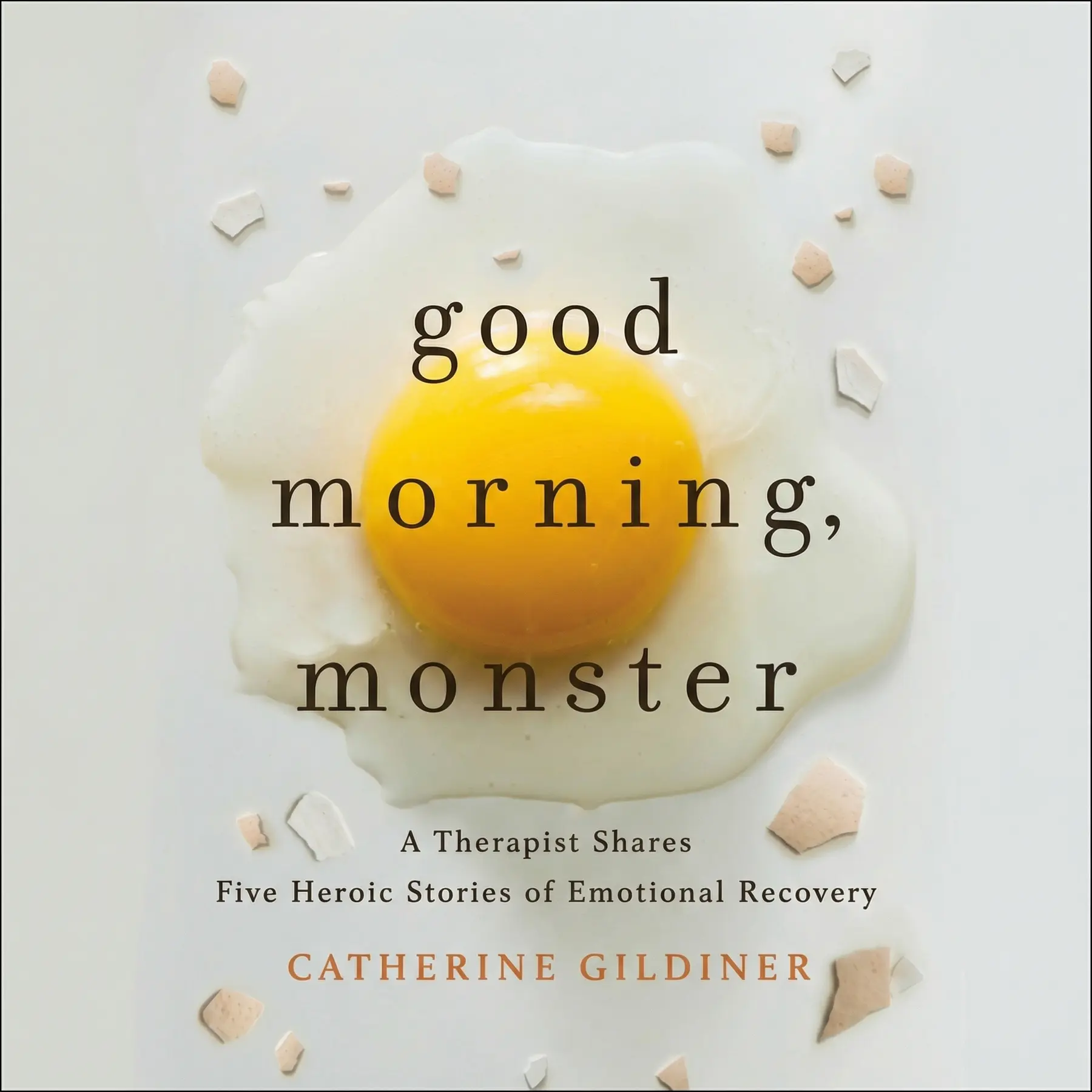
Listeners find this work enlightening and motivating, featuring stories that are both captivating and stunning. The prose is superbly written, and listeners characterize it as touching and relatable, with one listener mentioning how it uncovers truths about themselves and those around them. Although some consider it a simple read, others characterize it as emotionally taxing and hard to finish.
This book is a masterclass in human resilience that left me absolutely speechless by the final page. Gildiner doesn't just recount stories; she introduces us to individuals who have survived the absolute worst of humanity and come out the other side. Each case study is meticulously detailed, showing the slow, often painful 'rags to riches' psychological journey from victimhood to heroism. I found the writing to be incredibly moving and relatable, despite the extremity of the abuses described. It really makes you reflect on your own history and the invisible armor we all wear. While some parts are incredibly difficult to get through because of the subject matter, the payoff of seeing these patients find peace is worth every tear. This is easily one of the most insightful books on therapy I have ever encountered, ranking right up there with Gottlieb’s best work.
Show moreThe phrase 'good morning, monster' serves as a chilling reminder of how deeply parental cruelty can scar a child’s soul. This book is a hauntingly beautiful collection of stories that highlights the 'heroic' nature of survivors. I’ve read Gottlieb's hit book, and while that was great, this feels much more raw and visceral. The structure is perfect, allowing us to follow each patient from the first intake session to their eventual breakthrough. Gildiner is candid about her own mistakes, which makes the narrative feel authentic and grounded. It’s a mesmerizing read that reveals so much about the mechanics of the human mind and the power of a dedicated therapist. Just be warned: the trauma described is intense and might be triggering for many readers. It’s a breathtaking achievement in the genre that I will be recommending to everyone I know.
Show morePicked this up on a recommendation and was immediately sucked into the life of Peter, the indigenous man whose story is the heart of this collection. His level of resilience throughout the sessions is absolutely staggering. The way Gildiner navigates his cultural trauma while maintaining clinical focus is truly impressive. I found the book to be both an easy read in terms of prose and a difficult one in terms of content. It’s a strange balance. One moment you are fascinated by a breakthrough, and the next you are reeling from a description of horrific abuse. Personally, I think the 'hero' framing is a helpful way to process such dark material. It reminds us that these aren't just victims; they are conquerors of their own pasts. This is a must-read for fans of psychological memoirs who want something with more teeth than the usual fare.
Show moreRarely does a memoir about clinical psychology manage to feel this urgent and cinematic. Gildiner has a gift for narrative that turns a series of therapy sessions into a gripping, high-stakes drama. The stories are messy, complicated, and often painful to witness, but they are never dull. I appreciated the author’s willingness to show her own confusion and occasional missteps, as it humanizes the profession in a way most textbooks avoid. Some might find the level of detail regarding child abuse to be excessive, but it underscores the magnitude of the recovery. These patients truly are heroes for simply showing up every week and doing the work. The book is an excellently crafted tribute to the power of the human spirit to mend itself even when broken into a million pieces. It’s moving, relatable, and deeply profound for anyone seeking to understand trauma.
Show moreNot what I expected from a book about clinical therapy, but I am so glad I gave it a chance. The stories are heavy, dark, and frequently soul-crushing, yet they ultimately offer a sense of profound hope. I was particularly struck by the case of the woman whose mother called her a 'monster' every single day. The way Gildiner helps her unpack that trauma is both mesmerizing and heartbreaking. While some readers might find the descriptions of abuse a bit too graphic, they serve to illustrate the incredible strength required to heal. This book reveals things about both the patients and the readers themselves that are truly breathtaking. It is a moving tribute to the therapeutic process and the bravery of those who undertake it. I finished this book feeling more empathetic toward the hidden struggles of everyone around me.
Show moreFinally got around to this after being let down by the book 'Group' last year. Unlike that book, which felt a bit cringey, 'Good Morning, Monster' offers a much more substantive and professional look at the therapeutic bond. Gildiner’s writing is sharp and her patients are truly unforgettable. I was especially captivated by the case involving the 'monster' greeting—it perfectly encapsulates the psychological warfare some children endure. To be fair, the book is quite a heavy lift and isn't something you can just breeze through over a weekend. Processing such intense trauma requires a great deal of emotional stamina. However, the insights into how trauma manifests in adulthood are invaluable for anyone interested in psychology. This is an inspiring, though grueling, journey through the shadows of the human experience. I’ll be thinking about these five 'heroes' for a very long time.
Show moreEver wonder exactly how much one single human being can truly be expected to endure? Gildiner presents five cases that are as breathtaking as they are brutal, taking us through years of patient work. I was particularly moved by the story of the indigenous man, Peter, whose journey toward reclaiming his identity was beautifully rendered. My only real gripe is the ambiguity surrounding consent; I would have appreciated more clarity on how these deeply personal traumas were cleared for publication. Frankly, some of the author’s interventions with patients like Danny felt jarringly blunt, bordering on the unprofessional. Still, the writing is excellently crafted and offers a raw look at the therapeutic process that you won’t find in more polished memoirs. It is a heavy, taxing read, but one that provides profound insights into why we become who we are.
Show moreAs a student of psychology, I found this collection of case studies to be both breathtaking and deeply polarizing. Gildiner provides a raw, unfiltered look at the therapeutic process, including her own significant errors and lapses in judgment. The story of Peter was especially moving, highlighting the complex intersection of personal trauma and intergenerational history. However, the portrayal of Alana’s partner felt somewhat dated and could have benefited from a much more sensitive editorial touch. It’s an insightful read that reveals so much about the human condition, even if it occasionally feels like trauma porn. This isn’t a light read for a sunny afternoon, but it is an essential one for understanding the power of recovery. Despite the occasional lack of professionalism, the clinical insights gained here are well worth the emotional investment required to finish it.
Show moreThe narrative arc of this book is as mesmerizing as any fictional thriller, yet the stakes are infinitely higher. I was fascinated by the exploration of Dissociative Identity Disorder in Alana’s case, even if the diagnosis remains controversial in some circles. The writing is excellently crafted, though I felt the therapist’s comments to Danny regarding his appearance were somewhat unprofessional and insensitive. It is a difficult balance to maintain, but Gildiner mostly succeeds in being both a compassionate guide and a clinical observer. The stories are heavy and difficult to get through, yet they offer a relatable look at the scars we all carry. I would recommend this to anyone who enjoyed Gottlieb’s memoir but wants something with a bit more grit. Just be prepared for a journey into the darkest corners of the human experience before you reach the light.
Show moreTruth is, I have very mixed feelings about this particular book despite its high praise. On one hand, the stories of recovery are undeniably powerful and provide a window into the long-term work of healing from childhood wounds. However, I found myself recoiling at some of the therapist’s choices, especially the way Alana’s partner was discussed. The inclusion of transphobic rhetoric felt unnecessary and left a bitter taste in my mouth. Not gonna lie, the transitions felt a bit like 'click-bait' for trauma, which made the experience feel more like voyeurism than clinical education. While Peter's story was a standout moment of beauty, the overall tone often veered into 'trauma porn' territory for me. It’s worth a read for the insights into intergenerational trauma, but please go in with your eyes open to the ethical lapses that occur throughout the text.
Show morePsychologist Catherine Gildiner tells the stories of patients she considers heroic, people whose adult problems grew out of severe childhood harm. A pianist with an unexplained sexual problem had been locked in an attic as a boy. A Cree man had survived a residential school. An antique dealer’s anxiety came from a mother who called her a monster. Each one healed by facing the past with Gildiner’s help.
It comes from Madeline, Gildiner’s last patient. As a child, Madeline was greeted each morning by her mother with the words “Good morning, monster.” Over years of abuse, she absorbed that label and came to believe she deserved neither love nor success. That belief fueled anxiety that threatened her global antique business and kept her from a man who cared for her.
The problem a person brings to therapy is often only the outer layer, and the root usually lies in childhood survival strategies such as dissociation. Gildiner also stresses that healing depends on two things. The therapist must be flexible, since every patient is unique, and the patient must have the courage to face painful truths, even when that makes them feel worse for a while.
Working with Danny, a Cree man, Gildiner had to learn about Indigenous values such as non-interference, which made probing questions feel rude. She sought advice from Native healers and from Dr. Clare Brant, an Indigenous psychiatrist. She came to believe that Western therapy by itself did not always suffice, so she urged Danny to also consult Native healers while they continued their sessions, and this became part of his recovery.
When a problem resists ordinary fixes, ask what it once protected you from. If you are working through how a parent treated you, allow yourself both to understand their history and to name the harm, as Peter did. Notice harsh phrases in your inner voice and ask whose words they were first. If facing the past brings a low period, seek more support.
Steven C. Hayes





Leanne Maskell




AUDIO SUMMARY AVAILABLE
Get the key ideas from Good Morning, Monster by Catherine Gildiner, plus 5,000+ more nonfiction titles.









