
14 min 01 sec
Available in: English
Getting to Neutral: How to Conquer Negativity and Thrive in a Chaotic World
A mental conditioning coach shows how to swap both panic and forced optimism for calm, fact-based thinking. You learn to anchor hard decisions in your values, prepare for big moments and lead others steadily.
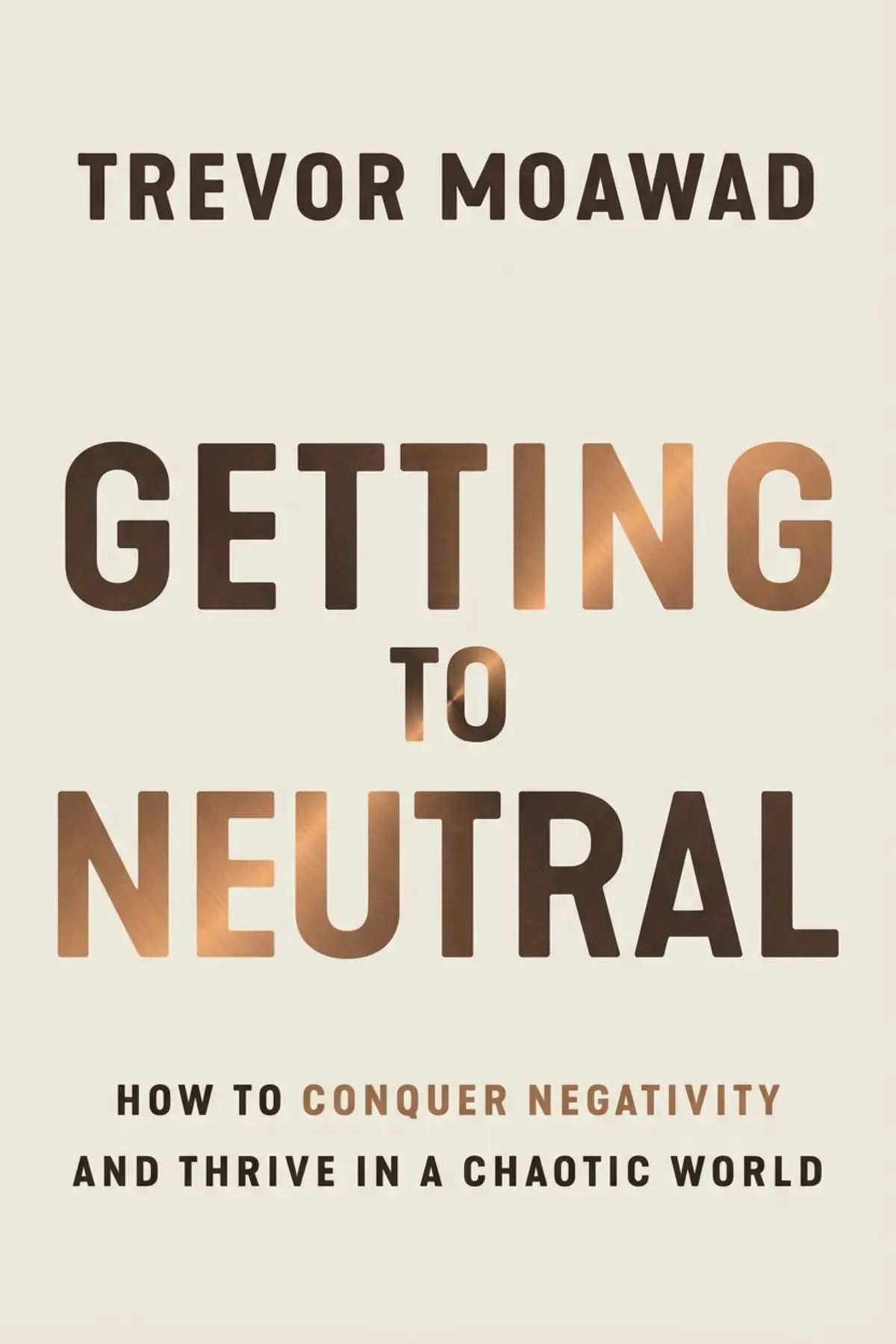
Table of Content
1. Introduction
1 min 06 sec
If your mind swings between expecting disaster and forcing yourself to stay upbeat, Trevor Moawad offers a third setting. In Getting to Neutral, the mental conditioning coach argues that relentless optimism can hurt you almost as much as pessimism, because hope with no basis turns into despair when things go wrong. His alternative is neutral thinking: look at the facts without judgment, use the past as a reference rather than a forecast, and then commit to your choice with full energy.
Moawad tested the idea on himself, after a cancer diagnosis that arrived just as the pandemic began. The case he makes is that calm in a crisis comes from facts, values and the next small step. Along the way you meet a health company that kept 50 more seniors alive than the odds predicted, a tennis champion’s scraps of paper and a journalist who changed how she leads. What you take from it is a routine for hard days: what to ask, what to ignore and who to keep close.
2. Trade both panic and false cheer for facts
2 min 03 sec
A coach who trained elite performers woke up one morning with yellow eyes, weeks before the world shut down. What he learned next challenges the advice most of us hear in hard times: just stay positive.
3. Shrink a crisis down to the next task
1 min 39 sec
A home-care company faced the pandemic with clients from one of the most vulnerable groups imaginable. Its CEO answered with a simple daily checklist, and far fewer clients died than the statistics predicted.
4. Values that steady your choices under pressure
1 min 37 sec
A big presentation is coming and the weekend is already filling with slides and stress. Moawad shows how two words, chosen in advance, can settle how that weekend goes before panic or false confidence decides for you.
5. Build small daily habits that keep you aimed
1 min 37 sec
An admiral’s first piece of advice to graduates sounded almost too simple to say out loud. A tennis champion’s notes held a single repeated word. Both show what turns good intentions into steady performance.
6. Turn off the feeds that drag you down
1 min 22 sec
Neutral is hard to reach when your thumb keeps refilling your head with bad news. Moawad names the habit that undoes all the others, and the small tool he suggests for pulling attention back.
7. Prepare for a hard day like an athlete
1 min 48 sec
Before major surgery, Moawad picked a specific chair, a specific film and a specific walk. He also refused to read certain things and kept certain people away, including some of the kindest ones.
8. Lead people by reading the room first
1 min 42 sec
A journalist once had to choose between a new baby and her job. Years later, running teams of her own, she built a daily habit that makes neutral leadership warmer without making it any less rational.
9. Conclusion
1 min 07 sec
What Moawad offers is a different place to stand when life turns against you. Gloom and forced cheer both try to predict the future with feeling. Neutral asks only what is true now, what the past suggests and what to do next, and then lets you act with full energy. He tested it in a doctor’s chair turned away from the screens, and Si France tested it with clients the virus threatened most.
The practice is modest. Name a handful of values and let them shape this week’s plans, the way hard work and family split a weekend between preparation and the park. Keep one habit that holds you on course, a made bed or a single word on a scrap of paper, and cut one feed that drags you under. Before your next hard day, choose what to take in and who to keep near, and let the feelings out before you decide. When you lead others, take their temperature before you push.
None of it requires feeling good. It asks only for the next step, taken calmly, and then the one after.
About this book
What is this book about?
Most advice for hard times tells you to think positive. Trevor Moawad, a mental conditioning coach for elite performers, argues that optimism with no basis can also do harm, because it can leave you more negative and depressed when the hoped-for result fails to arrive. His alternative is neutral thinking: look at the facts without judgment, treat the past as a reference and never a forecast, and then commit to your decision with full energy. Moawad brings his own crisis into the book. He was diagnosed with bile duct cancer just as the COVID-19 pandemic began, and he used neutral thinking to get through treatment. Around his own story he sets others: a home-care company that kept far more seniors alive than the statistics predicted, Serena Williams reading notes between matches, and journalist Maria Shriver rethinking how she leads. The book turns the idea into a working routine. It covers how to name your values and let them shape daily plans, which habits to build and which feeds to cut, how to prepare for a big day by choosing what not to take in, and how to coach yourself and others from a calm, factual place.
Book Information
Who it's for
Professionals facing high stakes
Professionals facing a layoff, a diagnosis or a high-stakes presentation who want calm without pretending.
Tired of doomscrolling
People worn out by doom scrolling and by pressure to stay positive.
Leading across generations
Managers, coaches and parents leading people of different generations through stressful times.
About the Author
Trevor Moawad
Trevor Moawad (1973 to 2021) was an author and consultant who worked as a mental conditioning coach for elite performers. His best-known client was Russell Wilson, quarterback for the Seattle Seahawks. Getting to Neutral was his second book, It Takes What It Takes is another of his titles, and in this one he draws on his own experience of cancer treatment.
Ratings & Reviews
Ratings at a glance

What people think
Listeners find the book to be a superb resource, with one listener suggesting it deserves a periodic re-read. The mindset-focused philosophy earns high marks, and one listener comments on its ability to advance mental training significantly. However, the section containing specific advice results in a variety of different reactions from listeners.
Top reviews
Vera
Wow. I wasn’t prepared for how much this would hit me, especially knowing Trevor is no longer with us. The way he frames 'neutral thinking' as a survival mechanism rather than just a motivational tool is profound. He doesn't just preach; he applies these concepts to his own battle with cancer, which makes the advice feel earned. While some might find the sports anecdotes a bit heavy-handed, they serve as perfect metaphors for high-pressure decision-making. I loved the emphasis on values-based habits over emotional reactions. It’s a heavy-duty emotional ride that offers a real alternative to the 'toxic positivity' that we are constantly bombarded with on social media. This book is a memento mori that reminds us to focus on the next right thing. It is a legacy piece that I will keep on my shelf for many years to come.
Show moreManee
Picking this up after his passing made every word feel heavier and more significant than a typical motivational guide. Trevor doesn't just talk about mental conditioning; he lives it through the most harrowing experiences imaginable. The prologue by the co-author and the intro by Ciara set a deeply emotional tone that carries through the entire narrative. I found the section on 'emotional intelligence checks' to be a standout moment for anyone in a leadership position today. It isn't just about being a tough coach; it is about meeting people where they are and guiding them with clarity. Even though I’m not an athlete, I found his advice on cutting out 'energy vampires' and 'doom scrolling' to be immediately applicable. This book is an excellent reminder that we must dominate every precious second we are given on this planet.
Show moreElan
Ever wonder why staying 'positive' feels like such a chore when things go south? Trevor Moawad’s final work argues that toxic positivity is just as delusional as being a total pessimist. By shifting to neutral, you acknowledge the situation without letting your emotions dictate the next play. I was particularly moved by the way he applied these principles to his own cancer diagnosis, which he calls 'the C-word.' It grounds the theory in a harsh reality that makes the advice feel much more authentic than your standard self-help book. While the sports-centric tone remains his signature style, the underlying lessons about values and habits are universal. You learn that your future doesn't have to be a mirror image of your past mistakes. It is a powerful study of the human psyche that demands your full attention.
Show moreScarlett
Moawad’s mantra of 'stop saying stupid shit out loud' is simple but incredibly effective. Truth is, most of us sabotage ourselves before the game even starts by verbalizing our own fears and insecurities. This book isn't about being a cheerleader for yourself, which I find refreshing in a world obsessed with manifest destiny. It is strictly about dealing with facts as they are. While I appreciated the deep dives into the human psyche, the sports-heavy context might isolate readers who don't care about the NFL. However, if you can look past the locker room talk, there is a wealth of wisdom here regarding internal narrative management. It takes your mental work to a different level by emphasizing that your next behavior is what matters most. Rest in power to a man who clearly practiced exactly what he preached until the very end.
Show moreNoppadol
Look, I’m not even a sports fan, yet this book moved me more than I anticipated. The truth is that the core philosophy of getting to neutral transcends the football field or the locker room entirely. Trevor Moawad presents a compelling argument for why we should stop being cheerleaders for our own delusions and start looking at facts. I was genuinely struck by his incredible poise while facing his final days. While I found the middle sections a bit repetitive, the overall impact of his message is simply too hard for me to ignore. It encourages you to link your daily habits to your deepest values so that you aren't just drifting aimlessly. This is definitely a book worth reviewing from time to time because it helps you reset when your world starts to feel chaotic.
Show moreAmy
After hearing Trevor on a podcast, I knew I had to pick up his final book to see how he refined his mindset. The central idea of avoiding the highs and lows to stay in 'neutral' is a game-changer for anyone dealing with high stress. Frankly, it’s a relief to be told that you don’t have to be a delusional optimist when your life is falling apart. I appreciated the specific mentions of Russell Wilson and Ciara, as they provide real-world context for how these mental drills work in practice. The only downside is that the writing can feel a bit repetitive if you’ve already read his previous work. However, the depth of honesty regarding his cancer diagnosis adds a layer of authenticity that is rare in the self-help genre. It is a solid, practical guide for anyone looking to gain more control over their internal narrative.
Show moreTong
The core concept of 'neutral thinking' is a game-changer for high-stress environments where panic usually takes over. I picked this up because I wanted to take my mental work to the next level in my professional career. Moawad’s advice on 'pregaming' and choosing your team wisely is something every manager should read. The truth is that we often let our emotions cloud the facts, which leads to poor decision-making under pressure. I did find the sports-heavy context a bit narrow at times, but the underlying psychological principles are very sound. His ability to distill complex mental states into a simple gearshift metaphor makes the book easy to digest and remember. It is a powerful study of the human psyche that offers a clear path forward when you are facing a crisis. I would recommend this to anyone who feels overwhelmed by the constant pressure to stay positive.
Show moreAroha
Is neutral thinking actually revolutionary or just stoicism with a sports coat? This book sits in an awkward middle ground for me because while I like the concept, the execution is hit or miss. On one hand, the idea of a 'judgment-free zone' for decision-making is incredibly helpful for anyone prone to anxiety. On the other hand, the writing is so full of name-dropping and anecdotes about Navy SEALs that the actual message becomes muddled. I found the first ten percent of the book to be the most practical, as I actually took notes on how to shift gears. After that, it drifted into more of a personal memoir about Moawad’s legacy and his time with athletes. It’s a decent read, but it feels less actionable than his first book, which I personally preferred.
Show moreRania
To be fair, I expected more from this follow-up after enjoying Moawad's first book. It feels like a lot of common sense dressed up in fancy sports analogies that don't always translate to the average person's life. If you aren't a die-hard football fan or an elite athlete, the endless name-dropping of players like Russell Wilson can get exhausting. I was looking for more tangible, step-by-step strategies, but instead, I got a lot of stories about his personal life. While his battle with 'the C-word' was undeniably courageous and touching, the book often loses its way as a practical 'how-to' guide. It reads more like a swan song or an autobiography than a manual for mental conditioning. Honestly, you could probably skip the middle sections and still get the main gist of the concept without missing much.
Show moreSuphan
Unfortunately, this felt like an autobiography disguised as self-help. I wanted more actionable advice, but I found myself wading through endless stories about football players and elite quarterbacks. For an average person who isn't trying to win a Super Bowl, the 'common sense' tips felt a bit recycled from general mindfulness. The author was clearly a brilliant coach, but the message gets lost in the constant name-dropping and sports metaphors throughout the chapters. I struggled to distill actual strategies that weren't just 'don't be negative' or 'focus on the facts' during my reading. If you aren't a sports fan, this book will likely be a slog that offers very little new content for your growth. It's a tough read if you’re looking for a structured manual instead of a collection of anecdotes.
Show moreQuestions about this book
What is neutral thinking in Getting to Neutral?
Trevor Moawad describes neutral thinking as a fact-focused, judgment-free way of handling hard situations. You do not ignore the past, but you treat it as a reference point, not a prediction. You step back from emotion while deciding, weigh the facts and past experience, and then carry out the decision with energy and passion. Neutral is not cold; it simply keeps feelings out of the moment of choice.
Why does Moawad say positive thinking can be harmful?
He argues that optimism with no basis can backfire. When you expect a good outcome without thinking the situation through, and that outcome never arrives, you can fall into deeper negativity and even depression. False confidence can also lead you to prepare too little, as in his example of a big Monday presentation. Staying cheerful all the time is also tiring.
How do you get to neutral when you are stressed?
Moawad’s first step is a single question for the reader, who is asked to consider which action should come next. Then he anchors choices in personal values, such as hard work and family, so plans serve what matters most. Supporting habits help, and so does cutting doom scrolling. Before a big moment, prepare deliberately, decide what information to avoid, pick supportive people who are neither negative nor exhausting cheerleaders, and let your feelings out first.
What does Getting to Neutral say about leadership?
Moawad points to journalist Maria Shriver, who checks daily on how her team is feeling, which he calls taking the emotional temperature. Good coaches meet people where they are, accept generational differences and avoid yelling or fear. Even Navy SEAL training now prepares and supports candidates before tryouts. A neutral leader learns from the past without assuming old methods still work, and coaches themselves the same way.
Who should read Getting to Neutral?
It suits anyone facing a stressful event, such as a diagnosis, layoff, exam or job interview, who distrusts both panic and forced positivity. Readers worn down by negative news and social media will find practical steps to cut back. Managers, coaches, teachers and parents get a calm, fact-based approach to leading others, illustrated with stories from a cancer ward, a home-care company and professional tennis.
Readers also enjoyed

59 Seconds: Change Your Life in Under a Minute
Richard Wiseman





A Guide to the Good Life: The Ancient Art of Stoic Joy
William B. Irvine


A High-Performing Mind: Strengthen Your Mind and Live Your Best Life
Andrew D. Thompson


Abundance: The Inner Path to Wealth
Deepak Chopra
AUDIO SUMMARY AVAILABLE
Listen to Getting to Neutral in 15 minutes
Get the key ideas from Getting to Neutral by Trevor Moawad, plus 5,000+ more nonfiction titles.
- 5,000+ titles
- Listen as much as you want
- 7-day free trial
- Cancel anytime









