


14 min 40 sec
Available in: English
Financial Freedom: A Proven Path to All the Money You Will Ever Need
Shows how to calculate the exact sum that would free you from needing a paycheck, then reach it faster by cutting housing, transport and food costs, raising your income and investing every spare dollar early.
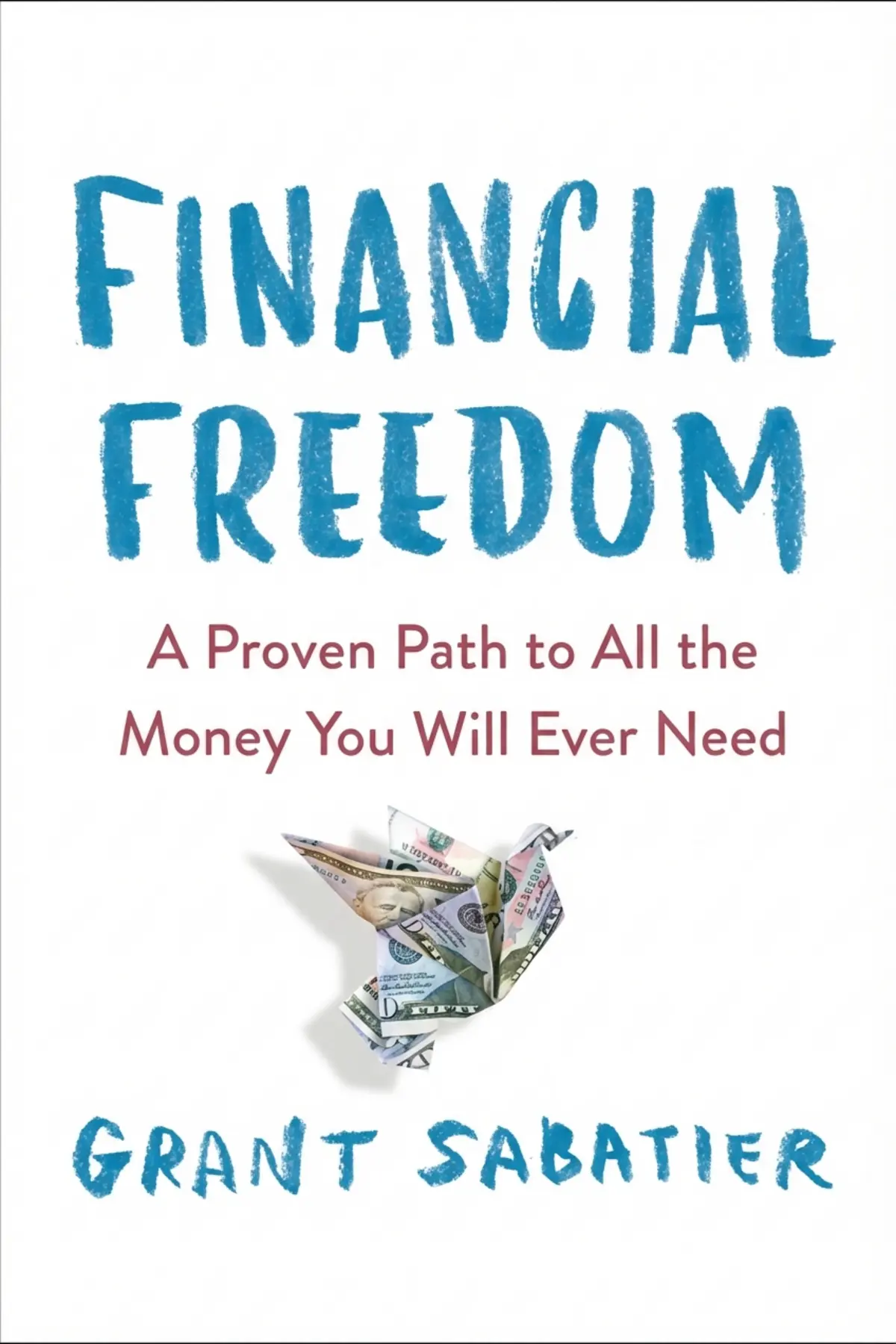
Table of Content
1. Introduction
1 min 04 sec
If your paycheck vanishes every month and retirement feels forty years away, Grant Sabatier’s Financial Freedom offers a different clock. His central idea is that freedom from work is a specific number you can calculate: your yearly spending divided by 4 percent. Sabatier, the founder of Millennial Money, went from $2.26 in his bank account at 24 to more than a million dollars five years later, with no inheritance and no lucky bet.
His argument is that the usual advice, save a little and wait, is too slow, and that money works best as a tool you put to work right away. Know your number and your starting point. Judge spending in hours of your life. Cut the costs that actually matter, earn more from both your job and a side business, and let compounding carry the rest. What follows is a plan with real arithmetic behind each step, and a first move you can make this week.
2. Do the math the forty-year plan hides
1 min 43 sec
At 24, after three years of hard work, Grant Sabatier had almost nothing in the bank. Doing the math showed him a normal career offered no guarantee of comfortable retirement, so he set an outlandish goal that meant breaking from his family and friends.
3. Find the exact number that sets you free
1 min 51 sec
Most people save toward a vague idea of enough and never know when they have arrived. One division turns that fog into a precise figure, and explains why Sabatier aimed for a million and a quarter.
4. Know where you stand before you start
1 min 31 sec
A goal means little if you have no idea how far away it is. Sabatier began with thousands in credit card debt, and his way of handling that starting point is simpler than most people expect.
5. See every purchase in hours of your life
1 min 42 sec
A three-dollar coffee seems too small to matter. Measured another way, it costs more than its price, and the method for measuring it reveals that your job may pay you far less per hour than you think.
6. Skip the strict budget and cut three big costs
1 min 54 sec
Budgets fail for the same reason diets do, and even when they hold, they often save surprisingly little. Sabatier points to where the real money leaks out of a household, and how much plugging it could be worth.
7. Make your day job pay you more
1 min 46 sec
Many people treat work as something to forget about on weekends. Sabatier sees three easy gains hiding inside an ordinary job, including a way of asking for a raise that makes yes easier for the boss.
8. Build a second income that outgrows your salary
1 min 45 sec
A Chicago graphic designer started out charging five dollars to walk a dog. Within three years the side business dwarfed his salary, and the way he grew it offers a template for testing any small idea.
9. Conclusion
1 min 24 sec
Sabatier’s case is that putting the usual 5 percent of salary into a retirement fund guarantees very little. Even people with large incomes stay tied to work by overspending or investing badly. What changes the outcome is treating money as a tool from the first day: a target you can calculate, a starting point you check daily, and every dollar from cheaper living, a better-paid job and a side business sent off to compound.
Waiting carries a price in this book. Each day money sits uninvested is growth lost, and there is always another book or course that can serve as a reason to delay. So start small, and start now. Book a meeting with your HR department about matched pension contributions. Open an investment account with a first deposit, even $100. Or set aside one hour to sketch business ideas on paper. Mistakes will come, as they do for everyone.
Talking helps as well. Money is a private subject in many families, but Sabatier suggests a monthly meeting with a few friends or relatives to compare strategies and keep one another honest.
It will mean saying no, sometimes to people you love. Sabatier gave up most of his Saturday lunches for a few years. By 30, he no longer had to work unless he chose to.
About this book
What is this book about?
Most people are told to save a small slice of their salary and wait forty years for retirement. Grant Sabatier tried the expected route, ended up unemployed at 24 with $2.26 in the bank, and decided the standard plan was too slow and too uncertain. Five years later he had more than a million dollars invested, enough to live on its returns. In Financial Freedom he lays out the method behind that turnaround. It starts with arithmetic: your yearly spending divided by 4 percent gives the sum you need invested, and your net worth shows how far away you are. From there the book works on both sides of the ledger. On spending, Sabatier skips strict budgets and targets the three largest costs: housing, transport and food. On earning, he shows how to get more from a day job through pension matching, raises and remote work, and how to build a side business that can outgrow a salary. Readers get a concrete target, a way to judge purchases in hours of their own life, and small first steps they can take this week.
Book Information
Who it's for
Paycheck-to-paycheck young professionals
Young professionals living paycheck to paycheck who want a concrete target and timeline.
Nine-to-fivers worried about retirement
Office workers who suspect forty years of nine-to-five will not buy them a comfortable retirement.
Side project in mind
People with a side project idea who want a low-risk way to turn it into investable income.
About the Author
Grant Sabatier
Grant Sabatier is an American author, podcaster and entrepreneur. He founded Millennial Money, a personal finance website that has reached more than 10 million readers since 2015. Starting from $2.26, he built his first million within five years and reached financial independence at 30. Financial Freedom, published in 2019, was his first book and has appeared in 12 languages. He has also hosted a podcast with the same name.
Ratings & Reviews
Ratings at a glance
What people think
Listeners find this financial guide very accessible, with one noting it is an essential resource for millennials. Furthermore, the book offers practical strategies that help people reshape their connection with money. Listeners also appreciate its function as a blueprint for financial autonomy, with one listener emphasizing that building multiple revenue sources is key to success. The information is presented clearly with factual evidence, making it both easy to grasp and motivating for listeners, including one who described it as life-changing.
Top reviews
Prinya
Picked this up after seeing Sabatier on a podcast, and it really shifted how I view my paycheck. Instead of just looking at the number in my bank account, I’m now calculating the actual value of my time. The concept of "life energy" isn't new if you've read Vicky Robin, but Sabatier updates it for the digital age in a way that feels incredibly accessible for millennials. I particularly appreciated the breakdown of side hustles; it’s not just about saving pennies, but about expanding the gap between income and expenses. Some might find the math a bit optimistic, but the mindset shift is what matters most. It’s a comprehensive roadmap that doesn't just tell you to "save more," but shows you how to build a life where work is optional. For anyone feeling stuck in the 9-to-5 grind, this provides a clear, actionable exit strategy.
Show moreDing
Finally got around to reading this, and I wish I’d found it five years ago. What I love about Sabatier’s approach is that he doesn't just focus on deprivation. Instead, he focuses on the "per hour" value of your life, which made me realize how much time I was wasting on things that didn't actually bring me joy. The book provides a step-by-step roadmap that feels much more achievable than the vague advice you usually get in finance books. The chapters on tax-advantaged accounts and choosing the right side hustle were worth the price of the book alone. Personally, I found the tone incredibly encouraging and easy to follow. It’s not just a book about money; it’s a book about freedom and taking back control of your time. If you’re a millennial feeling burnt out by the corporate ladder, this is a must-read. It genuinely changed my perspective on what’s possible.
Show moreYanin
Wow, this is easily the most comprehensive guide to financial independence I've ever read. It doesn't just stop at "save 10% of your income." Sabatier dives deep into tax optimization, side hustles, and the psychology of spending in a way that is incredibly motivating. I’ve read older investment guides and found them a bit dense, but this takes those same principles and makes them feel actionable for today’s world. The roadmap he provides is detailed and backed by facts, giving you a clear path from debt to abundance. Let's be real, I was skeptical about the "financial freedom" promise, but after finishing this, it actually feels attainable. It’s a must-read for anyone who wants to stop trading their time for a paycheck. This book truly transformed my relationship with money and gave me the tools to build a better future.
Show moreHunter
Is it possible to retire in your 30s without a six-figure starting salary? Sabatier argues yes, provided you’re willing to rethink everything you know about employment. I found the sections on side hustles particularly inspiring, even if some of the examples felt a bit extreme. He breaks down complex investing topics into digestible pieces, making the "boring" stuff like compound interest actually feel exciting. I’ve started tracking my net worth daily because of this book, and that habit alone has changed my spending. Not gonna lie, the middle chapters drag a bit with too many charts that basically repeat the text, but the overall message is powerful. It’s a solid roadmap for anyone who feels like the traditional retirement age of 65 is a trap. It’s definitely written for a younger audience, but the core principles of diversification and aggressive saving are universal.
Show moreDiego
As someone who has read a dozen books on the FIRE movement, I wasn't expecting to learn much, but Sabatier surprised me. He has a way of explaining the "why" behind financial independence that resonates on an emotional level. The emphasis on creating multiple streams of income is something a lot of other authors gloss over, but here it’s the central pillar. I did find the sections on dog walking and selling website templates a bit repetitive—we get it, side hustles are good—but the core investment advice is sound. The truth is, most people just need a clear plan, and this book delivers that roadmap. It’s a bit thick and could have used a tighter edit, but the enthusiasm is infectious. I’ve already recommended it to several friends who are struggling with work-life balance. It’s a great companion to older classics.
Show moreSuvannee
Ever wonder why you're working 40 hours a week and still feeling broke? This book tackles that question head-on. Sabatier’s writing style is casual and direct, making it feel like you're getting advice from a friend rather than a dry financial advisor. I particularly enjoyed the "7 levels of financial freedom" framework. It makes the ultimate goal feel less like an impossible mountain and more like a series of small, manageable hills. I’ll admit, the sheer amount of content can be overwhelming, and some of the chapters on side hustles felt like they were trying too hard to be "millennial-friendly." However, the underlying strategy for diversifying income and maximizing savings is solid. It’s a practical, modern guide for anyone looking to escape the traditional career path. It’s definitely one of the more readable finance books I’ve come across lately.
Show moreDaranee
After hearing a lot of hype about the FIRE movement, I decided to give this a shot. It’s an incredibly dense book, but the chapters are broken down in a way that makes it easy to digest. Sabatier’s focus on increasing your income through side projects, rather than just cutting back on lattes, is a breath of fresh air. Frankly, the dog walking chapter was a bit much and felt like filler, but the advice on housing and transportation was spot on. Those are the areas where you can actually make a huge dent in your savings rate. The tone is very optimistic, which I liked, though I’d recommend pairing this with something more conservative like The Psychology of Money. Overall, it’s an inspiring read that provides a lot of tangible advice for anyone willing to put in the work. It’s definitely aimed at a younger demographic.
Show moreThanakorn
The first half of this book is gold, but the second half feels like a long-winded blog post. I enjoyed the personal story of how he went from $2.26 to a million, but the repetition gets exhausting after a while. Sabatier is clearly passionate, but his "side hustle" advice can feel a bit out of touch if you aren't living in a major city with a high-paying tech background. Frankly, I felt some of the growth projections he uses for investments are a little too rosy. If the market isn't booming like it was in the 2010s, his timeline for "financial freedom" falls apart pretty quickly. Still, the emphasis on negotiating your salary and lowering your big three expenses is practical advice that anyone can use. It’s a decent entry point for beginners, but seasoned FIRE followers won’t find much new here.
Show moreZoe
While I appreciate the hustle, I can't help but feel like luck played a bigger role than the author admits. Starting an investment journey right at the bottom of a recession is a huge advantage that most of us won't have. Sabatier’s math relies heavily on those bull market returns. Moreover, the book is quite long and full of charts that don't add much value if you're already paying attention to the text. I found some of the anecdotes, like the $200k dog walker, to be a bit hard to believe without seeing the actual business expenses and taxes. To be fair, the advice on reducing your big expenses and investing the difference is classic for a reason—it works. It just felt a bit "surface level" at times. If you're new to the concept of early retirement, this is a good primer, but take the specific timelines with a grain of salt.
Show moreElena
Look, some of the advice here is sound, but I struggle to get past the blatant survivorship bias. Sabatier hit the market at the perfect time in 2010 and rode a massive bull run, yet he presents his success as a repeatable blueprint for everyone. The dog walking story—claiming someone made $200k by outsourcing the work—sounds like total fiction when you actually sit down and run the numbers. It’s full of those "hustle culture" anecdotes that feel more like LinkedIn fluff than reality. While the tips on maxing out a 401k are fine, you can get that from any basic blog without the 300 pages of filler and questionable math. To be fair, if you need a cheerleader to get you started, this might work, but for anyone looking for grounded, realistic financial planning, I’d suggest The Psychology of Money instead. It’s way too oversimplified for my taste.
Show moreQuestions about this book
What is the main idea of Financial Freedom by Grant Sabatier?
Sabatier argues that freedom from work is a number you can calculate and reach in years, not decades. You divide your yearly spending by 4 percent to find the sum you need invested, measure your net worth to see how far you are, then close the gap by cutting housing, transport and food costs, earning more and investing everything early so compounding works for you.
How do you calculate your financial freedom number?
Total a full year of spending, such as rent or mortgage, food, entertainment, education, travel, insurance, utilities and taxes, and leave room for future plans like having children. Divide the total by 4 percent. Sabatier needed $50,000 a year in Chicago, which gave him $1,250,000. He adds any debt to that target, so his $20,000 of credit card debt raised it to $1,270,000.
Why does Sabatier use a 4 percent rate?
He explains that most interest compounds at around 7 percent. If you live on only 4 percent of your investments each year, the remainder keeps the pot growing and covers inflation. That way the principal is never touched, and it can keep producing your yearly income for as long as you need it.
Does Financial Freedom recommend budgeting?
Not in the usual sense. Sabatier compares budgets to diets: easy to break, guilt-inducing and focused on small savings that larger costs overwhelm. He targets the Big Three instead, housing, transport and food, which he says take about 60 percent of an average American household’s income. Cutting that share to 30 percent frees about $17,500 a year, which he calculates could grow to $835,000 over twenty years.
How can I start applying Financial Freedom this week?
Sabatier urges starting before you feel ready, since every uninvested day costs growth. Book a meeting with HR about matched pension contributions, open an investment account with a first deposit of even $100, or spend an hour sketching side business ideas. Work out your real hourly rate, counting commuting and other unpaid work time, and use it to judge purchases.
Featured in
and 1 more
Readers also enjoyed



Cashing Out: Win the Wealth Game by Walking Away
Julien Saunders
Charlie Munger: The Complete Investor
Tren Griffin
Big Mistakes: The Best Investors and Their Worst Investments
Michael Batnick
AUDIO SUMMARY AVAILABLE
Listen to Financial Freedom in 15 minutes
Get the key ideas from Financial Freedom by Grant Sabatier, plus 5,000+ more nonfiction titles.
- 5,000+ titles
- Listen as much as you want
- 7-day free trial
- Cancel anytime









