

13 min 30 sec
Available in: English
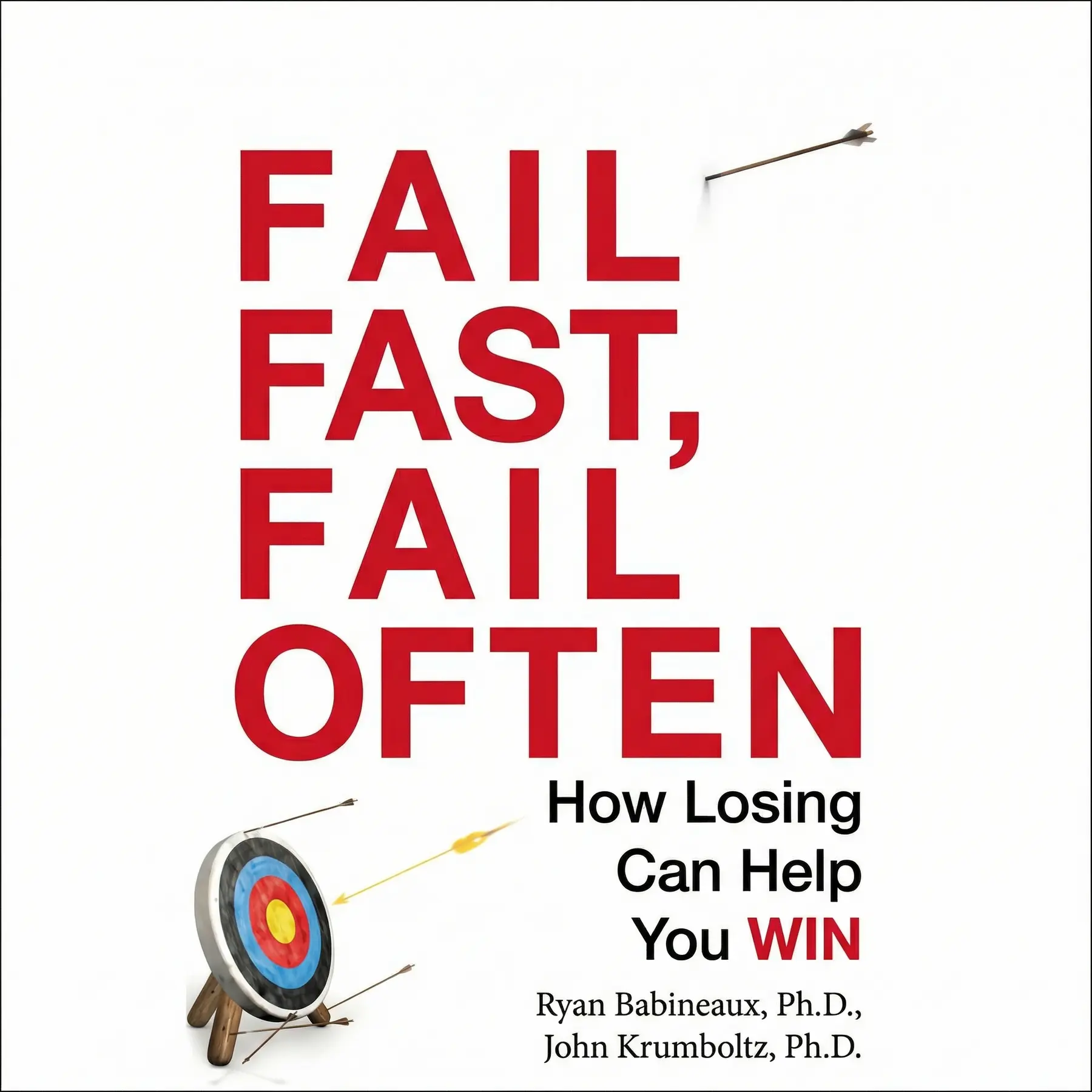
Fail Fast, Fail Often: How Losing Can Help You Win
Shows why waiting for a perfect plan keeps lives stuck, and how small, frequent attempts, more fun, curiosity, career test runs and a supportive community turn failure into a faster route to success.
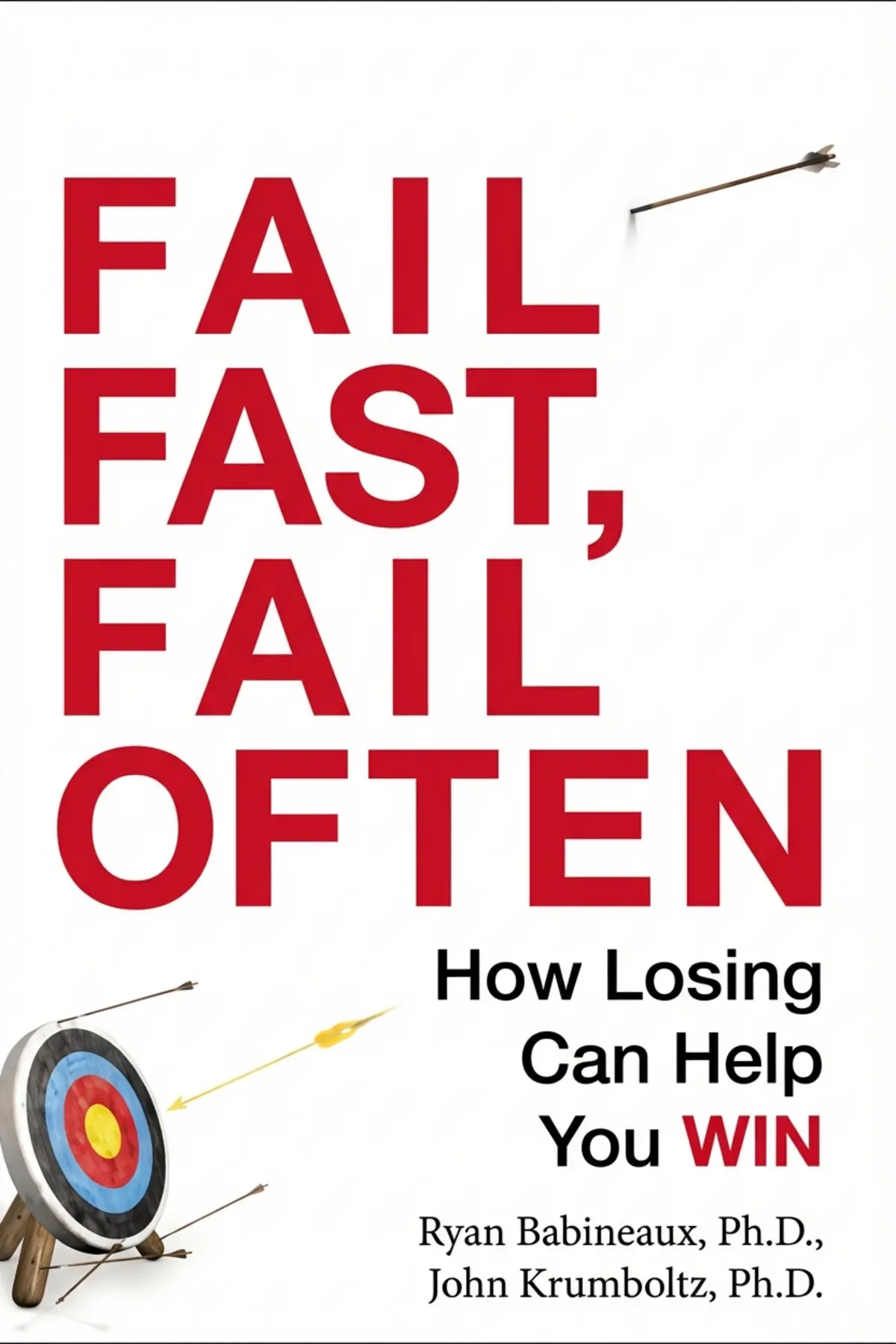
Table of Content
1. Introduction
58 sec
Most people who feel stuck have plenty of ideas and ambition. What holds them back is that they are waiting for a plan good enough to promise they won’t fail, and that wait never ends. In Fail Fast, Fail Often, career counselor Ryan Babineaux and Stanford psychology professor John Krumboltz argue that this fear is the real reason so many lives feel stale. The people who are both happy and successful, they find, plan less and try more.
Their case is that failure is the fastest route to progress, as long as the attempts are small, frequent and enjoyable enough to keep you going. The ideas that follow start with the decision to act, then move through fun, practice and curiosity to testing a career before you commit to it. They end with the people who help you keep trying. Along the way come several experiments you can run this week, starting with a map of where your days actually feel good.
2. Stop saying not yet and start now
1 min 35 sec
Most people believe a solid plan has to come before any real change. Two Stanford teachers argue that this belief is what keeps people stuck, and a bag of candy in a doctor’s office helps show why.
3. Turn fun into a route to success
1 min 32 sec
Fun usually sounds like the reward you earn once the serious work is done. A legal assistant who hated her job found it worked the other way round, and a simple drawing can show where yours is hiding.
4. Make more pots to make better ones
1 min 38 sec
A ceramics teacher split his class in two and gave each half a different goal. The group that seemed to care less about quality made the finest work, and the reason applies far beyond pottery.
5. Treat being a beginner as the point
1 min 49 sec
Not asking for the promotion feels safer than hearing no. The authors show why it is really the same loss, and how a gift guitar and a child’s endless questions point to a better way to start.
6. Think big, then shrink the first step
1 min 41 sec
A man set out to transform his health in a single year and did everything the advice says to do. Within weeks he had quit. His story shows how ambition itself can sink a good goal.
7. Test-drive a career before committing to it
1 min 37 sec
Few people would marry someone they had never met for coffee, yet many sign up for a lifetime of work on far less evidence. A chemist with ten years of training shows what that costs.
8. Build a community instead of a network
1 min 33 sec
Most career advice says to grow your network. The authors think the word itself points people the wrong way, and they explain what to build instead, and why a smoker friend proves how much it matters.
9. Conclusion
1 min 07 sec
Fail Fast, Fail Often makes a simple bet: the distance between a stale life and a full one depends mostly on how many things you try. Waiting for the perfect plan feels safe, yet it delivers the very failure it was meant to prevent. The potters who made the most pots, the comedian testing jokes in small rooms and the coffee shop owner who threw out his Italian menus all improved because they let early attempts go wrong while the cost was still low.
The authors pair that with a warmer point. Fun and curiosity, in their view, are how you discover what you are good at, what work suits you and who you want around you.
You can begin on a sheet of paper. Draw your own fun map, rate the places in your week, and move a few hours toward the top of the list. Then choose one thing you have postponed, whether a hobby, a conversation or a career you keep wondering about, and do the smallest, roughest version of it in the next few days. Whatever goes wrong is your first pot of many.
The plan can wait. Your first attempt will show you what the plan should be.
About this book
What is this book about?
Plenty of people know their routine has gone stale. They want different work, new hobbies and more excitement, but they hold back until they have a plan that guarantees they won't fail. Ryan Babineaux and John Krumboltz, who teach a Stanford course with the same name as this book, argue that this wait is the real problem. Fear of failure dresses itself up as careful planning, and the attempts that would have taught us something never happen. Their alternative is to act first and adjust later. The authors show how fun and curiosity open doors that duty never finds. They show why a pottery class that made more pots ended up with better ones, and how comedians and coffee shop founders improve by failing in small, cheap ways. They also explain why big goals collapse when you chase them all at once. Readers get a set of experiments to start right away: mapping where their days feel good, starting new things as beginners, breaking ambitions into small steps, test-driving a career before committing to it, and building a community in place of a contact list.
Book Information
Who it's for
Stuck in a job
Professionals stuck in a job they dislike who keep waiting for the perfect plan to change it.
Curious about trying careers
Students and career switchers wondering how to try a field before committing years to it.
Afraid of looking bad
Anyone who avoids new hobbies or requests because they fear looking bad.
About the Author
Ryan Babineaux
John Krumboltz is a professor of education and psychology at Stanford University, specializing in counseling psychology and career counseling. He has written or co-written more than 200 publications, including Luck is No Accident, and is a Fellow of the American Psychological Association. Ryan Babineaux is an educational consultant and career counselor educated at Stanford, Harvard and the University of California, San Diego, whose work focuses on how successful people build better lives. Together they created and taught the Stanford course Fail Fast, Fail Often.
Ratings & Reviews
Ratings at a glance
What people think
Listeners find this book perceptive and packed with excellent advice, making it an accessible and pleasant experience. Furthermore, the storytelling quality is highly regarded, with one listener specifically praising the compelling accounts of navigating obstacles.
Top reviews
Pop
Finally got around to reading this after a friend recommended it for my career pivot, and the timing couldn't have been better. The narrative quality is top-notch, featuring engaging stories about overcoming obstacles that make the advice feel grounded rather than preachy. I especially loved the section on how our interests change over time; it’s a relief to hear that choosing a career path at twenty isn't a life sentence. The authors write with a directness that cuts through the typical self-help fluff, focusing on how small actions trigger a sense of satisfaction. Truth is, I started applying the "go see for yourself" mantra immediately by shadowing a local professional instead of just Googling things. It’s insightful and full of great tips that are actually easy to implement in your daily routine. If you need a source of motivation to overcome procrastination, just buy it.
Show moreMattanee
Wow, what a refreshing perspective on why we get stuck in life's ruts. I’ve been paralyzed by the fear of making the "wrong" choice for years, but this book helped me realize that the biggest mistake is never making any mistakes at all. The quote about John Steinbeck writing one page at a time really stuck with me because it makes daunting projects feel manageable again. These authors aren't just selling a mystical formula; they are giving you permission to be messy and curious. Not gonna lie, the "go see for yourself" advice is something every career counselor should be shouting from the rooftops. It’s much more practical than taking those useless personality tests that try to put you in a box. I finished the book feeling energized and ready to sign up for a class I’ve been eyeing for months. It’s a wonderful resource for anyone who feels like they’re just going through the motions.
Show moreMeen
Ever wonder why kids are so much better at learning than adults? This book explains that it's because they aren't obsessed with the "benefit" of every single action; they just play and explore. Ryan Babineaux and John Krumboltz do a fantastic job of showing how we lose that curiosity as we age, replacing it with a paralyzing fear of looking stupid. Personally, I loved the debunking of career tests, which have always felt like nonsense to me anyway. Our interests change, and that’s okay! The narrative quality is great, with stories that feel authentic and tips that you can actually use to improve your life. It’s an incredibly inspiring read that reminds you that things don't ever have to be perfect for you to start. I've already recommended it to three people this week because the message is so vital for our "optimization-obsessed" culture. It’s practical, easy to understand, and truly helpful.
Show moreBenjamin
As a chronic over-thinker who gets paralyzed by the "perfect plan," this book was exactly the kick in the pants I needed to actually start moving. Babineaux and Krumboltz argue that waiting until you're "ready" is the quickest way to waste a decade of your life, and frankly, they’re right. The stories of people stumbling into careers—like the guy who found psychology through tennis—really hit home for me. It’s not about some mystical secret; it’s about making your tasks small enough that progress feels inevitable rather than impossible. My only gripe is that the title is a bit of a misnomer since it’s more about taking action than analyzing actual failure. Still, the pragmatic advice on how children learn through curiosity versus how adults over-analyze everything is worth the price of admission. It’s an easy, fast read that actually makes you want to get off the couch and try something new today.
Show moreMia
Pick this up if you're a meticulous planner who struggles to take the first step without a ten-year roadmap. The book’s core message is simple: dive in, see what happens, and adjust your course based on the results you actually get. I appreciated the straightforward manner in which the advice was presented, even if some of the stories felt a bit too "convenient" for my taste. It avoids the shame-heavy tone of many self-help books and instead offers a gentle, motivational push toward action. One of my favorite takeaways was the idea that progress itself triggers satisfaction, so breaking tasks into tiny pieces is essential for staying motivated. While I wish there was more emphasis on failing in slow-moving corporate cultures, the general tips for personal growth are excellent. It’s a fast, easy read that manages to be insightful without being overly dense or academic. Definitely a good addition to your shelf.
Show moreEarn
The authors, both counselors, bring a unique perspective to the table by focusing on action-oriented behavior rather than deep psychological analysis. While "Fail Fast, Fail Often" might have a catchy title that doesn't quite match the content, the actual advice regarding "planned happenstance" is incredibly valuable. They argue that most success comes from being in motion and being open to new experiences, rather than following a rigid plan. I found the stories of people overcoming obstacles through small, low-stakes experiments to be quite compelling and relatable. In my experience, the book works best as a motivational tool for those who are currently feeling stagnant or depressed in their current roles. It’s written in a very accessible style, making it a great gift for a recent graduate who is worried about finding their "one true passion." My only criticism is that it ignores some of the systemic issues that make failing much harder for people without financial safety nets.
Show moreKan
After hearing about this book on a podcast, I decided to see if it lived up to the hype for someone mid-career. It’s an insightful read with great stories of overcoming obstacles, even if it lacks the "I have been through this" grit of a memoir. The authors are clearly experienced counselors, and their perspective on "planned happenstance" is a useful mental model for anyone feeling stuck. Look, the book is incredibly helpful if you need a nudge to stop overthinking and start acting. I think it’s especially ideal for college students or those entering the workforce for the first time. It teaches you that progress triggers satisfaction and that waiting for perfection is a trap. While some advice feels a bit general, the overall push toward action is genuinely motivating. It’s a light, easy-to-digest book that provides some much-needed perspective on the value of simple curiosity.
Show moreMint
Does this offer groundbreaking science? Not really, but it serves as a solid reminder that perfectionism is the enemy of progress. Babineaux and Krumboltz present a pragmatic bent toward career counseling that I think would be particularly helpful for college students feeling lost. While the book mentions some interesting research on what drives innovation, much of the content feels like common sense dressed up in nice anecdotes. I personally found the advice to be a bit too general at times, especially when they gloss over the financial risks of "just diving in." However, the chapter on how children approach learning with pure curiosity was a highlight for me. It’s an enjoyable enough listen if you’re looking for a quick motivational boost, even if it lacks the deep theological reflection found in other works. It won't change your life overnight, but it might help you stop over-planning your next move for a few hours.
Show moreJib
Not what I expected based on the title. While I was looking for a deep dive into the mechanics of failure, this turned out to be more of a "start a hobby" guide. It’s very self-helpy, but to be fair, the writing is pithy and direct. The advice to "just do something" is fine, but it gets repetitive after a few chapters of similar anecdotes. Some of the stories, like the one about the pottery class, didn't really show failure at all, but rather a lucky break. If you are new to personal development, you might find this revolutionary. For those who've read a lot of psych books, it’s mostly a reminder of things you already know. Still, the narrative quality is decent and it’s an easy enough read for a weekend. It might give you the kick you need, just don't expect a technical manual on risk management.
Show moreSun
The title is a complete bait-and-switch, and if you’re looking for a deep dive into how to handle professional failure, you won’t find it here. Instead of exploring how to navigate the messy reality of mistakes, the authors provide a collection of anecdotes about programmers and entrepreneurs who "stumbled" into success. Look, I wanted to know how to fail in a corporate culture that moves like a glacier, not hear about a high school kid taking a pottery class. To be fair, the writing style is pithy and accessible, but the advice feels incredibly general and lacks the philosophical weight I expected from two researchers. It’s basically a motivational speech stretched into a book, filled with stories of people who already had the safety nets to take risks. If you’ve read any decent amount of psychology or self-help, you’ve heard all of this before. It’s not a terrible read, but it's definitely not the "manual on failure" it claims to be.
Show moreQuestions about this book
What is the main idea of Fail Fast, Fail Often?
Ryan Babineaux and John Krumboltz argue that fear of failure, often disguised as the need for a perfect plan, keeps people stuck. Happy, successful people plan less and act more. They pursue what they enjoy, try many small things, learn from what goes wrong and lean on a supportive community. Failure, in the authors’ view, is the fastest way to improve.
What is the not-yet approach?
It is the authors’ name for a common trap. People want success and happiness, but they believe they need a flawless action plan before they start. Because no plan is ever perfect, every chance to act gets postponed with a not yet. The authors suggest reversing this by finding happiness in the present and seizing opportunities as they appear, as Gary Erickson did when he started Clif Bar.
What is a fun map and how do I make one?
A fun map is a tool the authors recommend for finding where your good moments come from. List the places you regularly spend time and rate each by how much you enjoy being there, from most to least. Then spend more time in the highest-rated places and cut back on the lowest, such as a crowded commute or a dim office, wherever you can.
What does the ceramics class story show?
A teacher split his students into two groups. One aimed to make the best pots possible in a set time, the other to make as many as possible. The quantity group produced the best pots, because each attempt exposed mistakes they could fix next time. The quality group had few failures to learn from, so it barely improved.
How does Fail Fast, Fail Often apply to careers?
The authors compare choosing a career without trying it to marrying someone you never dated. They recommend test runs, like an internship at a stable for someone who loved horses as a child, before committing. They also warn against staying in a hated job because of years already invested, as a chemist they met did after a decade of study.
Readers also enjoyed

A High-Performing Mind: Strengthen Your Mind and Live Your Best Life
Andrew D. Thompson


Abundance: The Inner Path to Wealth
Deepak Chopra


60 Seconds & You’re Hired!
Robin Ryan



59 Seconds: Change Your Life in Under a Minute
Richard Wiseman

AUDIO SUMMARY AVAILABLE
Listen to Fail Fast, Fail Often in 15 minutes
Get the key ideas from Fail Fast, Fail Often by Ryan Babineaux, plus 5,000+ more nonfiction titles.
- 5,000+ titles
- Listen as much as you want
- 7-day free trial
- Cancel anytime









