

13 min 12 sec
Available in: English
Everyday Vitality: Turning Stress into Strength
Psychiatrist Samantha Boardman shows why waiting for a stress-free life is a mistake, and how small daily actions, closer connection, fresh challenges and a sense of purpose can make stress a source of strength.
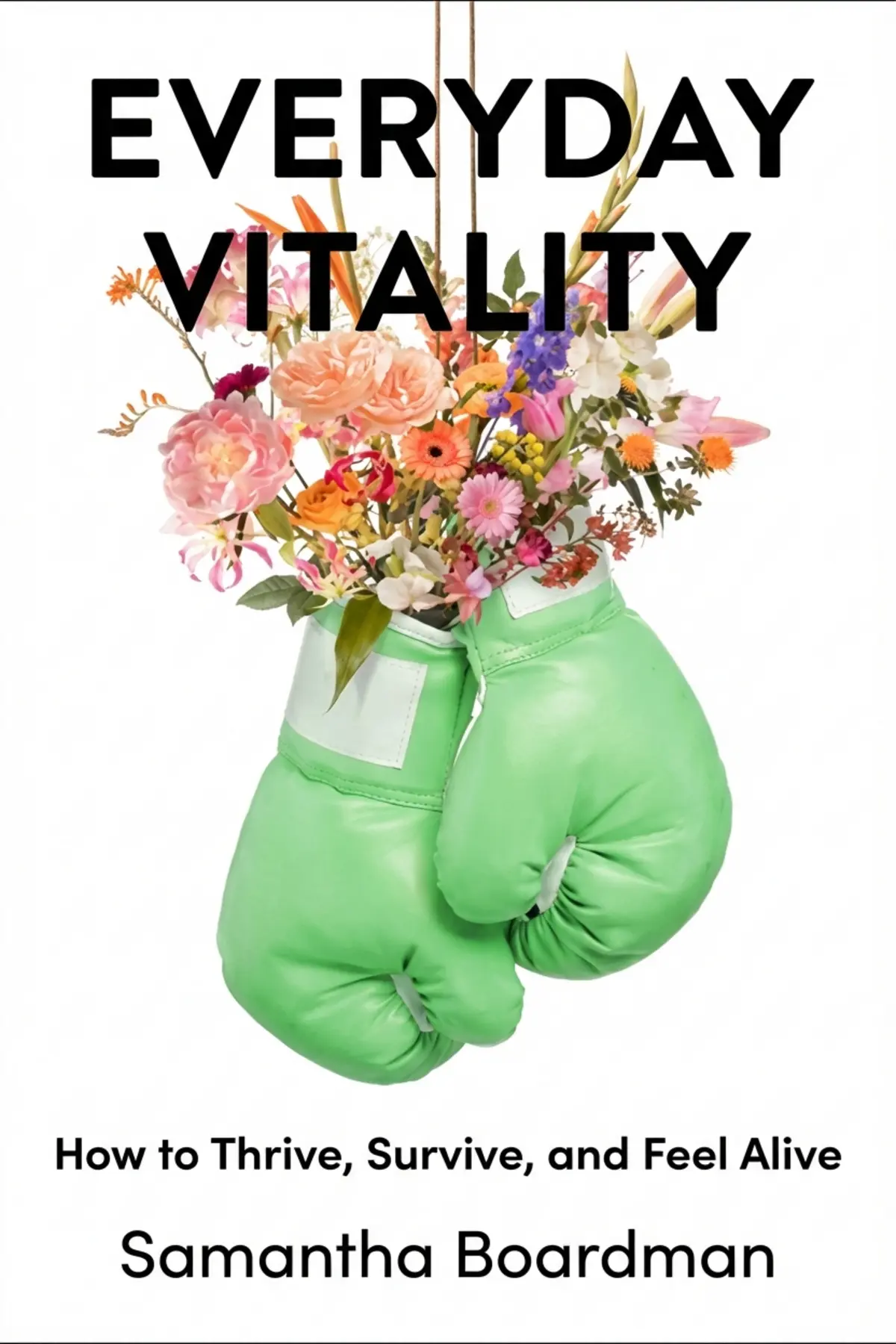
Table of Content
1. Introduction
1 min 04 sec
Many of us are waiting for a calmer season, when the job eases off or the children grow up, and psychiatrist Samantha Boardman argues that the wait is a mistake, because that stress-free day is unlikely to arrive. In Everyday Vitality, she makes a more useful claim. People who cope well keep doing small, deliberate things that build strength while their problems continue.
Boardman calls that strength vitality, and she says it grows from action. Her evidence includes rats digging for breakfast cereal, a cake mix that failed because it was too easy, and married couples who felt less pain from an electric shock while holding hands. The throughline is simple: stress will stay, and what you choose to do inside it decides whether it drains you or makes you stronger. Each idea ahead ends with something to try on an ordinary weekday, from borrowing a braver personality before a presentation to a minute of reflection in a parked car.
2. Stop letting small daily stresses stick to you
1 min 50 sec
After a bad week, some people seem to stay OK while others get stuck and let it drag them down. A Penn State researcher sorted them into two groups, and the habit that separates them is surprisingly ordinary.
3. The right amount of struggle makes you stronger
1 min 44 sec
Two groups of rats faced the same sealed-up treat, and one group gave up far sooner. The difference came from their past few weeks, and it says something uncomfortable about wishing for an easy life.
4. Borrow someone else's confidence for one hour
1 min 52 sec
A psychiatrist telling you not to be yourself sounds like strange advice. Yet before a frightening presentation, it may be exactly what helps, and the same trick can rewrite a story you have told about yourself for years.
5. Lean on others and hard things feel lighter
1 min 56 sec
A hill, a hug and an electric shock all point to the same finding about pain. Yet when life gets busiest, most of us do the opposite of what that finding suggests.
6. Stay curious, rested and moving every week
1 min 52 sec
The scientists who win Nobel Prizes should be the busiest people alive, yet they are far more likely to have a hobby than their peers. That clue leads to a broader set of everyday challenges worth taking on.
7. Give your pain a purpose and it hurts less
1 min 42 sec
Three groups received the same small electric shock, yet one group felt clearly less pain. The only difference was a story they were told, and it suggests a fresh way to carry your own hard days.
8. Conclusion
1 min 12 sec
Everyday Vitality turns a common hope around. Waiting for the calm season means waiting forever, so Boardman asks you to build strength inside the busy one, the way the rats that dug for their cereal kept working when the prize was sealed in plastic. In her account, stress is the place where vitality gets built, through deliberate choices, other people, fresh challenges and a clear sense of why the effort matters.
The practice can start small. Before your next hard meeting, decide whose confidence you will borrow for the hour. When someone you love shares news, ask them to tell you more. Before starting the car after work, run through what went well, and before bed write down two ordinary good moments.
Boardman also offers advice for when someone else is struggling. If a friend is stuck, resist telling them what to do. Ask what they would tell another person in the same position. That question pulls them out of their own head and lets them see the problem from a little distance.
Life will keep putting pebbles in your shoe. Enough small actions turn them into the weight you grow stronger against.
About this book
What is this book about?
Many people put their wellbeing on hold until life calms down: the baby gets older, the job gets easier, retirement arrives. Samantha Boardman, a psychiatrist trained in positive psychology, argues that this calm day will probably never come. The better plan is to learn to live alongside difficulty and grow stronger inside it. Her name for that strength is vitality, and she insists it comes from what you do far more than from what you think. Drawing on studies of rats digging for cereal, couples holding hands during electric shocks and hikers climbing hills with friends, she shows that the right amount of effort is good for us, that people soften pain, and that purpose changes how hard things feel. Readers get small, specific practices: borrowing someone else's confidence before a presentation, washing off a bad workday before walking in the door, answering a partner's news with real curiosity, guarding sleep like a meeting and writing down two ordinary good moments a day. The result is a practical way to stop waiting for an easier life and start building a stronger one.
Book Information
Who it's for
Waiting for calmer days
Busy professionals and parents waiting for life to calm down before they feel well.
Retreating after hard weeks
People who retreat into snacks, screens and isolation after a hard week.
Partners and friends
Partners and friends who want simple ways to ease the stress of the people they love.
About the Author
Samantha Boardman
Samantha Boardman is a psychiatrist who trained at Harvard and Cornell and spent years in clinical practice in New York City. She later earned a master's degree in applied positive psychology at the University of Pennsylvania. Her work in positive psychiatry has appeared in professional journals, the Wall Street Journal and Psychology Today, and she has been a guest on the Today Show.
Ratings & Reviews
Ratings at a glance
What people think
Listeners find the book’s guidance practical and simple to adopt, with one listener describing it as an excellent roadmap for living with greater energy. Furthermore, they appreciate how accessible and well-paced the writing is, with one review noting that it feels inspiring without resorting to cliches or pseudo-spiritual tropes. They also value the book’s emotional resonance, particularly its focus on finding vitality through social connection, and one listener highlights its emphasis on positive emotions.
Top reviews
Moo
Wow. This was exactly the kick in the pants I needed this month. I’ve been calling my small daily victories "wins," but I love her terminology of "uplifts." It shifts the focus from just surviving the day to actively cultivating moments of joy through interaction. The book is incredibly readable and fast-paced, avoiding that typical pseudo-spiritual tone that ruins so many health books. It feels more like a guide to being a better neighbor and friend than just a self-improvement manual. I finished it feeling genuinely motivated to step outside my comfort zone and engage with my community. If you want a book that is action-oriented rather than just theoretical, this is it.
Show moreLuckana
After hearing Dr. Boardman on a podcast, I had high expectations for this book. Thankfully, it delivered. It's refreshing to read a psychiatrist who doesn't just focus on what's "wrong" but looks at how to build what's "right." The blend of science-based research and real patient anecdotes makes the advice feel much more credible than your average influencer's tips. I especially appreciated the distinction between "meaningful" and "easy." Vitality comes from doing things that are "hard, in a good way." It’s a motivating read that doesn't feel like it’s talking down to you. The science is presented clearly, and the pacing keeps you engaged from the first chapter to the last page.
Show moreSarocha
Personally, I loved the emotional depth of this book. It doesn’t just give you a checklist; it asks you to rethink your relationship with the world around you. The focus on positive emotions and creating "micro-moments" of resilience is incredibly practical for anyone feeling overwhelmed by the news or daily life. It’s the kind of guide that feels easy to learn but offers deep rewards if you actually apply the "outward-oriented" mindset. I didn't find it cliché at all, mainly because the research feels very current and the author is honest about her own struggles. If you're looking for a way to find strength in stress, this is an excellent, intelligent starting point.
Show morePetch
Picked this up because I felt stuck in a repetitive, "meh" cycle. Boardman suggests that vitality isn't found through internal contemplation or bubble baths, but by turning your focus outward toward others. It’s a refreshing change from the self-indulgent narrative that dominates most modern wellness books. The chapter on "microstresses" really resonated with me; those tiny daily irritations drain our battery more than we realize. I appreciate how she mixes patient stories with clinical research, making the advice feel grounded and actionable. However, some of the suggestions, like parking further away to walk more, felt a bit recycled. Still, the core message about meaningful connection and "uplifts" is a solid perspective for anyone feeling drained.
Show moreWillow
As a mother who feels like my to-do list is never-ending, I found the concept of "everyday vitality" very approachable. The author emphasizes that mental health isn't just the absence of illness, but the active presence of resilience. I specifically liked the "WOOP" goal strategy: Wish, Outcome, Obstacle, Plan. It’s a simple mental model that actually works for busy schedules. My only gripe is that the book leans heavily toward an extroverted worldview. For those of us who replenish energy in solitude, the constant push to "turn outward" might feel a bit exhausting if taken too literally. Regardless, the focus on positive psychology and meaningful connection is a powerful tool for a hectic life.
Show moreWitthaya
This book offers a compelling argument for moving away from the "cult of self" that dominates modern wellness. Boardman makes a strong case that true vitality is cultivated through interaction and contributing to something bigger than yourself. Not gonna lie, I was skeptical about her background as a socialite, but her clinical experience shines through in the patient stories she shares. The idea that we devalue things offered on a silver platter because we didn't "earn" them was a real lightbulb moment for me. It’s a solid 4-star read that I’ll likely refer back to when I’m feeling particularly stuck. It's practical, science-backed, and focuses on health rather than just illness.
Show moreDome
Dr. Boardman makes a convincing case for "action-oriented" resilience. The book is full of steps to connect with those around us and challenge ourselves in positive ways. I found the section on "microstresses" particularly eye-opening because it explains why we feel drained even when nothing "big" is going wrong. While some of the advice is definitely geared toward a specific middle-class demographic, the underlying psychological principles of turning outward are universal. It’s an intelligent, well-written book that encourages you to stop staring at your phone and start engaging with the world again. It's a great guide for anyone who feels like they are just going through the motions and needs more vitality.
Show moreAiden
Ever wonder why every wellness book tells you to do the exact same things? Everyday Vitality has some great moments, particularly when discussing positive psychology and meaningful actions, but much of it felt like common sense. Yes, we know exercise and healthy eating are good for us. To be fair, her focus on "other-oriented" behavior is a nice pivot from the usual self-immersion we see on social media. But the dismissal of stress-related systemic factors made it hard to fully engage with her perspective. It’s a decent primer if you’re new to the genre, but seasoned readers might find it a bit milquetoast. It’s fine, but I expected more from a clinical psychiatrist.
Show moreSomsri
Finally got around to reading this, and I have mixed feelings. On one hand, the writing style is very engaging and the pacing is perfect for a quick weekend read. On the other hand, some of the author's opinions on "grit" felt a bit out of touch. Comparing modern stress to the supposed resilience of previous generations ignored a lot of our current reality. Also, as an introvert, the idea that the only way to heal is by "mingling" felt shortsighted. There is definitely value here, especially in the "uplifts" concept and the way she structures her patient stories, but you have to filter it through your own lifestyle. It’s not a one-size-fits-all solution.
Show moreLeo
The truth is, I’m getting tired of self-help books written by people with massive safety nets. Dr. Boardman’s advice to "just go out and mingle" completely ignores that many of us are struggling with systemic issues like inflation, being underpaid, or total burnout. She brushes off phone use as a simple bad habit without looking at why people retreat into them for a sense of safety. While the WOOP goal framework was a helpful takeaway for planning, the rest felt like privileged platitudes. She even implies that modern people just don't know how to struggle like the boomer generation did. It felt incredibly dismissive of the very real, unique hardships people are facing in today's economy.
Show moreQuestions about this book
What is the main idea of Everyday Vitality?
Samantha Boardman argues that a stress-free life will probably never arrive, so waiting for one is a mistake. People who handle stress well build what she calls vitality, mainly through action. They choose how to act on purpose, stay connected to others, take on new challenges, look after sleep and exercise, and find meaning in what they do. Done well, stress and hard work become sources of strength.
What are Teflon people and Velcro people?
The terms come from Penn State professor David Almeida. Velcro people stay stuck in bad situations, imagine the worst, withdraw from others and turn to comforting but empty habits like overeating or binge-watching. Teflon people let trouble slide off: they make flexible plans, stay engaged, do daily things that make them feel strong and support others. Boardman says the difference lies in what they do.
How can I use Everyday Vitality before a stressful presentation?
Boardman suggests deliberately acting like someone confident for the hour, such as a lively relative who lectures with ease, or even Batman or Wonder Woman. Making a precise choice about how to behave helps you perform better than following your nervous instincts. She also points to research showing that people afraid of public speaking feel less nervous after a hug, so connection helps too.
What practical habits does Everyday Vitality recommend?
The book recommends seven to eight hours of sleep with a bedtime alarm and a silent phone an hour before bed, walking for 30 minutes three times weekly, and new activities in place of scrolling. At home, wash off a hard workday before joining your family and answer your partner with real curiosity. Every day, record at least two ordinary uplifting moments.
Who should read Everyday Vitality?
It suits anyone who keeps postponing wellbeing until life gets easier: busy parents, professionals in demanding jobs and people who tend to withdraw when stressed. It also helps those who want to support a partner or friend, offering small acts like active, enthusiastic listening, invisible help such as filling a partner’s fuel tank, and asking a stuck friend what they would advise someone else.
Readers also enjoyed

59 Seconds: Change Your Life in Under a Minute
Richard Wiseman


ADHD an A-Z: Figuring It Out Step by Step
Leanne Maskell





AUDIO SUMMARY AVAILABLE
Listen to Everyday Vitality in 15 minutes
Get the key ideas from Everyday Vitality by Samantha Boardman, plus 5,000+ more nonfiction titles.
- 5,000+ titles
- Listen as much as you want
- 7-day free trial
- Cancel anytime









