
A Return to Love: Reflections on the Principles of a Course in Miracles
Marianne Williamson
 English
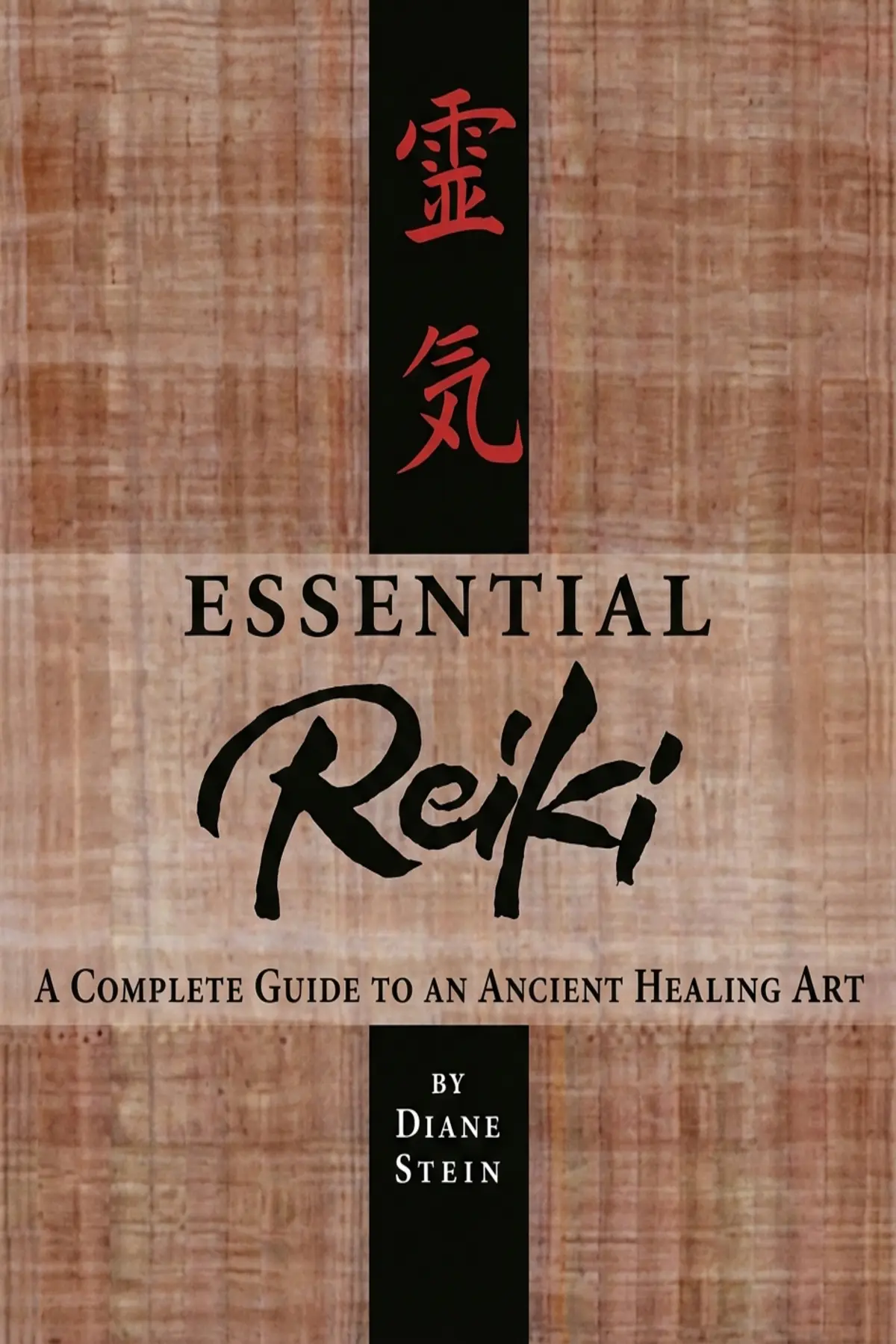
Diane Stein shows how the instinct to press a hand on a sore spot becomes Reiki, a hands-on practice for channeling life energy. She covers the setup, hand positions, timing cues and closing steps.
1 min 04 sec
Almost everyone already makes the first move of Reiki without knowing it. Bang your knee on a table and your hand flies to the spot and stays there. In Essential Reiki, healer and teacher Diane Stein argues that this reflex leads into an old healing practice. In it, the hands rest on the body to channel what she calls universal life energy, or Ki.
You may be curious about Reiki, an old and very simple method of healing by laying on of hands. Stein wrote for healers, practitioners and teachers, holding that Reiki healing belongs to everyone. Her case is that the comfort of a caring touch can be trained into a deliberate practice, and that the practice belongs to everyone, not to a guarded circle.
What follows is the shape of that practice as she teaches it: how to prepare the room, where the hands rest, when they move on, how to treat yourself and how to close with care. She is also honest about the one step that no book can give you.
1 min 24 sec
Your hand reaches for a bumped knee before you even think. Stein sees in that reflex the starting point of a whole healing tradition, and she insists it does not depend on what you believe.
1 min 23 sec
For decades, Reiki in the West was passed on behind closed doors. Stein set out to open it up, yet she admits there is one step that no printed page can hand you.
1 min 26 sec
Lighting, silence and the exact shape of your hands matter more than beginners expect. Stein explains how to prepare a session and where the hands should travel once it begins.
1 min 18 sec
Beginners rarely know how long to stay on one spot. Stein says the answer is already in your palms, if you know which feelings to watch for and how they change.
1 min 22 sec
Many people learn Reiki to help others and forget the person who is easiest to reach. A few simple positions let you bring the practice into your own evening.
1 min 19 sec
How a session ends shapes how the receiver walks away. Stein describes a closing gesture made without any touch at all, and compares the feeling to standing beneath a waterfall.
1 min 05 sec
Stein’s book starts with something too ordinary to notice, a hand pressed to a bruised knee, and builds a full practice on it. Her case is that the urge to comfort through touch can be shaped into a skill, and that the skill should not be locked away. In her telling, Reiki works for people of any faith, and it runs on attention. That means attention to the room, to the shape of the hands, to warmth and tingling as they come and go, and to the boundaries of the person receiving.
If the book has stirred your curiosity, the practical path is short. Look for a teacher for the attunement, since Stein herself says it cannot come from a page. Meanwhile, practice on yourself in a quiet, dim room. Keep your hands flat with the fingers closed, and move on when the sensations complete their cycle, roughly every five minutes. End with a swift sweep from head to feet, about eight inches above the patient’s body.
In Stein’s view, the hand that reaches for a hurt has been giving you the first lesson all along.
Reiki was long taught in the West as a guarded tradition, handed from teacher to student and seldom written down. Diane Stein, a healer and teacher, wrote Essential Reiki from the opposite conviction: this healing practice belongs to everyone. Her book sets out all three degrees of the system, and her publisher says much of that material reached print here for the first time. Stein begins with an instinct everyone shares, the hand that goes straight to a bumped knee. She links it to Ki, the universal life energy she says Reiki channels. She describes Reiki as an old, simple hands-on method with roots in Tibetan Buddhism, open to people of any faith. From there she walks through a session: a quiet, dimly lit room, hands held flat with the fingers together, and seven chakras running from the crown to just above the groin. The healer watches for sensations that cycle about every five minutes, respects the receiver's boundaries and ends with a sweep called energy brushing. Readers get a clear picture of how Reiki is practiced on others and on oneself. Stein is also frank that the attunements themselves must be received in person.
Wellness seekers curious about Reiki who want to know what actually happens in a session.
Beginners preparing for a first attunement who want to learn the hand positions and timing in advance.
Bodywork practitioners thinking about adding hands-on energy work to what they offer.
Diane Stein is a natural healer and teacher. She has written more than thirty books on the Goddess, metaphysics, alternative healing and natural remedies, among them The Women's Book of Healing and The Natural Remedy Book for Women. She was born in Pittsburgh, Pennsylvania, and now lives in Florida. There she runs workshops in Essential Reiki and Essential Energy Balancing, mostly for women.

Listeners find this Reiki resource to be thorough and expertly crafted, functioning as a total manual for performing the traditional healing art. The content is considered highly usable and clear, with one listener specifically pointing out its value during the attunement process. Additionally, they value how inclusive the work is, with one review noting that it removes the sense of exclusivity from this healing system.
Diane Stein's work is a breath of fresh air for those tired of the elitism often found in spiritual communities. Truth is, the way she democratizes these healing techniques by making the symbols public is exactly what the world needs right now. I found the instructions incredibly practical and easy to grasp, even for someone who hasn't spent years in formal training. While the book definitely leans into a fierce feminist perspective, I didn't find it off-putting so much as empowering for women in the field. She covers everything from the basics to advanced attunements with a level of detail that is rarely seen in other manuals. This guide effectively removes the high price tags and gatekeeping that usually surround the ancient art. It feels like a comprehensive reference that I will keep on my nightstand for years to come. If you want a guide that is inclusive and thorough, this is the one.
Show moreWhy should healing be a secret kept behind a paywall for the wealthy? Frankly, Diane Stein is a hero for breaking the silence and publishing the sacred symbols that were once hidden by traditionalists. This book is a complete toolkit for anyone who feels called to heal themselves or others without the unnecessary bureaucracy. The writing style is warm and exudes a loving energy that makes you feel supported throughout your journey. I found the practical exercises very helpful, especially the visualizations she recommends for clearing blockages. While some critics hate her for changing the traditional lineage rules, I think her approach makes Reiki more relevant for the modern age. It is well-written and easy to understand, making the complex concepts of energy flow feel intuitive. This is a must-read for anyone who believes that spiritual tools should belong to everyone regardless of their bank account balance.
Show moreThis book is effectively the only manual you need if you're serious about mastering the actual practice of hands-on healing. Personally, I found the step-by-step instructions for the attunement process to be the most valuable part of the entire text. It’s rare to find an author who is so willing to share every detail of their craft without holding back 'secrets' for higher-paying students. The energy within the words feels very nurturing and grounded. I noticed a significant shift in my own practice after applying her techniques for self-healing. While it’s true that she includes some controversial ideas about human origins, they are easy to skip if that’s not your thing. The core of the book is about love and accessibility, which are the true pillars of Reiki. It is a comprehensive guide that serves both the novice and the seasoned practitioner equally well.
Show moreWow, what an incredibly thorough guide that manages to strip away the gatekeeping usually found in this field. Honestly, I appreciate Stein’s courage in publishing this book despite the backlash she received from the more conservative Reiki community. She treats the reader with respect and assumes that we are all capable of accessing this universal life force. The instructions are clear, the diagrams are helpful, and the overall tone is one of deep compassion for the Earth and its inhabitants. It truly is a complete guide that covers everything from self-treatment to teaching others. I felt much more confident in my own abilities after finishing this than I did after my weekend workshop. It’s a beautiful, empowering book that makes healing accessible to the masses. Regardless of your gender or your background, there is something profound to be learned here.
Show morePicked this up while preparing for my Level II attunement because several practitioners mentioned it was the gold standard for modern energy work. To be fair, some of the historical claims are a bit out there, especially the parts about Reiki coming from other planets and Jesus studying in India. I had to take those sections with a grain of salt to get to the actual meat of the book. Once you move past the 'woo-woo' theories, the actual practice guide is phenomenal and well-organized. The illustrations of the symbols are very clear, which helped me memorize them much faster than using my teacher's hand-drawn notes. It’s a very detailed resource that provides a solid foundation for your practice. I appreciate how Stein makes the entire process accessible without requiring a small fortune in workshop fees. Even with the eccentric theories, the practical advice remains top-tier for any student.
Show moreAs a practitioner who values inclusivity, I found the Goddess-centric language a bit heavy-handed even if I agree with the core sentiment. In my experience, energy isn't gendered, so the constant focus on 'She' and 'Her' felt slightly exclusionary toward the men in our community. However, the sheer amount of information packed into these pages is undeniable. The layout is logical and follows a natural progression from the history of Usui to the actual application of hand positions. I particularly liked the section on the attunement process, as it demystified something that many teachers try to keep shrouded in mystery. It functions as a complete guide that covers the technical aspects better than most glossy modern books. If you can look past the author’s personal bias, you’ll find a wealth of knowledge. It’s definitely a supplement to your education rather than a replacement for a master's guidance.
Show moreEver wonder why the traditional Reiki masters were so upset by this specific publication back in the day? Gotta say, after reading it, I can see why they felt threatened by Stein’s transparency. She essentially took a system that was based on exclusivity and handed the keys to the public. The book is very practical and focuses on the actual application of energy rather than just the theory. I did find the feminist tone to be quite strong, which might not be everyone’s cup of tea, but the techniques themselves are solid. Her descriptions of the symbols are the most accurate I’ve seen in print. I use this as a reference guide whenever I feel like I’m forgetting a specific hand position or need a refresher on the chakras. It’s a bold piece of literature that has rightfully earned its place as a classic in the field.
Show moreFinally got around to reading this classic after years of hearing about the controversy surrounding Diane Stein. Look, the book is incredibly detailed and serves as a fantastic manual for anyone undergoing their first few levels of training. She makes the ancient art feel very approachable and removes the intimidation factor that often comes with spiritual study. I was particularly impressed by how she breaks down the ethics of healing and the importance of intention. My only gripe is that she presents her personal opinions on history and science as if they are established facts. If you can separate the practical healing advice from the metaphysical speculation, you have a 5-star book. It’s an easy-to-understand guide that really highlights how energy work can be a tool for global transformation. I’d recommend it to anyone starting their path.
Show moreNot what I expected when I signed up for a course on traditional energy work. Not gonna lie, the sections on Lemuria and extraterrestrial DNA were a bit much for my analytical mind to process. I was looking for a historical account of Mr. Usui, but what I got was a very opinion-based narrative that felt more like a manifesto at times. There is some worthwhile information here, particularly regarding the hand positions and the physical experience of giving a treatment. However, the author deviates so far from traditional methods that I worry beginners might get confused about what is actually part of the original system. It’s a well-organized book, but it requires a lot of 'filtering' to get to the useful parts. If you are a traditionalist, this will probably irritate you more than it helps. It’s an interesting addition to the literature, just don’t take every word as historical fact.
Show moreThe chapter on planetary origins was where she lost me completely. It is hard to take a healing manual seriously when it starts delving into theories that lack any historical or scientific grounding. I am a Reiki master, and I found her representation of some symbols to be slightly different from what was passed down through my lineage. This makes me question the accuracy of the rest of her 'revelations.' To be fair, the book is well-written and the organization of the material is excellent for a textbook. There is definitely a lot of useful information regarding the physical sensations of energy flow. I just wish she had stuck to the Reiki itself rather than injecting so much personal political and metaphysical bias. It’s an okay supplement, but please don't let this be your only source of information on the subject.
Show moreStein presents Reiki as an old, simple method of hands-on healing with roots in Tibetan Buddhism. In this method, the healer’s hands channel a universal life energy called Ki. She links it to the everyday instinct of pressing a hand on a sore spot. She then explains the three degrees of the system, how to set up a session, the seven chakras, self-healing and a closing technique called energy brushing.
Not completely, by Stein’s own account. She says the attunements, the stages that open each degree of Reiki, must be received in person from a teacher. Apart from that, the book aims to give healers, practitioners and teachers everything else they need. That includes hand positions, session setup and timing. Her publisher says much of this material was published there for the first time.
Stein says healers often feel warmth, tingling or vibration in their hands, and these sensations shift and repeat in a cycle of about five minutes. She treats a completed cycle as the sign that the energy has done its work at that chakra for now. At that point the healer moves the hands, held flat with the fingers closed, to the next position.
Stein says it is not. Although she traces Reiki’s origins to Tibetan Buddhism, she stresses that the practice does not depend on any religious affiliation or particular faith. In her view, that openness explains why people from many cultural backgrounds take it up. She also argues that Reiki healing belongs to everyone, not to a small group of insiders.
Stein’s book supports a simple self-practice. Choose a quiet room with soft lighting. Rub your palms together, then place your hands over your eyes and over other parts of your body, staying at each spot until the sensations in your hands complete their cycle. Finish by sweeping your hands from head to feet, without touching the body.
Marianne Williamson

Deepak Chopra

Pico Iyer

Alcoholics Anonymous World Services


Daniel Goleman


Eckhart Tolle

Beth Moore
Paramahansa Yogananda
AUDIO SUMMARY AVAILABLE
Get the key ideas from Essential Reiki by Diane Stein, plus 5,000+ more nonfiction titles.









