

14 min 09 sec
Available in: English
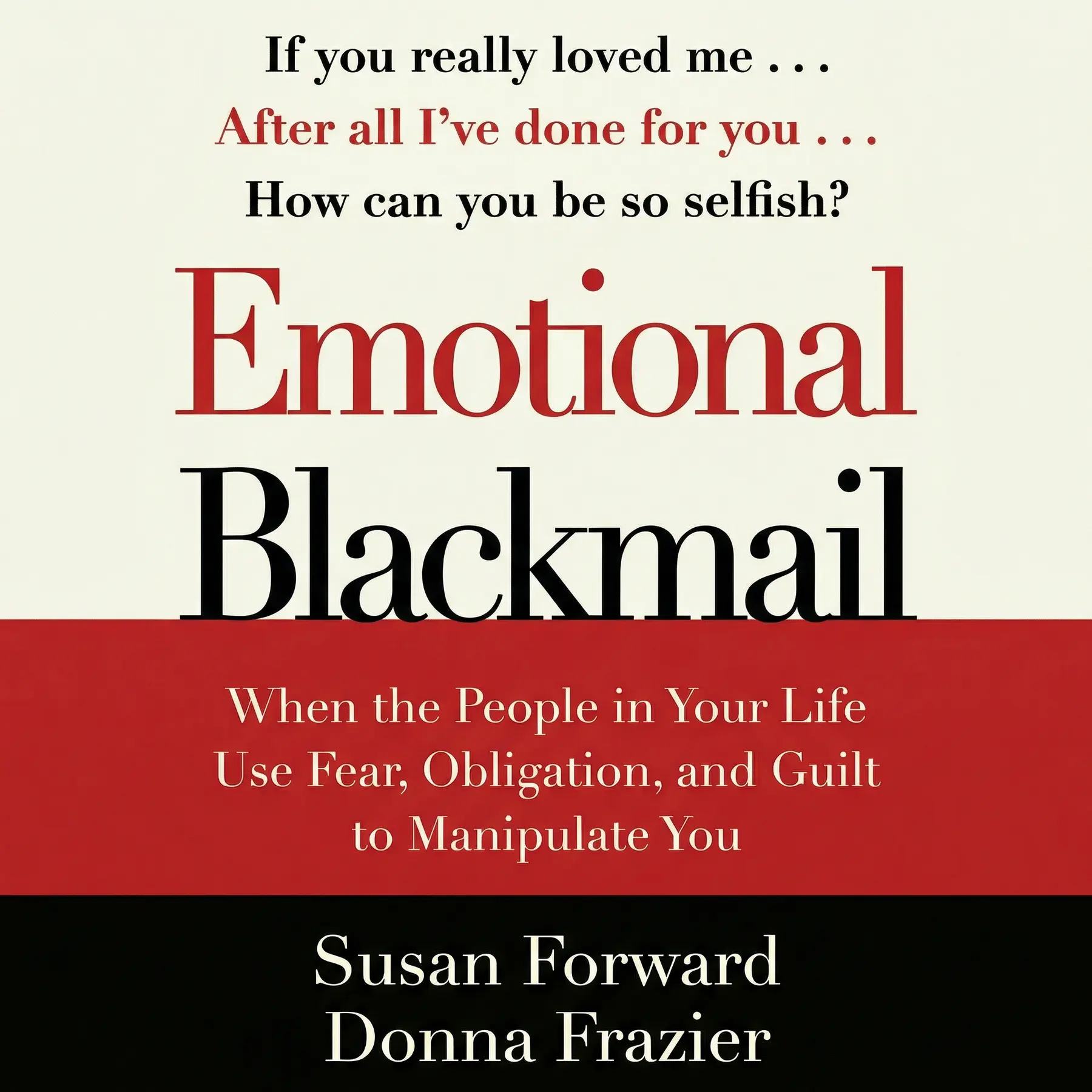
Emotional Blackmail: When the People in Your Life Use Fear, Obligation, and Guilt to Manipulate You
Shows how people close to you use fear, obligation and guilt to get their way. It explains the six signs of emotional blackmail and how to slow down, set boundaries and say no calmly.
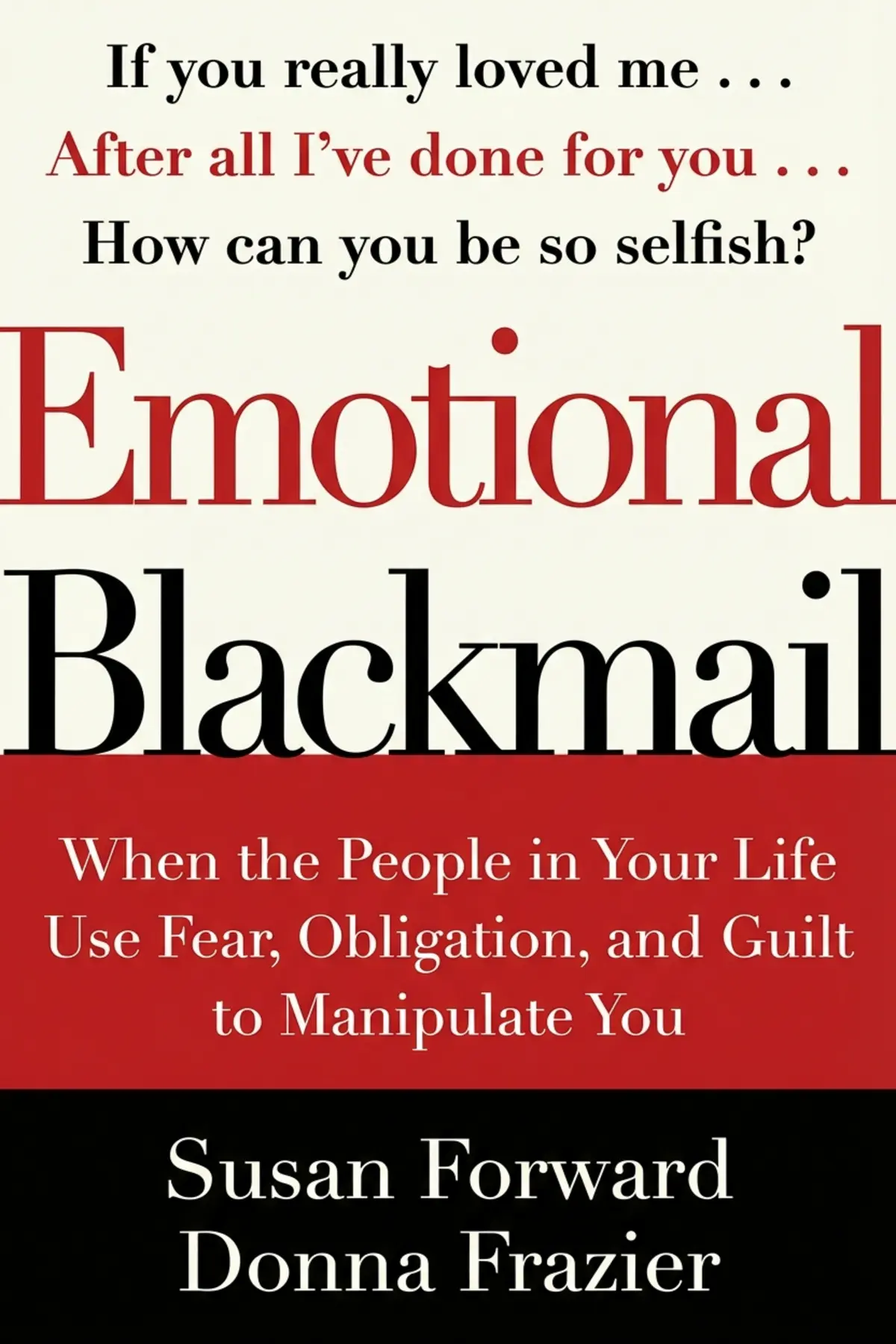
Table of Content
1. Introduction
1 min 03 sec
When someone you love hints that they will be hurt, or gone, unless you give in, saying no can feel impossible. In Emotional Blackmail, therapist Susan Forward, writing with Donna Frazier Glynn, gives that pressure a name and shows that it follows a predictable pattern. Her core claim is simple: whenever a person threatens to make you suffer for refusing them, you are being blackmailed, even when the threat comes wrapped in love.
Forward argues that this kind of manipulation works because it hides inside a fog of fear, obligation and guilt. It also works because the blackmailer knows you well enough to aim at your weak spots. Once you can see the pattern, she says, you can slow it down, map it and refuse to play your part. Through couples such as Anna and Artie, who saw her together in therapy, and Elliot and Eve, the book traces how a single surrender can harden into a cycle. It also gives you the words and steps that let you stop feeling guilty for having needs of your own.
2. Recognize a threat dressed up as love
1 min 38 sec
The person best placed to manipulate you is rarely a stranger. Forward explains why the qualities you are proudest of can become the very handles someone uses to move you where they want.
3. Trace six steps from wish to habit
1 min 47 sec
A request, a refusal, a little pressure. It sounds like any couple’s disagreement. Forward shows the exact point where an ordinary argument turns into something that will keep coming back.
4. See through the fog of fear and guilt
1 min 44 sec
A husband who feels threatened and a mother who wants a holiday use very different words. Underneath, they lean on the same three feelings, and those feelings blur what is really happening.
5. Tell a fair fight from a power play
1 min 43 sec
Two marriages, the same painful confession, two very different outcomes. One question decides which side of the line a conflict falls on, and it has nothing to do with how angry anyone gets.
6. Learn how giving in once weakens your resolve
1 min 48 sec
An artist skipped her first design class after one angry morning at home. What happened inside her afterward explains why each surrender makes the next demand easier to win.
7. Buy time and map the pattern on paper
1 min 42 sec
The blackmailer’s strongest weapon is the clock. Forward’s first countermove takes only a sentence or two, and what you do with the time it wins turns a blur of feelings into something you can read.
8. Hold a boundary without starting a war
1 min 38 sec
Saying no to someone who uses guilt can feel like lighting a fuse. Forward’s way of speaking keeps the temperature down without giving up an inch of what you need.
9. Conclusion
1 min 06 sec
Emotional blackmail rarely announces itself. It shows up as a sigh, a question about whether you really care, a reminder of everything someone has done for you. What Forward offers is a shape for that pressure. Once you know the six signs, and once you can feel the fog of fear, obligation and guilt rolling in, the moment loses much of its grip. A threat you can name is a threat you can think about.
The habit she puts above all others is listening to your inner voice. When a demand feels unreasonable, notice the guilt or fear that follows instead of pushing it aside, because that is how you learn when and why you feel powerless. From there, give yourself time before answering, and write down what the other person did and how you reacted. Then state your limit calmly, without attacking.
Eve gave in once and then yielded more easily each time, while Anna’s surrender left Artie likely to try the same tactic again. The cycle starts with a single yes, and it can end with a single, calm not yet.
About this book
What is this book about?
Some of the hardest pressure in life comes from the people we love most. A partner hints he might leave. A parent lists everything she sacrificed. A spouse brings up an old mistake every time she wants something. Therapist Susan Forward calls this emotional blackmail: any time someone signals that you will suffer unless you give them what they want. Writing with Donna Frazier Glynn, Forward breaks the pattern into six signs, from the first blocked wish to the habit that forms after you give in. She explains why it is so hard to see. It thrives in what she calls the FOG of fear, obligation and guilt, and the blackmailer knows exactly which of your proudest qualities to turn against you. Through couples from her practice, she separates honest conflict from manipulation and shows how each surrender makes the next one easier. The book then turns practical. Readers learn how to refuse the blackmailer's deadline and step back from the conflict. They learn to write down what the other person does and how they react, then state a boundary calmly without escalating the fight.
Book Information
Who it's for
Resentful after saying yes
People who say yes to a partner, parent or friend and then feel resentful and guilty.
Mistakes held against them
Anyone whose past mistakes keep coming back as leverage in arguments.
People-pleasers who freeze up
People-pleasers who freeze in confrontation and want calm words for saying no.
About the Author
Susan Forward
Susan Forward worked as a therapist in private practice and as a therapist, teacher and consultant at psychiatric and medical facilities across Southern California. Her books Men Who Hate Women and the Women Who Love Them and Toxic Parents both reached number one on the New York Times best-seller list, and she hosted her own ABC Talk Radio show for six years. Donna Frazier Glynn is a former newspaper journalist, including at the Los Angeles Times, who now edits, writes and coaches authors. She has written ten books.
Ratings & Reviews
Ratings at a glance
What people think
Listeners describe this work as clear and accessible, offering valuable insights that help them contextualize and process their own life events. They also value the actionable methods and clinical guidance provided, highlighting its potential to transform lives and help individuals reclaim their independence. Furthermore, the guide clearly explains the concept of emotional manipulation within interpersonal bonds, and one listener pointed out how well it covers the complexities of family and social circles.
Top reviews
Leila
This book changed how I view every difficult conversation in my life. Frankly, I never had a word for that heavy feeling of dread when dealing with my parents, but Forward defines it perfectly as the 'FOG'—fear, obligation, and guilt. The way she breaks down how manipulators use our own conscience against us was a massive eye-opener for me. It isn't just a list of complaints; it’s a manual for regaining control. I appreciated the practical strategies for setting boundaries without being unnecessarily cruel. For the first time, I feel like I have the tools to negotiate instead of just caving in to keep the peace. If you’ve ever felt like you were being held hostage by someone else's emotions, you need to read this immediately. It is life-saving advice wrapped in a very easy-to-understand package.
Show morePongpan
After hearing about Susan Forward's work for years, I finally dove into this, and it felt like she was reading my mind. This isn't just some dry psychology text; it’s a powerful guide for anyone who feels trapped in a toxic cycle. Truth is, I was a chronic people-pleaser until I read the sections on 'Fear of Abandonment' and 'Fear of Change.' The book gives you actual scripts to use when someone tries to guilt-trip you. I’ve recommended this to over a dozen people because everyone has someone in their life who uses emotional tactics to get what they want. It really helps you distinguish between making someone suffer and simply letting them face the consequences of their own actions. Truly amazing and highly recommended for your mental health.
Show moreYulia
As a mental health professional, I find this remains one of the most accessible resources for patients trapped in high-conflict cycles. Forward and Frazier have a way of simplifying complex psychological defense mechanisms into something the average person can use. The concept of 'Fear, Obligation, and Guilt' is a cornerstone of forensic psychology, and seeing it explained so clearly here is wonderful. It teaches readers that disapproval is merely a weapon used to coerce compliance. Rescuing people from themselves harms everyone involved. This book provides a clear path toward standing up for oneself without losing one's empathy. It is absolutely one of my favorite books on the subject. If you want to understand how manipulation tactics actually work in real-time, buy this book today.
Show moreNoo
Wow. Just wow. Picked this up on a whim and it was exactly what I needed. I’ve spent years feeling like I had to comply with outrageous demands just to keep the 'peace' at home. This book taught me that peace at the cost of your own integrity isn't peace at all. The 'Just Say No' philosophy sounds simple, but this book gives you the actual emotional backbone to do it. It’s amazing how your life changes once you understand the mechanics of manipulation. I’ve already recommended it to several friends who are in similar positions with their in-laws or partners. It is a powerful tool for anyone ready to expand their emotional intelligence and stop being a victim. Simply fantastic writing and very high-impact advice.
Show moreWeera
Look, we all have that one family member who makes us feel like we're constantly walking on eggshells. For me, it was my aunt, and this book helped me realize that her 'episodes' were actually calculated moves to get her way. The writing is very direct and clear. I especially liked the sections on the different types of blackmailers, from the 'Sufferers' to the 'Tantalizers.' It really puts your personal relationships into perspective. My only gripe is that it feels a bit repetitive in the middle chapters. However, the therapeutic advice is solid, and the examples of marital and parent-child dynamics were spot on. It’s a great life investment for anyone struggling to be more assertive and diplomatic. You'll finally understand why you've been saying yes when you really wanted to say no.
Show moreSkylar
Does anyone else feel like these cases are just textbook narcissism? Personally, I think calling it just 'emotional blackmail' is like calling an alcoholic someone who just likes a drink—it downplays the severity of the personality disorders involved. That said, the information provided is incredibly useful for everyday life. The book is well-written and does a great job of describing the variations of behavior involved in manipulative relationships. I found the examples of work and friendship blackmailers particularly relevant to my own situation. It gives you a way to stop the 'dance' and set healthy boundaries. I’m giving it 4 stars instead of 5 only because I think it misses the mark on the narcissism aspect, which is often the root cause of these behaviors.
Show moreMontri
In my experience, the term 'blackmail' can feel a bit harsh, but the behaviors described here are undeniably real. I bought this because a close friend was making me feel responsible for her happiness, and it was draining my soul. This book gave me the courage to stop taking her 'bs' and start being good to myself. The author provides great examples of situations and conversations that illustrate exactly how we get sucked into these dynamics. It isn't necessarily about cutting people out of your life, but about changing the rules of engagement. I feel much more assertive and diplomatic now. You have to stick with it through all the example stories, because the 'why' behind the behavior doesn't always click until the very end.
Show moreAlejandra
Finally got around to reading this and I’m glad I did. Not gonna lie, some of the stories were hard to read because they hit so close to home. The book is very effective at defining what emotional blackmail is and helping readers understand their personal relationships more deeply. I appreciated that it included both male and female blackmailers and covered work dynamics as well as family ones. It really helps you see when your emotions are yours and when they were instilled by someone else just to get their way. It’s a solid 4-star read—informative, practical, and very supportive. It might just save your sanity if you're dealing with a toxic person who knows exactly which buttons to push.
Show moreNook
The chapter on the 'tools of the trade' was enlightening, but I struggled with how much the book focuses on the blackmailer's actions over our own internal triggers. To be fair, Forward does mention that certain people are more susceptible to these tactics. However, I think the book would have been far more helpful if it spent more time helping me adjust my own views and perceptions. Sometimes we are the ones getting in our own way by trying to control the other person's emotional state to avoid a conflict. If you find yourself obsessed with how others react, you might want to supplement this with a book on codependency. It's a good start for identifying manipulation, but it misses the mark by not diving deeper into why we allow it in the first place.
Show morePairot
Wait, why does every book in this genre eventually push a 12-step program? I found the first few chapters of Emotional Blackmail quite helpful for identifying toxic patterns, but then it took a turn that I didn't care for. The author suggests attending programs that, in my experience, are often based on religious guilt and self-deprecation. If I'm already struggling with a mother who cuts me off whenever I don't comply, the last thing I need is a program telling me my 'sensors' are faulty. The book is a bit too focused on the other person as the 'blackmailer' without giving enough credit to the reader's ability to just walk away. It was way too repetitive for me and felt a bit dated in its approach to recovery.
Show moreQuestions about this book
What is emotional blackmail according to Susan Forward?
Forward defines it as any situation where someone close to you signals that you will suffer unless you give them what they want. The classic case is a threat to end a relationship, made by someone who knows you care too much to let that happen. It is hard to spot because the blackmailer knows your weak points and because most people would rather not believe a loved one is manipulating them.
What are the six signs of emotional blackmail?
Forward lists desire, resistance, pressure, threats, compliance and repetition. Someone wants something, you resist, they push and then hint at a consequence, you give in, and the tactic returns because it worked. In her example, Artie pressured Anna to move in, questioned her love, hinted he might leave, and once she agreed he had learned that guilt got results.
What does FOG mean in Emotional Blackmail?
FOG stands for fear, obligation and guilt, the three feelings that hide blackmail from the person on the receiving end. Fear often drives the blackmailer too, frequently a fear of abandonment rooted in childhood. Obligation and guilt are normal feelings, but they become weapons when used to cross boundaries, such as a parent demanding a vacation from children who are already generous and attentive.
How do you respond to emotional blackmail?
Forward’s method starts with refusing the blackmailer’s deadline: calmly say you need time to think and repeat it if pushed. Then step back and ask what the person wants, how they asked and how they reacted to your refusal. Write down their actions and your emotional reactions, find where your boundaries were crossed, and state them calmly, agreeing to disagree rather than attacking.
How can you tell normal conflict from emotional blackmail?
Forward’s test is whether the other person wants to solve the problem or simply to win. People seeking a solution speak openly, consider your feelings and own their part. After Jack’s affair, Jill asked for therapy and promised never to use it against him. Rori, in a similar situation, kept raising Ron’s affair to get attention and gifts, which made it blackmail.
Featured in
Readers also enjoyed










AUDIO SUMMARY AVAILABLE
Listen to Emotional Blackmail in 15 minutes
Get the key ideas from Emotional Blackmail by Susan Forward, plus 5,000+ more nonfiction titles.
- 5,000+ titles
- Listen as much as you want
- 7-day free trial
- Cancel anytime









