


14 min 41 sec
Available in: English
 ไทย
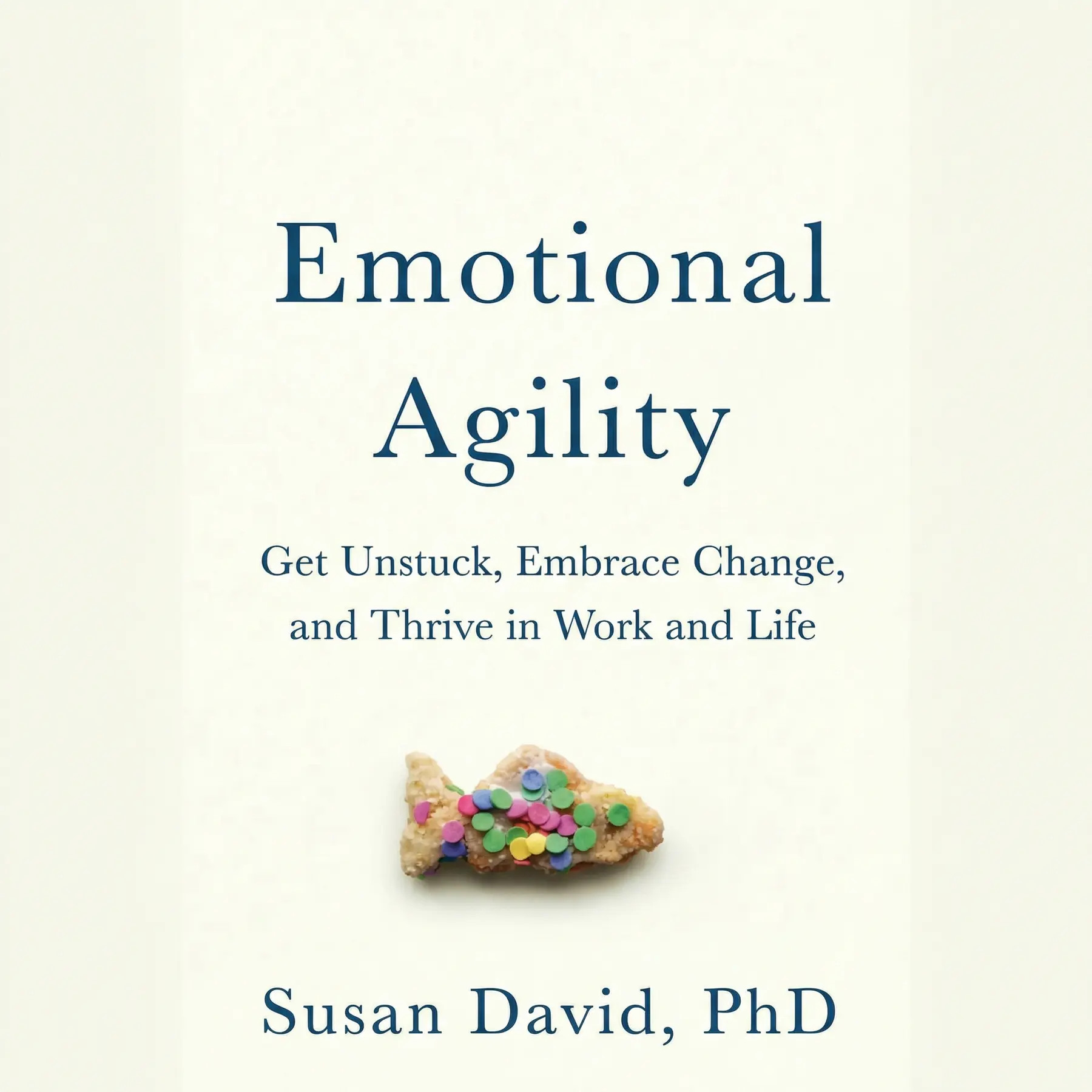
EnglishไทยEmotional Agility: Get Unstuck, Embrace Change, and Thrive in Work and Life
By Susan David
Psychologist Susan David shows how to stop being run by harsh inner stories and painful feelings. You learn to face them kindly, put space between you and them, and act on what you value.
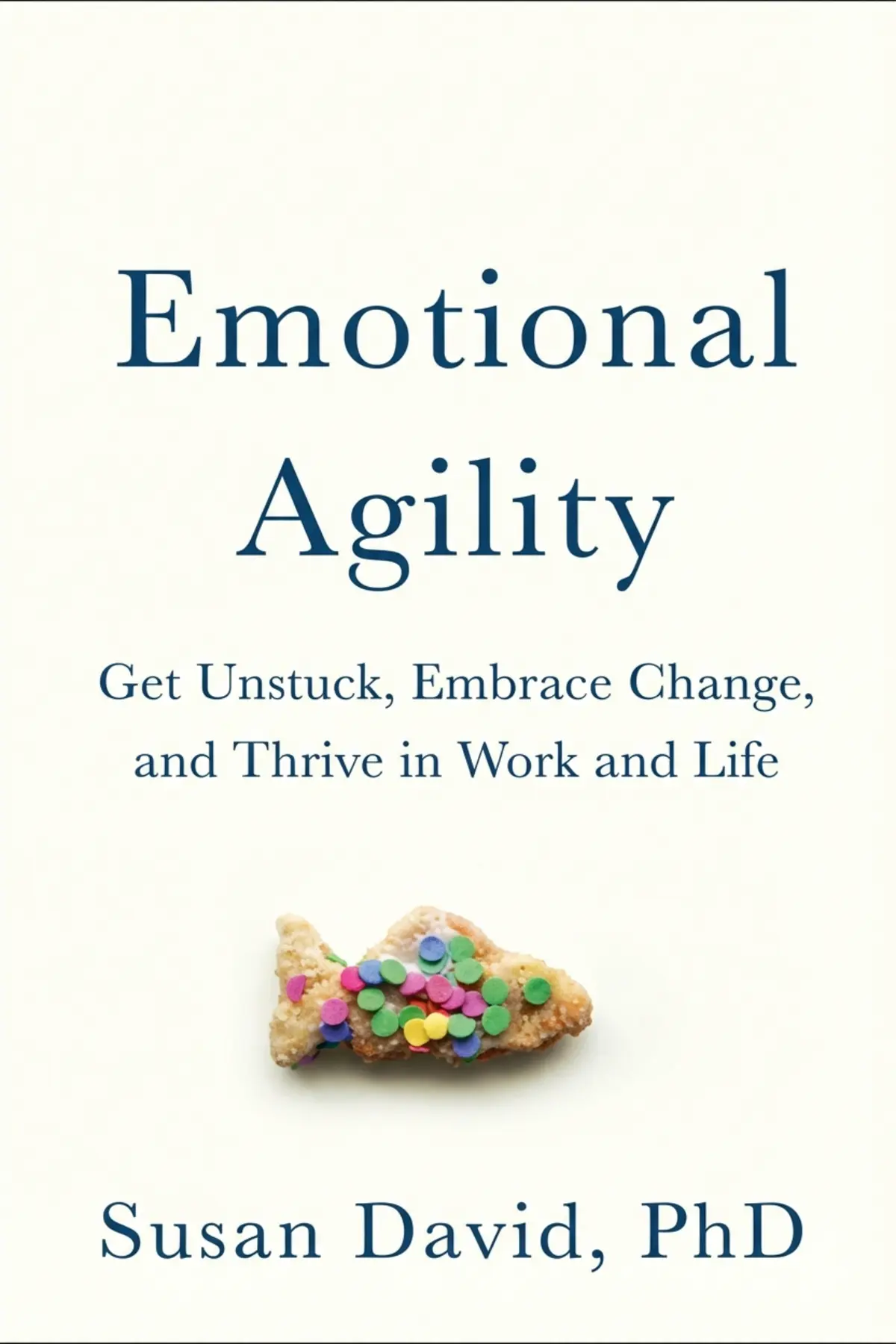
Table of Content
1. Introduction
1 min 07 sec
Most of us live with an inner voice like a drill sergeant: you are not good enough, you will never handle tomorrow’s presentation. In Emotional Agility, psychologist Susan David argues that such verdicts are stories the mind builds, usually bent toward the negative. Obeying them keeps you stuck, and so does forcing them away.
Her alternative is emotional agility, the skill of stepping back from a feeling far enough to see it clearly and decide what needs to change. Painful emotions, in her view, are information to examine with kindness, and the space you make around them is where better choices begin.
The evidence runs from college smiles that predicted lives thirty years later to a Hollywood director who sold most of what he owned, and a working mother hiding in her closet during a call with her boss. Each story turns into a practice: comforting yourself after a setback, cooling anger before it costs you, testing whether your goals are really yours and saying the hard thing at work.
2. Spot the story your mind is telling you
1 min 48 sec
A tense moment with your boss can end in a fight at home about a dishwasher. The reason lies in something your brain does every second of the day, and it rarely gets the facts right.
3. Let bad feelings tell you something useful
1 min 37 sec
Old photographs of college classmates held a clue to who would have happier marriages and careers decades later. That clue says a great deal about what forced cheerfulness really costs.
4. Treat yourself the way you'd comfort a child
1 min 48 sec
Two experiments, one with divorcees and one with job candidates, point to the same advantage. It belongs to people who do something many high achievers believe will make them look weak.
5. Put space between you and your anger
1 min 47 sec
A furious call about a wrong phone bill and a pillow you are allowed to scream at both point to the same skill. It takes only seconds, and brain scans suggest it changes you.
6. Choose goals that are actually yours
1 min 44 sec
A director at the top of Hollywood found that success felt empty and changed course completely. His story raises an awkward question about how many of your own ambitions you really chose.
7. Answer the small bids that keep relationships alive
1 min 43 sec
Researchers filmed couples living in an apartment inside their lab, then checked on them six years later. What predicted who stayed together was a habit so small most people never notice it.
8. Grow at the edge without breaking
1 min 54 sec
Mastery has a hidden cost, and comfort can slowly turn into a trap. A mother crouched among her clothes during a work call shows where the way out begins.
9. Conclusion
1 min 13 sec
Emotional Agility adds up to a different relationship with your inner life. The drill sergeant in your head does not have to be obeyed, and it does not have to be silenced either. Its stories can be noticed, questioned and set down, and the feelings under them often point at something real: an unfair demand at home, a goal borrowed from friends, a job that has swallowed your day off.
David’s method is to make room. Kindness toward yourself lets you face a feeling, distance lets you see it clearly, and your values tell you what to do next. The payoff shows up in ordinary places, from honest smiles in an old class photo to couples who answered each other’s small bids and stayed together.
Start small. When anger rises, give it one breath before you reply, the way David caught herself with the phone agent. Write the letter to your future self and see which of your goals still sound like yours. At the next family dinner, skip the safe chatter and ask one question that matters.
Erin did not need a new life. She needed to come out of the closet and say what was true.
About this book
What is this book about?
Most people know the voice that says they are not good enough, not a good enough partner, not ready for tomorrow's meeting. Susan David argues that this voice tells distorted stories, and that both common responses, obeying it or forcing a smile over it, keep people stuck in the same patterns at work and at home. Her answer is emotional agility: stepping back from a feeling far enough to see it clearly and decide what needs to change. She builds it in stages. You show up for hard emotions with self-compassion, step out of them through mindfulness, choose goals that are truly your own and move on by staying open to the people around you. Studies of college smiles, divorcees, mock job interviews and couples filmed in a lab apartment support each step, along with stories from her clients and friends. The reader gets simple practices to use right away: comforting the child you once were, giving anger a pause before acting on it, writing a letter to your future self, answering small bids for connection and having the honest conversation you have been avoiding.
Book Information
Who it's for
Self-critical professionals
Professionals whose harsh inner voice spills into meetings, reviews and evenings at home.
Smiling through stress
People who smile through stress, then snap at a partner over small things.
Stuck in hollow routines
Anyone stuck in a job or routine that looks fine from outside but feels hollow.
About the Author
Susan David
Susan David is a psychologist, speaker and author born in South Africa. She is on the faculty of Harvard Medical School and co-founded the Institute of Coaching at McLean Hospital. She has advised the senior leaders of hundreds of organizations, including the United Nations, Ernst and Young and the World Economic Forum, and her work has appeared in Harvard Business Review, Time, Fast Company and The Wall Street Journal.
Ratings & Reviews
Ratings at a glance
What people think
Listeners find this book to be a high-quality listen that presents an exceptional system for interpreting emotions alongside useful tips for everyday life. It acts as a continuous guide for emotional well-being, helping individuals enhance their self-perception to achieve greater life satisfaction. Additionally, listeners praise the polished prose and narrative style, regarding the title as a truly worthwhile investment.
Top reviews
Tom
Susan David offers a stellar framework that moves far beyond the typical, shallow "just think positive" platitudes found in most modern self-help. It’s practical. Instead of avoiding difficult feelings, she teaches you how to see emotions as data rather than directives, which has been a total game-changer for my psychological well-being. The core idea is that we shouldn't be controlled by our internal weather. Instead, we should use it to navigate toward our true values. I found the storytelling to be incredibly engaging and the research-backed advice provided an ongoing resource for my mental health. This isn't just a one-time read; it’s a manual for life fulfillment. If you are looking to cultivate deeper self-awareness and stop the cycle of self-sabotage, this book is a valuable expenditure of time and money.
Show morePrinya
Wow, this book actually lived up to the massive hype and then some. Not gonna lie, I was skeptical because I’m tired of the 'toxic positivity' movement, but Susan David validates the struggle of being human. She explains that being emotionally agile isn't about being happy all the time; it’s about being able to handle the full spectrum of human experience with compassion. The chapter on 'walking your why' helped me align my daily habits with my core values in a way that felt authentic rather than forced. Her writing style is warm and accessible, making complex psychological concepts feel like a conversation with a wise friend. If you’re a fan of Brene Brown or have been looking for a way to grow stronger through your challenges, you need this on your shelf.
Show moreRay
As someone who has struggled with anxiety for years, finding a framework that doesn't just tell you to 'think positive' is incredibly refreshing. This book is a masterclass in emotional health. David explains that our emotions are like a compass; they point us toward the things we care about most, even when they feel painful. I loved the practical exercise of repeating a word until it loses its power—it’s a simple but effective way of 'stepping out' from under a heavy thought. The writing is clear, the research is fascinating, and the advice is genuinely life-altering if you actually put in the work to apply it. It has helped me become more resilient in the face of workplace stress. This is truly well worth the investment for your long-term fulfillment.
Show moreWittaya
Finally got around to finishing this, and I can say it's an essential read for anyone interested in self-development. Personally, I found the idea that 'emotions are data, not directives' to be the most clarifying sentence I’ve read all year. It takes the pressure off. You don't have to 'fix' a bad mood; you just have to listen to what it’s trying to tell you about your needs. The book is filled with wonderful stories that make the abstract concepts feel very grounded and real. It’s helped me show more compassion toward myself and, by extension, to the people I work with every day. Susan David has provided a brilliant roadmap for navigating life with more grace and intentionality. Highly recommended for anyone who feels stuck in their own head.
Show moreMalee
Ever wonder why you get 'hooked' by the same old arguments or self-sabotaging thoughts every single time? In my experience, most books on this topic are too wishy-washy, but David provides actual tools like journaling and the 'third-person' perspective to create space between the feeling and the reaction. To be fair, there is a bit of fluff to wade through, and the middle sections can feel slightly repetitive if you're already familiar with mindfulness. However, the distinction between 'bottlers' and 'brooders' was a massive wake-up call for me personally. I realized I’ve been a world-class brooder for years, obsessing over slights until they become my entire identity. Breaking that habit isn't easy, but the practical steps here make it feel possible. It's a solid, well-written guide for anyone wanting to be more resilient.
Show moreRungrat
The concept of being an 'observer' of your own thoughts is something I’ve heard before, but the way it’s framed here feels much more applicable to a busy, stressful life. David argues that courage is not the absence of fear, but rather 'fear walking,' which is a quote I’ve now taped to my desk. Gotta say, the section on parenting was particularly eye-opening. Learning how to help my kids label their emotions instead of just telling them to 'stop crying' has already changed the dynamic in our house for the better. The book is well-written and the storytelling makes the scientific concepts stick. My only minor gripe is that it leans a bit heavily on the author’s consulting experiences, which can feel a little self-promotional at times. Still, it’s a brilliant resource for anyone seeking more self-awareness.
Show moreLeah
Picked this up because I wanted a better way to handle the constant 'ups and downs' of my career. It turns out that being emotionally agile is exactly what I was missing. The book is a great blend of research and real-life application, and it really helped me identify the habits that were tripping me up in meetings and high-pressure situations. I especially appreciated the advice on using third-person self-talk to gain perspective. It sounds silly until you try it, but it works. While some of the positive psychology experiments felt like ones I’ve read a dozen times in other books, David’s synthesis of the material is unique enough to keep it interesting. It’s a solid addition to the genre and a very helpful tool for personal growth.
Show morePear
After hearing so many people rave about this, I finally sat down with the copy I bought months ago. To be fair, the central premise—that we need to acknowledge and label our emotions—is deeply resonant and logically sound. However, the delivery felt quite long-winded for my taste. I struggled with the sheer volume of case studies and experimental data that seemed to bury the actual prescriptions for change. It took me a second read-through to really outline a plan for my own behavior because the 'how-to' segments were spread so thin across the chapters. There are definitely gems of wisdom in here, specifically regarding how we communicate our needs to others. But you really have to be willing to dig past the rhetoric to find the practical application. It’s a good book, just not the revolutionary experience I was expecting.
Show moreTak
Look, if you’ve spent any time in the corporate world, you’ve likely seen the viral Harvard Business Review article this book was expanded from. Frankly, the article was enough. This feels like a classic case of taking a solid ten-page idea and stretching it into a full-length book to justify a consulting career. While the author writes confidently, much of the 'evidence' is based on correlational social science studies that often fail to replicate in the real world. It’s a corporate feel-good book designed to make you feel like you’re doing 'work' on yourself without actually providing a clear, actionable roadmap. I found the advice to be largely vague and shrouded in academic rhetoric. If you've never read a single self-help book, you might find a nugget of gold here, but for the rest of us, it’s mostly repackaged existential psychology.
Show moreSureerat
This is unfortunately just another pseudo-psychology book that takes a simple concept—mindfulness—and dresses it up in new terminology to sell books. The author fails to acknowledge her own lens of privilege, making several statements that come across as tone-deaf to anyone dealing with actual systemic issues or severe trauma. It’s easy to say 'choose your values' when you have a comfortable safety net, but for many, the 'big scary world' isn't just an internal feeling to be managed. Beyond the lack of self-awareness regarding her world view, the book is incredibly repetitive. It offers very scant details on how to actually achieve this 'agility' beyond some basic meditation and journaling tips you can find for free on any blog. It felt like a waste of several hours of my life.
Show moreQuestions about this book
What is Emotional Agility by Susan David about?
Psychologist Susan David argues that the mind constantly builds stories about our lives, and that these stories often distort reality in a negative way, creating painful emotions. Instead of obeying those feelings or forcing a smile over them, she teaches emotional agility: stepping back from a feeling to see it clearly, treating yourself with compassion, and then choosing actions that fit your own values at work and at home.
What are the stages of emotional agility?
David describes Showing Up, which means facing painful emotions with self-compassion instead of running from them; Stepping Out, which means creating distance through practices like mindfulness; and Moving On, which includes staying emotionally available to partners and friends. Along the way she stresses choosing goals that are truly yours and living at the edge of your potential, challenged enough to grow but secure enough to stay calm.
Why does Susan David say forced positivity is harmful?
She argues that pushing painful feelings away with a fake smile does more harm than good. She cites Berkeley researchers who studied Mills College class photos: women with genuine smiles, which involve the eyes as well as the mouth, had happier marriages, careers and well-being thirty years later. Negative emotions can also carry useful information, as with a client whose anger revealed unreasonable demands at home.
How can I practice emotional agility at work?
Pause before reacting, as David did when she caught herself yelling at a call-center agent over a billing error. Try short mindfulness breaks, and write a letter to your future self to test whether your goals are your own. When a situation keeps you stuck, get clear on your feelings and say what you need, the way Erin told her boss her day off was for her family.
Readers also enjoyed





A Guide to the Good Life: The Ancient Art of Stoic Joy
William B. Irvine




A High-Performing Mind: Strengthen Your Mind and Live Your Best Life
Andrew D. Thompson
AUDIO SUMMARY AVAILABLE
Listen to Emotional Agility in 15 minutes
Get the key ideas from Emotional Agility by Susan David, plus 5,000+ more nonfiction titles.
- 5,000+ titles
- Listen as much as you want
- 7-day free trial
- Cancel anytime









