

13 min 54 sec
Available in: English
Emotion by Design: Creative Leadership Lessons from a Lifetime at Nike
By Greg Hoffman
Draws on Greg Hoffman's decades at Nike to show how brands stand out in crowded markets. The method is to design for emotion through empathy, bold risks, a true identity, stories, authenticity and clear purpose.
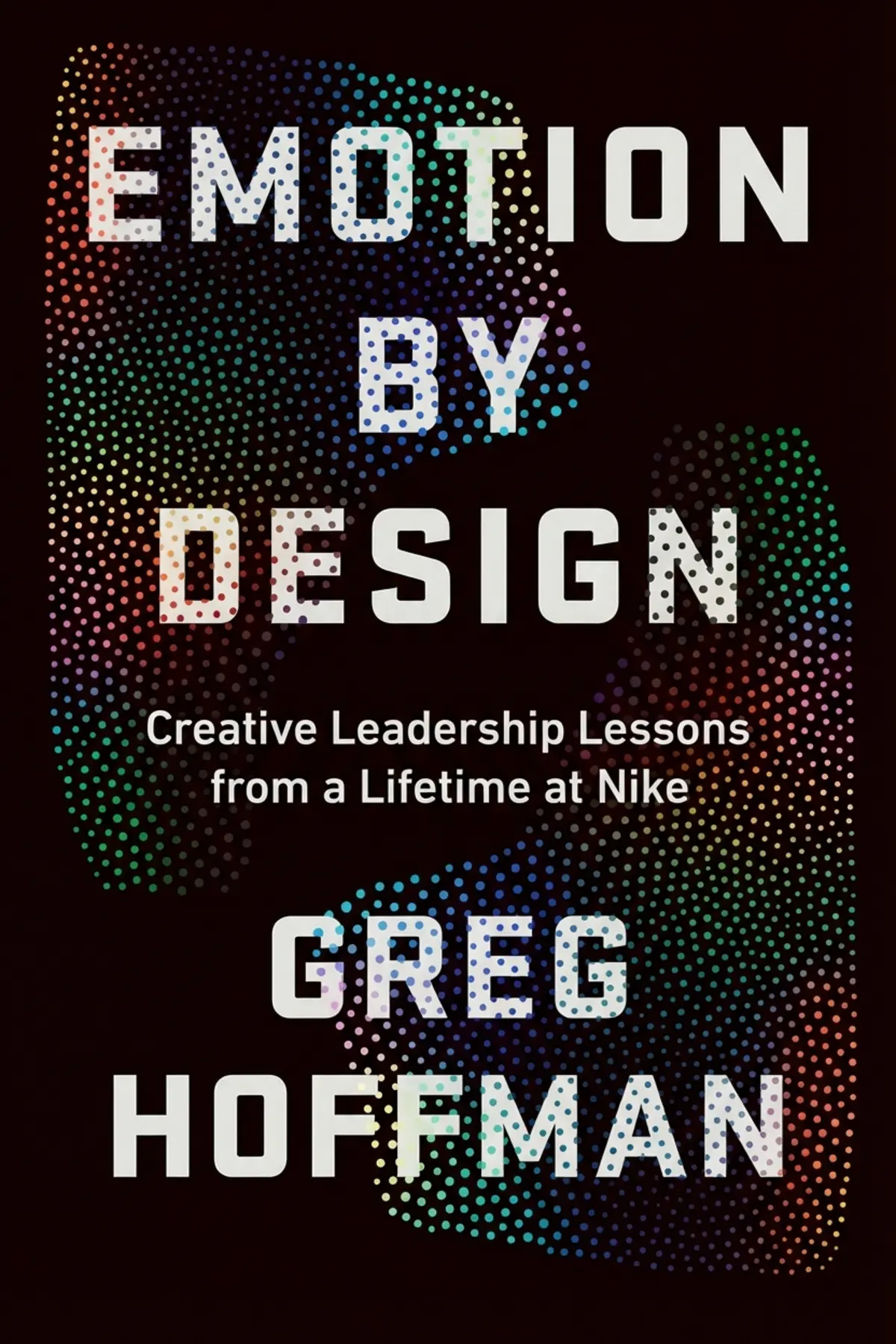
Table of Content
1. Introduction
1 min 06 sec
If your business is one of many in a crowded market, better features and bigger budgets rarely make people care. In Emotion by Design, Greg Hoffman, who spent decades in Nike’s marketing, design and innovation teams and served as its Chief Marketing Officer, argues that the brands people love win on feeling. Design for emotion first, he says, and loyalty follows.
His case rests on campaigns from Nike’s long history. A five-minute animated football film stretched the company’s usual limits. A basketball shoe became a street icon without big marketing stunts. A comedian sold a running watch while barely talking about its features. Each story shows a choice any brand can make, whatever its size: look harder at people, keep taking risks after success, show who you are, tell stories, refuse trends and sell purpose.
By the end you will have a set of questions to put to your next campaign, product page or pitch, and a clear sense of why some brands become part of people’s lives.
2. See what competitors miss by widening your view
1 min 44 sec
A basketball coach described the idea of seeing what rivals overlook, and the book links it to how brands win. The first step has little to do with marketing tools and everything to do with who sits in the room.
3. Train curiosity like a muscle, every week
1 min 38 sec
Creative teams often run dry for a reason that has nothing to do with talent. Nike’s answer includes a phone full of photos, three questions before every trip and an afternoon spent watching chefs.
4. Keep taking risks after success arrives
1 min 49 sec
Many brands grow timid the moment they reach their goals. In 2014 Nike did the opposite, spending more than a year and valuable airtime on a film that promoted no specific product.
5. Make every logo and poster carry your values
1 min 35 sec
Nike’s name sits small at the bottom of one of its most famous posters. Hoffman explains why the logo is the least of what that image says, and what a logo is worth without values behind it.
6. Stories that stay with people, in any format
1 min 43 sec
A secret football tournament, an Elvis remix and a playful side of Kobe Bryant all served the same purpose. The format changed each time, and Hoffman explains what stayed fixed.
7. Skip trends and build a product people love
1 min 34 sec
Nike never set out to make the Air Force 1 an icon, and gave it no big marketing push. Decades and 1,700 versions later, its story shows who really decides which products become legends.
8. Sell what your product changes in people's lives
1 min 42 sec
Nike had a new smartwatch full of clever technology, and chose to say almost nothing about it. A comedian, a desert and 300 runners in Boston explain what the company talked about instead.
9. Conclusion
1 min 03 sec
Hoffman’s lessons from Nike add up to a simple claim with hard work behind it: in a crowded market, people remember how a brand made them feel. That feeling can be designed, through who you hire, where you look for ideas, which risks you take, what your logo stands for and what you choose to say about a product. The emotional bond, he argues, is what turns a sale into loyalty and customers into advocates.
The Air Force 1 is the image to keep. Nike ran no big marketing stunts for it. It built a shoe true to its purpose, put it on players, and let the people who loved it do the rest.
You can start small. Keep a visual journal and bring one discovery to your team each week. Cover the logo on your next piece of work and see whether your values still show. And when you describe what you sell, begin with the life it changes. Hoffman’s last word is to be open and authentic, so customers can see the people behind the business. That human side is what they come back for.
About this book
What is this book about?
Most businesses want to become a brand people love, but there is too much competition to win on features or budget alone. Greg Hoffman, Nike's former Chief Marketing Officer, argues that the brands people stay loyal to are the ones that make them feel something, and that this feeling can be designed. Hoffman builds his case from campaigns he saw from the inside. A five-minute animated football film made Nike the most-viewed brand of the 2014 World Cup. The Air Force 1 became a street icon without big marketing stunts. Comedian Kevin Hart sold a running watch by talking about the change it makes for people, with features kept in the background. Along the way he explains the vision advantage, a phrase borrowed from basketball coach Mike Krzyzewski, and shows how empathy and curiosity feed it. Readers get a practical set of habits for creative leadership: building diverse teams, training curiosity with a visual journal, protecting a culture of risk after success, making a logo stand for values, choosing the right story format, refusing trends and putting relatable ambassadors in front of a product's purpose.
Book Information
Who it's for
Founders and business owners
Founders and small business owners competing in crowded markets who want customers to care, not just compare.
Marketing and creative leads
Marketing and creative leads looking for habits that keep a team's ideas fresh after early success.
Product managers
Product managers tempted to lead with features instead of the change their product makes.
About the Author
Greg Hoffman
Greg Hoffman spent decades at Nike in marketing, design and innovation roles. He served as Chief Marketing Officer, and his last position there was Vice President of Global Brand Innovation. Fast Company named him one of the most creative people in business in 2015. He now runs Modern Arena, which advises large brands, startups and nonprofits, and teaches branding at the Lundquist College of Business at the University of Oregon.
Ratings & Reviews
Ratings at a glance

What people think
Listeners enjoy the deep dive into Nike’s most legendary advertising efforts, although some feel the writing at times prioritizes the author’s individual career path over novel professional wisdom. Moreover, many consider the text a motivating manual for fostering brand sincerity through the use of storytelling and empathy. They also point to the utility of the concrete lesson wrap-ups provided at the close of every chapter, with one listener remarking that the accounts of partnering with world-class athletes deliver an "enormous inspiration and creativity boost" for both marketers and designers.
Top reviews
Boy
After hearing Greg Hoffman speak on a podcast, I knew I needed to grab this book immediately. It did not disappoint. The way he breaks down the creative process behind Nike’s most iconic campaigns, like the work with Serena Williams and Cristiano Ronaldo, is simply masterclass material. He proves that creativity isn't just a lightning bolt of luck. It's a skill. Personally, I was most moved by his focus on curiosity and the 'seeker’s mentality.' Keeping a visual journal of inspiration is a habit I’ve now started myself. While some chapters lean a bit heavy on his personal career path, the underlying message of building an emotional connection with consumers is essential. It's a beautiful, insightful read for anyone who wants to move beyond transactional marketing to true brand storytelling.
Show moreBrahim
Wow, the section on the 'Equality' campaign and the use of the Michael Jordan 'Wings' poster really hit home for me as a creator. Hoffman understands that a brand isn't just a logo or a catchy slogan. It is a soul. This book is an emotional journey through the history of the world's most recognizable sports brand. I loved the emphasis on diversity and how different perspectives lead to more resonant storytelling. The writing is accessible and powerful. Even if you aren't in marketing, the lessons on empathy and risk-taking apply to almost any creative field. I felt energized after every chapter. This is exactly the kind of visionary book I needed to kickstart my own branding projects this year.
Show moreDimitri
Picked this up during a creative slump and the emphasis on empathy was exactly the spark I needed. Greg Hoffman has an incredible way of articulating why certain images stay with us for decades. He doesn't just talk about selling products; he talks about moving people. The concept of the 'vision advantage'—seeing what others overlook—is something I will be applying to my own design firm immediately. It’s a very personal, open, and vulnerable account of a high-flying career. I found the chronological structure very helpful to see his growth from an intern to a CMO. This isn't just for 'Nike fans.' It’s for anyone who believes that business can have a heart. Pure inspiration.
Show moreBank
To be fair, I'm a bit of a Nike fanboy, but seeing the internal process behind the 'Find Your Greatness' campaign was fascinating. The book succeeds because it focuses on the 'why' instead of just the 'what.' Hoffman explains how to highlight a product’s purpose rather than just its technical features. That’s the secret sauce. The prose is fast-paced and the chapters are punchy. I particularly liked the advice on stopping the chase for trends and focusing on unapologetic authenticity. It’s a refreshing take in a world obsessed with data and algorithms. Hoffman reminds us that at the end of the day, humans are emotional creatures. If you want to build loyalty, you have to design for the heart.
Show moreHassan
Finally got around to reading this marketing staple, and while the Nike stories are legendary, the real value lies in the 'Emotion by Design' framework. Most books in this genre ramble endlessly without giving you a path forward. Hoffman avoids this by including practical summaries at the end of every chapter. It makes the book a handy reference guide for later. I found the 'vision advantage' concept particularly useful for my own team projects. Frankly, I wish there were more photos of the actual ads. Trying to visualize the 'Wings' poster or the 'Equality' short film while reading text-only pages is a bit of a missed opportunity. Still, the emphasis on empathy as a tool for innovation is a game-changer for any aspiring CMO.
Show moreTod
Ever wonder how a brand transitions from just selling sneakers to becoming a global cultural powerhouse? Hoffman answers that by focusing on the 'risk' factor. The chapter on 'The Last Game' animated film for the 2014 World Cup was a highlight for me. It shows that even a giant like Nike has to gamble to stay relevant. The truth is, most companies play it too safe once they get big. Hoffman argues that authenticity requires vulnerability. While the book could have used more diverse examples outside of the Nike bubble, the core principles are solid. It’s an easy, engaging read that offers a unique peek behind the curtain of high-stakes advertising. Definitely worth the time for any entrepreneur.
Show moreAnong
Look, if you want a glossy coffee table book in text form about the 'good old days' at Nike, this is for you. I appreciated the behind-the-scenes look at the 'Kobe System' campaign and the logic behind using humor for a legendary athlete. It was fun. However, the tone is occasionally a bit too self-congratulatory for my taste. In my experience, marketing is a team sport, yet the narrative here often centers on the author's singular vision. It’s a decent read for the inspiration factor alone, but don't expect a technical manual. It's more of a motivational speech stretched out over two hundred pages. Take what works and ignore the fluff.
Show moreYuki
Not what I expected from a former CMO, but there are still enough gems here to make it worth a weekend read. My main gripe is that it feels generic at times. 'Build a dream team' and 'be curious' are things we've all heard before. Got to say, the athlete collaborations are the real draw here. Reading about the partnership with Kevin Hart for the Apple Watch Nike+ launch provided a great lesson on choosing relatable ambassadors. However, the lack of visual aids in a book about 'design' is a huge oversight. It’s all tell and no show. It’s an okay book, but I wouldn’t call it a must-read for seasoned pros.
Show moreJonathan
As someone who has worked in brand strategy for fifteen years, I found this remarkably light on actual substance. Truth is, it's a memoir. To be fair, the anecdotes about the World Cup are entertaining for a casual fan, but the 'lessons' felt like glorified platitudes. It is frustrating. The book promises a blueprint for creative leadership but delivers a series of ego-driven career milestones instead. Hoffman is clearly brilliant. Yet, this narrative feels more like he's recounting his greatest hits than teaching us how to play the instruments. If you want Nike history, buy it. If you want a textbook on brand building, look elsewhere.
Show moreArt
This book felt more like an elongated resume or a 200-page LinkedIn post than a genuine guide to creative leadership. Not gonna lie, I was bored. As a brand designer with a decade of experience, I didn't find a single new professional lesson here. It’s mostly Greg Hoffman pounding his chest about Nike's glory days. The narrative is incredibly navel-gazing. He tells very ordinary stories as if they were revolutionary breakthroughs of the human spirit. It’s just ego. If you’ve never seen a Nike ad before, maybe you’ll be impressed. Otherwise, save your money.
Show moreQuestions about this book
What is the main idea of Emotion by Design by Greg Hoffman?
Hoffman argues that brands stand out in crowded markets by designing for emotion. Drawing on his decades at Nike, he shows how empathy and curiosity help teams see what rivals miss, why risk-taking must continue after success, and how identity, stories, authenticity and a clear purpose build emotional bonds that turn customers into loyal advocates.
What is the vision advantage?
The vision advantage is a phrase Hoffman borrows from Duke University basketball coach Mike Krzyzewski. It means noticing what others overlook and using that insight to tell stories that move people. Hoffman says it rests on two traits: empathy, strengthened by a diverse team, and curiosity, trained through habits such as a visual journal and planning trips around who to meet, what to look at and which places to visit.
Why did the Nike Air Force 1 become an icon?
According to Hoffman, the Air Force 1 came out from Nike in 1982 simply to give basketball players a shoe built for them, without big marketing stunts. Once Moses Malone of the Philadelphia 76ers wore it to win a championship game, the shoe caught on and spread from courts to streets. Hoffman sees it as proof that authenticity, not trend-chasing, creates lasting icons.
How can I apply Emotion by Design to my own brand?
Start by checking whether your work says what you believe even with the logo covered. Lead product messages with the change the product makes in someone’s life, and choose a relatable ambassador who has lived that problem, as Kevin Hart did for the Apple Watch Nike+. Keep a visual journal, share discoveries with your team, and keep one project on the table that feels a little risky.
Who should read Emotion by Design?
It suits founders, marketers, designers and team leads who want their brand to mean something to customers. Hoffman’s examples come from Nike campaigns such as The Last Game, Find Your Greatness and the Michael Jordan Wings poster, but his habits scale down to small businesses and individual creative teams that compete against many similar rivals.
Readers also enjoyed



Acting with Power: Why We Are More Powerful Than We Believe
Deborah Gruenfeld

All In: How Great Leaders Build Unstoppable Teams
Mike Michalowicz



7 Powers: The Foundations of Business Strategy
Hamilton Helmer


A Bigger Prize: How We Can Do Better Than the Competition
Margaret Heffernan
AUDIO SUMMARY AVAILABLE
Listen to Emotion by Design in 15 minutes
Get the key ideas from Emotion by Design by Greg Hoffman, plus 5,000+ more nonfiction titles.
- 5,000+ titles
- Listen as much as you want
- 7-day free trial
- Cancel anytime









