
15 min 32 sec
Available in: English
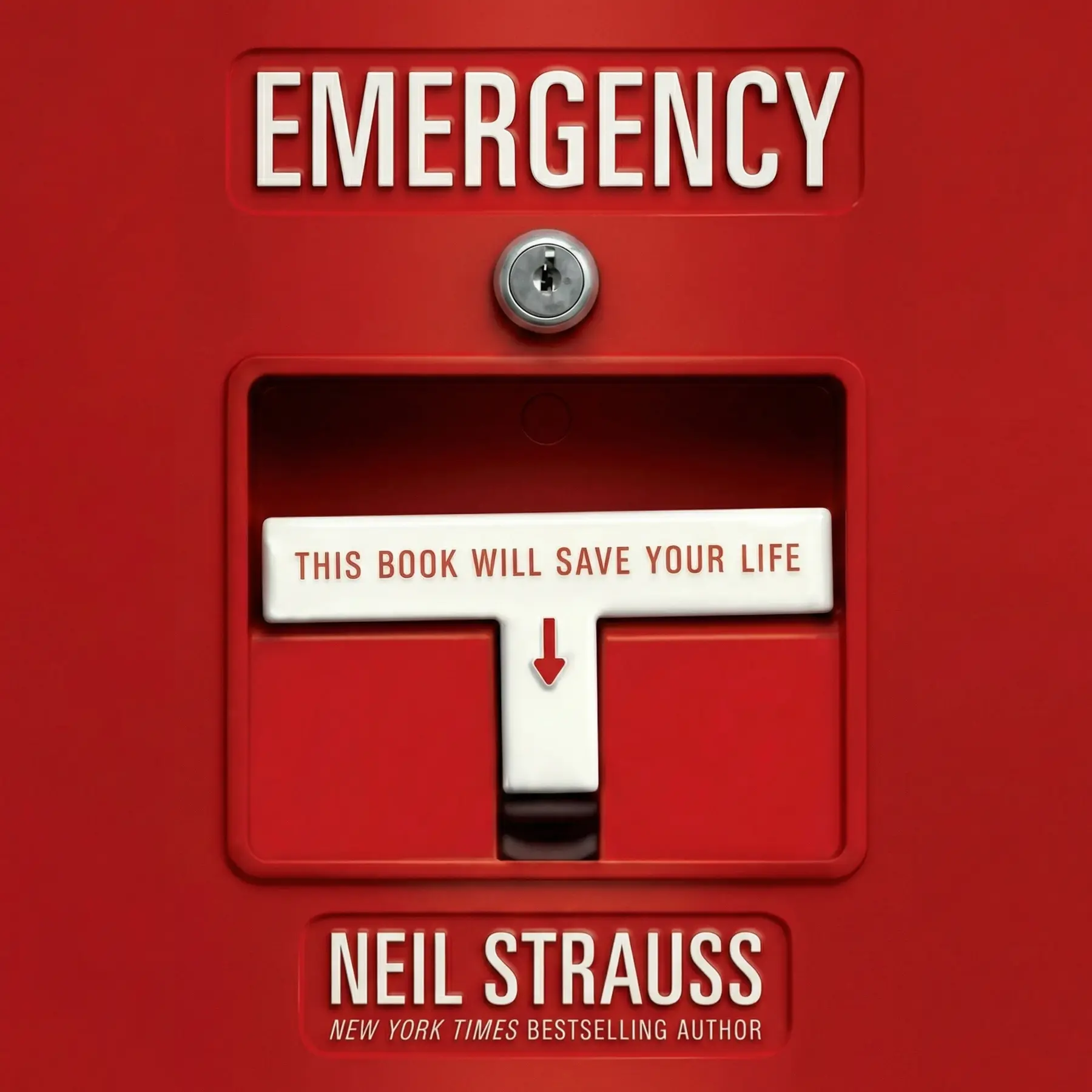
Emergency: This Book Will Save Your Life
By Neil Strauss
A journalist trains for disaster, from second passports and escape routes to guns, urban evasion and emergency medicine. He learns that facing small risks and being able to help others protects you better than hiding.
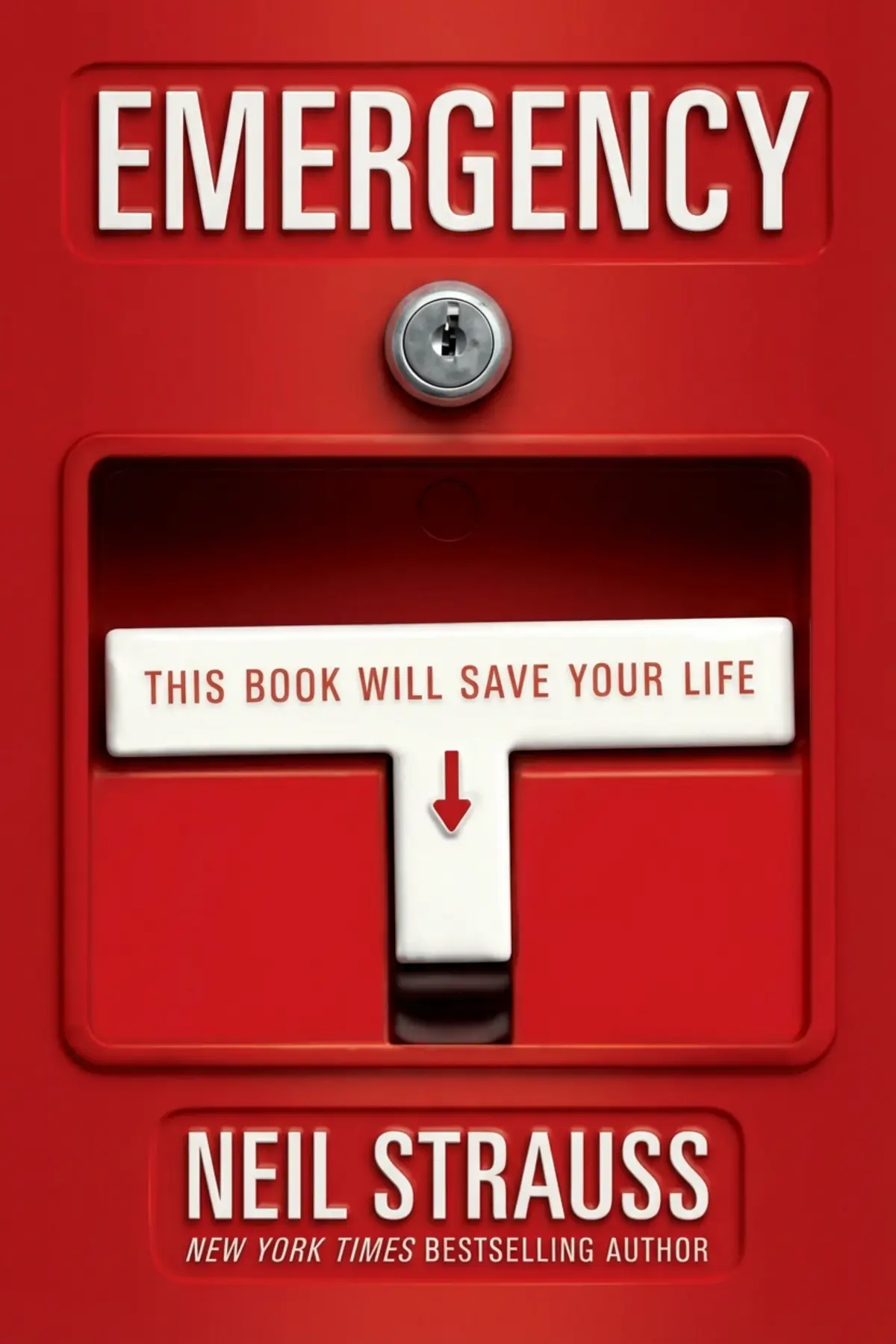
Table of Content
1. Introduction
55 sec
Most people’s disaster plan is to wait for help, yet Neil Strauss reports that in the United States the rescue system can take three to fourteen days to start working. In Emergency, the journalist sets out to learn what an ordinary city dweller would need if power, water, supermarkets and police all disappeared at once. He secures a second passport, trains with gun instructors, a knife tutor called Mad Dog and urban escape specialists, and finally takes emergency medical training.
Somewhere along the way his question changes. He starts out trying to save himself and ends up convinced that the best preparation is the calm and skill that let you help the people around you. The practical rewards include the water already hidden inside your home, smarter exit plans and a better way to handle fear when something really goes wrong.
2. Train for many disasters, not just one
1 min 51 sec
An earthquake, a war and a market crash each demand different skills, and nobody gets to choose which one arrives. So what should a sensible person learn first when the list of possible catastrophes never ends?
3. Know what you expect from people in a crisis
1 min 48 sec
Picture war breaking out tomorrow. Would your neighbors join forces or turn on each other? Your honest answer decides whether you would buy guns, plant a shared garden or head for the forest.
4. Secure a second passport before borders close
1 min 58 sec
On the day of one American election, inquiries about moving abroad shot up. Strauss followed that impulse all the way to a Caribbean island and found out what holding a second citizenship really takes.
5. Plan escape routes that still work in gridlock
1 min 49 sec
When a whole city tries to leave at once, the highways freeze. Survivalists plan for that moment with hidden supplies and some unusual ways to travel, one of which comes with almost endless drinking water.
6. Find the water and skills already around you
2 min 19 sec
After Hurricane Katrina, help took days to arrive. Strauss concluded that in a real collapse you are on your own at first, and that an ordinary home holds more resources than most people realize.
7. Shrink big fears with small, calculated risks
1 min 55 sec
The more Strauss studied escape, the more frightened he became. A change of direction turned his fear into something useful, and it suggests that hiding from danger may cost more than it saves.
8. Become the person who stops to help
1 min 45 sec
On a busy highway, driver after driver sped past a man slumped beside his motorcycle. Strauss used to be one of those drivers. What made him pull over this time was something he had learned.
9. Conclusion
1 min 12 sec
Emergency begins as a manual for getting away and ends as a case for staying useful. Strauss gathered a second passport, escape routes, hidden supplies, gun and knife training and lessons in slipping out of handcuffs. Each made him more capable. None made him less afraid. What changed him was turning toward other people: practicing danger in small doses, learning to treat injuries and accepting that official help may be days away, so the first responder is often whoever happens to be there.
His advice points to a few plain moves. Take first-aid or emergency training, so that stress does not make your decisions for you when something goes wrong. Learn what your home already holds, from the water in the radiators to the toilet tank, and think through at least one way out of your city. If you want to depend less on modern conveniences, a survival school can teach you to make fire by rubbing wood together, build shelters from leaves and branches, spot edible plants and draw water from nature.
The man beside the motorcycle had no use for a bunker. He needed one driver who knew what to do and chose to stop.
About this book
What is this book about?
Terror attacks, hurricanes and financial crashes have left many people feeling that society is fragile and that anything could happen. Neil Strauss asks a blunt question: if electricity, running water, supermarkets and police vanished tomorrow, what would you actually do? To find out, he becomes a student of survival. He gets a second citizenship on a Caribbean island, maps escape routes, learns to shoot at an Arizona range, trains with a knife tutor called Mad Dog and takes an urban escape course alongside soldiers. He also meets people who prepare in very different ways, from armed survivalists to a cooperative garden community and a teacher of wilderness skills. The book's turn comes when Strauss notices that all this escape planning makes him more afraid, not less. Emergency training changes that. Readers get practical ideas, such as the water already stored in their homes and how to plan a way out, along with a broader lesson. Practicing danger in small doses and learning to care for others is what keeps a person steady when a crisis really comes.
Book Information
Who it's for
City dwellers fearing disasters
City dwellers who worry about disasters but have never made a real plan.
Parents and partners
Parents and partners who want to be able to look after the people they love in a crisis.
Anxious about the worst
Anxious readers looking for a practical way to turn fear of the worst into steady competence.
About the Author
Neil Strauss
Neil Strauss is an American author and journalist who has written for The New York Times and served as a contributing editor at Rolling Stone. Ten of his books have been New York Times bestsellers, including The Game, Emergency and The Truth. He has co-written books with Rick Rubin, Kevin Hart and Mötley Crüe, and his serial podcast To Live and Die in LA reached number one on iTunes. In Emergency he applies his immersive reporting style to the question of how to survive a disaster.
Ratings & Reviews
Ratings at a glance
What people think
Listeners find this book to be a well-crafted and enjoyable listen that offers practical insights alongside engaging anecdotes. They value the impressive exploration of the preparedness community, with one listener noting it covers a wide range of strategies for natural disasters. The narrative flow is well-received; one listener describes it as an advanced look into real-world scenarios, while another highlights the fascinating combination of a personal biography. However, the survival instruction aspect earns mixed reviews, with some listeners noting it's not a survival guide.
Top reviews
Arjun
This book completely shifted my perspective on what it means to be a modern man in an unstable world. Neil Strauss, the guy who basically invented the pick-up artist craze with 'The Game,' takes a hard look in the mirror and realizes he’s a total victim if the power goes out. The narrative follows his transformation from a helpless city dweller who can’t even change a light bulb to a competent survivalist. His journey through tracking schools and urban evasion tactics is told with a level of brutal honesty that I found refreshing. While he spends a lot of time on the 'white-collar' survivalist stuff like offshore accounts, it provides a fascinating look into how the elite plan to disappear. The writing style is engaging and pulled me through the more technical bits about dual citizenship easily. It’s an advanced look into real-world scenarios that feels more like a fast-paced personal biography than a dry manual. Frankly, it's a must-read for anyone who feels a bit too reliant on the grid.
Show moreSienna
Given the current state of the world, this felt less like a 2009 relic and more like a prophecy. Reading this during a period of political volatility makes Strauss’s concerns feel incredibly justified. He explores the fragility of our society with a level of detail that is both fascinating and terrifying. The book covers a wide range of strategies, from basic wilderness survival to advanced urban evasion. I appreciated the honesty about his own failings and his fear of being unprepared. It's not a dry manual; it's a fast-paced journey that makes you question your own self-sufficiency. The sections on joining emergency response teams were particularly moving. It shows that true survival isn't just about hoarding cans; it's about being a useful person in a crisis. This is one of those books that sticks with you long after you put it down. Highly recommended for the modern era.
Show moreNannapat
Wow, Strauss really goes all-in on his deep dives, moving from a helpless writer to someone who could actually hold his own in a disaster. The level of commitment he shows—attending tracking schools, learning to fly, getting EMT certified—is staggering. I found the armchair treasure hunt element to be a fun, dorky addition that kept me engaged with the physical book. His description of the 'Fliesians' and our collective fear of social breakdown was spot on. The book is well-written and serves as a fascinating combination of personal biography and societal critique. It’s not just about hiding in the woods; it’s about the psychological shift from being a dependent consumer to an independent producer. Some might find his sexist remarks about his girlfriend off-putting, and they are, but the rest of the journey is too compelling to ignore. It’s a gritty, honest, and ultimately redemptive story.
Show moreMoo
Ever wonder how you’d actually fare if the power went out for a month? Strauss explores that anxiety with his signature immersive style, throwing himself into everything from lock-picking to wilderness medicine. I loved the mix of seriousness and self-disparagement he brings to the table. He doesn't pretend to be a hero; he starts as a guy who is genuinely terrified of the world falling apart. Some of the survival tips are genuinely useful, even if the book isn't meant to be a literal survival guide. I found the inclusion of the armchair treasure hunt and comic book sections a bit quirky, but it added to the entertainment value. The only thing that bothered me was the portrayal of his girlfriend as almost entirely helpless—it felt a bit dated and off-putting at times. Despite that, the pacing is fantastic and the information is well-researched. It’s a great look into the world of preparedness without being overly paranoid.
Show moreMaya
After the wild ride of 'The Dirt,' I wasn't sure if Neil Strauss could pull off a topic as heavy as apocalyptic prepping. To my surprise, he manages to make the subject both hilarious and deeply unsettling. He does a great job highlighting the policy changes and events that make survivalism seem like a rational choice rather than a fringe conspiracy. The transition from a guy who can't handle a rolling blackout to someone who can pick a lock with a soda can is impressive. I particularly liked the 'Fliesians' concept; it really made me laugh because it perfectly captures that specific brand of pessimism. While the chapters are brief and occasionally hinder the flow, the writing is top-notch. It’s an entertaining look at what happens when a city guy decides to stop being a victim. Definitely worth picking up if you enjoy a good personal transformation story.
Show moreRoongsak
Picked this up at a charity shop thinking it was science fiction, but I’m glad I gave it a shot. It turns out to be a very readable account of one man's descent into the world of survivalism. Strauss has a way of taking a complex, often dark subject and making it breezy and accessible. I found the 'white collar' plans for offshore accounts interesting, even if they aren't applicable to my tax bracket. The writing style is a cool mix of serious investigation and self-deprecating humor. He admits his own weaknesses freely, which makes his eventual progress feel more earned. While some of the chapters felt a bit short, the overall pacing was good. It’s a fantastic look into a subculture that most people never see. Whether you're a prepper or just a casual reader, there’s plenty of entertaining material here to keep you hooked.
Show moreJulian
Frankly, the middle section about obtaining dual citizenship and setting up havens in St. Kitts felt like a major slog. I understand why Strauss included it, but for a reader without a couple hundred thousand dollars to throw around, it felt mostly worthless. It’s a bit like reading a cookbook where the chef only uses ingredients you can’t afford. However, the parts where he actually gets his hands dirty are much more engaging. His time at the tracking school and his efforts to join a volunteer emergency response team were highlights for me. I also enjoyed his coinage of the term 'Fliesians' to describe people who think we will all turn into 'Lord of the Flies' characters during a crisis. The short, breezy chapters kept the momentum going, even when the subject matter got a bit repetitive. It's a decent read with some original ideas, but it lacks the continuity I was hoping for in a long-form narrative.
Show moreRungtip
Not what I expected from a book about prepping, as it focuses way more on the 'why' than the 'how.' To be fair, Strauss is an excellent writer who knows how to keep a reader's attention. I found the parts about his girlfriend's inability to drive in LA almost hard to believe, though it served to highlight his own motivation for change. The book feels a bit like a mix of a travelogue and a self-help book for the paranoid. I was intrigued by the treasure hunt clues hidden in the comic sections, even if I'll never actually go out and dig for a cache. It reminded me a bit of the David Blaine treasure hunt from years ago. The ending was somewhat redemptive, focusing more on community than isolation. However, I still don't quite understand his ultimate goal of surviving in a stick-and-leaf shelter. What’s the point of surviving if the world is a wasteland? He never quite answers that.
Show moreLook
The short, breezy chapters made this an easy weekend read, but the continuity felt a bit disjointed at times. I've read Strauss's other work, and while this has his usual flair, it felt a bit like a series of articles stitched together. There is some great information here, but as others have noted, it’s not exactly a survival manual. I enjoyed the anecdotes about his training, especially the tracking school, which was way more engaging than the sections on offshore banking. The truth is, unless you have a lot of money, a good chunk of his advice is impossible to follow. I also thought his observation about the homeless being the ultimate survivalists was borderline insightful, but he didn't really develop it. It’s an interesting read with an occasional great turn of phrase, but it didn't quite hit the mark for me as a cohesive narrative. Good, but not great.
Show morePan
Look, I bought this expecting a practical survival guide, but it's basically just a memoir of a rich guy panicking. I found it very dry and often quite boring. Strauss spends way too much time talking about the bureaucratic process of moving his money offshore and not nearly enough time on actual survival skills. If you aren't a millionaire, half of his 'escape plan' is totally irrelevant to your life. Also, I couldn't get past some of the sexist undertones when he talks about his girlfriend's 'softness and submission.' It just felt unnecessary. There are a few interesting turns of phrase, but they aren't enough to save the book from feeling like a vanity project. If you want to learn how to survive in the woods, go buy a real manual. This is just an account of a celebrity writer who has too much time and money on his hands. It didn't lead anywhere insightful for me.
Show moreQuestions about this book
What is the main idea of Emergency by Neil Strauss?
Strauss sets out to learn how to survive if society collapses, covering second passports, escape routes, hidden supply caches, weapons and urban evasion. His conclusion goes beyond self-protection. Running from danger made him more afraid, while emergency training and the ability to help others made him calmer and more useful. Official rescue can take days, so the people already on the scene matter most.
What are the three survival mindsets in Emergency?
Strauss describes survivalists who expect people to turn violent when society falls and so stockpile weapons and supplies. Permaculturists, like the residents of the Commonweal Garden outside San Francisco, trust cooperation and build self-sufficient communities. Primitivists, such as instructor Tom Brown, cut ties with modern society and learn to live in the woods. Each approach reflects a different belief about human nature.
How does Emergency suggest dealing with fear of disaster?
Strauss found that avoiding what he feared only increased his worry. His remedy is to face danger in small, calculated doses, for example through emergency training, which stretches your comfort zone while teaching you to care for yourself and others. After his training, a small earthquake no longer threw him: he took cover, checked on loved ones and neighbors, and offered help to emergency services.
What practical steps from Emergency can I take this week?
Find out where usable water is stored in your home: most radiators hold more than forty gallons, and toilet tanks hold more. Sign up for a first-aid or emergency medical course so you can stop bleeding, treat burns and splint broken bones. Think through at least one route out of your city. If you want more independence, a survival school can teach fire making, shelter building and finding food and water.
Who should read Emergency by Neil Strauss?
It suits readers who feel uneasy about terror attacks, storms or economic collapse and want something more useful than worry. It also fits people curious about the survivalist world, from gun ranges and knife training to urban escape courses. Anyone who wants to be the person who can act in a crisis, rather than drive past, will find its emergency medical lessons the most relevant.
Featured in
Readers also enjoyed


A High-Performing Mind: Strengthen Your Mind and Live Your Best Life
Andrew D. Thompson


Abundance: The Inner Path to Wealth
Deepak Chopra


59 Seconds: Change Your Life in Under a Minute
Richard Wiseman




AUDIO SUMMARY AVAILABLE
Listen to Emergency in 15 minutes
Get the key ideas from Emergency by Neil Strauss, plus 5,000+ more nonfiction titles.
- 5,000+ titles
- Listen as much as you want
- 7-day free trial
- Cancel anytime









