

12 min 02 sec
Available in: English
 ไทย
EnglishไทยElon Musk
Walter Isaacson traces how a boy from Pretoria with a taste for risk built Zip2, PayPal, SpaceX and Tesla, then bought Twitter at the peak of his success, and what that restlessness costs.
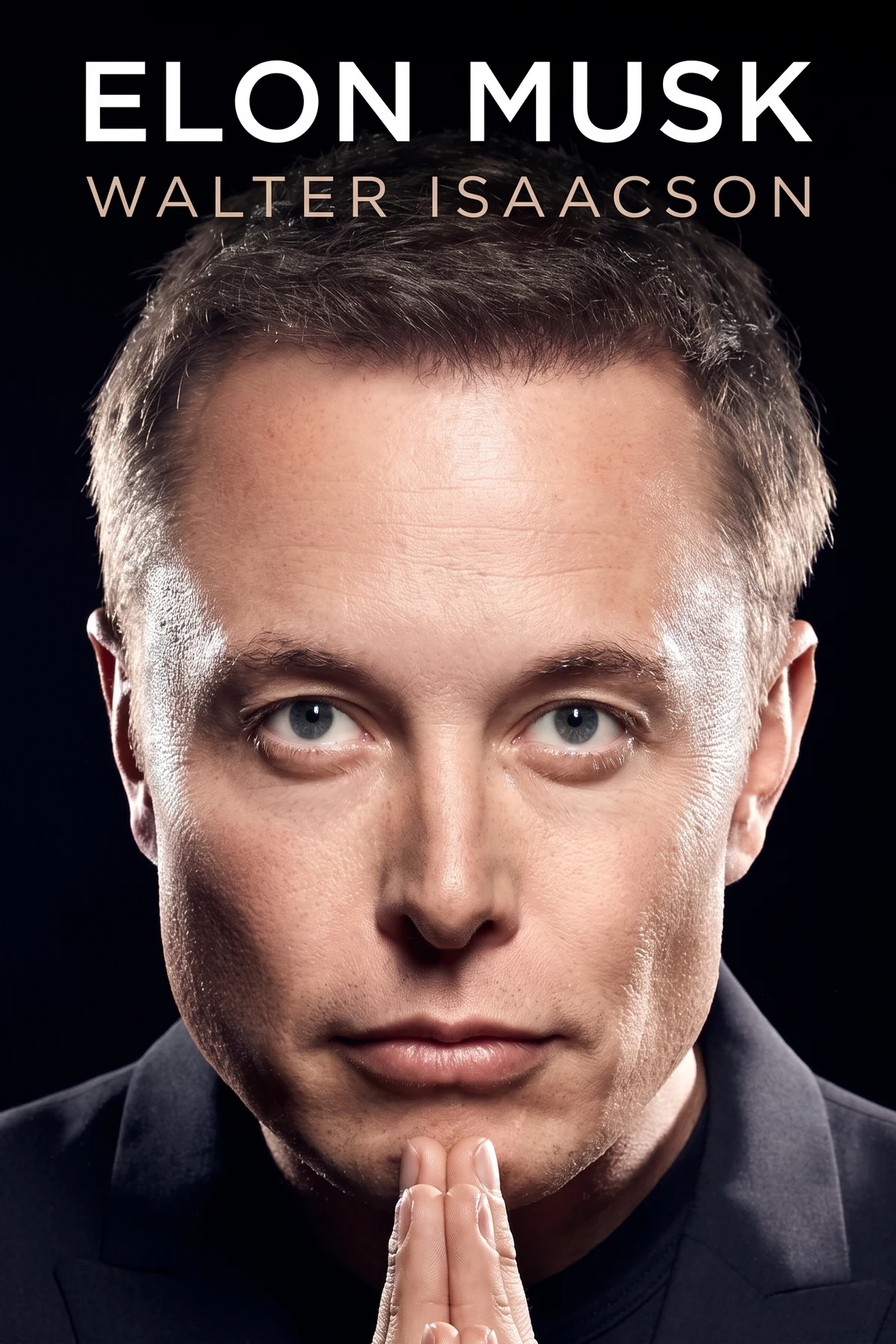
Table of Content
1. Introduction
1 min 05 sec
Many people who admire bold founders never see the pattern underneath their bets: the same hunger that builds rockets can also unsettle a hard-won success. In his biography Elon Musk, Walter Isaacson links that hunger to a boy in Pretoria, whose grandparents set out each year to explore the Kalahari Desert, hunting for a legendary lost city that a charlatan had described to them. Isaacson, a former editor of Time and former head of CNN, follows the pattern from a volatile family home to Zip2, PayPal, SpaceX, Tesla and finally Twitter.
The throughline is easy to state. Musk keeps choosing the hardest problem in sight, insists on controlling it himself and grows restless the moment things go well, and that one trait explains both his breakthroughs and the conflict around him. By the last story, any ambitious leader, perhaps including the listener, can be read through three plain questions: where the appetite for risk came from, what it builds and what it costs.
2. The family stories that explain a risk-taker
2 min 00 sec
A chiropractor and his wife kept driving into the desert after a city they had only heard about from a swindler. Their grandson would inherit that stubborn hope, along with something much darker from his father.
3. Turn being pushed out into a bigger bet
1 min 55 sec
Twice in a few years, Musk lost the top job at a company he had helped build. The Zip2 sale made him a multimillionaire, and the PayPal ouster, painful as it was, freed him to chase even greater ambitions.
4. Build it yourself when buying is impossible
1 min 54 sec
Musk wanted to send a greenhouse to Mars and went shopping for a rocket. The sellers let him down, and the question he asked next, why not build the rockets himself, gave rise to a company that would challenge an entire industry.
5. A factory you control keeps the vision alive
2 min 02 sec
Tesla’s first car got more expensive the more of them the company tried to make. The fix Musk chose went against how carmakers usually worked, and it came with a human price.
6. Spot the restlessness that follows every win
1 min 54 sec
At the moment his companies were beating every rival, Musk turned to a social media platform, and even his closest associates could not understand why. His reasons reveal what success does to him.
7. Conclusion
1 min 12 sec
Musk’s life, in Isaacson’s telling, is one pattern repeated at ever larger scale. A family that hunted an invented city in the desert, a father who was both adventurous and frightening, and a boy left free to tinker produced a man who runs toward risk and away from rest. That pattern turned a directory with maps into a $307 million sale, a failed Russian rocket purchase into SpaceX, and a tangled supply chain into factories Tesla controls itself. It also cost him the top job at Zip2 and PayPal, strained the people working for him and pulled him into Twitter at the very moment his companies were thriving.
The lessons that follow are modest and practical. When a vendor or partner blocks a plan, consider whether you could own that piece, as SpaceX did with rockets and Tesla did with its parts. When you push a team hard, count the friction as part of what you are paying. And when success finally arrives, notice whether the pull toward a new fight comes from a mission or a habit.
The Haldemans went looking for a city that never existed. Their grandson kept the search going, and aimed it at Mars.
About this book
What is this book about?
Elon Musk is one of the most watched people in technology, yet the headlines rarely explain what drives him from one enormous bet to the next. Walter Isaacson's biography looks for the answer in the pattern of his life, starting with grandparents who searched the Kalahari Desert for a city that did not exist and a father who was adventurous, unpredictable and at times abusive. Isaacson follows that pattern through each venture. Two brothers work out of a modest Palo Alto office on Zip2, getting very little sleep. PayPal grows out of X.com, and Musk is pushed out of the top job. Russian rocket talks fail, so SpaceX builds its own rockets. Tesla survives early crises by making its key parts itself. Then, with Tesla and SpaceX at record highs, Musk takes on Twitter. Readers get a clear map of how one appetite for risk and control produced both remarkable results and lasting friction, and a way to read the same trait in other ambitious leaders and in themselves.
Book Information
Who it's for
Founders and business operators
Founders and operators who want to see how Musk handled failed deals, costly supply chains and investor pressure.
Managers weighing deadline pressure
Managers weighing how hard to push a team toward ambitious deadlines, and what that pressure costs.
Curious beyond the headlines
Curious readers who know Musk from headlines and want the story of how one trait shaped five companies.
About the Author
Walter Isaacson
Walter Isaacson was born in New Orleans in 1952 and studied at Harvard and, as a Rhodes scholar, at Pembroke College, Oxford. He has been editor of Time, chair and CEO of CNN, and president and CEO of the Aspen Institute. Since 2018 he has interviewed guests on Amanpour & Company. He won the National Humanities Medal in 2023, and his other biographies cover Benjamin Franklin, Leonardo da Vinci, Henry Kissinger and Jennifer Doudna.
Ratings & Reviews
Ratings at a glance
What people think
Listeners find the biography captivating and skillfully composed, as one review mentions how smoothly the prose flows. Furthermore, the work provides an in-depth examination of Musk's journey, offering remarkable glimpses into his mind and spirit. The storytelling is also characterized as high-energy and powerful, with listeners valuing the comprehensive level of detail. Nevertheless, the tempo draws varied responses; while some listeners feel it is relentless, others define it as crazy.
Top reviews
Nit
Walter Isaacson has a way of making 600 pages feel like a breeze. The pacing is absolutely relentless, almost mirroring the manic energy of Musk himself. I was particularly gripped by the sections on 'demon mode'—the way Isaacson describes Musk’s descent into cold, ruthless efficiency is chilling but provides incredible insights into his soul. To be fair, you don't have to like the man to appreciate the depth of analysis here. The book doesn't shy away from the messy reality of his personal life or the chaotic Twitter acquisition. It’s an intense, dynamic read that feels more like a front-row seat to history than a standard biography. While some might find the sheer amount of detail overwhelming, I found the flow to be remarkably seamless throughout.
Show moreChamlong
Wow, this was a wild ride into the mind of a man who seemingly never sleeps. Picked this up because I wanted to understand the engineering behind SpaceX and Tesla, and the level of technical detail is staggering. Isaacson clearly spent a lot of time on the factory floors. The 'surge' chapters were the highlight for me, showing how Musk drives cost reduction to a degree that seems impossible. Not gonna lie, the sections on his personal life were harder to stomach. His inability to share credit or show empathy makes him a difficult protagonist. However, the depth of interviews—over 100 people including rivals like Jeff Bezos—makes this feel like the definitive account. It’s a massive, exhausting, but ultimately brilliant piece of work.
Show moreRod
Picked this up expecting a fluff piece, but Isaacson actually leans into the darker traits of his subject. We see the 'demon mode' up close, especially during the tumultuous Twitter takeover which occupies a huge portion of the final act. The book offers incredible insights into his decision-making process, even when those decisions seem erratic or downright dangerous. I was particularly interested in the Starlink/Ukraine revelation; it’s a moment that makes you question how much power one individual should actually hold. The prose is dynamic and keeps you moving through the dense manufacturing politics. Truth is, Musk is probably the most interesting person alive right now, and this biography captures every jagged edge of his personality without pulling many punches.
Show moreOoi
Ever wonder what it takes to actually build a rocket company from the ground up? This book is basically a manual on how to be a relentless, high-stakes entrepreneur. I loved the focus on his obsession with physics-first principles and how he handled the near-bankruptcy of 2008. The detail is incredible, providing a soul-searching look at a man driven by a messianic mission to save humanity. It’s an intense read that doesn't let up. While I don't agree with his politics or his management style, you can't deny the impact he's had on the world. Isaacson captures the 'tiger' side of Musk perfectly. This is a must-read for anyone who wants to understand the intersection of tech, power, and ego in the modern age.
Show moreChee
Finally got around to this massive tome and the prose is surprisingly dynamic. I expected it to be a dry business book, but it’s more of a character study. Isaacson provides such a deep analysis of Musk’s mind that you start to see the patterns in his chaos. The way he jumps from Tesla to SpaceX to Twitter is portrayed as a frantic, almost desperate need for drama. It’s a relentless pace that keeps the reader hooked from the early days in South Africa to the Starship launch pads in Texas. The book offers incredible insights into why he behaves the way he does. Even the minor characters are well-drawn, giving you a full sense of the 'Musk-verse.' If you want a thorough detail-heavy biography, this is it.
Show moreKwan
As someone who follows tech news closely, I was surprised by how much new information was packed in here. The book doesn't just cover the wins; it dives deep into the '2018 hell' period and his volatile relationship with Amber Heard. I appreciated how Isaacson balanced the 'tiger' of his business dealings with the 'rose' of his inner vulnerabilities, even if that rose is mostly thorns. Look, Musk is a polarizing figure, and this biography captures that duality perfectly without being a total hagiography. The description of his childhood explains so much about his current obsession with risk. It’s a thorough, detail-rich journey that kept me engaged even during the dense manufacturing chapters. This is easily the most significant tech biography since Isaacson’s take on Steve Jobs.
Show moreOwen
After hearing all the controversy surrounding Musk lately, I needed to see the full picture. Isaacson delivers a narrative that is both intense and incredibly thorough. The early chapters regarding his childhood in South Africa and his strained relationship with his father provide a necessary foundation for his later 'reality-bending' behavior. Personally, I think the author walks a fine line between admiration and critique. He documents the childish outbursts and the fallout of the Starlink decision in Ukraine without necessarily scolding him. The prose flows seamlessly, though the structure feels a bit like a collection of vignettes. It’s a fascinating look at a man who is clearly a genius but also a total dick to everyone around him. Definitely worth the time.
Show moreSirinat
The sheer depth of interviews here is staggering. Isaacson didn't just talk to Elon; he tracked down the ex-wives, the ousted partners from the PayPal days, and the engineers who actually build the rockets. As someone interested in industrial design, seeing the role of Franz von Holzhausen highlighted was a nice touch. The narrative is intense and keeps a steady clip, though it does get a bit repetitive when describing Musk’s 'reality-defying' demands. In my experience, most biographies of billionaires are either hit jobs or worship, but this feels balanced. It presents him as a savant who is also an inveterate man-child. The editing could have been tighter to avoid some of the recycled phrases, but the information provided is top-tier.
Show moreEvelyn
To be fair, the narrative feels a bit like a series of disjointed magazine articles glued together. I’ve read a lot of Isaacson’s work, and this one feels the most hurried, perhaps because the story is still unfolding in real-time. He relies heavily on Musk's self-diagnosis of Asperger’s to excuse some pretty toxic behavior, which felt a bit lazy as a biographical device. Every time Elon is a jerk, the book pivots back to 'The Innovations.' It’s a 700-page bloat that could have used a much stricter editor to cut out the repetitive descriptions of his moods. That said, the insider access is undeniably impressive. You get to see the Twitter deal fall apart from the inside, which is genuinely entertaining. Just don't expect a deep moral reckoning.
Show morePia
Frankly, I found Isaacson’s constant justification of Musk’s abusive behavior exhausting. While the author claims neutrality, he essentially acts as an enabler for every toxic outburst under the guise of 'Asperger's' or 'innovation.' We get detailed accounts of the Starlink/Ukraine incident and the Twitter disaster, yet there’s a distinct lack of hard questions regarding ethics or safety. The prose is repetitive and the editing feels rushed, like a collection of Vanity Fair snippets that never quite coalesce into a deeper critique. To me, it felt like Isaacson fell under the billionaire's spell during those two years of shadowing. Instead of an unvarnished truth, we got a massive excuse for a man who refuses to take responsibility for his failures. It’s a disappointing effort from a usually great biographer.
Show moreQuestions about this book
What is the main idea of Elon Musk by Walter Isaacson?
Isaacson portrays Musk as driven by one recurring trait: an appetite for the hardest problem, a need to control it and a restlessness that returns whenever things go well. He traces it from a volatile childhood in Pretoria through Zip2, PayPal, SpaceX and Tesla to the Twitter takeover in 2022, showing how the same trait produced both major breakthroughs and serious conflict.
How did Elon Musk's childhood shape him, according to Isaacson?
His maternal grandparents, Joshua and Winnifred Haldeman, made yearly trips into the Kalahari Desert searching for a mythical city, and passed that love of adventure down the family. His father Errol was adventurous too, but verbally abusive and erratic. Elon was bright but isolated and had learning difficulties. His mother gave him wide independence, and at 17 he left South Africa for Canada, in June 1989.
Why did Musk start SpaceX instead of buying rockets?
After a Labor Day drive in 2001 with Adeo Ressi, Musk wanted to send a greenhouse to Mars, a project called Mars Oasis, partly because NASA had no real Mars plan. His attempts to buy affordable rockets from Russia failed. So he decided to build rockets himself and founded SpaceX in May 2002, later pushing for fixed-price contracts over the industry’s cost-plus model.
Why did Elon Musk buy Twitter, according to the book?
In April 2022, Tesla and SpaceX were at record highs, and Musk turned restless. He had long criticized Twitter’s handling of free speech, especially what he saw as suppression of right-leaning voices, and wanted it to become an open public square. The takeover involved legal battles and big financial risk, and in December 2022 he began releasing the Twitter Files on content moderation.
What can leaders learn from Isaacson's Elon Musk?
The book suggests a few practical lessons. When a supplier blocks your plan, consider owning that piece yourself, as Tesla did with its key components. When you set extreme deadlines, treat the strain on your team as a real cost, since it caused internal friction at Tesla. And after a big success, check whether the urge for a new challenge serves a mission or simply restlessness.
Readers also enjoyed

A Long Way Gone: Memoirs of a Boy Soldier
Ishmael Beah

All Creatures Great and Small
James Herriot


A Promised Land
Barack Obama


A River in Darkness: One Man’s Escape from North Korea
Masaji Ishikawa

A Spy Among Friends: Philby and the Great Betrayal
Ben Macintyre


A Year in the Life of William Shakespeare: 1599
James Shapiro
AUDIO SUMMARY AVAILABLE
Listen to Elon Musk in 15 minutes
Get the key ideas from Elon Musk by Walter Isaacson, plus 5,000+ more nonfiction titles.
- 5,000+ titles
- Listen as much as you want
- 7-day free trial
- Cancel anytime









