

12 min 06 sec
Available in: English
Dropshipping: A Beginner's Guide to Dropshipping – How to Make Money Online and Build Your Own Online Business
By James Moore
Shows how to run an online store that buys products only after customers pay, and how to choose suppliers, niches, advertising and automation so a small margin per sale becomes steady income.
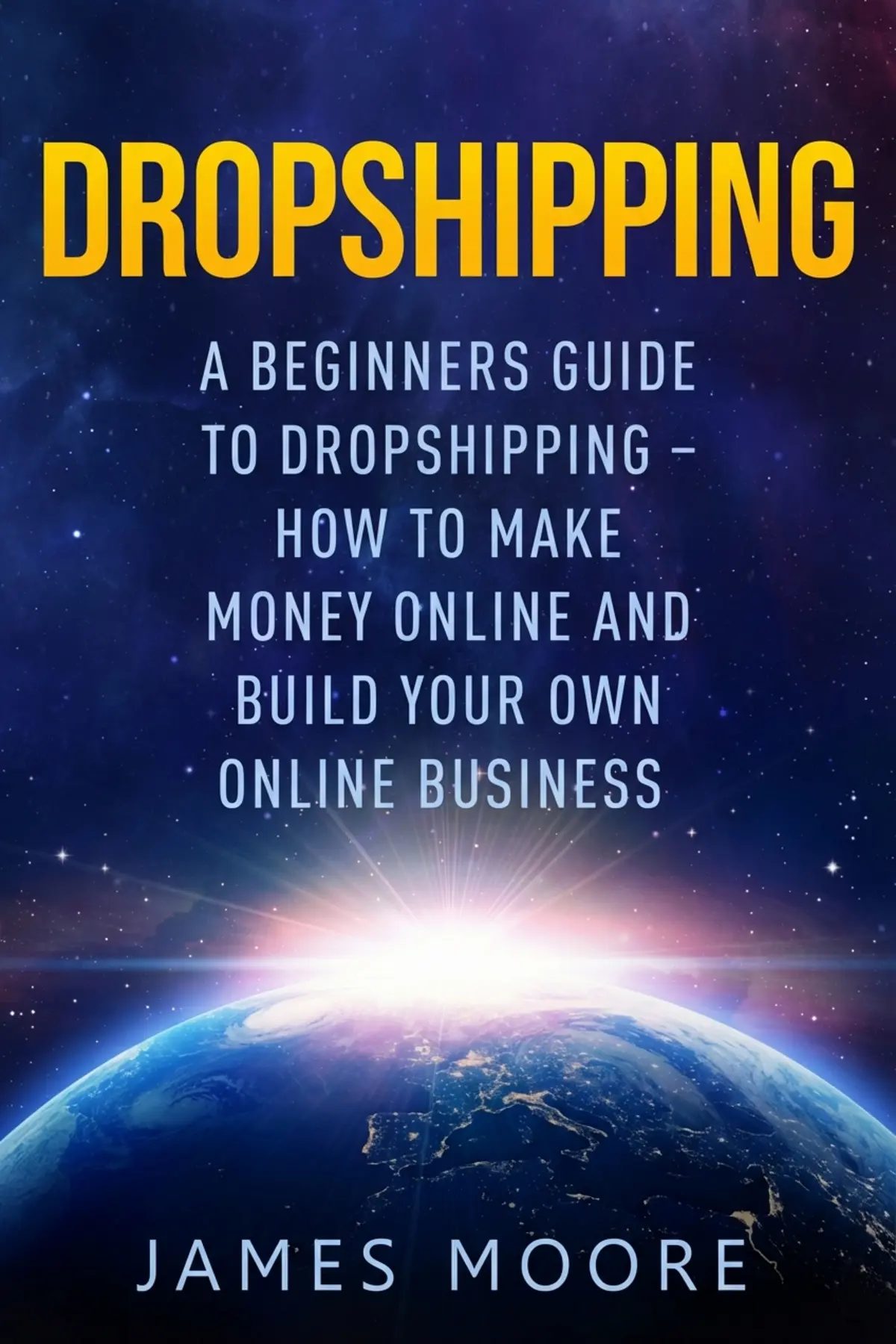
Table of Content
1. Introduction
59 sec
If you have wanted a business of your own but balked at renting a shop or filling a garage with stock, dropshipping offers a different order of events: collect the customer’s money first, and only then buy the product. In Dropshipping, serial entrepreneur James Moore lays out how this works. A store sells a cat toy for $20, pays a supplier $15 to ship it straight to the buyer, and keeps the $5 in between. Nothing sits on a shelf, and nothing passes through the seller’s hands.
Moore’s larger point is that the model is easy to start, while the profit lives in the details around it: who supplies you, what you sell, how many people see it and how much of the routine you can hand to software. Each piece comes as a concrete step, from calling a potential wholesaler with your questions to forwarding orders automatically, though Moore stresses that a first store still demands upfront time, money and effort.
2. Sell first, buy second, keep the difference
1 min 36 sec
A $20 cat toy can earn a profit for someone who never touches it, stores it or ships it. The catch lies in what that seller still has to handle when something goes wrong.
3. Test a supplier before your customers do
1 min 46 sec
Your customers will judge your store by a company they never meet. A few hidden fees, a missing address or an odd payment request can tell you whether that company deserves your trust.
4. Pick a narrow niche that people already buy
1 min 41 sec
The founder of Walmart was once arrested in a department store for behaving strangely. What he was doing there explains how a beginner should choose what to sell, and where to sell it.
5. Plan traffic for the ninety-eight who won't buy
1 min 36 sec
Most people who visit an online shop leave without buying anything, and the share who do buy is smaller than most beginners expect. That number changes how you should spend a first marketing budget.
6. Set up the money and paperwork before launch
1 min 47 sec
Moore gives a rough figure for what ten hours a week could earn after a year. Before chasing it, a handful of small setup choices decide whether customers take a new store seriously.
7. Run orders by hand, then let software take over
1 min 36 sec
Every order passes through the same three steps, and doing them by hand forever defeats the purpose. Moore explains when to stop, and what to do when a parcel goes missing.
8. Conclusion
1 min 05 sec
Dropshipping, as Moore presents it, removes the riskiest step in retail: buying stock nobody has ordered yet. What remains is a set of smaller jobs that decide whether the $5 between the customer’s price and the supplier’s price is worth having. A supplier you have phoned and tested, a niche narrow enough to stand out, enough visitors to survive a 1 to 2 percent conversion rate, separate accounts and a workflow that runs without you.
If the idea appeals, the first moves are modest. Pick one specialized product and work out its margin against a real supplier quote that lists every fee. Place a test order with that supplier before you take money from anyone. Handle your first orders by hand until the rhythm is clear, then automate them, and keep a backup supplier ready for the day the first one stumbles.
None of this asks for a warehouse or a storefront. It asks for the kind of attention Sam Walton gave to the shelves of a rival store, pointed at your own small shop.
About this book
What is this book about?
Running a shop usually means buying stock, storing it and hoping it sells. Dropshipping reverses that order. The seller takes the customer's payment first, buys the item from a wholesaler at a lower price and has it shipped directly to the buyer, keeping the difference. James Moore explains this model for complete beginners, using a simple cat toy store to show the math. His angle is practical and step by step. Moore covers how to vet suppliers on cost and service, why a narrow niche suits a newcomer better than a broad catalog, and how to weigh selling on Amazon or eBay against building your own website. He explains why an average conversion rate of 1 to 2 percent makes advertising and customer reviews the center of the business. He also lists what to arrange before launch, from a starting budget of about $1,000 to a separate business bank account and a toll-free number. Readers get a clear sequence for a first store: pick a product, test a supplier, bring in visitors, handle orders by hand, then automate the routine and grow with a backup supplier in reserve.
Book Information
Who it's for
Employees wanting side income
Employees who want a side income online without renting space or buying stock.
First-time founders
First-time founders weighing Amazon and eBay against a store of their own.
Curious about e-commerce
Career switchers curious about e-commerce who need a step-by-step starting plan and a realistic budget.
About the Author
James Moore
James Moore is a serial entrepreneur who has worked in Kindle publishing, investing and real estate. He prefers income streams that can eventually be handed to others, and he focuses on online businesses because he sees them as a faster, simpler path to wealth than traditional shops. By his own account, more than a year of trial and error passed before he earned a decent income online, and he writes to help newcomers get there sooner. He has published several books, articles and blogs.
Ratings & Reviews
Ratings at a glance

What people think
Listeners consider this guide to be well-documented and valuable for novices, with one review highlighting its thorough explanation of what to do and what to avoid. The prose is clean, and one listener mentions that it serves as an excellent short listen.
Top reviews
Dek
James Moore manages to break down a complex business model into something that feels genuinely achievable for the average person. I was struck by how the author avoids the typical "get rich quick" fluff that plagues this niche, focusing instead on a methodical, step-by-step approach. The book is well-researched and highlights several critical do's and don'ts that I hadn't considered before, particularly regarding the long-term sustainability of a storefront. Truth is, I walked away feeling much more confident about my ability to set realistic goals. It's a short, punchy read that serves as a solid foundation without overwhelming the reader with technical jargon.
Show moreJai
Picked this up on a whim after seeing a recommendation and I must say it exceeded my expectations for a short business guide. The way Moore outlines the process is so logical and well-thought-out that it removes a lot of the initial anxiety of starting a business. Not gonna lie, I was worried it would be full of generic advice, but the specific tips on what to avoid were worth the price alone. This book left me believing that I really can do this if I'm willing to put in the actual work required. It’s a great starting point for anyone wanting to expand their knowledge of the industry.
Show moreSirirat
Finally got around to finishing this short guide and I’m genuinely impressed by how much information was packed into such a concise format. The "do's and don'ts" section was particularly enlightening, as it pointed out several traps that I likely would have fallen into otherwise. It’s clear that this book was well-researched and written with the intention of actually helping people succeed rather than just making a quick buck. I feel like I finally have a clean and simple path forward to start setting bigger goals for my online store. Truly a great intro for those who are serious about learning the business.
Show moreJirapat
Why didn't I find this sooner? This ebook is an excellent starting point for anyone looking to dip their toes into the world of online sales without losing their shirt in the process. Personally, I appreciated the down-to-earth tone because it made the practical advice feel much more accessible than most YouTube tutorials I've watched recently. While the section on marketing felt a bit thin compared to the logistics chapters, the overall roadmap is incredibly clean and simple to follow. It’s clear the author knows his stuff and isn't just trying to sell a dream. I’ll definitely be revisiting the checklists as I start my own setup.
Show moreRyan
After hearing so much buzz about ecommerce, I decided to give this guide a shot to see if the hype was real. Moore delivers a very informative overview that thoroughly explains the basics, though I wish there was more depth on specific niche selection tools. The instructions are written in an easy-to-understand way, making it a breeze to take notes and plan my next moves. Frankly, it functions more like a high-level roadmap than a deep dive into every single variable, but that’s exactly what a beginner needs. The writing style is neat and professional, which kept me engaged from the first page to the last.
Show moreIsabelle
To be fair, I was skeptical about whether a short book could actually teach me the ropes of a whole industry. However, James Moore provides a surprisingly practical set of ideas that helped me iron out my initial business plan. The tone is refreshingly realistic, emphasizing that success requires effort and patience rather than magic tricks or overnight wealth. My only minor gripe is that some of the links provided for further reading seemed a bit outdated. Despite that, the core framework is solid and the step-by-step direction is very easy for a newcomer to follow without getting lost.
Show moreCameron
As someone who has zero experience in selling online, I found this ebook to be an incredibly helpful and non-intimidating resource. The instructions are laid out in a way that is very easy to understand, providing a logical flow from concept to actual execution. I think the author did a fantastic job of keeping the advice down-to-earth and grounded in reality. While I would have liked more specific examples of successful product categories, the general principles are sound and easy to apply. It’s a very informative read that gives you the confidence to start your journey without feeling completely overwhelmed.
Show moreHenry
Gotta say, the writing here is refreshingly neat and free of the usual filler you find in self-published business books. I’ve read a few of these guides before, but this one stands out because of its methodical approach and clear-eyed view of the challenges ahead. It isn't the typical "get rich fast" nonsense, which I appreciated more than I can say. The author highlights important things that every new dropshipper should be aware of, especially the logistical hurdles that often get ignored. It's a useful resource that I'll probably refer back to as I navigate the complexities of my first store.
Show moreSaovapa
The chapter on supplier selection was decent, but I felt the rest of the book skimmed over some of the more difficult legal hurdles of dropshipping. It’s a good starter guide, don’t get me wrong, but experienced sellers won’t find much new information here to sink their teeth into. Look, if you are brand new and need a well-researched introduction, this is probably worth your time for the low price. However, if you're looking for advanced strategies or complex case studies, you might find yourself wanting a bit more meat on the bones. It is a very short read that can be finished in a single sitting.
Show morePita
Not what I expected from a top-rated guide. While the author's writing is neat and the structure is organized, I found the content to be far too basic for my specific needs. In my experience, successful dropshipping requires much more nuance regarding ad spend and conversion rates than what is presented in these pages. It feels more like a long blog post than a comprehensive manual, which was disappointing given the positive reviews I had seen previously. It might be okay for someone who has literally never heard of the concept, but for most people, it's just too light.
Show moreQuestions about this book
What is dropshipping, according to James Moore?
Moore describes dropshipping as online retail where the seller buys inventory only after a customer orders. The seller collects the full price, orders the item from a manufacturer or wholesaler at a lower price, and the supplier ships it straight to the buyer. In his example, a cat toy sells for $20, the supplier charges $15, and the seller keeps $5 without ever storing or handling the toy.
How do you choose a good dropshipping supplier?
Moore says to judge suppliers on cost and service. Ask for an itemized list of every charge, including membership fees, restocking charges and minimum orders. Check legitimacy through registration with a body like the Better Business Bureau, and see how long their website has existed with a Domain Age Checker. Avoid companies that look brand new, hide their address or want direct bank transfers. Then call them and place a small test order.
How much money can you make dropshipping?
Moore figures that devoting ten to fifteen weekly hours over twelve months should probably yield roughly $1,000 to $2,000 monthly, while a full 40-hour week might generate close to $50,000 annually. He suggests about $1,000 to get started, covering web hosting, advertising and administrative fees, and stresses that the early months demand real time and effort before income arrives.
Should you sell on Amazon and eBay or on your own website?
Moore weighs both. Amazon and eBay make listing easy and bring millions of shoppers every day, but standing out is hard and repeat buyers are rare. Your own site gives more control over presentation and a better chance at a loyal following, though traffic starts low. Marketplace sellers should focus on strong titles and photos, while site owners should buy targeted social media and pay-per-click ads.
How do you automate a dropshipping business?
Moore advises handling orders yourself for the first few weeks, sending details to the supplier and a personal confirmation with tracking to the buyer. Once the routine is clear, set orders to forward automatically to the supplier, with the product title, purchase order and shipping address in the template. Then check in about once a day, replace or refund problem orders at no charge and keep a backup supplier.
Readers also enjoyed


7 Powers: The Foundations of Business Strategy
Hamilton Helmer



Alibaba: The House That Jack Ma Built
Duncan Clark

Be A Free Range Human: Escape the 9 to 5, Create a Life You Love,
Marianne Cantwell

Be Obsessed or Be Average
Grant Cardone
Being Boss: Take Control of Your Work and Live Life on Your
Kathleen Shannon
AUDIO SUMMARY AVAILABLE
Listen to Dropshipping in 15 minutes
Get the key ideas from Dropshipping by James Moore, plus 5,000+ more nonfiction titles.
- 5,000+ titles
- Listen as much as you want
- 7-day free trial
- Cancel anytime









