
10 min 56 sec
Available in: English
 ไทย
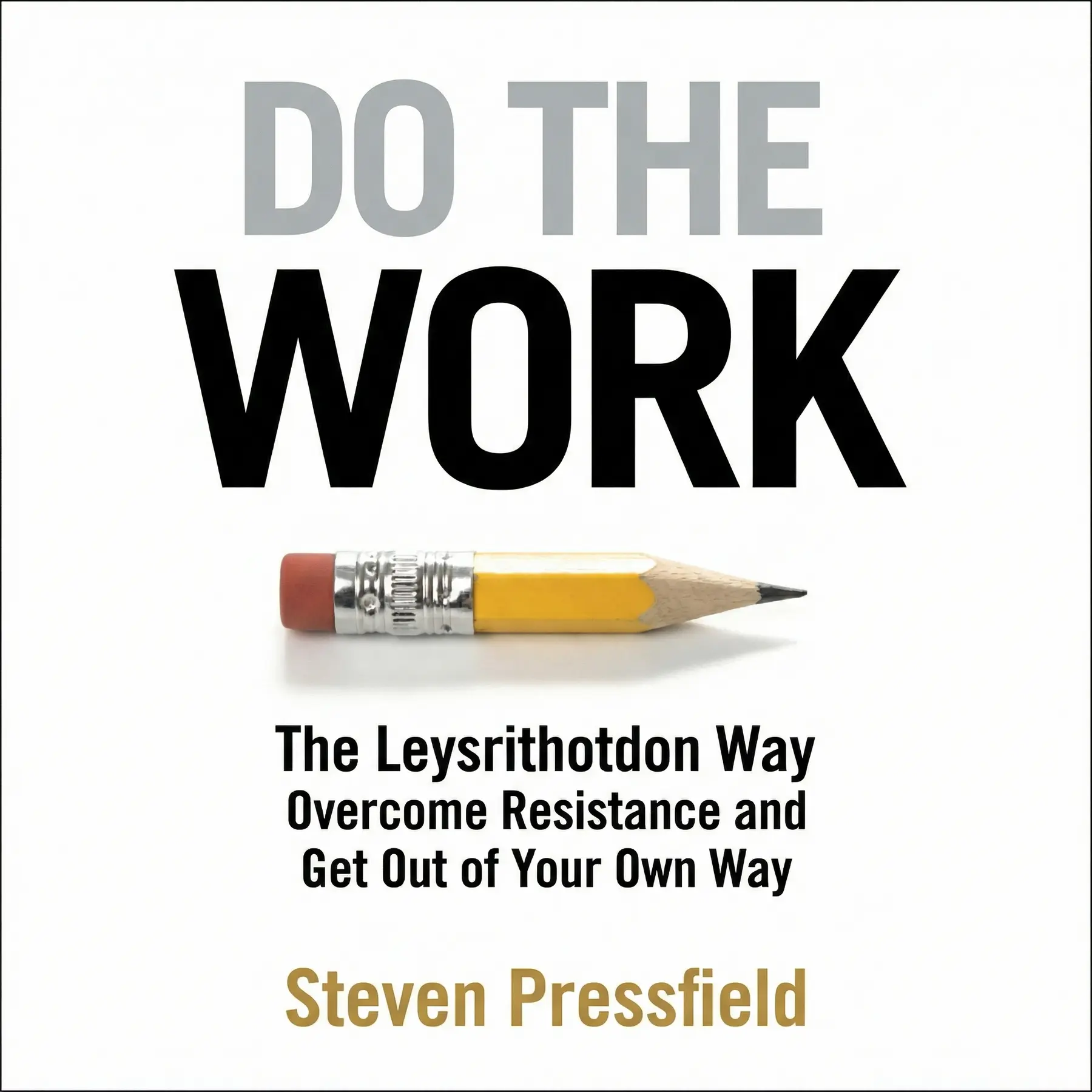
EnglishไทยDo the Work: Overcome Resistance and Get Out of Your Own Way
Shows how to recognize the inner Resistance that stalls meaningful projects, and how to beat it by acting before you overthink, committing fully and pushing through setbacks to the finish.
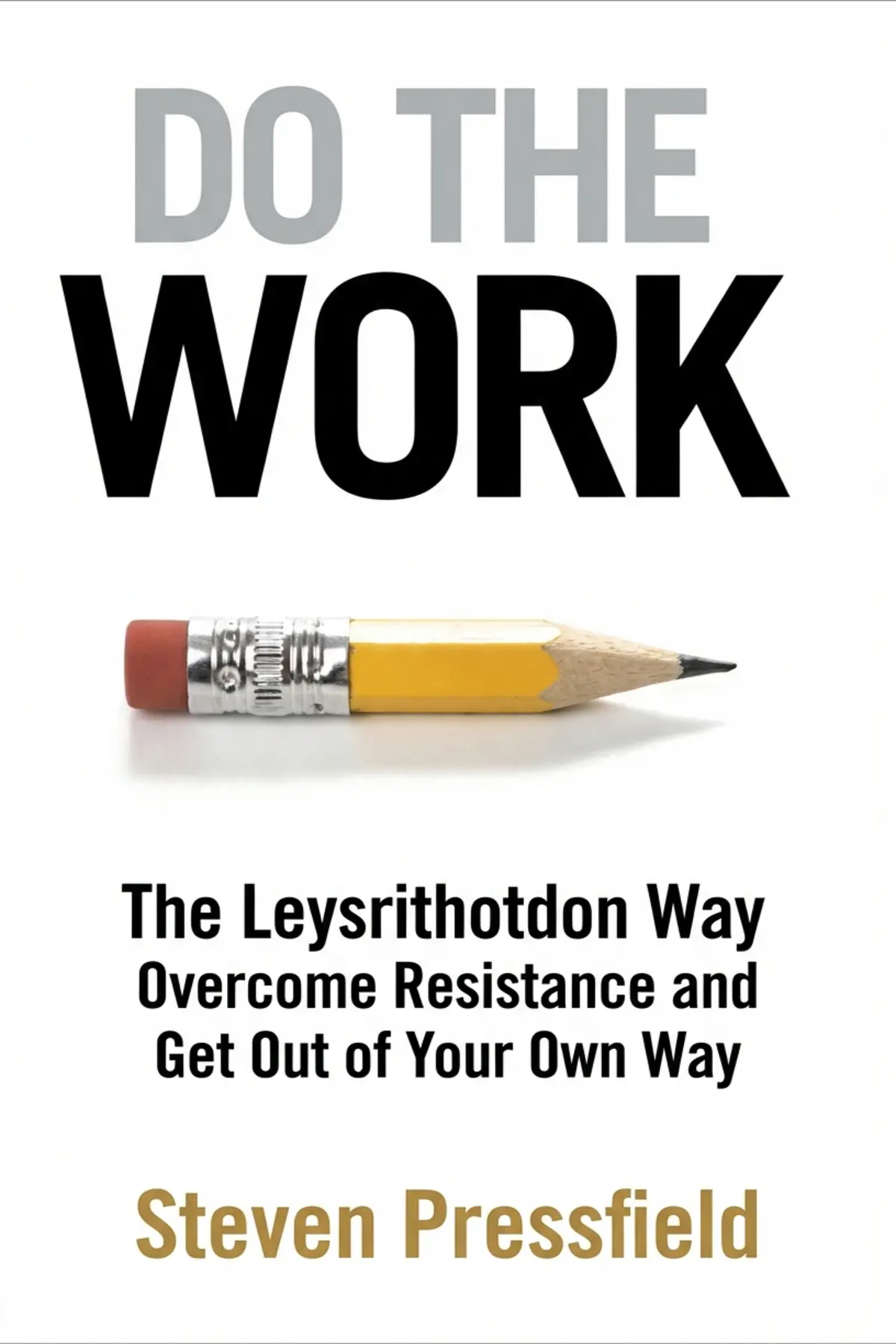
Table of Content
1. Introduction
59 sec
If a project you care about keeps living only in your head, the cause may have little to do with talent or time. In Do the Work, novelist Steven Pressfield gives that cause a name, Resistance, and describes it as an inner force that pushes back hardest against exactly the work that means most to you.
Pressfield’s case is that this force is predictable, which means it can be beaten. You beat it by knowing your allies, acting before you think too much, committing completely and treating every crash as training for the next round.
The book is short and blunt, and so is its method. Along the way come an aviator who succeeded partly because he did not know better, a novel the author’s own friends hated, and a bestselling writer who checked into hotels to finish his books. What it offers is a way to recognize the moment you are about to stall, and a handful of moves for getting past it.
2. Spot the force that stalls your best work
1 min 43 sec
One of the most celebrated actors of his era felt sick before every performance, even in old age. His nerves reveal a rule about which of your projects will fight you the hardest.
3. Turn stubbornness into fuel for hard projects
1 min 43 sec
A pilot attempted a flight he barely understood and made history because of it. Pressfield finds strength in the very traits most advice tells you to fix.
4. Act today and judge your work tomorrow
1 min 54 sec
Planning feels like progress, which is exactly why it is so dangerous. A simple split between two kinds of effort, and a structure borrowed from storytelling, keeps a new project from stalling.
5. Answer two questions that get you past a block
1 min 46 sec
When a creative wall appears, most people look for someone to blame. Pressfield points somewhere less comfortable, then offers a test with only one passing answer to each question.
6. Come back stronger from every crash
1 min 40 sec
A novel two years in the making met a brutal verdict from the author’s friends. That setback, and a bestselling writer’s hotel habit, show where Resistance strikes hardest and why surviving it pays off.
7. Conclusion
1 min 11 sec
Pressfield’s book adds up to a new way of reading your own stalling. The doubt that shows up when you finally sit down, the urge to prepare a little longer, the despair after a crash, the strange slowdown just before the finish: these are one opponent wearing different clothes. Once you can name it, it loses much of its cover. Fonda’s nerves and Crichton’s hotel room start to look like the normal cost of caring about the work, and not like personal failings.
The practical moves follow from that. When fear makes you want to abandon a project, step back, quiet the chatter in your head and turn your attention to the joy and satisfaction the work gives you, since in Pressfield’s view fear is what kills passion. Keep making and judging apart: produce today, evaluate tomorrow. When you are close to done, guard your momentum instead of easing off.
Pressfield never promises that Resistance will disappear. His promise is that each time you beat it, the next fight gets a little easier, until finishing becomes simply what you do.
About this book
What is this book about?
Many people carry an idea they care about for months or years without turning it into anything finished. Steven Pressfield argues that the cause is rarely a lack of talent. It is Resistance, an inner force of doubt, delay and self-criticism that grows stronger the more a project matters to you. Pressfield treats Resistance as an enemy with habits you can learn. He shows how traits like stubbornness and even ignorance can work in your favor, why too much preparation is a disguise for fear, and how a simple three-act structure keeps a project moving. He asks two hard questions about how much and why you want your goal, and he explains what to do when a Big Crash wipes out months of progress. The examples range from Henry Fonda's stage fright and Charles Lindbergh's flight to Paris to Michael Crichton's hotel stays near the end of each novel, plus the author's own book that his friends hated. Readers get a short, direct method for starting, continuing and finishing the work they keep putting off.
Book Information
Who it's for
Avoiding a half-finished project
Writers, designers and makers with a half-finished project they keep avoiding.
Stuck in endless planning
Founders and professionals who plan endlessly but struggle to start or finish.
Frozen after a setback
Anyone who froze after a major setback and wants a plain way back into the work.
About the Author
Steven Pressfield
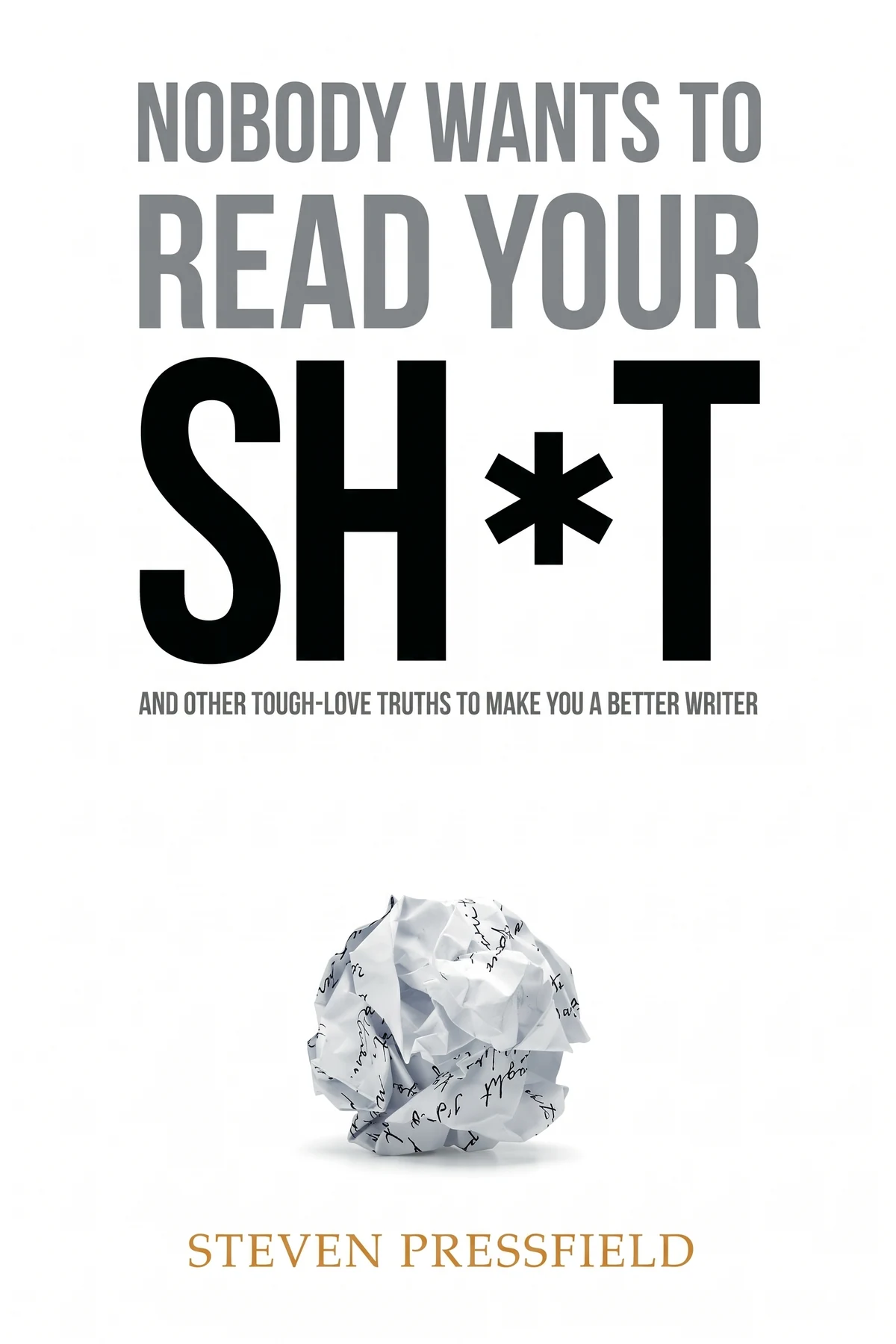
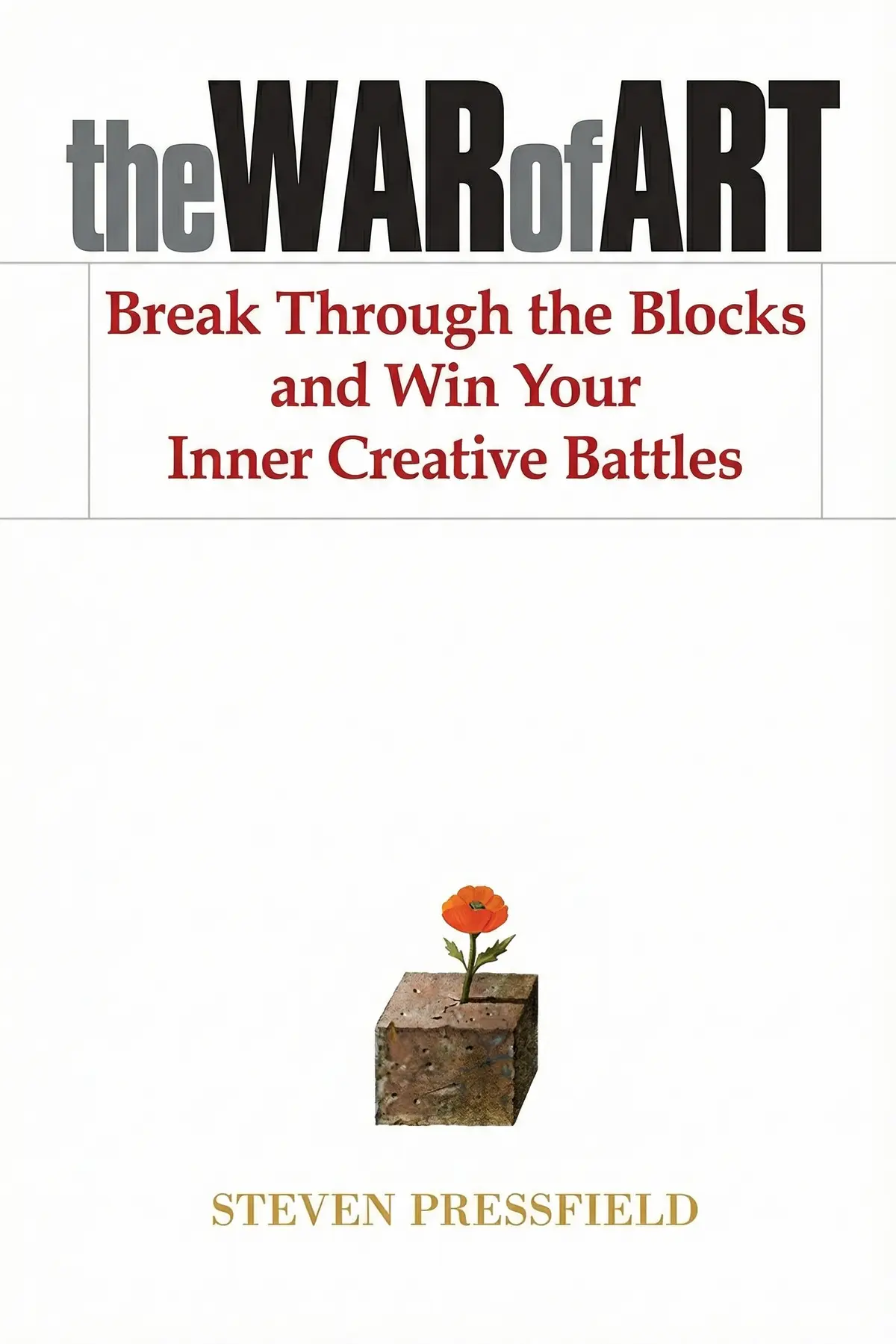
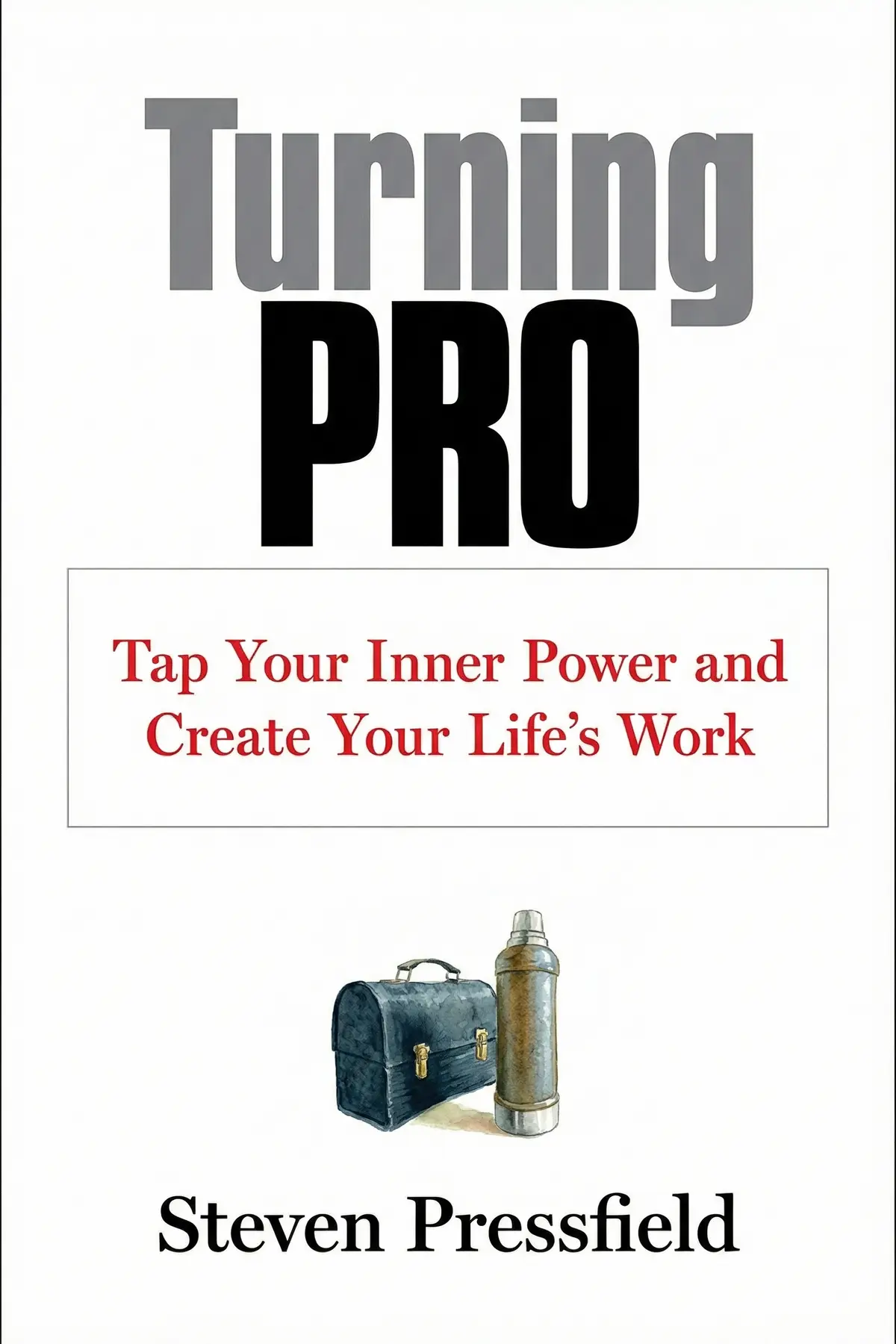
Steven Pressfield was born in 1943 in Port of Spain, Trinidad, graduated from Duke University and joined the US Marines in 1966. He worked as an advertising copywriter, teacher, truck driver and bartender before writing full time. His novel The Legend of Bagger Vance became a Hollywood film, and Gates of Fire is read at West Point. In The War of Art he named creative self-sabotage Resistance, a theme he extends in Turning Pro and Do the Work. He lives in California.
Ratings & Reviews
Ratings at a glance
What people think
Listeners find this book to be a fast-paced guide that offers superb advice for shaping one's mindset, with one listener observing that it assists in boosting self-assurance. Furthermore, the author's prose is lauded for its professional insights into conquering creative stalls, and listeners value the pragmatic methods applied to many different projects. The brief length also ensures it remains easy to digest; one listener specifically points out that it breaks things down in their simplest form.
Top reviews
Henry
Picked this up when I was drowning in a sea of half-finished drafts and self-sabotaging research loops. Pressfield provides the precise kick in the pants required to stop the endless cycle of preparation and actually start shipping work. I found the concept of 'Resistance' as an external, malign force to be an incredibly useful framework for battling my own procrastination habits. It’s a very fast read, which is perfect because you don't want to spend more time reading about work than actually doing it. Frankly, the way he breaks down the creative process into its simplest form is invaluable for anyone who feels paralyzed by self-doubt. By viewing my internal blocks as a 'dragon' that needs to be stayed, I finally felt empowered to move past the messy middle of my project. This is absolute truth for the modern creator.
Show moreSupachai
To be fair, I wasn't expecting a manifesto that would actually make me stop procrastinating and start producing, but here we are. Pressfield’s approach to the 'malign force' working against us reminds me of Descartes' evil demon—it's a clever way to externalize the negative thoughts that keep us in bed all day. By positioning Resistance as an external enemy, it becomes something you can actually fight rather than a personal failing you have to mourn. The book is incredibly accessible and doesn't waste a single sentence on fluff or academic filler. It called me on my shit immediately, specifically regarding how I use 'planning' as a way to avoid the actual pain of creation. If you are a creative person wracked with self-doubt, this should be required reading for your soul.
Show moreJames
Steven Pressfield is the truth when it comes to understanding the psychology of why we don't get things done. I loved how he pegs the particular forms of Resistance I'm prone to, especially the tendency to over-complicate things to avoid the actual work. This book is a quick read that provides excellent guidance on developing a thought process that favors action over deliberation. It doesn't matter if you're writing a script or starting a business; the enemy is the same. The way he breaks everything down into its simplest form makes the path forward feel incredibly clear and reachable. I've read a lot of motivational books, but few are this practical and devoid of unnecessary padding. It’s a brilliant, concise guide for anyone ready to stop talking and start shipping.
Show moreNiphon
Ever wonder why you can spend months 'researching' a project without ever actually producing a single page of results? Pressfield identifies this as a prime symptom of Resistance, and his solution is as simple as it is difficult: just do the work. I found this to be an invaluable follow-up to The War of Art because it focuses so heavily on the 'shipping' aspect of the creative cycle. The format is great for people with short attention spans, as it uses a very concise layout to drive home its points. Not gonna lie, I needed the reminder that my self-doubt is actually a sign that the work is important. It’s a practical, no-nonsense approach that helps build confidence in your own ability to finish what you start. This is definitely required reading for my fellow procrastinators.
Show moreNongnuch
Resistance is a real bitch, and Pressfield knows exactly how to punch it in the teeth with this concise guide. Following up on his previous work, this book dives deeper into the practicalities of overcoming writer's block by fostering a bias toward action. I especially appreciated the expert perspective on treating research as a form of resistance; it’s so easy to hide behind 'one more book' instead of writing. The writing style is punchy and direct, which helps in developing a tougher mental thought process for when things get difficult. I don't necessarily agree that his advice to be 'stupid and arrogant' applies to leading a country or building a boat, but for creative endeavors, it's spot on. It’s a quick read that provides excellent guidance on building the confidence to just ship the damn thing.
Show moreNitaya
After hearing so much hype about his earlier work, I found this follow-up to be the precise medicine I needed to stop over-analyzing my projects. The truth is that most creative blocks are just fear in a fancy suit, and this book strips away all those pretenses with brutal honesty. It’s a very fast read, which allowed me to finish it in one sitting and get right back to my draft. I love how he breaks things down into their simplest form, making the monumental task of finishing a project feel manageable. Some of the metaphors are a bit 'macho' for my taste, and the giant font is a bit distracting, but the core advice is solid. It helps build confidence by reminding you that everyone faces the same internal dragon. It’s a solid 4-star kick in the pants.
Show moreMay
Frankly, I think most people struggle with 'research as resistance' without even realizing that's what they are doing. Pressfield calls this out perfectly, highlighting how we use preparation as a shield against the actual risk of failing. The book offers a practical approach to various endeavors, even if it feels a bit geared toward the 'hustle' side of things. I appreciated the reminder that the middle of a project is always a mess and that chaos is just part of the birthing process for any idea. While the writing style is a bit aggressive, the expert perspective on how to handle writer's block is genuinely helpful. It’s the kind of book you keep on your desk to flip through when you feel the urge to lie in bed and give up. Definitely a useful framework for any creator.
Show moreChamp
Is it helpful to be 'stupid and arrogant' when you’re trying to build something that actually needs to function in the real world? Pressfield lists a few exceptions like boat building, but he misses the mark by suggesting his 'ignore the facts' approach works for every endeavor. For writers, this is a decent little bag of wisdom nuggets, like his advice to pop the champagne when you send the manuscript rather than when it’s published. However, the tone is a bit too much like a bad motivational speech complete with spam-laced marketing vibes. Look, I get the 'just do it' message, but we have enough arrogance in the world already without making it a prerequisite for success. It’s an okay read for a quick boost, but I’m not totally drinking the Kool-aid on his basic premise.
Show moreKevin
Not what I expected given the rave reviews, as it felt a bit like a collection of blog posts with huge fonts and repetitive slogans. Personally, I found the message to be a bit one-dimensional, ignoring the fact that sometimes research and careful planning are actually necessary for a good outcome. The birth metaphor felt particularly flawed and didn't resonate with my own experiences of creativity being a more melodic, peaceful process. However, I still adhered to the 'just get it finished' message and managed to complete my current chapter after reading it. It’s a bit too short for a higher rating, and the masculine 'war' framing gets old after a while. It’s an okay tool if you need a quick jolt of energy, but don't expect deep philosophy or nuanced advice.
Show moreFang
This feels like a series of bad PowerPoint slides shouting at me in a 40-point font. While the core message of 'just get it finished' is fine, the execution is deeply steeped in an aggressive, masculine hustle culture that I found off-putting. He writes about slaying dragons constantly, but I tend to think we’d be better off befriending our creative fears rather than treating our own minds like a battlefield. His metaphor regarding birth—claiming it always happens in chaos and screaming—is also a bit narrow-minded and flawed. To be fair, there are a few wisdom nuggets here for writers, but the tone is far too 'Kool-Aid' for my liking. If you enjoy being yelled at by a drill sergeant about your movie script, you’ll love it. Otherwise, it’s mostly just marketing buzzwords and loud typography.
Show moreQuestions about this book
What is the main idea of Do the Work by Steven Pressfield?
Pressfield argues that an inner force he calls Resistance stops people from turning ideas into finished work. It shows up as doubt, self-criticism and endless preparation, and it pushes hardest against the projects that matter most. Because it behaves predictably, he says, it can be beaten by acting before overthinking, committing fully, and pushing through crashes and the slowdown that often comes right before the finish.
What does Pressfield mean by Resistance?
Resistance is the self-sabotage that appears whenever you take on meaningful work requiring time and energy. Pressfield locates it inside your own head, so blaming a boss, children or a partner does not help. He also stresses that it is inside you without being you: a block does not mean you did something wrong, only that a force is working against your creative self.
How can I apply Do the Work to a stalled project?
Separate doing from judging: for a writer, put words on the page today and evaluate them tomorrow. Sketch the project as three acts and ask what it is about, what its theme is and what is missing. When you stall, ask how badly and why you want it. Near the end, protect your momentum, as Michael Crichton did by rising earlier and working almost nonstop.
What is the Big Crash in Do the Work?
The Big Crash is a major unexpected setback, such as a computer failure that wipes out an unfinished novel or a personal crisis. Pressfield’s own example is The Profession, which took two years to write and was hated by his friends. After talks with colleagues and another year of work it improved. He argues crashes show what is not working and make future obstacles easier.
Readers also enjoyed





AUDIO SUMMARY AVAILABLE
Listen to Do the Work in 15 minutes
Get the key ideas from Do the Work by Steven Pressfield, plus 5,000+ more nonfiction titles.
- 5,000+ titles
- Listen as much as you want
- 7-day free trial
- Cancel anytime









