Do the Work: Overcome Resistance and Get Out of Your Own Way
Steven Pressfield
 English
 ไทย
Explains why talented people stay stuck as creative amateurs and how to become a professional. The method is to drop the safe substitute job and the soothing distractions, face the fear behind them and keep a lifelong daily practice.
1 min 01 sec
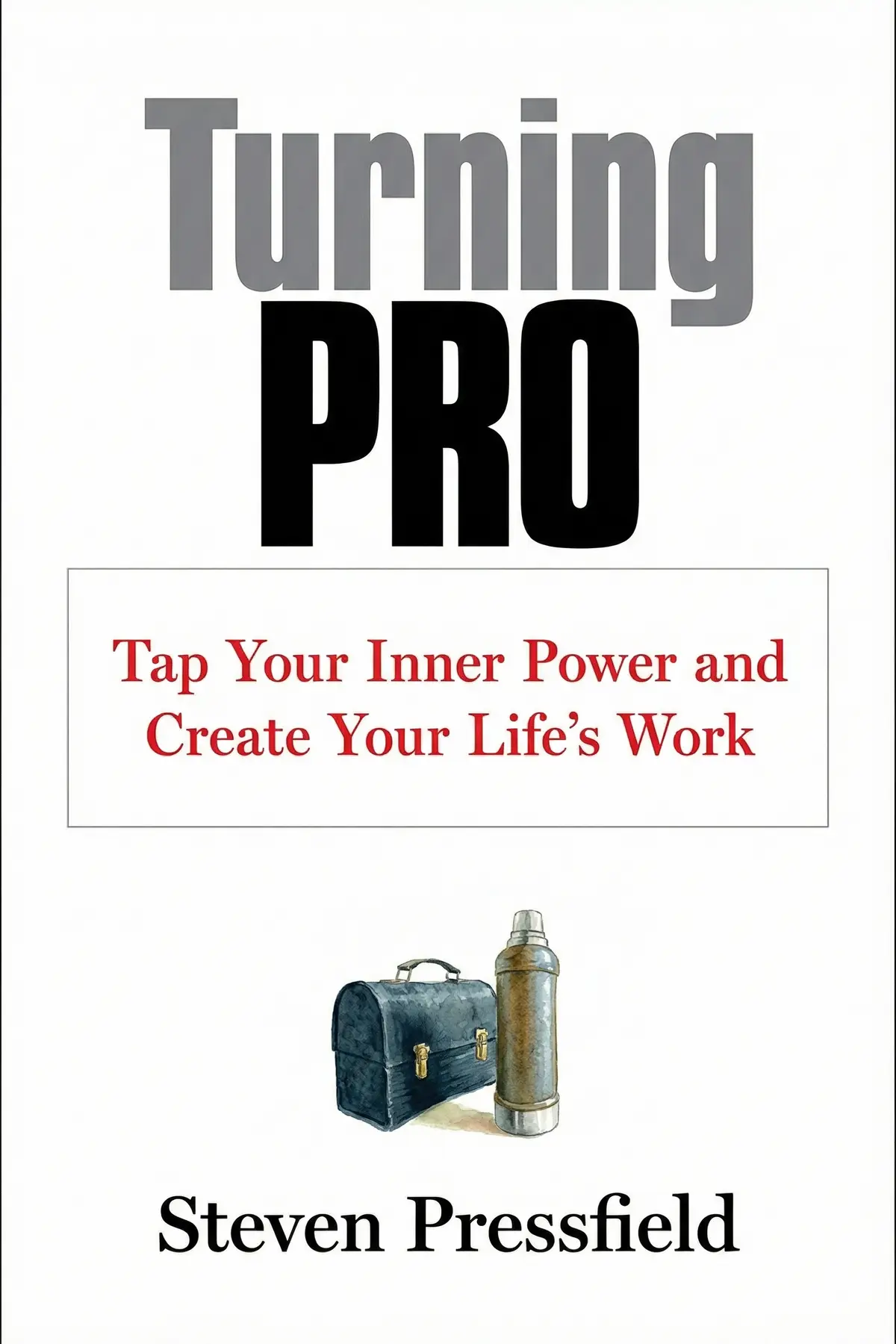
If you keep promising yourself that you will start the novel, the painting or the business idea tomorrow, Steven Pressfield has a blunt diagnosis. The obstacle is fear in disguise, and talent has little to do with it. In Turning Pro, the novelist argues that amateurs and professionals are only a small step apart, and that anyone can choose to take that step.
Amateurs avoid the choice by hiding in safe substitute careers and soothing distractions. Pros face the fear, rebuild their days around the work and trust that something will come when they sit down. Pressfield’s main evidence is his own life: years of running from writing, a night of dread over an old typewriter, and a year living on $25 a week to finish a novel. By the end you will be able to name the job that is standing in for your calling, catch the habits that numb the fear and set up a practice that survives bad days.
1 min 38 sec
A young man chose long-haul trucking because it looked like freedom and courage. Years later he understood what the job was really doing for him, and why so many careers play the same role.
1 min 40 sec
A friend of Pressfield’s has gifts most people would envy, and almost none of them are growing. Her story shows the trap that keeps capable people busy, restless and nowhere near their real work.
1 min 35 sec
A grim habit from the First World War trenches explains why so many people sabotage themselves just before they begin. Underneath it lies one fear above all others, and Pressfield thinks it rests on an illusion.
1 min 31 sec
Pressfield’s breakthrough came with no contract, no applause and no good pages. It came in a sublet apartment, in dread, and ended at a sink full of dirty dishes.
1 min 38 sec
Once the decision is made, it spreads into bedtimes, reading, meals and friendships. Not everyone around you will welcome the new version of you, and the old temptations will be back tomorrow morning.
1 min 43 sec
Picasso destroyed months of paintings while his dealer was praising them. A racehorse trainer never touches the whip. Pressfield argues a professional needs both attitudes at the same time.
1 min 56 sec
Monks who meditate at the same hour every morning and artists whose rooms share the same mood point to one structure. Pressfield breaks it into four qualities anyone can copy at home.
1 min 44 sec
A Stanford improvisation teacher asked students to describe what was inside an imaginary white box. Their answers, and the one answer nobody gave, speak directly to the fear of sitting down with nothing.
1 min 14 sec
Pressfield’s line between amateur and pro runs through a single person. Both sides carry the same talent, the same fear and the same pull toward self-sabotage. What separates them is one decision, then the many small ones that keep it alive: the job that stops being a hiding place, the distraction left alone, the desk you return to on a bad morning.
Money will test that decision, since serious work may or may not pay for a long time. Pressfield suggests counting a second salary, the psychological reward of living as who you really are, paid in a nobler currency than cash.
To begin, name your shadow career and ask what it is a safer copy of. Then claim one hour and one place for the work, and show up tomorrow whether or not you feel inspired. When it goes badly, handle yourself the way the trainer handles his horses: no whip, rest when tired, and a reason to come back.
On his worst night, Pressfield wrote two hours of pages bad enough for the trash, then stood whistling over a sink full of dishes. The pages were thrown away. The writer stayed.
Plenty of people have a book, a painting or a start-up idea they keep meaning to begin. Something always gets in the way. Steven Pressfield argues that the obstacle is rarely talent or timing. It is fear, and fear hides well. It hides in safe jobs that resemble the real calling and in habits that numb the discomfort, from endless scrolling to stormy love affairs. Pressfield draws mostly on his own life. He spent years driving trucks and cabs instead of writing, typed two miserable hours on a neglected typewriter one night in New York, and later lived on $25 a week to finish a novel. From that history he builds a clear contrast between the amateur and the professional. Both feel the same fear. Only the pro organizes life around the work and returns to it every day. Readers get a way to recognize their own shadow career and the distractions that protect it. They also get the four qualities of a working creative practice, plus a mindset that pairs strict standards with self-compassion and trusts the muse to show up.
Writers, artists and would-be founders who keep postponing the project they care about most.
Professionals who suspect their steady job is a safe stand-in for the work they really want.
Creatives who swing between burnout and avoidance and want a daily practice that holds.
Steven Pressfield was born in Port of Spain, Trinidad, in 1943, studied at Duke University and served as a US Marine. He was an advertising copywriter, schoolteacher, truck driver and bartender before he wrote full time. His novel The Legend of Bagger Vance became a Hollywood film, and his Spartan novel Gates of Fire is on the reading list at West Point. In The War of Art he named creative self-sabotage Resistance. He lives and writes in California.
Listeners find this work to be an excellent listen that is straightforward to grasp, featuring eloquently expressed ideas. Furthermore, they value its inspiring message, particularly the way it fosters a path toward self-actualization and aids in shifting from merely adequate to significant work. Additionally, the book functions as an ideal successor to "War of Art" and offers utility, with one listener mentioning its applicability to martial arts practice. Listeners also appreciate its depth, with one review pointing out how it translates complex ideas into relatable wisdom.
Pressfield has a way of cutting through the noise that most self-help gurus just can't match. After finding 'The War of Art' transformative, I wasn't sure if a sequel could offer anything substantial, but 'Turning Pro' proved me wrong by diving deeper into the actual lifestyle shift required for greatness. It isn’t just about fighting Resistance; it’s about the total psychological overhaul from being a hobbyist to a professional who respects the craft. Truth is, the brevity of the chapters makes the wisdom hit harder, like a series of quick punches to the gut that wake you up from a mediocre slumber. I particularly appreciated the focus on daily habits and the hard truth that distraction is just a polite word for self-sabotage. While some might find the philosophy a bit repetitive if they’ve read his previous work, the way he frames the 'shadow career' concept is absolutely worth the price of admission. It’s a call to move from merely acceptable output to work that actually carries meaning and weight.
Show moreFinally got around to reading this after a mentor suggested it for my martial arts practice, and the timing couldn't have been better. I’ve always struggled with consistency, often letting small distractions pull me away from the mat, but Pressfield’s definition of the 'pro' changed my entire perspective. He makes it clear that the professional shows up regardless of how they feel, treating their practice with a level of sanctity that the amateur simply doesn't understand. The book is incredibly easy to digest, yet I found myself pausing after every few pages to really sit with the concepts he presents. Not gonna lie, some of his personal anecdotes felt a little self-indulgent, but they serve the larger point about hitting rock bottom before you can truly ascend. It's a grit-focused guide that encourages a journey into self-realization through the lens of labor and sweat. This isn't just for writers; it's for anyone trying to master a difficult skill while battling their own internal excuses.
Show moreWow, I wasn't expecting a 150-page book to make me feel so convicted about my morning routine. Pressfield has a gift for taking complex psychological barriers and turning them into relatable wisdom that anyone can apply immediately. This book acts as a fantastic bridge from 'The War of Art,' taking the theory of Resistance and showing what the actual remedy looks like in practice: turning pro. I loved the section on how a professional handles failure compared to an amateur; it helped me realize that my fear of judgment was just another form of self-sabotage. Every page feels like a pep talk from a coach who isn't afraid to tell you that you’re being lazy. The prose is beautiful in its simplicity, proving that you don't need big words to convey big ideas about the human spirit. If you're struggling to take your work to the next level, just buy it and read it in one sitting. It's an investment in your future self that you won't regret.
Show moreEver wonder why you have all the talent in the world but nothing to show for it? Pressfield answers this question with brutal honesty: you’re likely still an amateur in your heart. This book is a deep dive into the mindset shift required to finally move from being a 'wannabe' to someone who actually produces results. I found the concepts to be beautifully written and surprisingly profound, especially the idea that our addictions are often just displaced creative energy. It’s a great follow-up to his previous books, providing that extra bit of encouragement needed to enter the arena of self-realization. Not gonna lie, I was skeptical about the short chapters at first, but they actually help you focus on one core idea at a time without getting overwhelmed. It encourages you to strip away the 'shadow' versions of yourself and commit to the work that truly matters. Highly recommended for any creative professional who feels stuck in a cycle of procrastination and self-doubt.
Show moreAfter hearing several people compare this to a 'spiritual successor' to The War of Art, I had to see if it lived up to the hype. It absolutely does, though it approaches the battle from a different angle. While his first book was about the enemy (Resistance), this one is about the solution (the Professional). The transition into self-realization is portrayed not as a single event, but as a series of daily choices to choose the work over the distraction. I found the book's insight into how we build lives around avoiding our true calling to be both terrifying and incredibly helpful. The truth is, the brevity of the writing makes it feel more like a series of meditations than a standard self-help book. It’s practical because it changes your internal monologue, which is where the real work happens anyway. This book kicks your ass in the best way possible, forcing you to look at your habits and admit where you’re falling short. Definitely a must-read for any serious artist.
Show moreAs someone who has spent years dabbling in creative projects without finishing anything, this book felt like a necessary intervention. Pressfield doesn't sugarcoat the reality of the creative life; he reminds us that the amateur plays for fun, while the professional plays for keeps. The way he breaks down how we use 'shadow careers'—like drinking, or constant social media scrolling—to avoid our true calling was a major lightbulb moment for me. Personally, I think the short, staccato writing style works perfectly for this kind of message because it leaves no room for the reader to hide or make excuses. Even though it lacks a 'map' in the traditional sense, it provides a compass that points toward the discipline required to move from acceptable output to meaningful work. My only minor gripe is that it can feel a bit mystical at times, which might lose readers who prefer a more clinical approach to productivity. Still, it’s a quick, intense read that challenged my daily habits in a way few books do.
Show moreThe chapter on the difference between the amateur and the professional is worth the price of the book alone. Pressfield argues that being a pro is about accepting the daily struggle and relishing it, rather than waiting for some magical moment of inspiration. Frankly, the message is simple—stop wishing and start working—but it’s a message that most of us need to hear on repeat until it actually sinks in. I enjoyed how he tied in his own past failures, which gave the philosophical parts more emotional resonance and made his advice feel earned rather than preached. While it is a very fast read and some might complain about the lack of 'meat,' the density of the insights makes up for the low word count. It’s the kind of book you keep on your desk and flip to a random page whenever you feel like checking Twitter instead of writing. It’s not a manual, but it is a powerful manifesto for anyone tired of their own excuses.
Show morePicked this up on a whim after seeing it mentioned in a blog post about productivity, and I'm glad I did. It’s an incredibly easy read that you can finish in an afternoon, but the ideas stay with you much longer than that. Pressfield’s core argument is that 'Turning Pro' is a free choice we make, but it comes with a high price of discipline and sacrifice. I liked how he used his own life stories to illustrate the transition, though I wish some of those anecdotes were a bit more detailed. To be fair, the book is more of a motivational spark than a technical guide, so if you're looking for spreadsheets and schedules, look elsewhere. However, for those of us who need a kick in the pants to stop self-sabotaging, it's perfect. It helps you understand that the resistance you feel is actually a sign that you’re on the right path. It’s a solid 4-star read that I’ll likely revisit when I’m feeling uninspired.
Show moreIs this book a revolutionary manifesto or just a collection of very expensive blog posts? I went in expecting a concrete roadmap for professional transition, but instead, I found a philosophical meditation on what it means to be serious about your work. To be fair, Pressfield writes with undeniable punch, and his metaphors about the amateur’s life being filled with 'shadow careers' are quite insightful. However, the extreme brevity—some chapters are literally a single sentence—can feel a bit like you’re paying for a lot of white space rather than dense content. If you loved his first book, you might find this to be a bit of a rehash of the same core principles regarding Resistance and discipline. It serves as a decent motivational kick, but don’t expect a step-by-step guide on the logistics of your career. It’s more about the internal mindset shift, which is valuable, but perhaps not enough to justify a full-length book purchase for everyone.
Show moreLook, I really wanted to like this given the hype, but it felt incredibly hollow and repetitive. If you have already read 'The War of Art,' you have basically read this book, except this one has more white space and fewer original ideas. Pressfield spends a lot of time talking about how cool it is to be a professional without ever giving you the actual tools to get there. It felt less like a guide and more like a collection of sound bytes designed for Instagram quotes rather than deep learning. The tone often drifts into self-aggrandizement, where the author positions himself as the ultimate arbiter of who is 'pro' and who 'sucks.' I found the lack of development in his arguments frustrating because he starts an interesting thought and then just ends the chapter abruptly. For thirteen dollars, I expected more than 20,000 words of 'just work harder' platitudes. I'd suggest skipping this and sticking to his earlier, more substantial work if you actually want to learn.
Show morePressfield argues that becoming a professional depends far more on mindset than on talent. Amateurs avoid their calling by hiding in safe shadow careers and numbing distractions, driven by fear, especially the fear of being rejected by their tribe. Turning pro is a conscious decision to face that fear, reorganize daily life around the work and keep a disciplined practice for life.
A shadow career is work that resembles your true calling but carries no real risk, so failure costs little. Pressfield’s own example was truck driving, which he chose for its romance while avoiding writing. Other examples in the book include a doctorate in Elizabethan studies instead of writing plays, or assisting an inventor instead of inventing. Because it mirrors the real calling, a shadow career can reveal what you should be doing.
Pressfield names four. A sacred space, such as a studio or workshop kept orderly and free of personal drama. Intention, meaning focused practice aimed at going deeper into the work. Humility, leaving the ego at the door because you are there to learn. And lifelong commitment, since a practice has no season; Picasso kept painting into his nineties.
Start by naming the safe job or habit that stands in for your real work. Notice what distraction you reach for just before you would begin. Then set a fixed time and a dedicated place for the work and return daily, without waiting for inspiration. Hold high standards for what you make, but pace yourself kindly, like the racehorse trainer in the book who never uses the whip.
It suits writers, artists and aspiring founders who have a project they keep postponing, and people who suspect their stable career is a hiding place. It also helps anyone caught between avoidance and burnout, since Pressfield pairs strict standards with self-compassion. Readers who want money to justify their creative work will find his idea of a second salary, the psychological reward of living authentically, especially useful.



Richard Wiseman






William B. Irvine
AUDIO SUMMARY AVAILABLE
Get the key ideas from Turning Pro by Steven Pressfield, plus 5,000+ more nonfiction titles.