

14 min 27 sec
Available in: English
DIRTY LAUNDRY: Why adults with ADHD are so ashamed and what we can do to help
A warm, practical look at six everyday struggles of adult ADHD, from lost phones to abandoned business ideas, showing how to swap shame for acceptance and small fixes, for ADHDers and the people who love them.
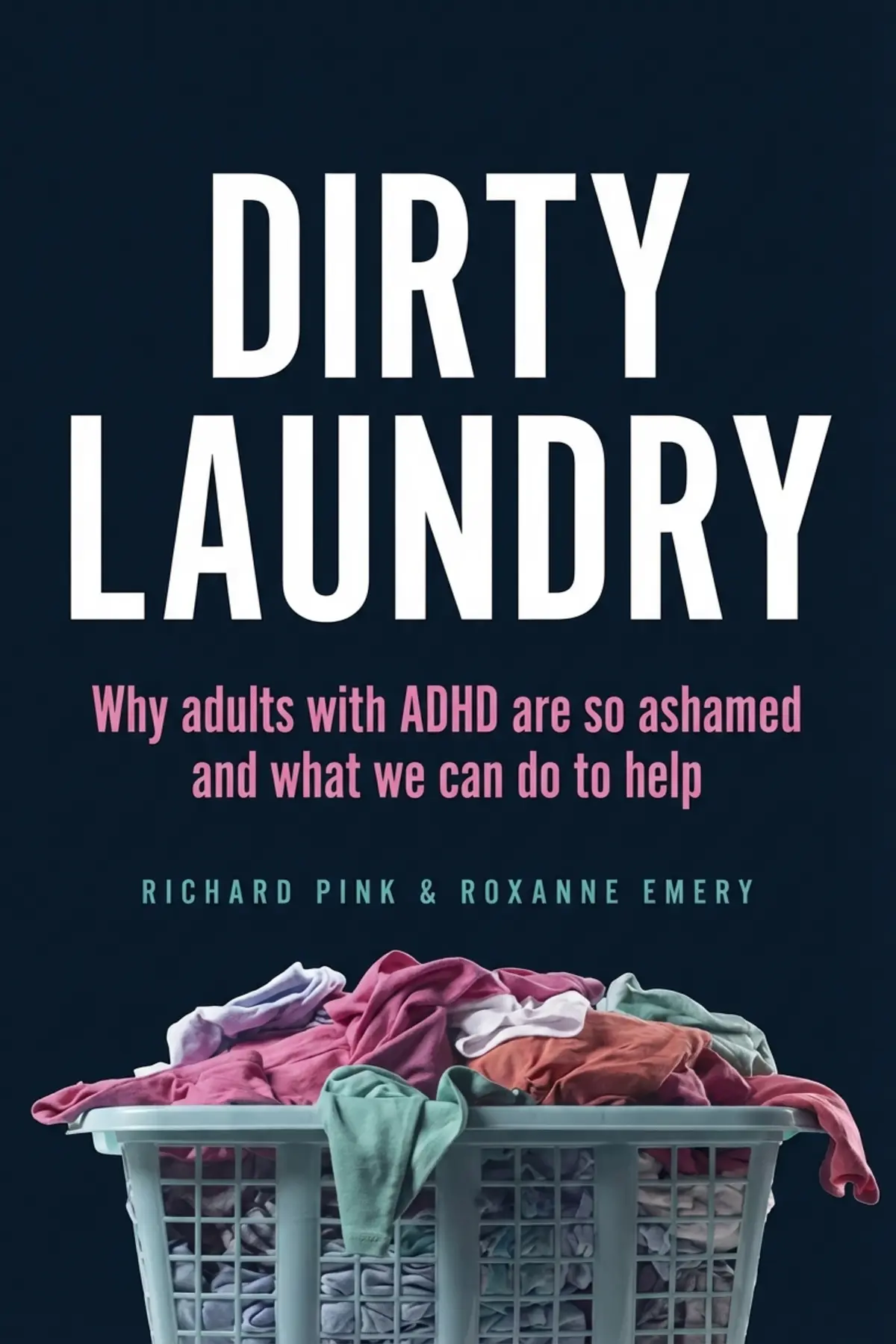
Table of Content
1. Introduction
1 min 02 sec
If you live with ADHD, you may have spent years believing you were simply careless, rude or lazy. Richard Pink and Roxanne Emery, the married couple behind the ADHD Love account on TikTok, see what happens when that belief lifts: fans stop them in the street, and most of them are crying. In Dirty Laundry, Rich, the neurotypical half, and Rox, who lived undiagnosed for much of her life, explain the tears. Learning that your daily failures have a name, and that many others share them, can be overwhelming.
Their argument is simple. The lost phones, missed flights and unanswered texts come from a brain that works differently, and shame only makes them worse. What helps is acceptance, a few practical safeguards and people nearby who respond with patience. Six familiar struggles follow, each with a story from Rox’s life and concrete moves for the person with ADHD and for whoever loves them.
2. Stop treating lost keys as a character flaw
2 min 07 sec
One woman has lost more than thirty phones, wallets and passports, and once slept on her own doorstep. The surprising fix starts with throwing out a tool most organized people swear by.
3. Arrive on time by telling the truth
2 min 02 sec
Missing one flight is bad luck. Missing two in the same day, at the same airline desk, points to something else entirely, and the remedy begins with a very small, very honest sentence.
4. Enjoy hyperfocus without letting it run your life
2 min 04 sec
A teenager who could lecture for hours about one ancient farming tool was labeled a gifted child. That compliment turned into a burden, and the reason changes how intensity and talent should be read.
5. Turn task avoidance into progress you can use
1 min 54 sec
A student spent the night before her exam teaching other people’s economics with real passion. Her detour reveals what procrastination with ADHD actually targets, and it is rarely the boring stuff.
6. Keep friendships alive with one honest sentence
2 min 05 sec
Old friends drift away, guilt builds, and every late reply opens with an excuse. The couple explain what is really happening in the ADHD brain and offer a tiny phone habit that breaks the cycle.
7. Let big ideas live without draining your savings
2 min 00 sec
A resin furniture company, a record label and a children’s clothing line all ended up in one cupboard. Yet the same restless impulse also built a following of millions, and the trick is telling them apart.
8. Conclusion
1 min 13 sec
What links a lost letter, a missed flight, a clay model of an Egyptian water device and a cupboard of resin is a brain that works differently, judged for years by rules written for other brains. That is why strangers cry when they meet Rox and Rich. Her diagnosis changed everything for Rox, and the couple’s case is that a new perspective, a few behavior changes and a lot of compassion can do the same for others.
The method behind the book is consistent. Call the symptom by its name instead of an insult, then put a small safeguard around it: a spare key with a neighbor, an honest arrival time, a coffee date in the calendar in place of a vague promise to text. If you love someone with ADHD, your part is just as concrete. Offer help where you would have lectured, join their latest passion with curiosity, and gently pull them back when the hyperfocus or the big plan runs too far.
Rox still loses things and still runs late. She and Rich have built a full, happy and often hilarious life anyway. The shame was never helping. Without it, there is room for everything else.
About this book
What is this book about?
Many adults with ADHD spend years believing they are careless, rude or lazy. They lose wallets, miss flights, forget to reply to friends and start projects they never finish, and the people around them often agree with that harsh verdict. Richard Pink and Roxanne Emery, the married couple behind a hugely popular ADHD account on TikTok, argue that the shame does more damage than the symptoms do. Rox lived with undiagnosed ADHD for much of her life, and Rich is her neurotypical husband. Together they walk through six familiar struggles: losing things, time blindness, hyperfocus, task avoidance, losing touch with people, and impulsivity. Each one is told through a story from Rox's life, from thirteen lost phones to a cupboard full of failed businesses. For every struggle the book offers two sets of advice. One is for the person with ADHD: how to talk to yourself, which small safeguards to put in place, and what to say to others. The other is for partners, friends and family, who learn how to help without scolding. The promise is modest and humane: a calmer, kinder and more workable daily life.
Book Information
Who it's for
Tired of feeling broken
Adults with ADHD, diagnosed or suspected, who are tired of feeling broken over lost keys and missed deadlines.
Partners, friends and family
Partners, friends and family who want to help without nagging.
Drifting from projects
People who keep starting projects and losing touch, and want kinder, practical fixes.
About the Author
Richard Pink
Richard Pink creates social media content about attention deficit hyperactivity disorder, and his ADHD Love account has passed 5 million followers worldwide. He wrote Dirty Laundry and Small Talk with Rox Pink, books about relationships, communication and mental health, and the children's book Ady and Me. Roxanne Emery, also known as Rox Pink, is an English singer-songwriter, multi-instrumentalist and producer who has also recorded as RØRY.
Ratings & Reviews
Ratings at a glance
What people think
Listeners find this book accessible and beneficial, offering useful day-to-day techniques alongside neurodivergent viewpoints. Furthermore, they value its empathetic tone, with one listener highlighting its emphasis on mending emotional distress and its comforting material that ensures they feel understood. The work also earns praise for its authentic narratives, genuine feelings, and clever humor, serving as a significant guide for people living with ADHD.
Top reviews
Wyatt
Finally, a resource that doesn't treat ADHD like a cold list of clinical symptoms but like a vibrant, messy, lived experience. It’s refreshing. The authors have managed to create something that focuses on healing the deep-seated emotional pain of feeling 'broken' for years. I loved how Roxanne shares her struggles with zero filter, while Richard offers a compassionate lens for the partners who might be struggling to understand the chaos. This book is basically a warm hug for your brain. I felt less like a project to be fixed and more like a human being who just processes the world differently. If you have ever felt the crushing weight of a mounting laundry pile, you need to read this immediately. It’s light, heartfelt, and deeply validating for those of us who have spent our lives apologizing for our existence. Truly a profound resource for the neurodivergent community.
Show moreMind
The banter between Richard and Roxanne is what makes this book shine, turning what could be a dry subject into something genuinely entertaining. I found myself laughing out loud at the relatable stories, especially the ones about 'the doom pile' and the struggle of starting tasks. It’s not just funny, though. There is a real sense of healing emotional pain here. For the first time, I didn't feel judged for the things I can't seem to get right. The book focuses on removing the shame that society piles on us, and that is more valuable than any organizational tip. Richard’s perspective as a neurotypical partner is eye-opening because it shows that it is possible to be loved for who you are, quirks and all. This is a must-read for any couple struggling to find common ground in their communication styles. It’s bright, witty, and incredibly kind.
Show moreCaleb
Wow, I didn't expect to be in tears by chapter three. As a woman diagnosed late in life, the stories Roxanne shared about her 'hidden' struggles resonated with me on a cellular level. Personally, I’ve spent so much energy trying to mask my symptoms that I didn't realize how much trauma I was carrying. This book helped me start the process of letting go of that guilt. The way they describe the ADHD experience is so spot-on that I kept highlighting passages to show my husband. It’s a profound resource for anyone who has ever been called 'lazy' or 'careless.' The witty banter keeps the tone from getting too heavy, but the underlying message is one of deep, transformative love. It made me feel seen in a way few books ever have. Thank you for putting this into the world.
Show moreSomboon
Truth is, I’ve felt like a failure for most of my adult life because I couldn't keep up with 'normal' adulting, but this book changed my entire outlook. It’s a heartfelt, emotional journey through the ups and downs of life with a neurodivergent brain. Roxanne’s vulnerability is her superpower. By sharing her most embarrassing moments, she gives the rest of us permission to be imperfect. Richard’s sections are equally important, providing a template for how to love someone without trying to change them. The witty banter between the two of them makes the advice go down easy. It’s not just a book about laundry; it’s a book about radical self-love and the power of a supportive partner. I’ve already started using some of their 'game-ified' cleaning tips, and they actually work! This is a life-altering guide for anyone ready to stop hating themselves.
Show moreJoe
Picked this up after seeing their videos online and was pleasantly surprised by the depth of the emotional connection found in these pages. The structure is quite clever: Rox provides a vulnerable anecdote about a specific struggle—like losing keys or emotional dysregulation—and then Rich explains how he adjusted his own perspective to be supportive. It offers very practical daily strategies that move beyond the typical 'just use a planner' advice. Frankly, it’s a manual for empathy. I did find some sections a bit repetitive, as the 'how to help' advice often boiled down to 'be patient,' but the sentiment is gold. It’s an easy-to-understand guide that would be perfect for a couple recently navigating a new diagnosis. While it isn't a medical textbook, it fills a gap that clinical books often miss by focusing on the actual relationship dynamics and the importance of curiosity over judgment.
Show moreTong
Ever wonder why you can't just finish a simple task like folding the laundry without it becoming a week-long mental hurdle? This book explains that phenomenon with so much grace. It’s an easy-to-digest resource that focuses on neurodivergent perspectives in a way that feels authentic and raw. I particularly liked the 'Rich’s Perspective' sections. He talks about how he had to retrain his brain to stop taking Roxanne's forgetfulness personally. That shift from anger to curiosity is something every partner of someone with ADHD needs to learn. My only gripe is that it leans a bit too much on the 'Rich is the savior' trope at times, which might not sit well with everyone. Still, the practical daily strategies for household management are helpful and easy to implement. It’s a solid addition to the ADHD library for anyone looking for a more personal touch.
Show moreSelin
This book is essentially a roadmap for empathy within a neurodiverse relationship. Not gonna lie, I was skeptical at first because social media influencers don't always write the best books, but this one has real heart. The authors tackle the 'dirty laundry' of life—both literal and metaphorical—with a sense of humor and radical honesty. It’s a very quick read, which is great for those of us who struggle to finish 300-page tomes. While I would have liked a bit more focus on how to manage without a partner's help, the message of self-acceptance is universal. It's less about 'fixing' yourself and more about finding workarounds that actually fit your brain. The relatable content makes you feel like you're chatting with friends rather than being lectured by a doctor. Definitely worth a read for the emotional validation alone.
Show moreBank
As someone who has been diagnosed for a decade, most of this felt like a recap of things I've already seen on my social media feeds two years ago. To be fair, if you are brand new to the world of neurodiversity, this is a gentle introduction. However, for the 'seasoned' ADHDer, there isn't much new ground broken here. The chapters are very short and follow a predictable pattern: Rox messes up, Rich describes how he didn't get mad, and then they offer a tip. It’s a quick read, but it can be repetitive. I appreciated the witty banter and the obvious love between the authors, but I was hoping for more 'how-to' and less 'this is what happened to us.' It’s a sweet story about their marriage, but don’t expect a life-changing toolkit if you’ve already done your own research into executive dysfunction.
Show moreEnd
In my experience, books on ADHD usually lean toward the clinical, so I appreciated the personal anecdotes here, even if they were a bit repetitive. The truth is, this is more of a memoir about a specific relationship than a comprehensive guide to ADHD. It's very sweet, but I felt it lacked professional depth. There isn't much mention of medication or therapy, which are vital for many of us. Also, the constant use of 'your ADHDer' felt a bit like being talked about rather than being talked to. However, the daily strategies they suggest are simple and low-pressure, which is a nice change from the high-stress productivity hacks usually found in these types of books. It’s a decent choice for a casual read, but maybe supplement it with something a bit more scientific if you want the full picture.
Show moreA
Look, I really wanted to love this, but the way Rich refers to Roxanne as 'his ADHDer' throughout the entire book made my skin crawl. It feels incredibly infantilizing, as if those of us with ADHD are pets or toddlers needing to be managed by our 'superior' neurotypical partners. The advice is heavily skewed toward co-dependency rather than empowerment. If you don't have a partner as saintly and patient as Richard Pink, the book essentially implies you are doomed to a life of dysfunction. There is also a glaring lack of evidence-backed information or any mention of professional help, therapy, or medication. It’s purely anecdotal. While their TikToks are cute for a thirty-second dopamine hit, as a full-length book, it lacks the substance needed to be truly helpful. It felt more like a celebration of their specific relationship than a guide for the rest of us.
Show moreQuestions about this book
What is Dirty Laundry by Richard Pink and Roxanne Emery about?
It looks at why adults with ADHD carry so much shame and how to ease it. Through stories from Rox’s life, the couple cover six common struggles: losing things, time blindness, hyperfocus, task avoidance, losing touch with friends and impulsivity. Their core message is that these are symptoms of a brain that works differently, and that acceptance plus small practical changes helps far more than blame.
What is time blindness in ADHD?
The couple use the term for the way many people with ADHD fail to feel time passing. For Rox, five minutes and fifty minutes feel the same; time is simply now or later. She once missed two flights in one day. Their advice is to be honest with yourself about travel times, honest with others about when you will arrive, and to let friends take charge when timing really matters.
How can I support a partner or friend with ADHD?
The book gives loved ones a role in every chapter. Do not scold when something is lost; help fix the problem. Gently point out impossible time promises. Pull someone away kindly after hours of hyperfocus. Get curious about what they are doing instead of demanding they switch tasks. Tell them slow replies do not bother you, and enjoy their enthusiasm while steering toward the feasible ideas.
How do you stop feeling guilty about not replying to messages with ADHD?
The couple trace this to object constancy: what is out of sight is hard to keep in mind. They suggest telling friends openly that you are bad at texting and setting a date to meet instead. Leave a message unread until you can reply, so the notification keeps reminding you. If you are already avoiding someone, send the apology now and plan a meetup.
Who should read Dirty Laundry?
It suits adults who have ADHD or suspect they do, especially those who grew up feeling careless or lazy, and the partners, friends and relatives who live alongside them. It is light, story-driven and practical, built around Rox’s own experiences, and every symptom it covers comes with advice for both the person with ADHD and the people who care about them.
Readers also enjoyed





Alcoholics Anonymous
Alcoholics Anonymous World Services

A Liberated Mind: How to Pivot Toward What Matters
Steven C. Hayes


AUDIO SUMMARY AVAILABLE
Listen to DIRTY LAUNDRY in 15 minutes
Get the key ideas from DIRTY LAUNDRY by Richard Pink, plus 5,000+ more nonfiction titles.
- 5,000+ titles
- Listen as much as you want
- 7-day free trial
- Cancel anytime









