All About Love: New Visions
bell hooks
 English
Shows how couples and singles can choose a relationship structure on purpose, from deliberate monogamy to polyamory. It also sets out the honesty and intimacy skills that make any of these arrangements last.
1 min 03 sec
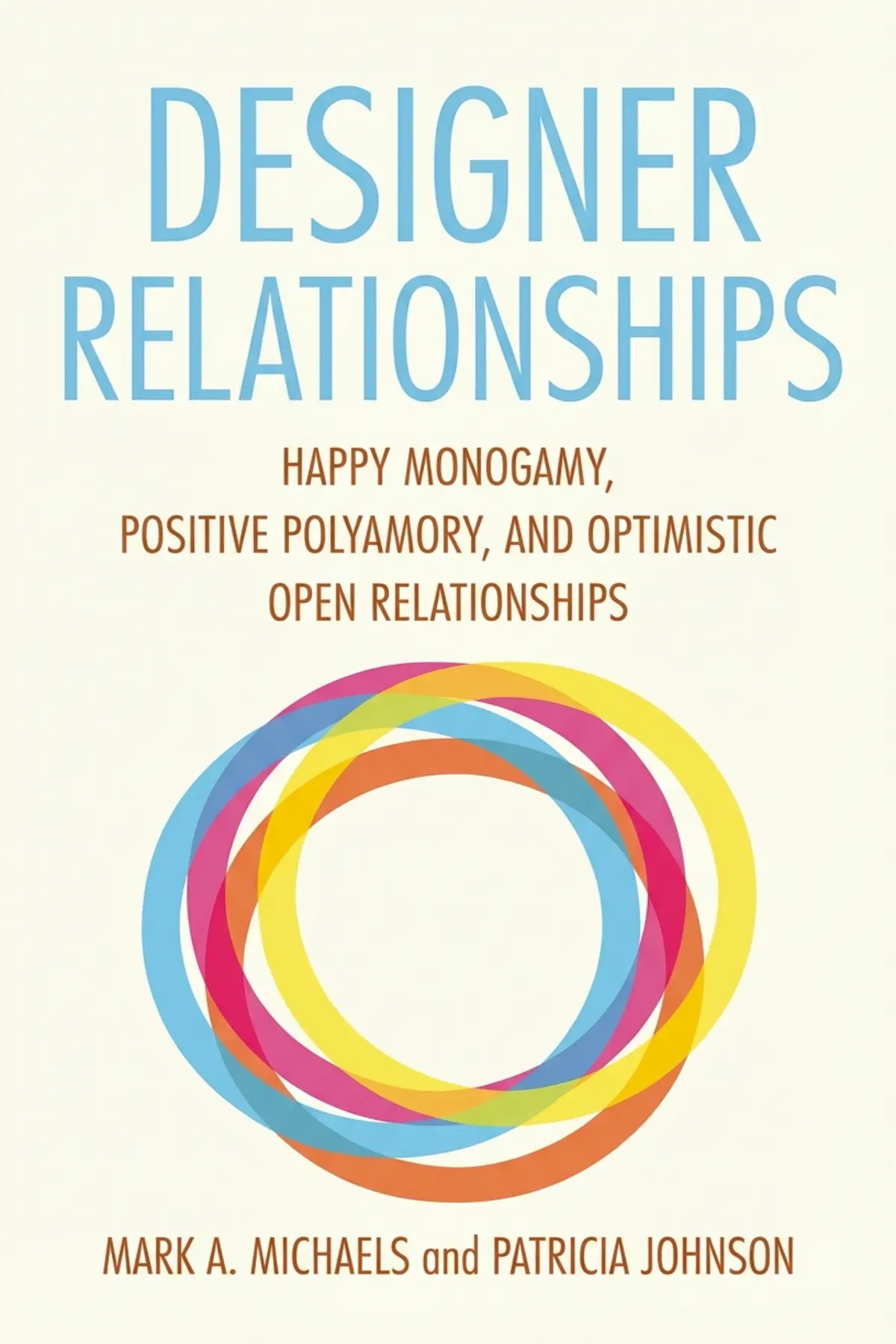
If your love life runs on rules you never actually agreed to, Mark A. Michaels and Patricia Johnson offer a different starting point: a relationship can be designed. In Designer Relationships, the married authors and longtime Tantra teachers borrow a term coined by Kenneth Haslam, who founded the Polyamory Archive at the Kinsey Institute. It describes partnerships built on conscious choice and mutual agreement. That can mean strict exclusivity, an open arrangement, several loving partners or a bond with no sex at all. What matters is that everyone chose it with open eyes.
Their argument runs through the whole book. Any structure, monogamous or not, works best when it is chosen deliberately, agreed out loud and kept alive with real intimacy skills. Along the way they take apart six common fears about nonmonogamy, describe the habits that keep closeness alive, and give couples a gradual way to open up without putting their bond at risk.
1 min 52 sec
Two people can share a home for years and still be following different rulebooks without knowing it. The authors trace the trouble to one missing step, and it applies even to couples with no interest in anyone else.
2 min 06 sec
Most people carry only two boxes in their heads for how relationships work. The authors open a much larger menu, and simply having the words for it can change what partners feel able to ask for.
2 min 02 sec
Worries about marriage, health, gender and children stop many curious people before they even start a conversation. The authors test each fear against what they see as the actual record, with some surprising results.
1 min 52 sec
An open relationship sounds to many people like cheating with permission. The authors argue the comparison falls apart once you look closely at what actually destroys trust between partners.
1 min 55 sec
Agreeing on a structure turns out to be the easy part. The authors describe the everyday habits that decide whether a relationship stays warm, and a researcher’s idea about tiny moments sits near the top.
1 min 31 sec
Jealousy is often taken as final proof that openness can never work. The authors treat it as expected and even useful, and they point to a less familiar feeling that can grow alongside it.
1 min 53 sec
They urge couples to go at a speed both partners find comfortable, since every couple’s path will be different. The authors lay out a gradual sequence, and most of its early steps never involve anyone else at all.
1 min 14 sec
Designer Relationships makes one move and carries it everywhere: it takes the default out of love. Whether a couple stays exclusive, adds a partner or builds a household around friendship, Michaels and Johnson ask that the shape be chosen, spoken and agreed by everyone it touches. Monogamy passes this test well when it is picked on purpose. Open arrangements pass it too, as long as honesty replaces secrecy. What fails, in their account, is the relationship nobody designed, where each partner assumed rules the other never heard.
That puts the work in ordinary places. Say aloud the rules you have been assuming, and ask your partner for theirs. Answer the small attempts at connection that fill a normal day. When jealousy shows up, give it a calm conversation before it turns into a fight, and look for the pleasure in a partner’s happiness. If you decide to open up, settle the details, down to whether kissing is allowed, before anything happens, and move at a pace you both accept.
The authors judge a relationship by whether every person in it said yes, knowing exactly what they were agreeing to, however many people that is.
Most people never decide what kind of relationship they are in. They slip into a default, assume the rules are obvious, and find out years later that each partner was following a different rulebook. Mark A. Michaels and Patricia Johnson offer another starting point. Borrowing a term from Kenneth Haslam of the Kinsey Institute, they argue that a relationship can be designed: chosen consciously and agreed by everyone it involves. The book lays out the range of options, from being single by choice and nonsexual partnerships to monogamish couples, open relationships, swinging, polyamory and polyfidelity. It takes on six common fears about consensual nonmonogamy, covering marriage, health, intimacy, cheating, gender and children. Then it describes the skills that keep any partnership close, among them John Gottman's idea of turning toward bids for connection, frank talk about sex, and compersion, the joy of seeing a partner happy with someone else. For couples curious about opening up, the authors give a gradual path that protects the original bond. For couples who want to stay exclusive, they show why choosing monogamy deliberately can make it stronger.
Couples who sense their unspoken rules no longer fit and want a way to talk about it.
Partners curious about open relationships or polyamory who want to explore without damaging their bond.
Monogamous couples who want to choose exclusivity deliberately and keep closeness alive.
Mark A. Michaels and Patricia Johnson are a married couple who have taught and written together about Tantra and sexuality since 1999. Their books include Partners in Passion, Great Sex Made Simple and Tantra for Erotic Empowerment, and several have won awards. They are senior students of Tantra pioneer Dr. Jonn Mumford, who named them lineage holders for the Americas and Europe. In 2007 they co-founded the Pleasure Salon, a monthly gathering in New York City, and they have taught in the United States, Canada, Europe and Australia. Michaels holds a law degree from New York University.

Listeners find the book educational, with one review emphasizing its informative look at various relationship models and thought-provoking concepts. The advice on partnerships is valued, as one listener notes how it helps build relationships that satisfy individual needs. Feedback on the pacing is mixed, including one listener who feels the material is somewhat rudimentary.
Finally got around to reading this and I’m so glad I did because it gave me the vocabulary I was missing. I’ve always felt 'monogamish,' but seeing it defined alongside things like 'swolly' helped me realize I’m not just making things up as I go. The emphasis on conscious choice is such a breath of fresh air compared to the usual 'how to save your marriage' books. It encourages you to explore new sexual territories with your primary partner first, which I think is a crucial step often skipped in other guides. Mark and Patricia write with a lot of compassion and lived experience, making the advice feel grounded and realistic rather than purely theoretical. This is exactly the kind of book that needs to be written to help people build more authentic, tailored connections.
Show moreThis book is an absolute gem for anyone who feels like the standard relationship models just don't fit. It doesn't treat non-monogamy like a problem to be solved, but rather like a creative project to be enjoyed. I loved the breakdown of 'single by choice' and 'non-sexual' relationships, as these are so often ignored in mainstream relationship advice. The authors emphasize that self-awareness is the key, which is a message that bears repeating. It’s incredibly accessible and doesn't rely on heavy academic jargon, making it a perfect gift for a partner who might be nervous about these topics. Designing a life that suits your unique needs is a beautiful concept, and this book provides the roadmap to start that journey. It is truly informative.
Show morePicked this up during a layover and it actually lived up to the 'airport read' promise the authors made in the intro. It provides a very accessible overview of different relationship structures like 'monogamish' and 'swolly' without being overly judgmental or preachy. While the tone is a bit academic at times, the breakdown of myths surrounding non-monogamy was genuinely thought-provoking and helpful for reframing my own biases. I appreciated how the text doesn't elevate polyamory over monogamy, but rather treats both as valid choices if they are 'designed' with intention. It’s a gentle, compassionate introduction that works well for those just starting to question the traditional relationship scripts they were raised with. You won't find deep psychological breakthroughs here, but it's a solid foundation for further exploration. It is a fantastic and very respectful introduction to a lot of topics.
Show moreThe truth is that most of us are monogamous by default, not by choice, and this book does a great job of highlighting that distinction. It offers a useful framework for anyone looking to craft a partnership that reflects their actual values rather than just following a societal script. I found the section on 'semiconsensual non-monogamy' to be particularly honest, as it acknowledges the messy reality that one partner is often more reluctant than the other. The authors provide specific relationship skills in Chapter 5 that are applicable regardless of your chosen structure. My only real gripe is that the pacing drags in the middle when they get bogged down in data. However, the glossary of terms alone makes it a valuable resource for anyone trying to navigate the modern dating landscape.
Show moreEver wonder why we feel so much pressure to stick to one specific way of loving? This book tackles those misconceptions head-on, especially the myth that non-monogamous people are incapable of true intimacy or are at higher risk for STDs. It’s an educational read that focuses on self-awareness as the cornerstone of any healthy connection. The concept of 'designer relationships' is liberating because it gives you permission to be the author of your own life. I liked the focus on communicating boundaries and preferences early on to avoid the pitfalls of 'cheating' vs. consensual exploration. It isn’t a dense self-help manual, which I actually appreciated. It’s light enough to digest in a couple of sittings but carries enough weight to spark some very serious conversations with your partner.
Show moreFrankly, the most valuable part of this book is the way it deconstructs the idea that monogamy is the only 'natural' state for humans. By grounding the discussion in historical context, the authors show that relationship structures have always been evolving. I appreciated the specific tips on honesty—especially the idea that total transparency isn't always the kindest or most beneficial path in every single moment. The bullet-point guides make it easy to refer back to when you're actually in the middle of a tough conversation. It’s a bit statistics-heavy in the beginning, which might bore some readers, but the practical advice in the later chapters is worth the wait. It’s a solid 4-star read for anyone wanting to move beyond default settings in their romantic life.
Show moreNot what I expected, but in a good way. I thought it would be a 'how-to' for polyamory, but it’s actually more of a philosophical guide to any kind of intentional relationship. It’s educational without being preachy, and it really makes you think about why you hold certain beliefs about fidelity and commitment. The pacing is a bit hit-or-miss—some sections fly by while others feel like a slog through data—but the overall message is powerful. It’s a great reminder that we have the freedom to craft our own happiness. I would recommend this to anyone, even strictly monogamous couples, because the communication skills discussed are universal. It helps you realize that what works for you is more important than what is considered 'normal' by society.
Show moreHonestly, I have mixed feelings about this one because while the message is great, the execution feels a bit dry. The authors clearly know their stuff, but the writing style is so decorous and polite that it almost lacks the spark you'd expect from a book about passion. It functions well as a 'field guide' to terms like polyfidelity and kink, providing a neutral foundation for couples to start talking. But if you’ve already read The Ethical Slut or Mating in Captivity, you likely won't find anything revolutionary here. It’s a respectable introductory text, but it doesn't have the emotional depth to really grab a skeptical reader and pull them in. It serves its purpose as a primer, but don't expect it to solve complex attachment issues or deep-seated jealousy.
Show moreTo be fair, this felt like a high school essay padded out with endless statistics to meet a word count requirement. It misses the mark. If you are already living a non-monogamous lifestyle, there is almost nothing here that qualifies as an advanced insight or a new learning. The pacing is agonizingly slow because the authors insist on throwing historical facts at you instead of getting to the practical advice. It might serve as a decent starter guide for someone who has literally never heard of an open relationship, but for the rest of us, it’s just too basic. I was hoping for something that went into actual depth regarding navigating the complexities of multi-partner dynamics, perhaps involving conflict resolution or managing the logistical nightmares of scheduling, but instead, I got fluff. They could have cut the fat tremendously and simply annotated the references for those inclined to read deeper into the data.
Show moreAs a gay man who has lived in non-monogamous circles for years, I felt almost entirely missed by this book’s perspective. It seems written specifically for straight, cisgender couples who are curious about opening up for the very first time. There’s a glaring lack of discussion regarding gay hookup culture or how to build meaningful partnerships within that specific community. The 'baby steps' approach feels incredibly slow and, frankly, a bit patronizing if you aren't a beginner. While the historical context is interesting, the authors rely too heavily on their own 17-year partnership as the primary blueprint. It’s respectful enough, but it doesn't offer the nuanced tools needed for people whose lives already exist outside the heteronormative 'default.' It simply didn't go into enough depth to be very helpful for my personal experience.
Show moreKenneth Haslam, who founded the Polyamory Archive at the Kinsey Institute, coined the term, and Michaels and Johnson use it for any partnership built on conscious choice and mutual agreement. It can be sexually exclusive, open, polyamorous, nonsexual or a mix. The structure matters less than the process: everyone involved chooses it deliberately, talks openly about boundaries, and revisits the agreement as desires and circumstances change.
No. The authors include monogamy by choice as one of the designs, describing couples who weigh the alternatives and pick exclusivity anyway. They argue that this deliberate decision tends to bring stronger commitment and clearer boundaries than monogamy taken for granted. Many of the intimacy skills in the book, such as answering a partner’s bids for connection and frank talk about sex, apply to any couple.
They define cheating by dishonesty, betrayal and lost trust, which they argue are absent in consensual nonmonogamy. They note that between 25 and 50 percent of divorces can be traced to infidelity, and argue that people who openly admit interest in others are much less likely to deceive their partners. They also say secret affairs carry far greater sexual health risks than consensual arrangements.
Gradually. The authors suggest exploring new things together first, sharing fantasies, then getting comfortable in social settings such as a couples’ massage class or a sexuality workshop. Next come shared experiences like a visit to a swingers club. Before any outside contact, agree on detailed boundaries, including kissing and protection, treat jealousy as something to discuss, and move at a pace that is comfortable for both partners.
Many describe compersion as jealousy’s opposite: the joy of seeing your partner happy with someone else. Michaels and Johnson present it as a feeling you can cultivate. It means feeling joy when a partner is happy with someone else, and they believe it helps build a supportive atmosphere where other connections are celebrated instead of seen as threats.
AUDIO SUMMARY AVAILABLE
Get the key ideas from Designer Relationships by Mark A. Michaels, plus 5,000+ more nonfiction titles.