

14 min 33 sec
Available in: English
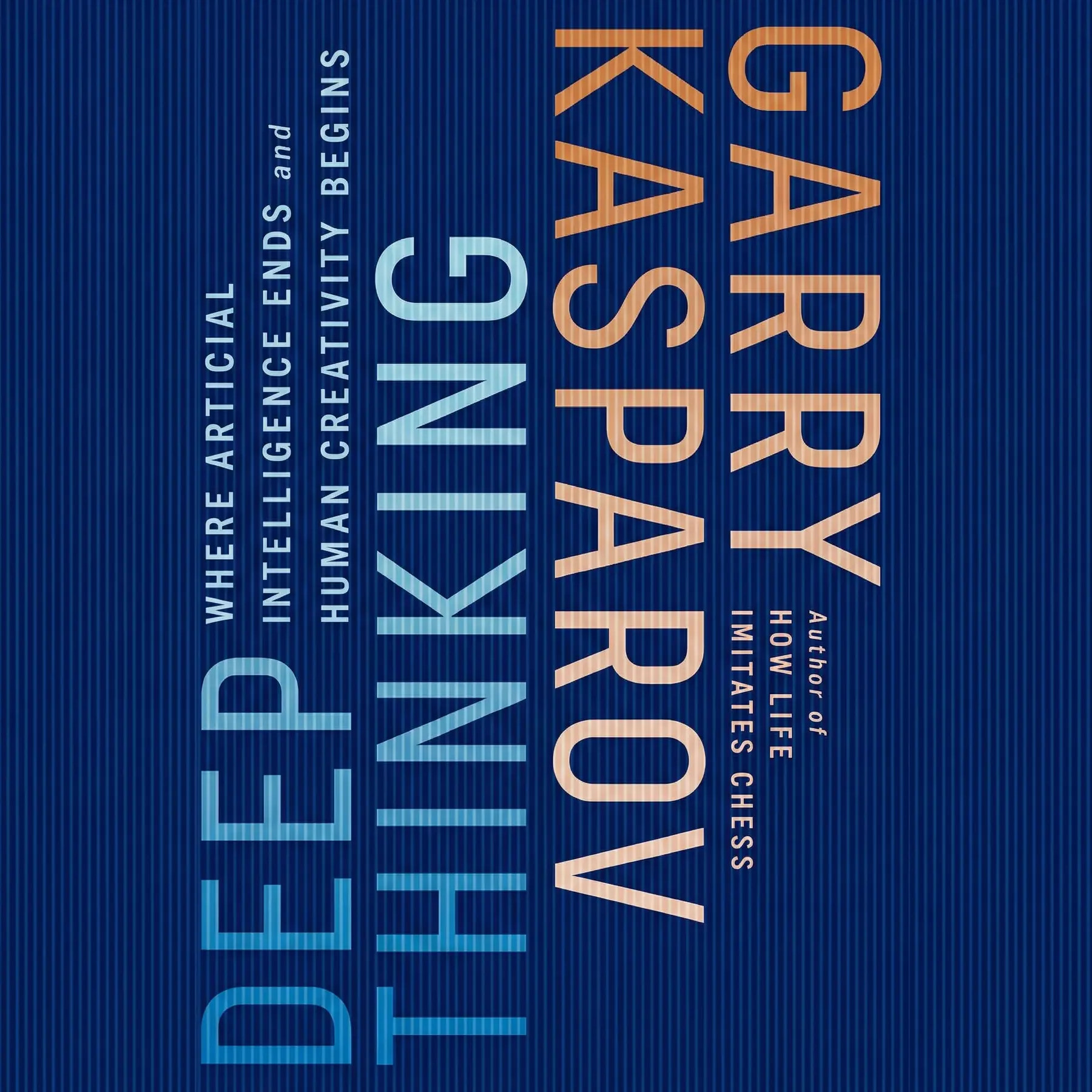
Deep Thinking: Where Artificial Intelligence Ends and Human Creativity Begins
Garry Kasparov, the first world champion beaten by a machine, explains what Deep Blue really proved. He argues that the smart response to intelligent machines is partnership, with humans keeping creativity, curiosity and purpose.
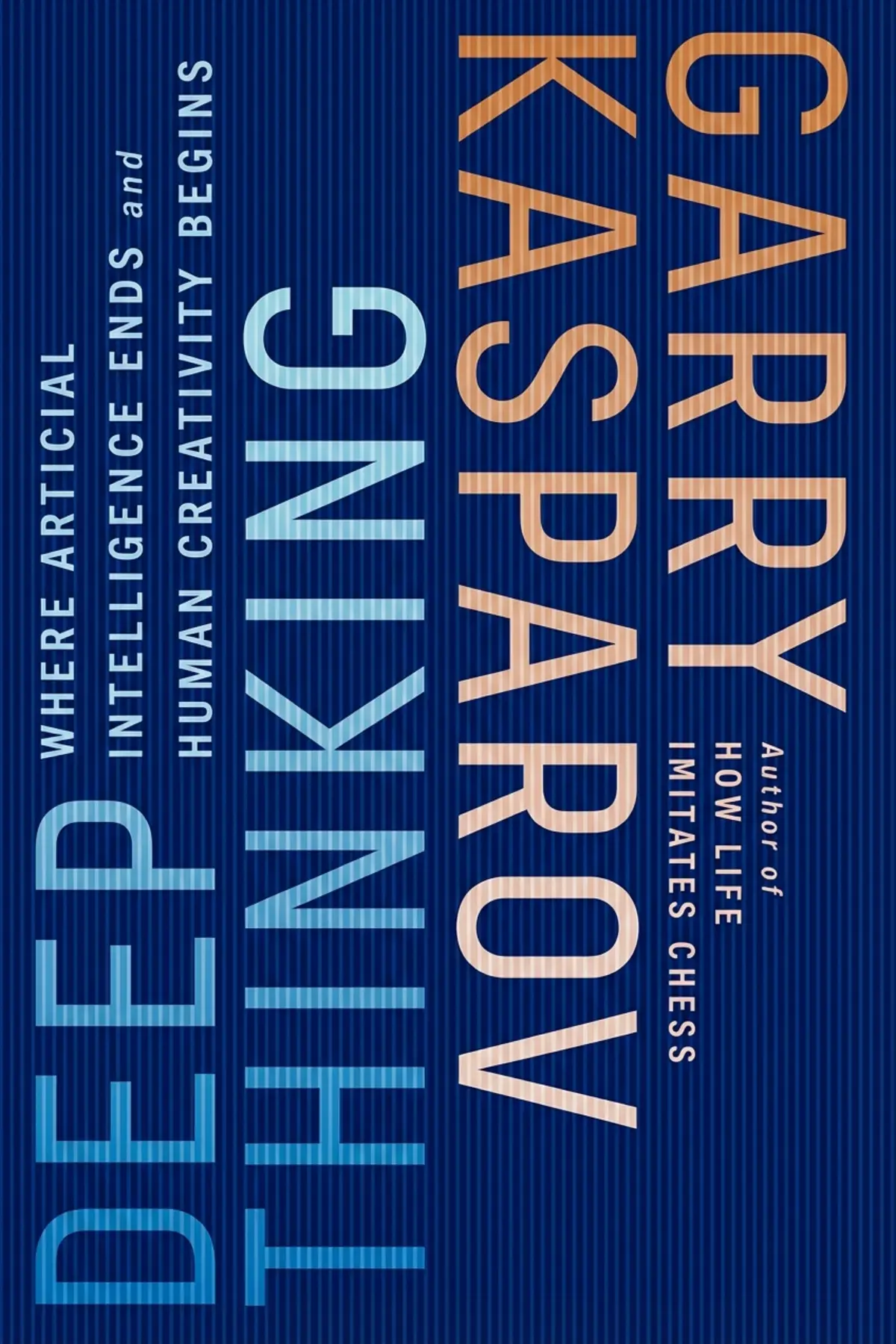
Table of Content
1. Introduction
1 min 03 sec
If artificial intelligence makes you uneasy about your work or your worth, consider the man who faced that fear first. In Deep Thinking, written with Mig Greengard, former world chess champion Garry Kasparov looks back on 1997. That year IBM’s Deep Blue beat him by a single game, and he became the first world champion to lose a match to a machine. His surprising verdict is that Deep Blue was never intelligent. It won by weighing up to 200 million positions a second, and Kasparov judges its way of thinking no smarter than an alarm clock.
His argument runs like this. Machines will beat us at whatever can be calculated, so the winning move is to stop competing with them and start working alongside them. People keep the creativity, curiosity and sense of purpose that machines lack. Ahead are the inside story of computing’s most famous match, a formula for teaming up with machines and a calmer way to think about the jobs automation takes.
2. Tell fast calculation from real intelligence
1 min 47 sec
Computing’s founders thought a chess-playing machine would prove that computers could think. When one finally beat the world champion, the man it beat reached a very different conclusion about what had actually happened on the board.
3. Spot where data-trained machines go blindly wrong
1 min 46 sec
A chess program trained on millions of grandmaster moves played brilliantly, then kept doing something no grandmaster would do. Its odd habit exposes a weakness shared by every tool that learns from examples.
4. Find the human weak spots a machine can cover
1 min 41 sec
One world champion held his title for 27 years by making opponents uncomfortable. That tactic is useless against a computer, and the reason points to the exact places where you could use a machine’s help.
5. Lose to a machine without losing your head
1 min 42 sec
A secret team of grandmasters, a refused team room and two crashes surrounded the most famous match in computing. Years later, Kasparov’s own analysis changed how he judged both the machine and himself.
6. Stop mourning the jobs machines take over
1 min 51 sec
Every wave of machines has erased whole professions, from watchmakers to travel agents. Kasparov’s view of what to do about it will comfort some listeners and annoy others, and it starts with gravediggers.
7. An average player plus a machine wins
1 min 34 sec
The best results in human-machine chess did not come from the strongest player or the strongest computer. They came from a combination most people would bet against, and its lesson applies to any office.
8. Keep the questions and hand machines the answers
1 min 49 sec
Voice assistants already ask you questions, so what is left for people to do? Kasparov draws a line that machines cannot cross, and it has to do with something we do not fully understand about ourselves.
9. Conclusion
1 min 20 sec
Deep Thinking is the story of a defeat that its author slowly turned into advice. Kasparov admits he took the 1997 loss badly: he criticised IBM’s conduct during the rematch, and he later apologised for being ungracious in defeat. Yet by the time of that rematch he had already come to believe that people and machines should work together rather than simply compete. Deep Blue did not think. It counted at enormous speed, and counting is something people can be glad to hand over.
His optimism is practical, and he chose it partly because he never saw any benefit in the alternatives. New technology tends to shock people for a moment before they settle into accepting it, and Kasparov asks for clear thinking in that short gap. If people stay creative and ambitious, he argues, intelligent machines will be as great a boon as electricity. If fear wins, automation and inequality could swamp them. For him, optimism is a self-fulfilling prophecy.
So the next time a tool beats you at a task, look at how it won. Give it the part it does better and invest in the process that connects you to it. Keep the part no machine has, which is deciding what the work is for.
The champion lost his match. The partnership he found afterward is open to anyone.
About this book
What is this book about?
Garry Kasparov was the first world chess champion to lose a match to a computer. IBM's Deep Blue beat him by a single game in 1997. Deep Thinking, written with Mig Greengard, is his full account of that rivalry and of what it taught him about artificial intelligence. He traces chess machines from MANIAC 1, a 1956 computer that could beat only a beginner, to Deep Blue, which won by sheer calculation. In his view it was no more intelligent than an alarm clock. He gives his side of the 1996 and 1997 matches, including IBM's tactics, his own suspicions and his admission that he was a sore loser. He then widens the lens to jobs, machine learning and what stays human. His argument is optimistic and practical. Machines will beat us at whatever can be calculated, so the sensible response is collaboration. An average player with a machine and a better process can beat the strongest machine alone. Humans keep what machines lack: creativity, curiosity and the purpose that decides which questions are worth asking.
Book Information
Who it's for
Using AI at work
Professionals who use AI tools at work and want a sensible way to divide tasks with them.
Worried about automation
Workers worried about automation who want a clear, hopeful view of what stays human.
Curious about Deep Blue
Chess fans curious about the inside story of the Deep Blue matches.
About the Author
Garry Kasparov
Garry Kasparov was born in Baku, Azerbaijan, in 1963. At 22 he beat Anatoly Karpov to become the youngest undisputed world chess champion. He held the title until 2000 and retired from regular competition in 2005. In 1997 IBM's Deep Blue beat him in a match, the first time a machine had done that to a world champion at standard time controls. His other books include the My Great Predecessors series, How Life Imitates Chess and Winter Is Coming. He has worked in Russian politics and human rights, founded the Renew Democracy Initiative in 2017 and speaks to business audiences on strategy and leadership.
Ratings & Reviews
Ratings at a glance
What people think
Listeners find the book accessible and well-constructed, with one listener noting it serves as a must-read for AI enthusiasts. It provides an extensive look at the brain's capabilities, as one listener points out the thorough research. They also value the storytelling; one review focuses on the Deep Blue match while another praises Kasparov’s chess expertise. The writing strikes a careful balance between optimism and realism.
Top reviews
Aim
As a lifelong chess enthusiast, I found Kasparov’s reflections on the "Drosophila of AI" absolutely gripping. He doesn't just recount his games; he dives into the philosophical implications of our relationship with machines. The storytelling regarding the 1997 match against Deep Blue is tense and cinematic, yet he maintains a balanced perspective on why he eventually failed. To be fair, some readers might find the technical chess analysis a bit dense if they aren't players. However, his vision for human-machine collaboration remains incredibly optimistic and practical. This isn't just a bitter memoir about a loss; it's a forward-looking manifesto on how technology can actually amplify our creative potential. Kasparov is as sharp as ever here, blending history with a profound look at the human brain's capabilities.
Show moreAisha
Wow, Garry Kasparov is just as sharp with a pen as he is on the board. This book offers a thorough overview of how machines eventually surpassed human capabilities in the world's most intellectual game. Personally, I loved the way he framed AI as a tool for augmenting human creativity rather than just a threat to our existence. The narrative of his battle against IBM is filled with drama, and the psychological insights are worth the price of admission alone. To be fair, he doesn't shy away from admitting his own flaws and mistakes during that stressful period. It’s rare to find a book that is both a compelling autobiography and a serious look at technology. Highly recommended for thinkers.
Show moreChokdee
Garry provides a unique perspective that only a world champion could offer on the evolution of machine intelligence. This book is beautifully designed and meticulously edited, making it a joy to read from start to finish. I was fascinated by the concept of "Advanced Chess," where humans and computers work together to play better than either could alone. It’s a very practical and mature take on a subject that is often dominated by fear-mongering and doom-and-gloom scenarios. Kasparov’s intellect really shines through in every chapter, especially when he discusses the limits of brute force search and the value of human intuition. If you follow chess or technology, you will find this incredibly rewarding. It’s a truly deep overview of human capability.
Show moreNarumon
After hearing so much about the 1997 match, it was great to finally get the story directly from the source. Kasparov doesn't just talk about winning or losing; he talks about what it means to be human in the age of machines. The book is well-written and maintains a perfect balance between nostalgia and looking toward the horizon. I was particularly struck by his argument that technology should free us to be more creative rather than just making us redundant. Gotta say, the research into the history of AI was much more thorough than I expected from a sports memoir. It’s an instant favorite for me and a must-read for anyone curious about our digital future. His optimism is contagious.
Show moreMattanee
Finally got around to reading this and I was pleasantly surprised by the depth of research involved. Kasparov does a great job of explaining how the human brain functions differently compared to the brute force of a silicon chip. The chapters exploring the psychological pressure of top-level competition were particularly fascinating to me. Look, he is definitely a bit arrogant at times, but he earned that right by being the best in the world for twenty years. The writing strikes a delicate balance between realism regarding job displacement and optimism for the future of humanity. My only real gripe is that the focus on Deep Blue feels a bit repetitive by the end of the book. Still, it is a must-read for anyone interested in the intersection of sports and tech.
Show moreChatri
Picked this up for the AI insights, and I stayed for the incredible history of human-machine competition. Kasparov is an eloquent writer who manages to explain complex algorithms without losing the reader in jargon. I especially liked the section comparing the fear of self-driving cars to the initial public distrust of automated elevators. It shows a deep understanding of human nature and our fear of the unknown. Truth is, the book could have been about 50 pages shorter if he hadn't focused so much on the IBM conspiracy theories. Despite the occasional ego-tripping, there is a lot of wisdom here about how we should prepare for a future shared with intelligent machines. The writing maintains a great pace.
Show moreMarasri
The title is somewhat deceptive because this is much more of a personal memoir than a comprehensive treatise on "Deep Thinking." If you aren't already a chess aficionado, you might struggle through the move-by-move breakdowns of his matches. Frankly, it feels like Kasparov is still trying to justify his loss to IBM, even decades later. There are lingering accusations of human intervention that feel a bit like sour grapes. While the sections on the history of AI are well-written, the machine learning aspects feel slightly outdated by today's standards. I enjoyed the parts about automated elevators and societal shifts, but the book sags considerably in the middle sections. It’s a decent read for history, but maybe not for those seeking cutting-edge IT insights.
Show moreElise
Ever wonder what it feels like to lose your identity to a machine? Kasparov explores this through his own experience, and while the storytelling is compelling, the book lacks a cohesive structure. One minute you’re reading about the Soviet Union’s chess machine, and the next you’re hearing about Siri and Alexa. It’s an interesting mix, but the transition between memoir and tech analysis is often jarring. In my experience, the technical chess talk was a bit too heavy for a general audience. He makes some great points about how we adapt to new technology, but the bitterness regarding Deep Blue’s logs remains a distraction. It’s a fine book, just not the deep AI masterpiece I was anticipating.
Show moreHana
Truth is, I found the first half far more engaging than the second. The history of how programmers tried to "teach" machines to play chess is a fantastic look at early computer science. However, once the book gets into the weeds of the 1997 rematch, it becomes a repetitive loop of complaints and justifications. Kasparov is a genius, no doubt, but his writing reflects a man who is still deeply wounded by his defeat. The segments on "Moravec's Paradox" and how humans and machines can work together are the real highlights. It’s a readable book with some great research, but you have to filter out a lot of personal drama to get to the good stuff. Not much to learn if you're already an expert.
Show moreAnong
Not what I expected at all. I was hoping for a book about modern AI applications in creative fields, but instead, I got a long-winded justification for why a chess player lost a match in 1997. The whole thing reads like one giant excuse, and it's obvious he hasn't moved on from the IBM defeat despite saying otherwise. If you aren't a serious chess player, the technical descriptions of specific moves will be totally lost on you. To be honest, I felt swindled by the promising title and the marketing blurb. The final chapter on the future of AI is interesting, but it feels tacked on at the end as an afterthought. Save your money unless you really love chess history.
Show moreQuestions about this book
What is the main idea of Deep Thinking by Garry Kasparov?
Kasparov argues that Deep Blue beat him through brute calculation, not understanding, and that machines will outdo people at anything that can be calculated. Instead of fearing or fighting them, he says, we should work alongside them. People should focus their effort on creativity, curiosity and purpose, choosing which questions are worth asking while machines supply the answers.
How did Garry Kasparov lose to Deep Blue?
He beat Deep Blue 4 to 2 in Philadelphia in 1996, then lost the 1997 rematch in New York 3.5 to 2.5 after losing the final game. IBM had upgraded the hardware, secretly hired grandmasters to tune the software and put up the $1.1 million prize. Kasparov criticizes IBM’s conduct, yet admits he was a sore loser and later found that Deep Blue had made serious mistakes too.
What does Kasparov say about humans and machines working together?
His formula is that an average player with a machine and a better process beats a powerful machine alone. That player also beats a strong player whose process with the machine is worse. The interface, meaning how the work is shared, matters more than raw skill. He adds that AI has no universal application, so the right kind of collaboration varies from case to case.
Does Deep Thinking say AI will take our jobs?
Kasparov accepts that machines will keep replacing work, from cashiers to parts of law and medicine, and calls that shift the history of civilization. He compares mourning lost jobs to grumbling that antibiotics hurt gravediggers. In his view, slowing automation would help a few people briefly and harm everyone later. The best help for displaced workers is ambitious new technology that creates lasting industries and jobs.
Readers also enjoyed









AUDIO SUMMARY AVAILABLE
Listen to Deep Thinking in 15 minutes
Get the key ideas from Deep Thinking by Garry Kasparov, plus 5,000+ more nonfiction titles.
- 5,000+ titles
- Listen as much as you want
- 7-day free trial
- Cancel anytime









