

A River in Darkness: One Man’s Escape from North Korea
Masaji Ishikawa
 English
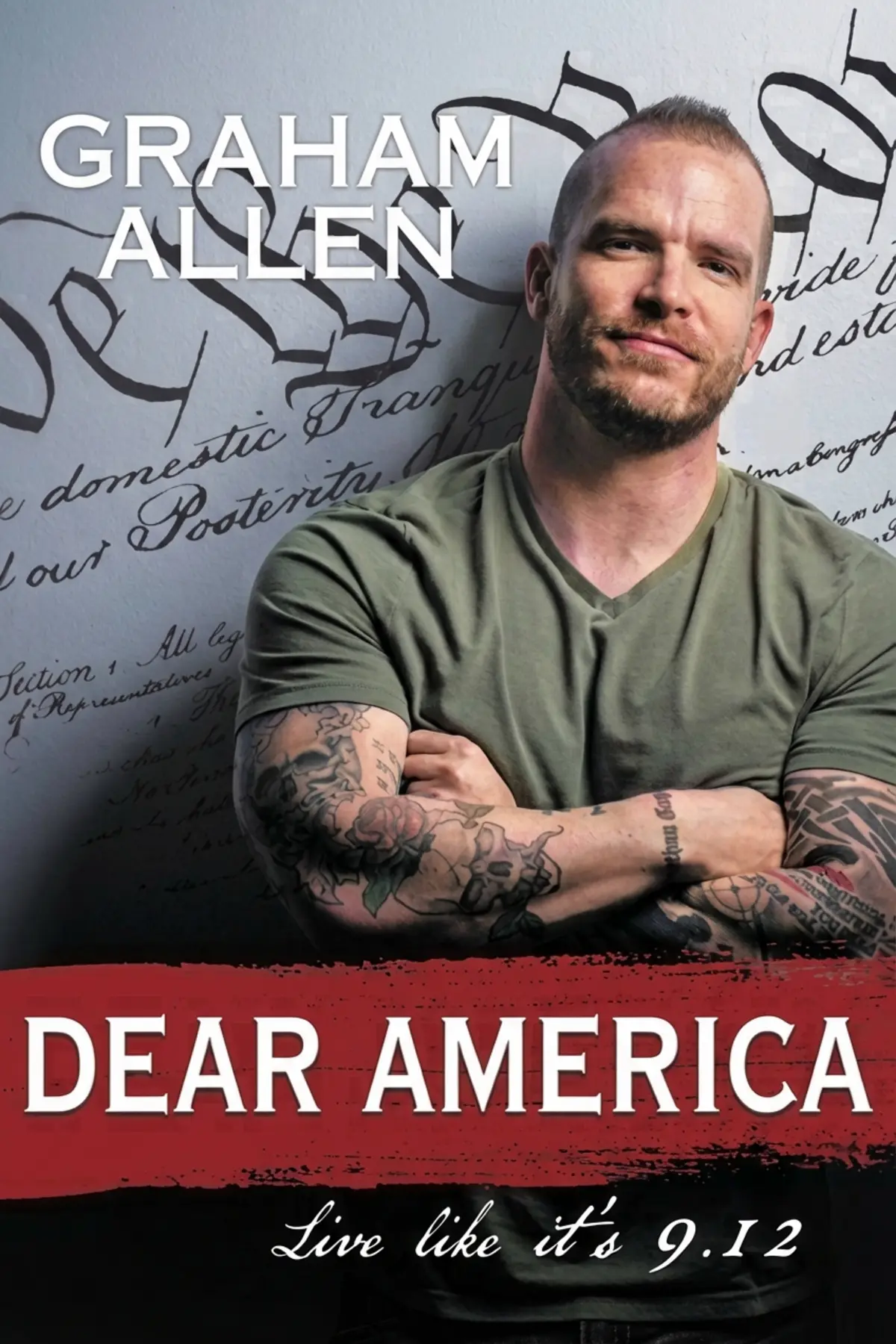
Graham Allen argues that Americans have turned neighbors into enemies. Reviving the unity of September 12, 2001, through community, respectful disagreement and personal responsibility, is in his view the way back.
1 min 09 sec
Many people now treat a neighbor with different politics as an enemy, and Graham Allen thinks that habit is the real danger to his country. In Dear America, the Iraq veteran and podcast host points to a single day as proof that it can change: September 12, 2001. The morning after the attacks, he writes, Americans of every race, party and belief stopped sorting each other and stood together simply as Americans.
Twenty years later, Allen sees that feeling gone, replaced by suspicion, outrage and a focus on the self. His argument is that no single politician caused this. Ordinary people let community, honest disagreement and personal responsibility slip away, and only ordinary people can bring them back.
Along the way he blames frozen dinners and garage doors, defends division as the engine of progress and rereads one famous phrase from the Declaration of Independence. What he offers, whatever your politics, is a habit for the next heated conversation: look first for what you share.
1 min 49 sec
A study of why people join the military points to something larger than recruitment. Allen uses it to argue that a country’s decline rarely has one villain, and that the uncomfortable truth sits closer to home.
1 min 50 sec
A tray of frozen potatoes and a button that opens the garage sound harmless. Allen argues that together they changed how Americans spent their evenings and mornings, and how rarely they spoke to anyone nearby.
1 min 54 sec
Online, many people now treat a different opinion as a threat. Allen looks back at a revolution, a civil war and a vote for women to make a surprising case about what division has done for his country.
1 min 55 sec
One phrase in the Declaration of Independence is often misheard. Allen reads it alongside an old Army recruiting slogan and draws a hard message about entitlement, failure and who is responsible for how your life feels.
2 min 01 sec
On one morning in 2001, the labels that usually split people stopped mattering. Allen argues that what happened that day is a better guide to the country’s future than the date it was founded.
1 min 09 sec
Allen’s book is a call to remember one morning. Beneath the complaints about frozen dinners, social media and participation trophies sits a single claim. A country holds together when its people treat each other as fellow citizens first and opponents second, and that choice sits with ordinary people.
He ends on a concrete habit: step away from social media. He sees it as a stage for petty fights and a source of unhappiness, and he cites a study from Brown University that found heavier Facebook use went along with feeling worse. Logging off, he suggests, may help your mind as much as your country.
The rest of his advice grows out of his argument. Win back the small daily conversations that convenience took away, at the table or in the driveway. Let people disagree with you, and defend their right to do it. Treat happiness as something you chase, never something you are owed.
Whatever a listener thinks of his politics, the image he leaves is easy to keep: strangers who disagreed about nearly everything, standing side by side on the day after the worst day.
Graham Allen believes his country is in trouble. In his view, Americans have stopped seeing fellow citizens with different views as countrymen and started treating them as enemies, while patriotism fades and free speech comes under pressure. He does not blame a single politician or party. The drift, he argues, was a shared one. Allen traces it to ordinary changes. TV dinners emptied the family table in the 1950s, electric garage doors ended the morning chats between neighbors, and social media rewarded outrage and echo chambers. He defends division as the force behind American progress, from the Revolution to the end of slavery and women's right to vote. He also argues that the Declaration of Independence promises only the pursuit of happiness, never happiness itself. His answer is the spirit of September 12, 2001, the day after the attacks, when people of every background stood together as Americans. Readers get a blunt, patriotic case for civil discourse, personal responsibility and a shared identity that can outlast any argument.
Readers worn out by political fights who want a case for disagreeing without hating.
Parents and teachers thinking about entitlement, failure and what children should learn about effort.
Patriotic Americans who remember September 12, 2001 and want that sense of unity back.
Graham Allen is an entrepreneur from rural Mississippi who served twelve years in the military, including two deployments to Iraq. He found that social media let him reach a wide audience, and he went on to host the podcast Dear America. He also wrote America 3:16: Family, Faith, Freedom, Forever.
Listeners find this an exceptional book that features facts backed up with facts. They value the way the material is paced, while one listener highlights it as a heartfelt look at the country.
Graham Allen brings the same heat to the page that he does to his viral videos. This book is an amazing read that feels like a heartfelt look at the current state of our country. I really appreciated how he backed up his observations with solid facts throughout the chapters. The pacing is extremely fast, which makes it feel like you are sitting right there listening to one of his rants. While some might find his style aggressive, I found his passion for the day after 9/11 unity to be truly inspiring. We definitely need more voices like this to help us get back on the right track as a nation.
Show moreAfter hearing about this book on social media, I was eager to see if it lived up to the hype. The concept of living like it is the day after 9/11 is a truly powerful idea. We were a united country back then, regardless of our individual issues or different backgrounds. Graham captures that sentiment perfectly while offering a very heartfelt look at where we are headed now. The pacing is excellent and keeps you engaged from the very first page until the final chapter. Truth is, we need to stop the bickering and remember that America is always worth fighting for today.
Show moreFinally got around to finishing this, and I must say the facts presented are completely undeniable. This book offers a heartfelt look at our nation and provides actionable advice for every single citizen. I was particularly impressed by the research showing how social media impacts our collective mental health and happiness. Graham Allen does not hold back when describing the negligence that has led to our current political state. The pacing is great and the book moves along quickly without ever feeling boring or overly academic. It is a must-read for anyone who believes that America is still a country worth fighting for today.
Show moreAs someone who misses the unity we felt years ago, this book really hit home for me. Graham Allen provides a thorough look into the dumpster fire that our modern political landscape has become. He explains how we have become the epitome of everything our forefathers tried to fight against originally. The facts are backed up with more facts, which makes his arguments feel very grounded and difficult to ignore. I loved the way he challenged us to set aside our differences and unite under one label. This is a well-timed and topical book that every American should probably take the time to read.
Show moreThis book is definitely a wild ride that mirrors Graham’s signature fast-talking style perfectly. I have been a fan for a while, but I have to admit the writing itself can be a bit messy. The point often gets clustered because his brain seems to work way faster than his fingers can type. There are quite a few typos and grammatical errors that a better editor should have caught before the release. However, the content regarding our government’s negligence is eye-opening and provides a necessary wake-up call. To be fair, you will love this if you share his conservative views on taking back the country.
Show moreEver wonder where we went wrong as a nation and how we can finally fix it? This book dives deep into the negligence of our citizens and the resulting chaos in our current government. Graham’s tone is very aggressive and direct, but it comes from a place of genuine love for the country. Some of the points are repetitive, yet they serve to drive home the importance of his core message. I found the pacing to be quite fast, which fits his personality as a professional talker and advocate. It is a solid read for anyone who wants to understand the conservative perspective on modern American life.
Show moreThe chapter on social media alone makes this purchase worthwhile for any concerned citizen today. Graham highlights how these platforms serve as playgrounds for petty disputes that breed nothing but unhappiness. He references a study from Brown University to prove that Facebook usage often correlates with feeling worse about life. This section felt like a very heartfelt look at why we are so divided as a people right now. Not gonna lie, the pacing is a bit frantic, but the actionable advice is something we should all consider. We need to log off and start living in the real world to save our mental health.
Show morePersonally, I found the message powerful but the delivery was a bit too scattered for my personal taste. Graham is a talker by trade, and that definitely comes across in the way he structured these chapters. He often jumps between topics so quickly that it can be hard to keep up with his logic. While I agree with his views on social media, the book lacks the focus I usually expect from non-fiction. There is a lot of passion here, but the self-serving ideology can sometimes get in the way of the facts. It is an okay read if you already enjoy his videos, but others might find it frustrating.
Show moreTo be fair, the author’s passion is infectious even if the actual grammar is a total mess throughout. As an avid reader, the constant typos and lack of professional proofreading drove me a little bit crazy. It honestly seems like the editor just gave up on trying to polish Graham’s naturally rambling narrative voice. While the facts are backed by facts, the structure gives the reader a slight case of mental whiplash. He starts on a strong topic and then suddenly veers off course without much warning or transition. It is an informative read, but it could have been much better with a more disciplined approach to writing.
Show moreLook, I wanted to like this, but the massive ego on display is just too much to handle. The author admits he has not really evolved since high school, and it shows in his self-serving ideology. There are so many contradictions in his arguments that it becomes difficult to take the core message seriously. While he makes a few decent points about social media, he mostly just rambles and can't stay focused. Frankly, it feels more like a long-winded social media post than a well-thought-out book. I almost gave it an extra star for the comedic value of his over-the-top confidence.
Show moreAllen argues that Americans have let their country slip away by turning on one another. He blames no single party. Instead he points to a long drift from community toward isolation, from honest disagreement toward intolerance and from responsibility toward entitlement. His remedy is to recover the unity Americans felt on September 12, 2001, when people of every background stood together as citizens first.
It refers to the day after the September 11 attacks. Allen recalls that differences of party, wealth, race and faith faded as people mourned together and stood as Americans. Living like it is September 12 means keeping that shared identity every day, through civil discourse and patriotism, without needing another tragedy to bring people together.
Allen argues that division has driven American progress. The country began with a revolt against English rule, the Civil War ended with the abolition of slavery, and the Nineteenth Amendment in 1920 gave women the vote. In his view, groupthink blocks progress, while respectful disagreement is a legal freedom worth celebrating, and free speech covers views you dislike too.
Allen’s advice is practical. Spend less time on social media, which he links to petty fights and unhappiness, citing a Brown University study on Facebook use. Rebuild everyday contact, such as shared meals and talks with neighbors. In arguments, aim to understand rather than silence. And treat happiness as something you pursue through effort, not something anyone owes you.
Masaji Ishikawa

John Rawls



Miles Taylor



Tracy Rosenthal

Jessica Valenti

Yanis Varoufakis
AUDIO SUMMARY AVAILABLE
Get the key ideas from Dear America by Graham Allen, plus 5,000+ more nonfiction titles.









