

A River in Darkness: One Man’s Escape from North Korea
Masaji Ishikawa
 English
The founders of Fusion GPS tell how their paid research into Donald Trump's business deals led to the Steele dossier, and why they think its warning about Russian election interference still matters.
59 sec
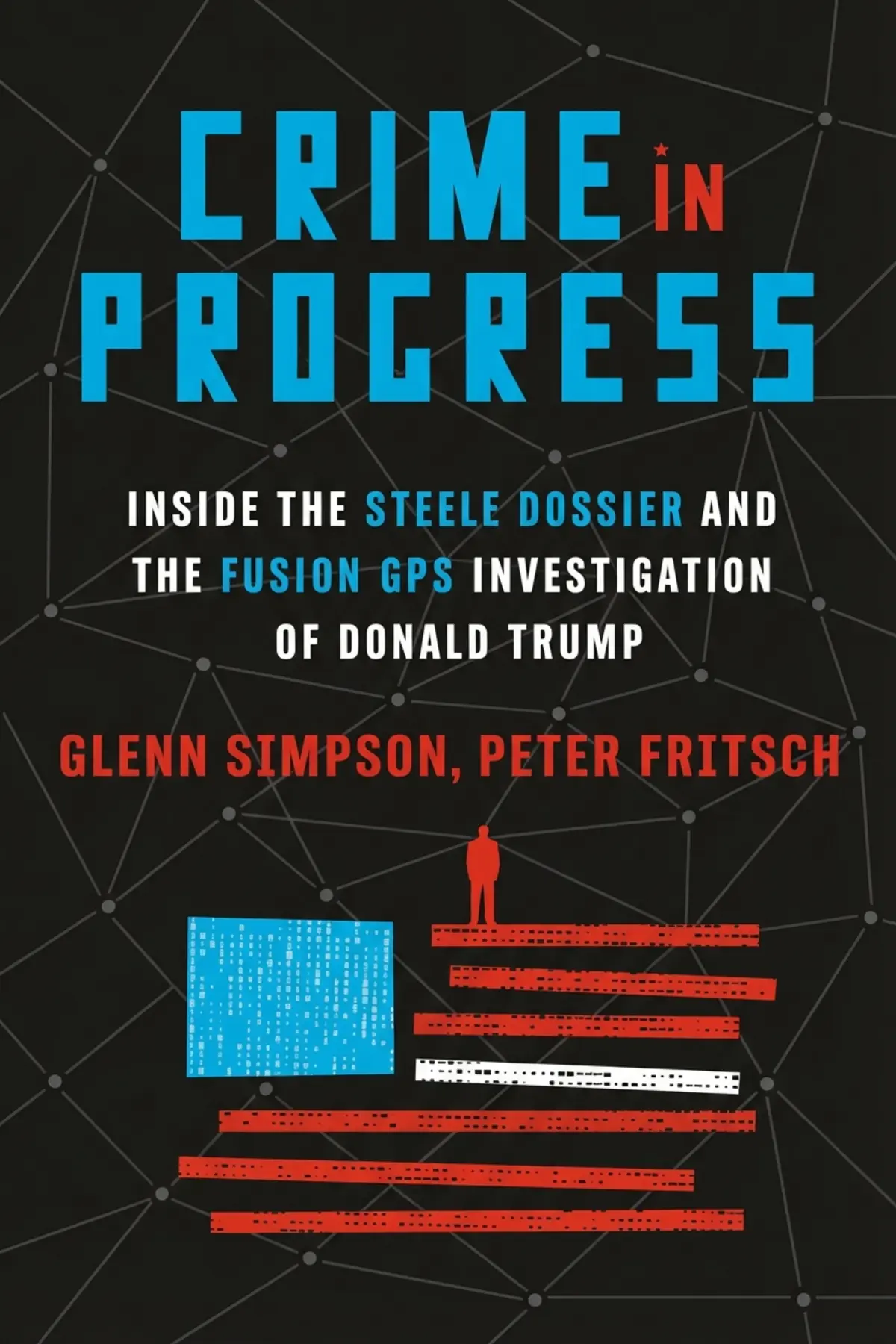
The Steele dossier, whose accusations eventually traveled around the world, grew out of an ordinary research job, and the first client paying for that job was a conservative publication. In Crime in Progress, Glenn Simpson and Peter Fritsch, two former Wall Street Journal reporters who founded the research firm Fusion GPS, tell how that job grew into FBI inquiries, a special counsel and a global scandal.
If the Trump and Russia story reached you as a blur of leaks and denials, their account puts it in order: who hired whom, what was found, who was told and what happened next. Their argument is that a small piece of paid opposition research exposed a real Russian effort to sway the 2016 election. The warning still stands, they say, even though some of the dossier’s claims were never confirmed.
Expect a fast inside story, the authors’ own reading of the Mueller report, and a clearer sense of why true information so often fails to reach the public in time.
1 min 25 sec
Most opposition research ends in a few forgotten news stories. This job began the same way, for a client few would guess, and nobody involved expected it to reach a sitting president.
1 min 40 sec
One court case proves almost nothing about a businessman. Read hundreds side by side, and a repeating shape can appear, along with a $50 million payment routed through a small country nobody expected.
1 min 56 sec
A two and a half page memo from a former British spy landed on Fusion’s desk with claims so serious that its author felt he could not keep it inside a campaign. Then the FBI went silent.
2 min 08 sec
By autumn 2016, US intelligence had concluded who was behind the hacked emails. On the day the government said so publicly, two louder stories broke and pushed that finding out of the headlines.
1 min 44 sec
A copy shared for one senator’s eyes only ended up photographed by a reporter. The public finally paid attention, but the man who wrote the reports had to go into hiding.
1 min 52 sec
Congressional chairmen, a subpoena for bank records and a lawsuit from the president’s own lawyer all came at Fusion. One strange coincidence made the firm look far more suspicious than it was.
1 min 37 sec
The first public verdict on the special counsel’s findings came from the president’s own attorney general. The authors argue the report itself said something quite different, and explain why it still felt unfinished.
1 min 13 sec
The book rests on an irony. Simpson and Fritsch could write it only because Trump and his allies in Congress pursued Fusion so hard, through lawsuits and subpoenas, that confidential material entered the public record. The effort to discredit the investigators handed them their evidence.
What their account adds up to is a portrait of how information travels in a democracy. A trail of failed hotel deals led to a former spy’s sources, then to the FBI, a senator’s office, a news website and a special counsel. At every stage, timing and trust shaped the outcome as much as the facts did.
The book supports a few habits for anyone following public affairs. When a big story breaks, ask where it started, who paid for it and what evidence would confirm it. When an official summary appears, find out what the inquiry was allowed to examine. And keep established claims apart from unverified ones, as the authors do with their own dossier.
Their last word is a warning. What happened in 2016, they argue, could happen again, and the alarm they raised then has not grown any less urgent.
In 2015, two former Wall Street Journal reporters who ran a small research firm in Washington took on what looked like a normal job. They would dig through Donald Trump's lawsuits and business deals for a client hoping to stop his run for the Republican nomination. Within a year the work had passed to a Democratic-linked law firm and a former British spy named Christopher Steele, and it had reached the FBI. In Crime in Progress, Glenn Simpson and Peter Fritsch give their inside account of that investigation. They cover the pattern they say they found in Trump's failed developments, Steele's alarming first report and his struggle to get officials and reporters to take it seriously. They also cover the BuzzFeed publication that made the dossier world famous, and the congressional and legal attacks that followed. Readers get the whole sequence in clear order, from the 2015 primaries to the Mueller report in 2019, along with the authors' argument about what that report really showed. They also explain why they believe the threat they warned about in 2016 has not gone away.
Readers who followed the Trump and Russia headlines and want the whole sequence in one clear order.
Journalists, researchers and analysts curious how open-source document work turns into intelligence.
Anyone weighing the Mueller report and the Steele dossier who wants the investigators' own account.
Glenn Simpson and Peter Fritsch were reporters at The Wall Street Journal before they left journalism and co-founded Fusion GPS, a Washington research firm, in 2010. The firm runs open-source investigations for businesses and law firms and opposition research for political candidates. Simpson also held a senior fellowship at the International Assessment and Strategy Center and co-wrote Dirty Little Secrets with political scientist Larry Sabato in 1996. Their account of the Trump investigation became a New York Times bestseller.

Listeners view this work as a vital piece that is thoroughly documented and expertly composed, with one listener remarking that it unfolds like a political suspense novel. They value its credibility; one listener specifically notes how it uses facts to debunk conspiracy theories. The storytelling style earns high marks, with one listener characterizing the account as a tale of patriotic service and bravery. Although listeners find the content gripping, some find it frightening.
Picked this up thinking it would be dry investigative reporting, but it is actually a white-knuckle ride through the dark side of international finance. Simpson and Fritsch write with the clinical precision you would expect from former Wall Street Journal reporters, yet the narrative flow feels more like a high-stakes political thriller than a non-fiction account. The depth of their research into Trump’s business dealings is staggering, connecting dots that the mainstream media often missed during the 2016 cycle. It’s fascinating to see how their focus shifted from standard opposition research to a massive web of Russian influence. While some parts are genuinely scary regarding our national security, the transparency about their process is refreshing. This isn't just a book about a dossier; it’s a masterclass in following the money when everyone else is looking at the headlines. I found the level of detail regarding court filings and public records particularly impressive, even if the sheer number of names can get overwhelming at times.
Show moreThe sheer level of detail in this account makes it feel more like a primary historical document than just another political memoir. I was struck by how Simpson and Fritsch managed to strip away the conspiracy theories to show the mundane, yet terrifying, reality of financial corruption. It reads as a story of service to the country, highlighting how private citizens can sometimes uncover truths that government agencies are too slow to grasp. The authors don’t just make claims; they show you the exact paper trail they followed through decades of bankruptcies and shady real estate deals. Some might find the tone a bit aggressive, but given the attacks they faced, their anger feels entirely justified to me. This book effectively dismantles the narrative that the Russia investigation was built on nothing but a single dossier. It’s a dense read that requires focus, but the payoff is a much clearer understanding of our current political landscape. Highly recommended for anyone who values evidence over rhetoric.
Show moreAs someone who followed the news cycles closely, I was genuinely surprised by how much I didn't know about the actual timeline of these events. This isn't just a rehashing of Rachel Maddow's greatest hits; it’s a deep dive into the 'how' and 'why' behind the headlines. The authors explain the mechanics of their research firm, Fusion GPS, with a level of clarity that makes complex investigations feel accessible to the average reader. I loved the early chapters about their time at the Wall Street Journal because it sets the stage for their investigative mindset. They aren't just activists; they are reporters who know how to dig through the mud. The book does an excellent job of showing how the Russian interference was a multi-pronged effort that began long before anyone took Trump seriously as a candidate. It’s a dense, fact-heavy book that manages to stay engaging from start to finish. Truly an important read for anyone who cares about the integrity of our elections.
Show moreWow, this is an absolute masterclass in investigative journalism from two guys who clearly know how to follow a paper trail across multiple continents. I’ve read a lot of books about the 2016 election, but this one feels the most grounded in actual, verifiable facts rather than just punditry. The way they describe the process of 'throwing a line in the water and catching Moby Dick' is both dryly funny and incredibly revealing. It’s not just about Trump; it’s about the entire ecosystem of enablers, lobbyists, and fixers that allow corruption to flourish in Washington. The writing is incredibly taut, almost like a noir novel, which makes the heavy subject matter go down much easier. I appreciated that they didn't shy away from the more controversial aspects of the Steele dossier, even while explaining its limitations. If you want to know the real story behind the headlines, this is the book you need to pick up. It's a heavy lift, but absolutely worth the effort.
Show moreAfter hearing Simpson and Fritsch on various podcasts, I expected a rehashing of familiar talking points, yet the book offers a much deeper dive. The historical context they provide regarding the fall of the Soviet Union and the rise of the oligarchs is essential for understanding why Russia cared about the 2016 election. They do a fantastic job of explaining the 'why' behind the 'what,' showing how financial interests often trump political ideology in the world of high-stakes lobbying. The book is well-articulated and moves at a clip, never getting too bogged down in the legalese of the various lawsuits they were involved in. I found the sections on Paul Manafort particularly eye-opening, especially his long history of working for foreign dictators. It’s a sobering look at the state of our union, but also an inspiring one in the way it champions the importance of the free press and independent research. This belongs on the shelf of anyone trying to make sense of the last decade.
Show moreEver wonder how a tiny research firm like Fusion GPS ended up at the epicenter of a global political firestorm? This book provides a meticulously documented answer that relies far more on boring court depositions than salacious rumors. To be fair, the authors' frustration with how they were treated by Congress occasionally leaks into the prose, which might turn off some readers looking for total neutrality. However, the factual foundation is hard to argue with if you actually take the time to read the footnotes. They do a great job of explaining why they hired Christopher Steele and how the investigation evolved naturally from domestic concerns to foreign interference. My only real gripe is that the middle chapters drag a bit when they dive deep into specific Russian oligarchs. Still, it is an essential piece of the puzzle for anyone trying to understand the 2016 election timeline. It definitely dispels the idea that this was all just a partisan 'witch hunt' from day one.
Show moreFinally got around to reading this and the biggest takeaway isn't the salacious headlines, but the systemic corruption found in plain sight. Most people fixate on the 'Pee Tape' or Steele, but the real meat of this book is the financial forensic work that Simpson and Fritsch performed. They lay out a convincing case that the warning signs were there years before the 2016 election even started. The writing style is punchy and direct, which helps navigate the complex web of shell companies and offshore accounts. Frankly, it’s a bit depressing to see how easily foreign interests can navigate our legal systems. While I appreciated the insider perspective, there were moments where the authors seemed a little too convinced of their own righteousness. A bit more humility regarding the errors in the initial dossier would have made this a five-star read for me. Regardless, it is a fascinating look at the intersection of private intelligence and public policy.
Show moreNot what I expected; it is a terrifying look at how easily our democratic systems can be manipulated by those with enough money and zero morals. The authors come across as very intelligent but also very embittered by the way they were dragged through the mud by partisan politicians. You can feel the tension in the writing as they describe being followed and harassed during the height of the investigation. While the book is meticulously researched, the narrative can be a bit one-sided at times, especially when discussing their interactions with the Clinton campaign. They don't spend much time reflecting on the potential pitfalls of their business model. However, the actual evidence they present regarding the ties between the Trump campaign and Russian actors is compelling and well-structured. It’s a scary book because it shows how vulnerable we are to disinformation campaigns. I’d recommend it, but maybe don’t read it right before bed if you’re already feeling anxious about politics.
Show moreTo be fair, while the information presented here is often staggering, you cannot easily ignore the reality that these guys were essentially high-priced bounty hunters for political dirt. The book is an interesting inside look at the 'opposition research' industry, but it feels a bit like they are trying to retroactively polish their reputations. They are very open about their work for Republican clients initially, which adds some credibility, but the transition to Democratic funding is handled with a bit of a defensive tone. The writing is sharp and the pace is fast, yet I kept waiting for more self-reflection on their role in the media circus. It’s a valuable historical document for the library, but one must keep in mind the massive sums of money involved in this type of work. The 'spy novel' vibe is fun, but it sometimes masks the more disturbing aspects of how our political system functions today. Worth a read for the facts, just keep your guard up.
Show moreLook, I wanted to like this for the 'inside baseball' perspective, but the authors are so clearly embittered that the objectivity vanishes halfway through. They claim to be simple researchers, but they were paid millions by political campaigns to find dirt, and that bias colors every single page of this narrative. It feels like a long-winded exercise in self-justification where they skip over anything that makes them look like partisan actors. A quick search of the events they describe shows they are occasionally guilty of lying by omission regarding their own ties to the people they were supposedly 'investigating.' The writing is fine, and the thriller elements are there, but the lack of transparency about their own financial motivations is a dealbreaker for me. If you’re going to read this, do it with a heavy dose of skepticism and a library card so you don't have to give them your money directly. It's more of a fairytale than a factual account.
Show moreIt is the inside account of Fusion GPS, the Washington research firm founded by Glenn Simpson and Peter Fritsch, and its investigation of Donald Trump from 2015 to 2019. The authors describe digging into Trump’s business record, hiring former British spy Christopher Steele, the creation and leak of the Steele dossier, the congressional attacks on their firm, and their reading of the Mueller report.
According to the authors, Fusion’s Trump research was first funded in 2015 by the Washington Free Beacon, a conservative outlet run by Republican billionaire Paul Singer. After Trump’s nomination became clear in 2016, the law firm Perkins Coie, through Democratic lawyer Marc Elias, became the client. Fusion then hired Steele in May 2016. After the election, the work continued unpaid and later through The Democracy Integrity Project.
Simpson and Fritsch argue that Attorney General William Barr’s summary played down a report that did not clear Trump and confirmed Russia tried to help him win. They say it felt incomplete because a sitting president cannot be charged under Justice Department policy, and because Mueller examined election interference rather than Trump’s wider Russian ties. They accept that the kompromat claim has been hard to verify.
The authors hold that the dossier’s core claim, a strong Russian effort to sway the 2016 election toward Trump, is now well established, whether or not Trump took part. They acknowledge that the most sensational allegation, the claimed compromising tape, has proved much harder to verify. They point to Michael Cohen’s later cooperation with Mueller as an example of their reporting holding up.
The book shows how true information can fail to reach the public when timing works against it, as on October 7, 2016, when news of Russian hacking was buried under other stories. It suggests asking who funded a report, what an official inquiry was allowed to examine, and which claims are confirmed. The authors also warn that the interference they described could happen again.
Masaji Ishikawa

John Rawls



Miles Taylor



Tracy Rosenthal

Jessica Valenti

Yanis Varoufakis
AUDIO SUMMARY AVAILABLE
Get the key ideas from Crime in Progress by Glenn Simpson, plus 5,000+ more nonfiction titles.









