First Bite: How We Learn to Eat
Bee Wilson
 English
 ไทย
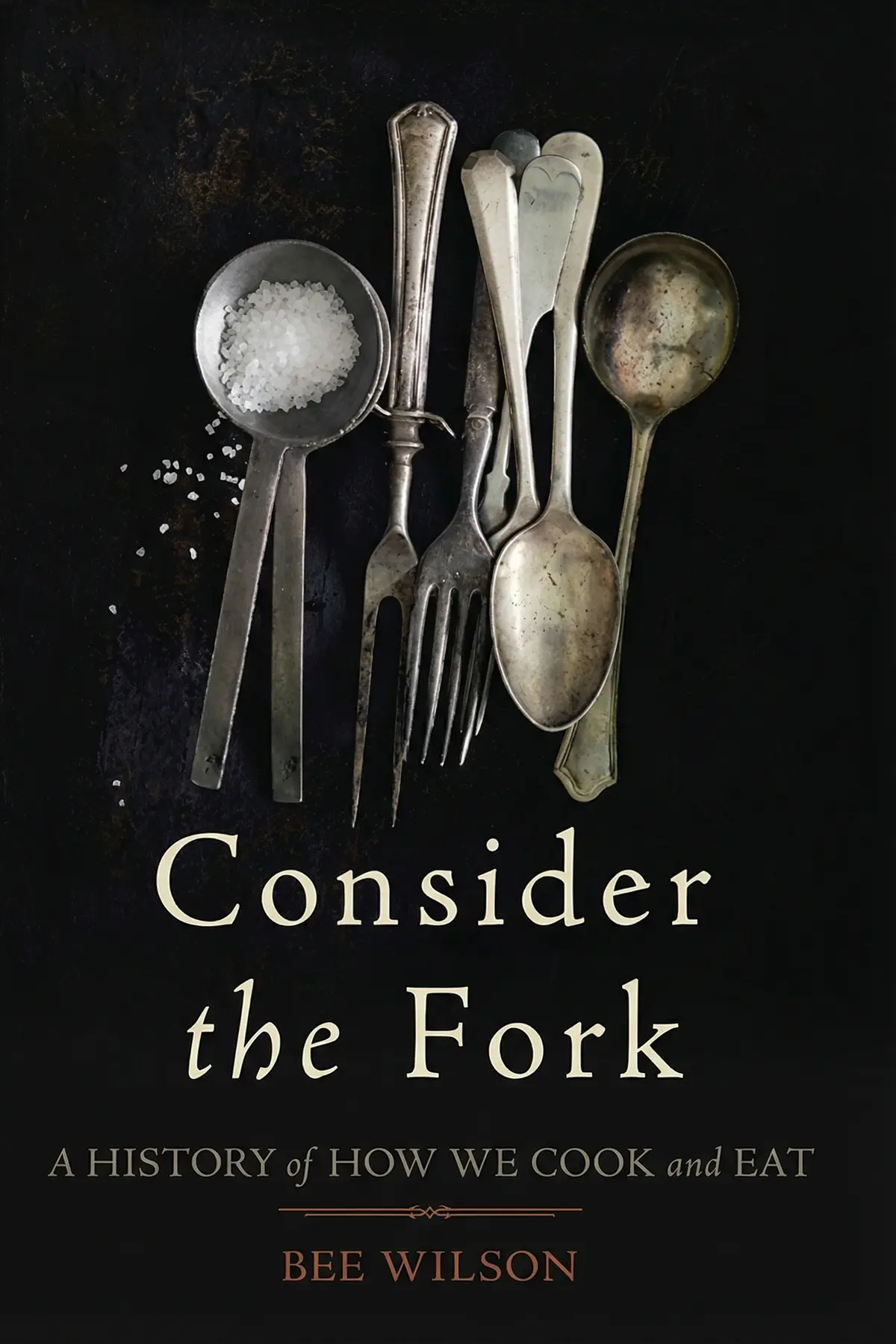
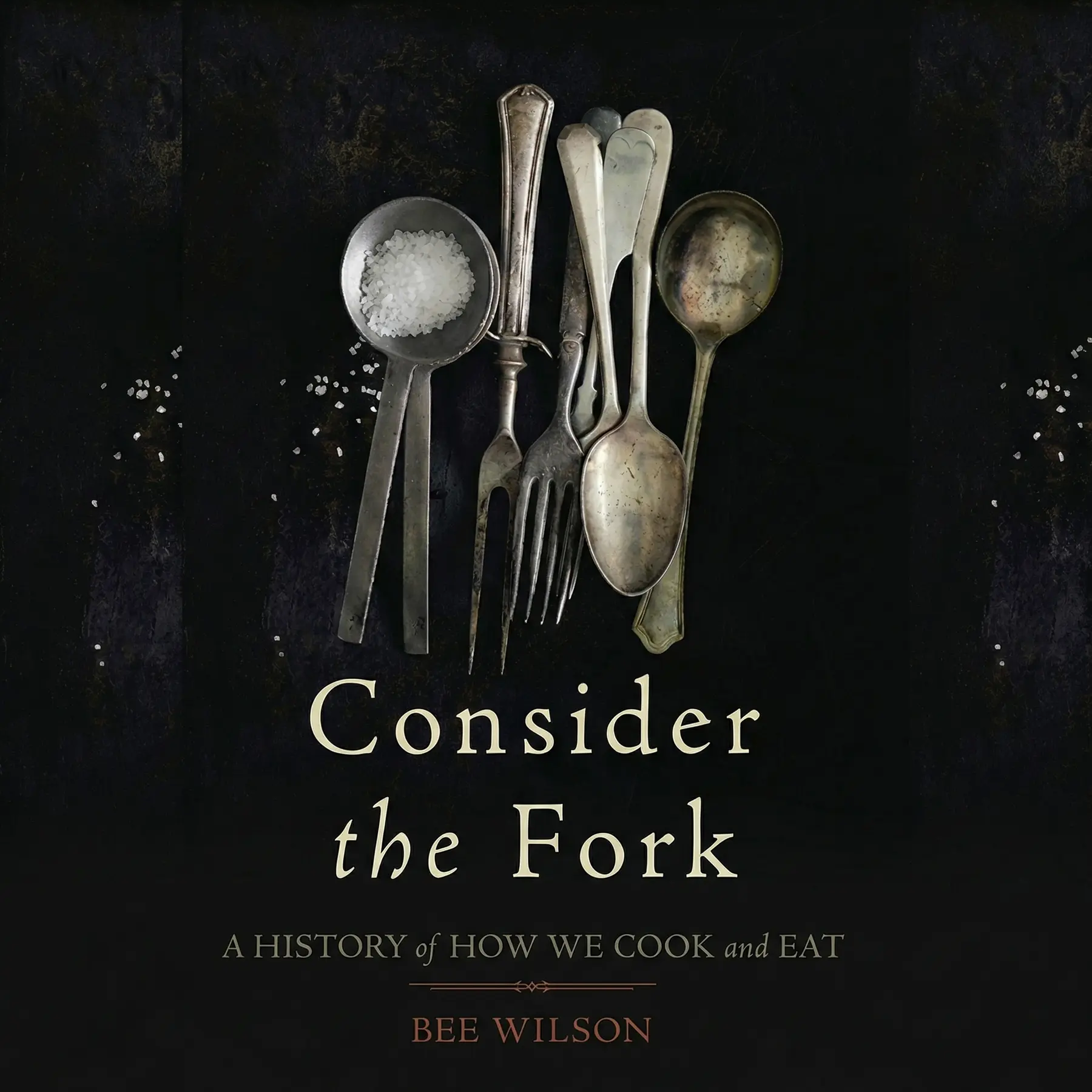
Shows how ordinary kitchen tools, from the first cooking fire to the fridge and the table knife, shaped human brains, teeth, manners and tastes, and why the way we cook changes so slowly.
1 min 03 sec
Most of us cook with tools we never think about: a pan, a knife, a fridge humming in the corner. In Consider the Fork, historian and food writer Bee Wilson shows that these ordinary objects carry a startling history, beginning with fire. Learning to cook with it, roughly 1.8 million years ago, may be what helped turn apes into humans, because cooked food gave our ancestors more energy for a growing brain.
Wilson’s case is that the way we cook does more than change what lands on the plate. Kitchen technology has kept people alive, reshaped our teeth, rewritten our manners and decided which foods feel normal. It also changes far more slowly than inventors expect.
Follow her through fire, pots, ice, knives, table customs and old ways of measuring, and the next time you stir a sauce or open the fridge, you will see a long chain of human choices behind the gesture, along with a reason to trust your own judgment at the stove.
1 min 56 sec
The kitchen flame looks like a convenience, but anthropologists see it as a turning point for the whole species. It also burned, choked and overheated the people who tended it, sometimes to strange extremes.
1 min 37 sec
For most of history, losing your teeth could mean slowly starving. One unglamorous invention changed those odds, and it also turned a poisonous root into a food that millions depend on.
1 min 38 sec
The fridge feels as old as the kitchen itself, yet one wealthy country had barely adopted it by the late 1950s. Its arrival changed how often people shop and even which foods feel ordinary.
1 min 38 sec
Archaeologists noticed that people in old Western skeletons bite differently from people today. The likely cause, as the book tells it, lies in the knife and fork that arrived with table manners beside the plate.
1 min 31 sec
A habit that looks perfectly polite at home can puzzle or offend hosts somewhere else. Even giving up cutlery entirely does not free a diner from rules, and one of them concerns which hand you use.
1 min 45 sec
Before clocks and thermometers, cooks timed sauces and tested ovens with methods that sound absurd today, one of them painful. Their story says something useful about how much precision a home kitchen really needs.
1 min 47 sec
Futurists once promised we would be living on nutrient pills by the year 2000. Most of us still stir soup in a pot, and Wilson traces that stubbornness to reasons rooted in survival, practicality and love.
1 min 15 sec
Wilson’s history turns the kitchen into a museum you use every day. The flame that once fed a growing brain now sits behind an oven door. The pot that saved toothless people from starving still makes the morning porridge. The fridge decided that yoghurt belongs on Western breakfast tables, and the table knife changed the way our teeth meet. None of these tools is neutral. Each one changed what people ate, and in doing so changed who they were.
The same story explains why kitchens feel so slow to change. We are wary of strange food, loyal to tools that work and attached to the dishes of our families, so passing fashions come and go while the pot and the knife remain.
Her account also suggests what to do differently. At an unfamiliar table, watch your hosts and copy how they serve, hold and even sound, because good manners are local. At your own stove, treat the recipe as a guide, then taste, look and adjust, the way cooks once timed a sauce with a prayer and tested an oven with a bare hand.
Cooking began as survival and grew into an art, and the art belongs to whoever is holding the spoon.
Few of us think about the pan on the stove or the fork in our hand. Historian and food writer Bee Wilson argues that we should, because these everyday objects hold a long story of survival and invention, and they have changed people as much as they have changed meals. Wilson follows the tools one by one. Cooking with fire may have helped turn apes into humans. Pots let people without teeth survive and made poisonous plants safe. The refrigerator changed shopping and turned yoghurt into a Western staple. Table knives and forks even reshaped the way our front teeth meet. Along the way she shows how table manners differ across cultures and how cooks once measured time with prayers and heat with their bare hands. Readers get a fresh way of seeing their own kitchen, a set of stories worth retelling at any dinner table, and an explanation of why new food fashions rarely replace the old pot and knife.
Curious readers who want the hidden history behind everyday objects like the pan, the fridge and the fork.
Home cooks who rely heavily on recipes and want more confidence in their own judgment.
Travelers and professionals who share meals across cultures and want to understand table customs.
Bee Wilson is a historian with a PhD whom the Guild of Food Writers named food journalist of the year in 2004, 2008 and 2009. The Guild of Food Writers named her food journalist of the year in 2004, 2008 and 2009 for her Sunday Telegraph column The Kitchen Thinker, and she wrote the Table Talk column for The Wall Street Journal until August 2024. Her other books include First Bite and The Way We Eat Now. She co-founded TastEd, a UK charity that helps children enjoy fruit and vegetables, and was made an MBE in 2025 for her work in food writing and education.
Listeners describe this food-focused work as completely delightful, offering intriguing perspectives on how culinary tools and methods have evolved over time. The narrative voice is highly captivating, and listeners value the wealth of knowledge provided; in fact, one listener highlights the text's encyclopedic breadth. Furthermore, the book receives praise for being witty and packed with curious trivia, leading listeners to express a deeper appreciation for the art of cooking.
Picked this up thinking it would be a dry history of cutlery, but Bee Wilson creates something much more vibrant. Her exploration of how "ice" became a profitable American export—literally shipping frozen blocks from Boston to Calcutta in 1833—was absolutely mind-blowing. It makes you realize that our modern refrigerators aren't just appliances; they are the culmination of a global obsession with preservation. The writing is witty and encyclopedic without ever feeling like a textbook. I particularly loved the section on the first can-opener designed by a surgical instrument maker in 1855. Who knew food safety had such a grizzly, clinical origin? This book fosters a new respect for the mundane tools in our drawers.
Show moreWow. I never thought I’d be so captivated by the history of the Dutch herring trade. Apparently, Dutch gutters could process 2,000 fish an hour, which is how they dominated the European market centuries ago. Wilson has this incredible knack for making ancient technology feel relevant to our modern dinner plates. The book is light-hearted but deeply researched, covering everything from the dangers of the mandoline to the alchemical secrets of candying walnuts on St. John’s Day. It’s the kind of narrative nonfiction that makes you want to go out and buy a heavy Le Creuset pan immediately. Truly a joy for any foodie.
Show moreThis book is a delightful romp through the evolution of the kitchen. I loved learning that the classic poundcake was literally just a pound of every ingredient—sugar, butter, flour, and eggs. Wilson captures that "first time" feeling of discovery, like the first person to realize a toxic-looking nutmeg was actually delicious. It’s humorous, insightful, and surprisingly emotional when she discusses the labor-saving myths of modern gadgets. You realize that a mixer doesn't always save time; it just makes you feel obligated to bake more! It’s an essential read for anyone who finds joy in the simple act of preparing a meal. Every page offers a new fascinating insight.
Show moreEver wonder why we call a distraction a "red herring"? This book explains that it comes from a pungent, double-smoked fish that was so strong it could lead hounds off a scent. Wilson’s narrative is full of these "aha!" moments that bridge the gap between language and the kitchen. Frankly, it changed how I look at my own cupboards, which she poignantly describes as "graveyards of passions that died." I’m looking at my abandoned egg-slicer very differently now. While the chapters feel more like a collection of essays than a single story, the humor kept me hooked throughout the entire read.
Show moreAs someone who relies heavily on my digital scale, the chapter on measurement was a total revelation. I had no idea that a "smidgen" was actually a defined 1/32 of a teaspoon or that Asian communities often cook rice with "effortless confidence" using just a thumb. Wilson highlights the tension between the scientific method and the intuitive art of the grandmother. It's a beautiful, analytical look at how tools dictate our relationship with ingredients. The book fosters a genuine respect for the evolution of the culinary craft. My only minor gripe is that I wanted more photos of the medieval gingerbread molds mentioned in the text.
Show moreFinally got around to reading this, and it’s easily one of the most informative books in my collection. The section on "Ice" was the standout for me, tracing the journey from 5th-century B.C. Athens to Clarence Birdseye’s $22 million sale to Goldman Sachs. It’s fascinating to see how the "American Dream" became synonymous with a refrigerator heaving with fresh produce. Wilson’s writing style is wonderfully engaging and accessible. She manages to make even the invention of the spoon feel like a high-stakes drama. I’ve recommended this to everyone in my cooking club already. It really changes your perspective on the daily chores of chopping and stirring.
Show moreLook, if you’ve ever wondered why Americans use cups while the rest of the world uses scales, you need this book. Bee Wilson explains the history of our "measure" with such wit that you’ll never look at a teaspoon the same way again. The book covers a massive range of topics, from the first custom-made can-opener in 1855 to the "microwave phenomenon." It’s encyclopedic in breadth but never feels heavy or academic. My favorite part was the description of medieval butter being 10% salt. It’s these little details that make the history of food feel so human and tangible. A wonderfully engaging piece of social history.
Show moreTo be fair, I went into this expecting a chronological history of cooking, but the structure is actually quite loose and thematic. Wilson jumps from medieval "salt butter"—which was a shocking 10% salt—to the 1970s obsession with the Cuisinart. It's fascinating, but the lack of a unified timeline occasionally made my head spin. One minute you're learning about Pompeii-era scales, and the next you’re reading about British households in 1959 buying frozen peas without owning a freezer. It’s a bit disorganized. However, the sheer volume of interesting fun facts makes it worth the read if you enjoy trivia. It just lacks a bit of narrative flow.
Show moreThe chapter on the "Knife" alone is worth the price of admission. It dives into the cultural associations of the blade and how it evolved from a basic stone tool into the surgical precision of the modern kitchen. To be honest, I found the Anglo-centric focus a bit limiting at times, but the historical nuggets about the 14th-century herring merchants kept me engaged. The book is a bit of a mixed bag in terms of pacing. Some parts fly by, while others, like the detailed descriptions of 19th-century gas stoves, feel a bit sluggish. It’s a solid read for history buffs, even if it feels repetitive toward the end.
Show moreNot what I expected, and frankly, a bit disappointing. I was looking for a rigorous technical history of metallurgy in cookware, but Wilson spends way too much time on personal anecdotes about her grandmother’s gadgets. The prose is conversational rather than factual, and the jumping around between eras felt chaotic. One page discusses 13th-century meat curing costs, and the next is a ramble about the "kitchen debate" between Nixon and Khrushchev. It felt more like a series of blog posts than a scholarly work. If you want deep science or a well-ordered timeline, look elsewhere. It was a struggle to finish despite a few interesting tidbits about Pompeii.
Show moreIt is a history of kitchen technology and eating habits. Bee Wilson follows fire, pots, refrigerators, knives, table manners and measuring methods to show that the tools we cook and eat with have shaped human survival, culture and even anatomy. Her argument is that cooking changes not only what we eat but, in some ways, who we are, and that our kitchen habits change only slowly.
Anthropologists cited in the book place the first cooking fires at roughly 1.8 million years ago and see that moment as a major step from apes toward humans. Cooked food is easier to digest, so people drew more nutrition from it. That extra energy, the argument goes, supported the growth of the human brain, making our ancestors smarter.
Wilson describes archaeological evidence that until about 250 years ago, people in the Western world usually had an edge-to-edge bite. In the Middle Ages, diners tore meat with their front teeth. Once knives and forks came to the table along with table manners, around the seventeenth century, that tearing stopped, and over generations a slight overbite became normal.
Wilson gives three reasons. Trying unfamiliar food was historically dangerous, so caution kept our ancestors alive. Traditional tools like pots and knives took ages to develop and already work well. And cooking is tied to emotion and family memory, such as making soup the way a grandmother did. New methods, like molecular gastronomy, tend to become passing trends rather than replacements.
The book’s closing advice is to trust your intuition while cooking instead of following recipes slavishly, since cooking is personal expression as much as instruction. Its history supports this: cooks once timed sauces with a prayer and judged ovens by hand. When eating abroad, it also suggests watching your hosts, since rules on cutlery, sharing and even eating noises vary widely between cultures.

Michael Axworthy

Tom Standage

Ishmael Beah




William J. Bernstein

Ben Macintyre


AUDIO SUMMARY AVAILABLE
Get the key ideas from Consider the Fork by Bee Wilson, plus 5,000+ more nonfiction titles.