
14 min 15 sec
Available in: English
 ไทย
EnglishไทยConfidence Man: The Making of Donald Trump and the Breaking of America
Maggie Haberman traces how habits Donald Trump learned from his father and lawyer Roy Cohn in New York stayed fixed for decades, powering his rise to the presidency and shaping its chaotic end.
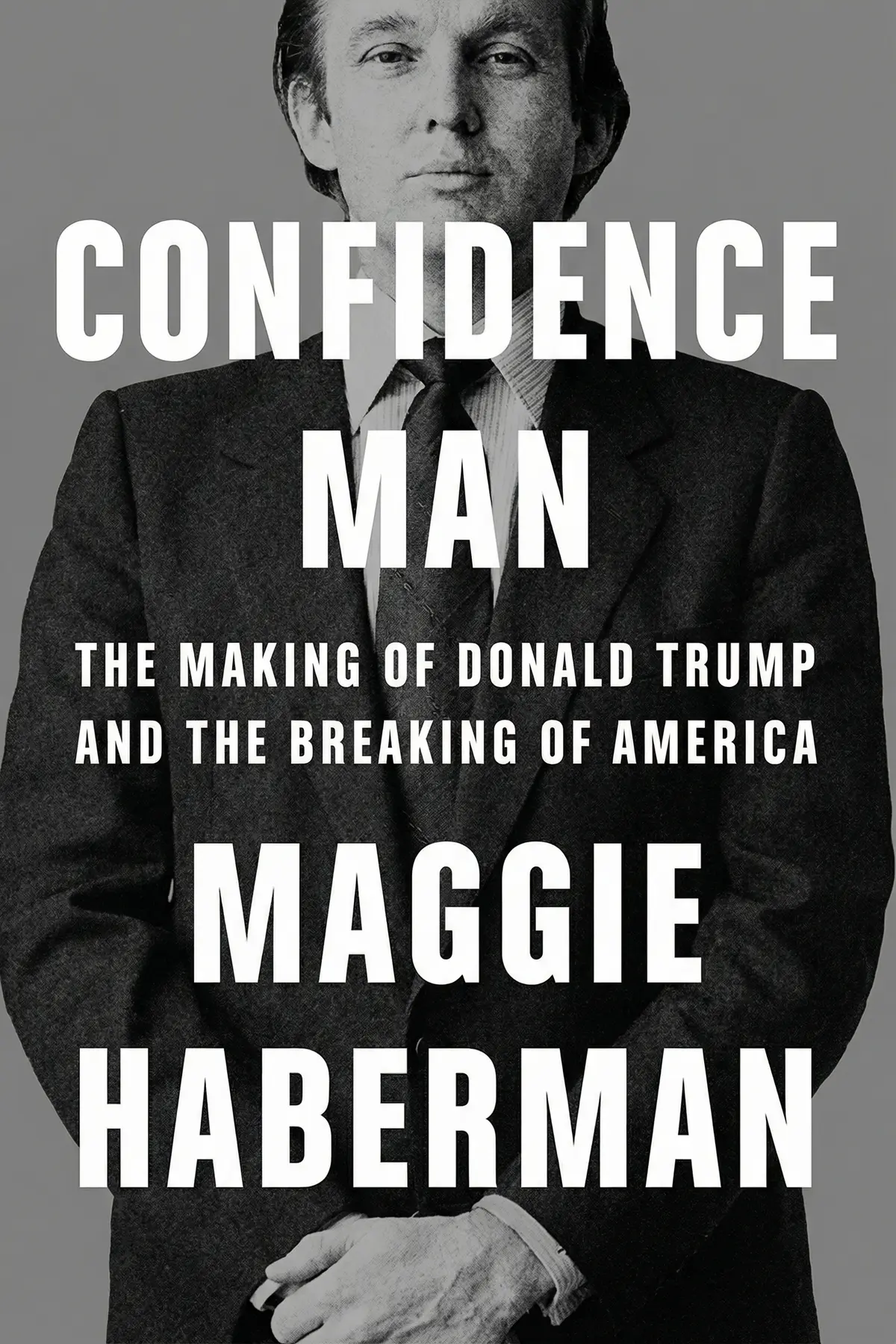
Table of Content
1. Introduction
1 min 06 sec
Donald Trump’s presidency can look like a blur of surprises, yet Maggie Haberman’s reporting shows that almost nothing in it was new. In Confidence Man, the New York Times White House correspondent traces a style he settled on decades earlier. In 1975, Trump walked into the office of Richard Ravitch, who chaired New York State’s Urban Development Corporation, wanting a tax break for his planned renovation of the Commodore Hotel. Ravitch found the plan thin and said no. Trump told him to grant the exemption or lose his job. Ravitch replied that Trump could leave or be arrested.
Haberman argues that this one scene holds the whole method: cast yourself as the wronged party, then meet resistance with threats and accusations, the wilder the better. The same habits that won him the White House also produced one of the most violent handovers of power in American history. Follow them from Queens to the Capitol, and a decade of headlines becomes one consistent story, along with a sharper eye for leaders who rule by grievance and loyalty.
2. Test a leader's origin story against the record
1 min 51 sec
Trump liked to explain himself with one vivid memory from a bridge opening in 1964. The public record tells a very different version of that day, and the gap reveals the rule he would live by.
3. Trace a lifelong style to two mentors
1 min 55 sec
One taught him to keep going no matter what. The other had hunted suspected Communists for Joseph McCarthy. Together they gave Trump a temperament that almost never concedes anything to anyone.
4. Learn why controlling the story beat having money
2 min 02 sec
By 1990 one newspaper put his net worth deep below zero, and his losses kept climbing. Yet within a few years he was a billionaire again, at least in public, and the reason was not his accounts.
5. See how outrage became votes for Trump
2 min 10 sec
Party leaders met in private to work out how to manage their unruly candidate. Every attempt backfired, and his own advisors watched in disbelief as mistakes that should have sunk him did the opposite.
6. Spot the workplace built on rivalry and loyalty tests
2 min 11 sec
Three chiefs of staff, three press secretaries and six communications directors in under three years. Behind that churn sat a management style Trump had refined long before he reached Washington.
7. The same playbook, run all the way to January 6
1 min 52 sec
A pandemic took away his favorite stage, and an election took away his office. What he did next followed a script written in a New York office in 1975, with consequences nobody around him predicted.
8. Conclusion
1 min 08 sec
Confidence Man is finally a story about persistence. The teenager who remembered a sunny bridge opening as a rainy insult, the developer who would not share a podium at Wollman Rink and the president searching for a new Roy Cohn are the same person, applying the same rules at ever larger scale. Haberman’s portrait shows how far one personality, shaped by a demanding father and a combative lawyer, could bend the institutions around it, and how close those institutions came to their limits.
The way of seeing she offers outlasts its subject. When a public figure tells you the story that made them, compare it with the record and ask what rule it protects. Treat a long pattern of threats and grievance as the best forecast of how someone will use more power. And in your own workplace, watch for teams where people compete for one person’s approval and bad news stops traveling upward, because that silence is where trouble grows.
Trump’s exit song announced that he had done it his way. Haberman’s reporting suggests he never did it any other way, from Ravitch’s office to the Capitol.
About this book
What is this book about?
Donald Trump's presidency often looked like a run of shocks. Maggie Haberman, who covered him for years at The New York Times, argues that very little about it was new. The tactics he used in the White House were ones he had practiced in Manhattan for decades. Haberman follows that consistency from a childhood shaped by his demanding father, Fred, and a young adulthood guided by the combative lawyer Roy Cohn. She shows the habits forming in his real estate deals, his near-bankrupt 1990s and his reinvention through The Apprentice and Twitter, then hardening into a campaign that grew stronger every time he refused to back down. Readers get one coherent story in place of a decade of headlines: how credit-seeking, threats and loyalty tests built a brand, ran a White House with record staff turnover and led to the riot at the Capitol on January 6, 2021. The book also gives a lasting lens for judging leaders by the patterns in their past.
Book Information
Who it's for
Followed the Trump headlines
Readers who followed the Trump years in headlines and want one coherent explanation of the man behind them.
Curious about celebrity presidencies
Students of politics, leadership and media curious how a celebrity brand became a presidency.
Managers and team leads
Managers and team leads who want to recognize leadership built on rivalry, credit-taking and loyalty tests.
About the Author
Maggie Haberman
Maggie Haberman is a White House reporter for The New York Times and a political analyst for CNN. She joined the Times in 2015 to cover the presidential campaign, after five years at Politico and earlier stints at the New York Post and the New York Daily News. In 2018 she shared a Pulitzer Prize with Times colleagues for reporting on the investigations into links between Donald Trump's circle and Russia.
Ratings & Reviews
Ratings at a glance

What people think
Listeners find the work well-crafted and full of thorough perspectives on Trump's background and his time in office. The caliber of writing and historical depth are praised, with one listener calling it the best single-volume history on the subject. Reactions to the book's accessibility and tempo are split, as some find the narrative captivating while others consider it tedious. Listeners also differ on the depiction of Trump’s nature; some value the profound look into his character, while others simply see him as a dreadful individual.
Top reviews
Ubolwan
Finally got around to finishing this massive tome, and it is easily the most comprehensive account of the Trump era I’ve encountered. Maggie Haberman leverages her years of reporting to connect the dots between the developer's New York roots and his tumultuous presidency. The book excels when detailing how his early experiences with Fred Trump and the city's tabloid culture shaped his 'cutting corners' mentality. Frankly, the level of detail regarding his business dealings and his treatment of women as mere possessions is chilling. While some might find the length daunting, the historical content is invaluable for understanding how we got here. It’s not just a collection of headlines; it’s a deep psychological profile of a man driven by insecurity and an insatiable need for praise. Even if you think you’ve heard it all, the context provided in these chapters makes it a necessary read for any political junkie.
Show moreSook
This book is a masterclass in journalism. Haberman delivers what feels like the best single-volume history of Donald Trump’s rise and fall, filled with detailed insights that go far beyond the daily news cycle. I was especially struck by the anecdotes about his desperate need for loyalty and his constant habit of flushing ripped-up papers, which perfectly encapsulate his disregard for protocol. The writing is sharp and the pacing is surprisingly fast for such a dense work. Not gonna lie, it’s a bit depressing to revisit some of these moments, but the analysis of his 'thin-skinned' nature is spot on. She doesn't just tell you what happened; she explains the 'why' behind the chaos. It’s a compelling, if unsettling, read that provides much-needed context to the division we see in the country today.
Show moreJoy
As someone who has followed the news cycle religiously since 2016, I thought I knew it all, but this book proved me wrong. Haberman includes details from her own interviews with Trump that are absolutely wild. Seeing his bold marker edits on her pre-publication texts in the photo section was a highlight! It really shows the bizarre relationship he has with the media—he claims to hate them but craves their attention. The book is well-written and flows beautifully, making even the denser policy sections easy to digest. Frankly, it’s a bit of a train wreck that you can't look away from. She captures the 'cult of Trump' perfectly and explains how he reshaped the Republican party in his own image. It’s a haunting, necessary account of a period in history that we are still very much living through.
Show moreRin
Haberman delivers an incredible character study that is as much about the decline of American institutions as it is about one man. The way she ties his amoral business behavior in the 80s to his actions in the White House is brilliant. I found the sections on his interactions with Cabinet Secretaries particularly revealing—they were often treated as mere puppets for his outlandish views. The book is a bit of a commitment due to its length, but the historical value is huge. Personally, I think it’s the most 'fair' portrayal I've read, as she doesn't shy away from the few instances where he showed empathy, even if they were quickly overshadowed by his callous nature. It’s an essential read for anyone who wants to understand the man who, for better or worse, changed the face of American democracy.
Show moreJirapat
Picking this up felt like a chore at first, given how much Trump coverage we all endure, but I couldn't put it down once I started. Maggie Haberman has written a definitive account that feels both intimate and expansive. She captures the insecurity and the ego in a way that makes the chaos of his presidency finally make some sort of sense. The detail about the poisoned handshakes and the inner turmoil of the campaign trail kept me hooked. While some critics say there's nothing new here, I found the connective tissue she provides between his different lives to be totally fresh. It’s a grim look at the state of our politics, but it’s written with such skill and insight that it’s hard to find fault. This will likely be the primary source for historians in the years to come.
Show morePrinya
Maggie Haberman clearly knows her subject better than almost anyone else in the press corps, and it shows on every page. This book is a fascinating exploration of how Trump’s years as a New York celebrity prepared him for the political stage. I particularly enjoyed the insights into his relationship with his father and how that fueled his bullying tactics. The author manages to provide a fair, clear-eyed look at the inner turmoil of the administration, even highlighting a few 'almost-human' moments that surprised me. However, I did feel the book was a bit too long; a tighter edit could have made the transition from his real estate ventures to the Oval Office feel more seamless. Still, the depth of research is undeniable. It’s an essential piece of the puzzle for anyone trying to make sense of the current political landscape and the breaking of traditional norms.
Show moreWatcharin
Ever wonder how a real estate mogul from Queens actually ends up in the Oval Office? Haberman’s book provides the clearest roadmap I've seen yet. The early chapters on the Trump family dynamics are particularly enlightening, showing how the 'Trump means business' persona was carefully manufactured over decades. I appreciated how she balanced the bombastic public image with the insecure man behind the scenes. The detail about his reaction to service members killed in action was a rare glimpse into a more complex side of his personality. My only real gripe is that the second half of the book feels like a highlights reel of things we all lived through in real-time. It’s still a 4-star read because of the sheer depth of the New York history, which provides the necessary foundation for everything that followed in Washington.
Show moreKasemsan
Is there anything left to say about the 45th president that hasn't already been dissected by cable news? This book certainly tries, but for this reader, there is a distinct “Me Too” feel to the narrative. Much of the ground covered—from the 2016 campaign to the January 6th fallout—feels like a well-plowed field. Haberman is a talented writer, no doubt, but I found myself skimming through anecdotes I’d already read in the Times years ago. The sections on his early New York days were the most interesting, yet they were overshadowed by the sheer volume of familiar White House drama. To be fair, it’s a solid primer for someone who hasn't followed the news closely, but for the rest of us, it feels a bit repetitive. The pacing occasionally drags, making the 500-plus pages feel more like a chore than an engaging biography.
Show moreJob
Look, the writing is sharp, but the pacing felt like a slog at times. I picked this up hoping for brand-new revelations, but ended up feeling like I was reading a very long summary of the last six years. To be fair, Haberman’s access is unparalleled, and her understanding of the 'New York' side of Trump is excellent. But by the time we got to the 2020 election and the pandemic, I felt like I was experiencing burnout all over again. The book is definitely well-researched, but it suffers from the same repetition as many other political books from this era. If you haven't read 'Fire and Fury' or 'Rage,' this is probably the best one-stop shop for you. But for those who have already read the 'Trump tribe' books, you won’t find many surprises here.
Show moreJulian
The truth is, I wanted to like this more, but the author’s constant opinion intervention was just too distracting for me. Haberman is clearly an expert, but she seems unable to refrain from painting every single situation in the most negative light possible. Even moments that could be seen as innocuous are framed with a decidedly inhospitable lens. I found the notes difficult to navigate, and many of the claims felt like they relied heavily on anonymous sources that have been questioned before. It felt less like a balanced biography and more like a long-form op-ed. If you’re looking for unbiased reporting, you might want to look elsewhere. The subtitle suggests a 'breaking' of America, but the sensationalist tone of books like this feels like it contributes just as much to the national divide. It’s well-written in a literary sense, but the bias is hard to ignore.
Show moreQuestions about this book
What is the main idea of Confidence Man by Maggie Haberman?
Haberman argues that Donald Trump’s behavior stayed remarkably consistent across his life. The habits he learned from his father, Fred, and the lawyer Roy Cohn, such as claiming all the credit, answering resistance with threats, playing the victim and treating relationships as deals, shaped his real estate career, his reinvention through The Apprentice, his 2016 campaign, his chaotic White House and finally the events of January 6, 2021.
Who influenced Donald Trump the most according to Confidence Man?
Haberman points to two figures. His father, Fred Trump, built a New York real estate empire and taught his children to keep going whatever happened, and Donald followed the path Fred laid out. Roy Cohn, a lawyer who had worked with Senator Joseph McCarthy, defended the Trumps against housing discrimination charges in the 1970s and modeled a fight-everything, transactional approach that Trump embraced.
What does Confidence Man say about how Trump ran the White House?
Haberman reports that he ran it like his companies. Staff were kept apart and set against one another, bad news was unwelcome, and people competed for his approval. He kept searching for a loyal fighter like Roy Cohn, firing figures such as Jeff Sessions. By mid-2019, Reagan, Obama and both Bushes had each held on to more of their first cabinets than he had, and he had also gone through six communications directors and a trio of chiefs of staff.
What can readers learn from Confidence Man beyond politics?
The book shows that a person’s long-running patterns are a strong guide to how they will act with more power. Haberman checks Trump’s own origin story against the record and finds it full of inaccuracies, which suggests a habit worth copying: test the stories leaders tell about themselves. It also illustrates how workplaces built on rivalry and loyalty tests drive turnover and stop bad news from reaching the top.
Readers also enjoyed

Ali: A Life
Jonathan Eig

Abortion: Our Bodies, Their Lies, and the Truths We Use to
Jessica Valenti

A Life Decoded: My Genome: My Life
J. Craig Venter


Adults in The Room: My Battle With Europe’s Deep Establishment
Yanis Varoufakis

A Long Way Gone: Memoirs of a Boy Soldier
Ishmael Beah

All Creatures Great and Small
James Herriot

AUDIO SUMMARY AVAILABLE
Listen to Confidence Man in 15 minutes
Get the key ideas from Confidence Man by Maggie Haberman, plus 5,000+ more nonfiction titles.
- 5,000+ titles
- Listen as much as you want
- 7-day free trial
- Cancel anytime









