

15 min 54 sec
Available in: English
Compromised: Counterintelligence and the Threat of Donald J. Trump
By Peter Strzok
A former FBI counterintelligence chief tells his side of the Clinton email case and the Russia investigation, and explains how secrets and lies can give a foreign power leverage over a president.
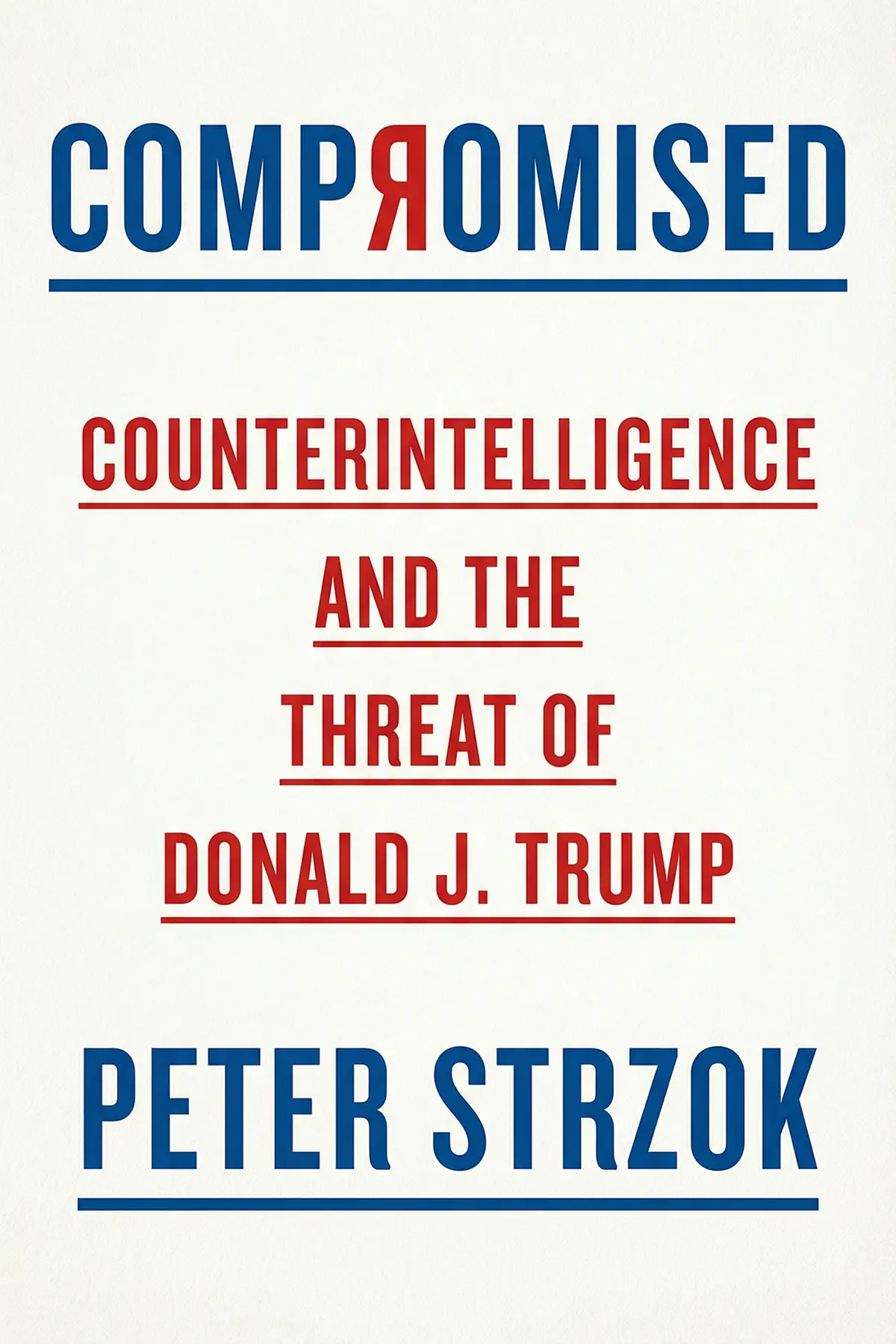
Table of Content
1. Introduction
1 min 04 sec
Most people remember the Russia investigations as a blur of headlines, tweets and cries of witch hunt. In Compromised, Peter Strzok, the FBI counterintelligence official who helped run both the Clinton email case and the Russia probe, argues that one Russian word explains it all: kompromat, the secrets a foreign service can hold over a person.
His account opens in January 2017, in a small room at FBI headquarters. The initials DJT sat at the top of a whiteboard, with names below them: Paul Manafort, George Papadopoulos, Mike Flynn, Carter Page. The question was whether to investigate the new president himself.
Strzok’s case is that Russian methods, not partisan plotting, drove the FBI’s work in those years, and that each time Trump lied about Russia or blocked the inquiry, he gave Moscow more leverage. Follow his timeline and you can retell the events in order, and test the claims about them that still circulate.
2. Learn the three tools of Russian spycraft
1 min 54 sec
A Harvard family with two sons, the kind of couple who worked, went out and took vacations together, turned out to be something else entirely. Their case explains a word every news reader now needs.
3. Tell careless handling apart from a crime
2 min 09 sec
Classified material sat in a secretary of state’s private inbox, and investigators confirmed it was mishandled. So why did the FBI advise against charges? The answer turns on a line most headlines skip.
4. Learn how one fake password email reached an election
2 min 00 sec
Election interference sounds like something vast and abstract. In Strzok’s telling, it began with a staffer clicking a link that looked exactly like a routine alert, and grew into a fake account that campaign leaders shared.
5. Follow one tip to a web of campaign contacts
1 min 47 sec
A casual remark to an Australian diplomat sent two FBI agents on a secret flight to Europe. Within a week they had a shortlist of names, and one of them was handing polling data to a Russian contact.
6. Pick between two bad options in public view
1 min 31 sec
Weeks before Election Day, the FBI faced a choice where speaking up and staying silent would both look political. How the director reasoned through it still divides people, and the logic deserves a hearing.
7. Spot how a lie to Moscow becomes a leash
2 min 09 sec
Russia answered American sanctions with silence, and the reason turned up in a phone call. Strzok uses that call, and a strange question from the president, to explain how a denial can become a lever.
8. Recognize the signs of an attack on investigators
2 min 00 sec
A director learned he was fired from a television screen mid-speech, and the next day the president discussed it with Russian officials. What followed reshaped the probe and turned one agent into a public target.
9. Conclusion
1 min 20 sec
Strzok’s account turns a noisy stretch of news into one chain of cause and effect. Russia’s services have long specialized in undercover agents, false information and secrets held over powerful people. In 2016 they hacked, leaked and posed as American voters, and they reached into a campaign whose members met Russian contacts and then lied about it. Each lie, in his telling, was another hold Moscow could use, and the president’s efforts to end the inquiry looked to him like the behavior of a man with something to protect.
He admits the investigations had flaws. He insists they were mostly run with care and respect for the Constitution, and he points to the inspector general’s finding that political bias did not shape his actions in either case. The real damage, as he sees it, came afterward, from a White House that bent the facts, weakened trust in democratic institutions and wrecked the careers of intelligence officers.
His story leaves a habit worth keeping. When a public figure has foreign ties, ask what secret someone abroad might hold. When an inquiry is branded a witch hunt, look for the memos, transcripts and findings before choosing a side. A lie, Strzok warns, is a gift to whoever knows the truth.
About this book
What is this book about?
Between 2015 and 2017, the FBI ran two investigations that dominated American politics: one into Hillary Clinton's private email server and one into links between Russia and Donald Trump's campaign. Peter Strzok helped lead both, and he was later fired after his private text messages became public and the president accused him of treason. In Compromised, Strzok retells those years from inside the bureau. His key to the story is a Russian intelligence term, kompromat: secret material a foreign service can hold over someone. He follows Russia's methods from undercover agents living as ordinary suburban families to phishing emails, fake social media accounts and leaked documents. Then he shows how campaign advisers built ties to Russia, how Flynn lied about his call with the Russian ambassador, and how the president's own denials and pressure on investigators looked, to a counterintelligence officer, like the behavior of a compromised man. Readers get a clear timeline of events that are still argued about, the reasoning behind the FBI's hardest calls, and a simple test for judging any leader's foreign ties: does someone abroad know a secret this person needs to keep?
Book Information
Who it's for
Followed the Russia headlines
Readers who followed the Russia investigation in headlines and want the events in order.
Curious about counterintelligence
People curious how counterintelligence works, from undercover agents to kompromat.
Weighing deep state claims
Anyone weighing claims of a deep-state plot who wants an FBI insider's side of the record.
About the Author
Peter Strzok
Peter Strzok is a counterintelligence expert and US Army veteran with more than twenty years in intelligence work. He was Deputy Assistant Director of the FBI's Counterintelligence Division and earlier led its Counterespionage Section. He oversaw both the Clinton email probe and the probe of Russian interference in the 2016 elections. He was dismissed in August 2018 over partisan text messages, and in 2024 the Justice Department agreed to settle his wrongful termination suit. He teaches at Georgetown University.
Ratings & Reviews
Ratings at a glance

What people think
Listeners find the writing exceptionally clear and engaging, with one individual noting that it reads much like a fictional thriller. Furthermore, the quality of information is highly regarded, as listeners appreciate how the book reveals complex investigations and provides educational perspectives on the FBI. The narrative is also praised for its passion, and listeners find the intelligence details valuable, with one highlighting the fascinating look into the FBI and intelligence procedures. Listeners also respect the work's sincerity, with one remarking on the author's honesty regarding mistakes made, and consider it a vital addition to the historical record.
Top reviews
Kwame
Strzok writes with the pacing of a high-stakes spy novel, which makes sense given his background. This isn't just a dry recounting of memos; it's a deep dive into the tradecraft used to dismantle Russian sleeper cells like the ones in 2010. I was hooked by the thriller-like feel of the first few chapters before the narrative shifted into the more familiar political territory of 2016. The author is remarkably transparent about his own errors, particularly concerning those texts, which adds a layer of integrity often missing from political memoirs. It’s a sobering reminder that while politicians come and go, the threats from foreign intelligence remain constant. The prose is sharp, the stakes are high, and the education on how the Bureau actually functions is worth the price of admission alone. Truly an invaluable contribution to the historical record.
Show moreRoo
After hearing so much noise in the media, I wanted to get the story straight from the source. What I found was a deeply personal account of a man who saw his life’s work dismantled by a vindictive administration. Strzok doesn't just talk about Trump; he talks about the collapse of the moral order when institutions are attacked from within. The chapters detailing his firing and the subsequent harassment of his family are absolutely heartbreaking. It’s a powerful testament to the importance of the rule of law. If you can get past the political bias that people project onto him, you’ll find a story about a patriot who warned us about a threat many refused to see. This is required reading for anyone worried about the future of American democracy.
Show moreGin
Few public figures are willing to own their mistakes as candidly as Strzok does here regarding those infamous text messages. He admits to being "careless" and "stupid" in his personal communications, which ironically makes the rest of his intelligence analysis more credible. The book shines brightest when he discusses the nuances of counterintelligence—the "wilderness of mirrors" where nothing is as it seems. It’s an invaluable contribution to our understanding of the 2016 election and the real-world consequences of foreign interference. I was struck by his dedication to the FBI's mission, even as the organization's leadership eventually buckled under political pressure. This is a must-read for anyone who values the integrity of our democratic institutions and wants to know what actually happened behind closed doors.
Show moreChamlong
Picked this up expecting a dry memoir and ended up finishing it in two sittings. Strzok is a gifted storyteller who manages to make the internal politics of the DOJ feel like a race against the clock. He captures the urgency of the 2016 investigations perfectly, conveying the genuine fear many in the intelligence community felt as they watched the pieces of the puzzle come together. The way he describes the Patriot Act and the evolution of surveillance is thought-provoking, even if you don't agree with his stance on government overreach. It’s a passionate, well-argued defense of his career and his country. I walked away with a much deeper appreciation for the complexities of the FBI’s work and the impossible positions agents are often put in.
Show moreNit
As someone who has followed the 'Crossfire Hurricane' coverage closely, I found this account to be an invaluable addition to the historical record. Strzok offers a unique vantage point that few others could, having been at the center of both the Clinton and Trump investigations. His writing is sophisticated yet accessible, bridging the gap between high-level intelligence theory and everyday political reality. The book serves as a stark warning: our democracy is more fragile than we think. He doesn't shy away from the personal toll this took on him, which adds a layer of raw emotion to the technical analysis. It’s a brilliant, necessary book for these turbulent times, providing a clear-eyed look at what it means to be compromised.
Show moreJoshua
Ever wonder how the FBI actually tracks foreign assets? Strzok provides a fascinating look at the internal mechanics of counterintelligence that feels both educational and terrifying. He explains complex bureaucratic processes in a way that’s accessible to a layperson, stripping away the Hollywood glamour to show the tedious, essential work of protecting the country. I did find the sections on the Hillary Clinton email investigation a bit repetitive, as if he’s still trying to justify every micro-decision made by the Bureau during that time. Still, the insight into Russian 'kompromat' and how it operates within our borders is essential reading for any citizen. It’s well-written and serves as a passionate defense of the career professionals who work in the shadows, even if the pacing slows down in the middle.
Show moreDome
This serves as a crucial companion piece to the Mueller report for anyone trying to understand the 'why' behind the investigations. Strzok fills in the gaps that the formal reports left out, providing the human context for the decisions made during Crossfire Hurricane. The writing is surprisingly fluid for a former government official, avoiding the stilted "bureaucratese" you might expect from a long-time agent. I particularly appreciated the detailed breakdown of how Russian influence campaigns are designed to exploit our existing divisions. My only real gripe is that it occasionally feels like a rehash of information that has been public for years. However, having it all in one cohesive timeline is incredibly helpful for keeping the facts straight in this era of constant misinformation.
Show moreKai
The most chilling part of this book isn't the political drama, but the sobering look at how Russian intelligence operations actually function on American soil. Strzok uses his decades of experience to explain how "compromise" isn't always a dramatic cinematic moment; it's often a slow, methodical process of entanglement. Look, the guy clearly has an axe to grind with the former president, and that bias is evident on every page. But that doesn't invalidate the evidence he presents or the warnings he issues about our national security vulnerabilities. The technical details about servers and data security might bore some, but I found them fascinating. It’s a dense, informative read that demands your full attention if you want to understand the current threat landscape.
Show moreOmar
To be fair, some of the bureaucratic details can get a bit thick, but the payoff is worth the effort. Strzok does a great job of explaining why the Russia investigation started in the first place—and no, it wasn't because of the Steele dossier. He lays out the breadcrumbs with a prosecutor's precision, showing how the FBI reacted to legitimate threats. While he is quite harsh on Hillary Clinton’s "extreme carelessness," he is equally unsparing toward the culture of the FBI itself. It’s not a perfect book—it could have used a better index for all the names mentioned—but it’s an essential piece of the puzzle for understanding modern American history. He shows us exactly how fragile our law-based order really is.
Show morePor
While the early chapters on counterintelligence are genuinely gripping, the tone shifts significantly once we get into the 2016 election cycle. Strzok is clearly talented at his job, yet I found his treatment of the Clinton investigation to be somewhat frustratingly dismissive of the FBI's own missteps. He spends a lot of time pointing fingers while portraying himself as a "good Republican" hero caught in a partisan crossfire. There's an underlying defensiveness here that makes it hard to fully trust the narrative, especially regarding his personal conduct and the impact those texts had on public trust. It's a readable book, no doubt, but the "weasely" behavior mentioned by other critics occasionally shines through. Not a bad read, but I suggest taking the author's framing of the 'Email Affair' with a grain of salt.
Show moreQuestions about this book
What is Compromised by Peter Strzok about?
It is Strzok’s insider account of two FBI investigations he helped lead: Midyear Exam, into Hillary Clinton’s private email server, and Crossfire Hurricane, into ties between Russia and Donald Trump’s campaign. He argues that Russian methods such as hacking, false information and kompromat drove those cases, and that Trump’s lies and pressure on investigators left him open to Russian leverage.
What does kompromat mean in Compromised?
Kompromat is compromising material a foreign service gathers on a target, such as proof of bribes or sexual advances. Once Russia holds such a secret, the person depends on Russia to keep it hidden, and is called compromised. Strzok argues that any lie a leader tells, when Putin knows the truth, works the same way and gives Russia leverage.
Why did the FBI not recommend charges against Hillary Clinton?
According to Strzok, the Midyear team found that classified information had been handled with extreme carelessness, but saw no evidence of knowing or malicious disclosure. The Justice Department, which decides on charges, rarely prosecutes such cases without that intent. Reviews of her lawyers’ laptops and, later, of emails found on Anthony Weiner’s laptop turned up nothing new.
How did the Crossfire Hurricane investigation start?
Strzok says it began after Trump adviser George Papadopoulos told Australian diplomat Alexander Downer that Russia had damaging material on Clinton and Obama and had offered to help the campaign release it. The FBI built a matrix of possible recipients of that offer, including Paul Manafort, Carter Page and Michael Flynn.
Who should read Compromised?
It suits readers who want a clear, ordered account of the 2016 investigations from someone who ran them, and those curious how counterintelligence officers think about foreign influence. It is Strzok’s own side of a contested story, including why he was removed from the Mueller inquiry and accused of treason by the president, so it pairs well with other accounts of the period.
Readers also enjoyed

Ali: A Life
Jonathan Eig

Abortion: Our Bodies, Their Lies, and the Truths We Use to
Jessica Valenti

A Life Decoded: My Genome: My Life
J. Craig Venter


Adults in The Room: My Battle With Europe’s Deep Establishment
Yanis Varoufakis

A Long Way Gone: Memoirs of a Boy Soldier
Ishmael Beah

All Creatures Great and Small
James Herriot

AUDIO SUMMARY AVAILABLE
Listen to Compromised in 15 minutes
Get the key ideas from Compromised by Peter Strzok, plus 5,000+ more nonfiction titles.
- 5,000+ titles
- Listen as much as you want
- 7-day free trial
- Cancel anytime









