

Fast Food Nation: The Dark Side of the All-American Meal
Eric Schlosser
 English
 ไทย
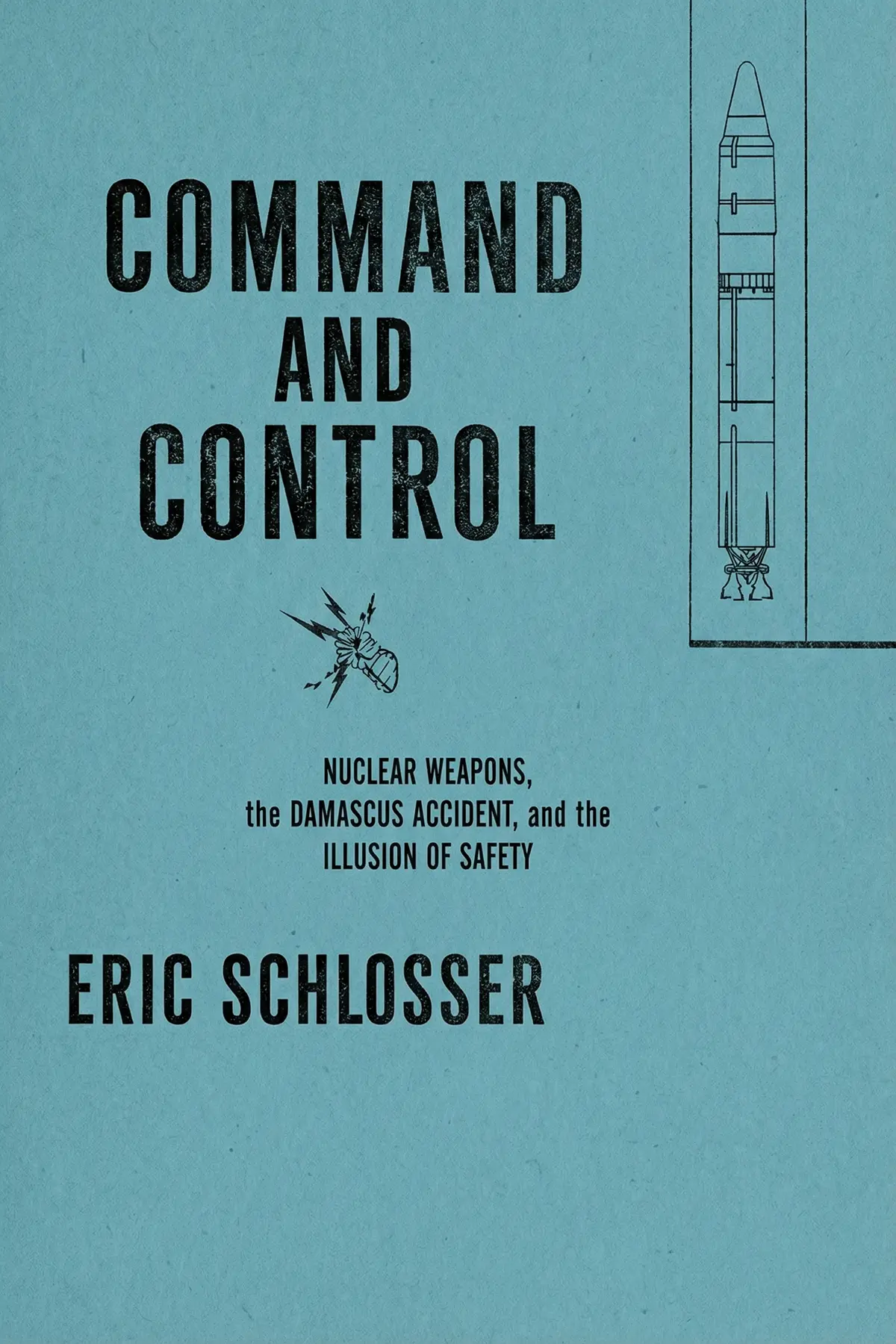
Eric Schlosser traces America's nuclear arsenal from the first test to today. Through near-disasters like a 1980 missile silo explosion, he shows why rules and chains of command cannot make these weapons truly safe.
1 min 03 sec
Most people assume the nuclear danger faded with the Cold War, and that strict rules keep the weapons still sitting in silos in check. In Command and Control, journalist Eric Schlosser shows how often those rules nearly failed: a 1968 report counted on average 130 serious accidents involving nuclear weapons each year. His argument is that no checklist or chain of command can make these weapons safe, because people err, machines break and secrecy hides the lessons.
The story turns on one night in 1980, when a dropped tool set off a crisis in a missile silo in rural Arkansas. Schlosser places that night inside the bomb’s whole history, from the first test in New Mexico to the most dangerous year of the Cold War. What you gain is a sharper eye for any system that looks safe on paper, and an honest sense of how much of our survival has been luck.
1 min 49 sec
The first test device needed 32 explosives to fire in the same instant, and one of the bombs used in war was rewired just before takeoff. That fragile start shaped how the weapon would be handled for decades.
1 min 46 sec
As fear of the Soviets grew, each new American bomb was far stronger than the last. A pair of laboratory scientists warned of a simple flaw, and the reasons they were ignored still sound familiar.
1 min 47 sec
One bomb left a crater in a family’s yard. Another partly detonated near a cemetery while officials denied any threat. The first official safety report counted how often such things were happening.
1 min 56 sec
Unscreened guards, keys hanging around necks, a war plan that could not be stopped and radar that saw missiles where none existed. The weakest links were often far from the bombs themselves.
2 min 04 sec
A dropped tool, a missing procedure and eight hours of waiting for approval turned a routine refill into a column of fire. One expert on site knew what to do, and nobody let him do it.
2 min 01 sec
A drill, a downed airliner and a missile that could reach Moscow in minutes pushed the superpowers to the edge. What moved one president toward peace was something he watched on television.
1 min 39 sec
Some American bombs were graded D, and in 2009 six missiles sat unguarded for two days. Yet Schlosser argues the gravest risks now lie beyond American bases, in a region where thieves have already tried.
1 min 22 sec
Schlosser’s history keeps returning to one scene: a capable person, a rule that does not fit the moment, and a safety margin that turns out to be luck. Fat Man’s bad wiring, a crater in a South Carolina yard, a fan switch in Arkansas, a drill misheard by the KGB. Again and again, a far worse disaster was avoided largely by luck, and afterward officials denied any threat in Spain and blamed low-ranking officers for Damascus. His verdict is blunt. While people and computers handle these weapons, something will go wrong, and the more nations hide their mistakes and designs, the harder safety becomes to improve.
The lesson travels well beyond warheads. When a system looks safe because its procedures look complete, look for the situation nobody wrote a checklist for. Agree in advance who may act without waiting eight hours for approval. Treat a near miss as a warning to share rather than a secret to bury, since blaming junior officers after Damascus left the deeper flaws in place. And notice that Reagan changed course only once he could see the cost.
David Livingston flipped a switch because he was ordered to. Thousands of warheads still depend on people like him, and on luck.
Most people think of nuclear danger as a Cold War memory. Eric Schlosser argues the risk never left, and that it has always come as much from accidents as from enemies. Thousands of warheads remain ready to launch. The systems built to control them depend on people who make mistakes and machines that malfunction. Schlosser follows the American arsenal from the Manhattan Project and the bombing of Hiroshima and Nagasaki through the arms race. He covers a long run of dropped bombs and crashed B-52s, war plans that could not be stopped once begun, and the near miss of Able Archer 83. At the center is one night in September 1980 at a Titan II silo in Damascus, Arkansas. There, a dropped socket, a missing checklist and eight hours of bureaucracy ended in an explosion that killed one of the technicians. Readers get a clear history of how the bomb was built, managed and nearly misused. They also get a hard lesson that applies well beyond weapons: procedures cannot anticipate everything, and secrecy keeps systems from getting safer.
Readers curious how close the Cold War came to accidental nuclear disaster.
Managers and engineers who rely on procedures and want to see where they break.
Listeners following today's nuclear tensions who want the history behind them.
Eric Schlosser is an American journalist and nonfiction writer, born in New York City in 1959. His earlier books, Fast Food Nation and Reefer Madness, were both New York Times bestsellers. His articles have appeared in The Atlantic Monthly, Rolling Stone, The New Yorker, Vanity Fair and The Nation. Command and Control, published in 2013, applies his investigative reporting to the history of nuclear weapons and their safety.
Eric Schlosser

Listeners find this book is written like a fast-paced thriller, utilizing historical details to craft a gripping story that keeps them engaged. They also praise the deep level of research and the fascinating chronicle of nuclear weaponry's evolution, viewing it as a necessary read for those who want to stay informed. On the other hand, the level of fear the book induces gets a variety of reactions, as some consider it profoundly unsettling.
Wow. I didn't realize a non-fiction book about nuclear policy could leave me this breathless. Schlosser weaves the 1980 Damascus accident together with a broader history of our nuclear arsenal in a way that feels like a high-stakes techno-thriller. To be fair, some of the technical descriptions of the silos are dense, but the sheer incompetence on display is horrifying. It is genuinely unsettling to realize how close we’ve come to accidental detonation because of a dropped socket wrench. The narrative moves back and forth through time, juxtaposing the frantic efforts of airmen in Arkansas with the cold, bureaucratic decisions made in Washington. By the time I finished, I was left wondering how we survived the 20th century at all. This isn't just a history lesson; it's a wake-up call about the fragility of our safety systems.
Show moreEver wonder how the world hasn't ended yet? This book provides the answer: pure, unadulterated luck. Schlosser takes a deep dive into the history of nuclear mishaps, focusing specifically on a Titan II missile accident in Damascus, Arkansas. The tension in those chapters is palpable. You can almost feel the poison gas filling the silo. It’s truly unsettling to read about how the Strategic Air Command resisted safety upgrades for decades, prioritizing readiness over the risk of vaporizing an American city. While the historical sections on the Cold War can get a little bogged down in technical specs, the overall impact is powerful. It’s an absorbing history of development that managed to keep me awake late into the night.
Show morePicked this up on a whim and now I can't look at the news the same way. The title "Command and Control" is clearly meant to be ironic, as Schlosser demonstrates that we often have very little of either when it comes to our atomic weapons. The way he recounts the 1980 incident in Arkansas is masterful. You’re right there in the dark with those airmen, trying to stop a catastrophe with basic tools. It’s a bizarre mix of high-tech weaponry and low-tech mistakes. My only minor gripe is the sheer volume of acronyms and military jargon, which can get confusing if you aren't already a history buff. Still, it’s an essential piece of investigative journalism.
Show moreThis book is a terrifying masterpiece. Schlosser is a phenomenal writer who can take complex physics and military policy and turn them into a page-turner. I was hooked from the first page describing the "socket incident" in Arkansas. It’s absolutely mind-blowing that a single dropped tool could have wiped out half of the state. The book perfectly balances these localized moments of crisis with the broader, terrifying logic of the arms race. I especially appreciated the sections on the lack of safety interlocks on early weapons. We were basically driving cars with no brakes and pretending everything was fine. It’s a must-read for anyone who wants to be truly informed about the state of global security.
Show moreFinally got around to reading this Pulitzer nominee, and it lives up to the hype. Schlosser provides a staggering look at the illusion of safety surrounding our nuclear arsenal. The contrast between the "perfect" technology and the fallible humans operating it is the central theme here, and it’s handled expertly. Personally, I found the historical sections on the SAC and General Curtis LeMay to be just as gripping as the Damascus accident. It’s a well-written, thoroughly researched exploration of a world we all live in but rarely think about. Even though it's a few years old now, the warnings about cyber-security and aging infrastructure feel incredibly timely. It's a sobering, essential history.
Show moreAfter hearing so much about this, I finally dove into Schlosser’s massive tome. The research here is beyond impeccable, drawing on FOIA documents that paint a grim picture of our "Broken Arrow" history. Frankly, the detail can be a bit much; did I really need the childhood biography of every single technician involved in the Arkansas incident? Sometimes the pacing suffers under the weight of all those names and dates. However, the core message is vital. Schlosser exposes the terrifying gap between the military’s public confidence and the reality of aging equipment and human error. It’s a compelling, if occasionally dry, read that everyone should pick up if they want to understand the true cost of nuclear deterrence.
Show moreThe chapter on the 1980 Damascus accident is some of the most intense writing I’ve encountered in years. It’s hard to believe this actually happened on American soil and wasn’t the plot of a Hollywood blockbuster. Schlosser does a brilliant job of humanizing the men on the ground while simultaneously critiquing the massive military machine above them. The book is a fascinating, if deeply unsettling, look at how bureaucratic inertia nearly led to multiple nuclear disasters. I did feel that the "human interest" sections occasionally felt like reading a series of CVs, which slowed the momentum. Regardless, the historical context provided is top-notch. It makes you realize that our survival is less about strategy and more about the grace of God and some very brave mechanics.
Show moreAs someone who grew up during the tail end of the Cold War, this was a difficult but necessary read. Schlosser’s exploration of nuclear technology is exhaustive, covering everything from the early days of Los Alamos to modern cyber-threats. The truth is, this book is the stuff of nightmares. Seeing the list of "minor" accidents—bombs falling out of planes, short-circuited warheads, and false alarms—is enough to make your blood run cold. The author’s writing style is clear and engaging, though he does go into extreme detail about things like silo wall colors and maintenance schedules. If you can handle the technical minutiae, you'll find a story that is as relevant today as it was in the eighties.
Show moreLook, I appreciate the depth of research here, but Schlosser has a habit of making world-ending scenarios feel surprisingly tedious. The book is structured like two different works smashed together: a gripping thriller about a missile silo explosion and a very long, very dry textbook on nuclear engineering. I found myself racing through the Damascus scenes only to hit a brick wall of biographical filler about generals I’ve never heard of. To be fair, the information about the SIOP and the lack of communication between branches of government is eye-opening. It definitely shatters the illusion of safety we all rely on. But man, it’s a slog in places. I’d recommend it for the content, but prepare for some heavy lifting.
Show moreNot what I expected at all. I was looking for a narrative history, but instead, I got a 600-page list of every person who ever touched a nuclear wrench. Schlosser is clearly a talented researcher, but he doesn't know when to edit. The book is crushed by the weight of its own data. For every exciting moment in the Damascus silo, there are fifty pages of dry, academic background on military procurement. I honestly struggled to finish it. It’s scary, sure, but it’s also incredibly boring in a way that feels unnecessary. If you’re a total nuclear nerd, you’ll love it, but for the casual reader, it’s just too much information to process without a strong cup of coffee.
Show moreIt is a history of America’s nuclear weapons told through their accidents. Schlosser follows the arsenal from the Manhattan Project through the Cold War arms race, crashed B-52s and computer false alarms. The 1980 explosion of a Titan II missile silo in Damascus, Arkansas, sits at its center. His argument is that checklists and chains of command cannot make these weapons safe, because people and machines fail.
On September 18, 1980, a worker refilling a Titan II missile’s oxidizer dropped a metal socket. It fell 70 feet, hit the rocket and released toxic vapor. No checklist covered the situation, and expert Jeff Kennedy’s plan waited nearly eight hours for approval. After an order to switch on a ventilation fan, the silo exploded. Technician David Livingston died, and the warhead landed in a ditch by the access road.
Pershing II missiles that could hit Moscow in under ten minutes were due in West Germany. American forces were pressing on Soviet airspace, and the Soviets had destroyed a Korean airliner, killing 269 people. When NATO ran the Able Archer 83 drill, KGB officers mistook it for a real attack, and the Soviet Union came close to striking first.
Schlosser concludes that no set of bureaucratic rules can safely control nuclear weapons, because humans make mistakes and computers malfunction. Secrecy makes things worse by hiding errors that could improve safety. The broader lesson for any risky system is to plan for the case no checklist covers, and to treat near misses as warnings to share instead of failures to blame on junior staff.


Ishmael Beah



Barack Obama


Masaji Ishikawa

William J. Bernstein

John Rawls

Ben Macintyre
AUDIO SUMMARY AVAILABLE
Get the key ideas from Command and Control by Eric Schlosser, plus 5,000+ more nonfiction titles.









