

14 min 13 sec
Available in: English
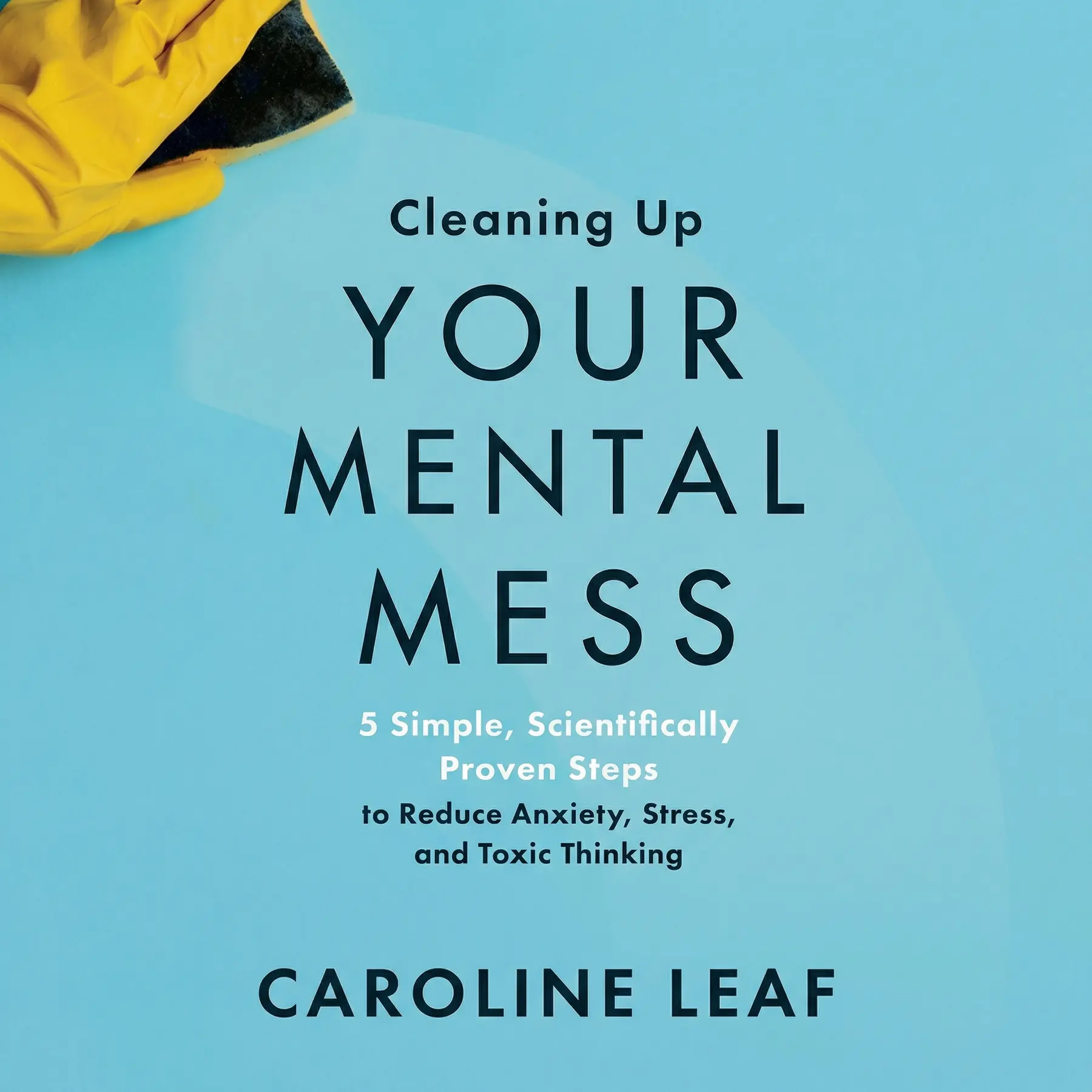
Cleaning Up Your Mental Mess: 5 Simple, Scientifically Proven Steps to Reduce Anxiety, Stress, and Toxic Thinking
A five-step daily practice for bringing anxious, toxic thoughts into view and replacing them. It comes with a 63-day plan for making new thinking a habit and uses for learning, trauma, sleep, food and exercise.
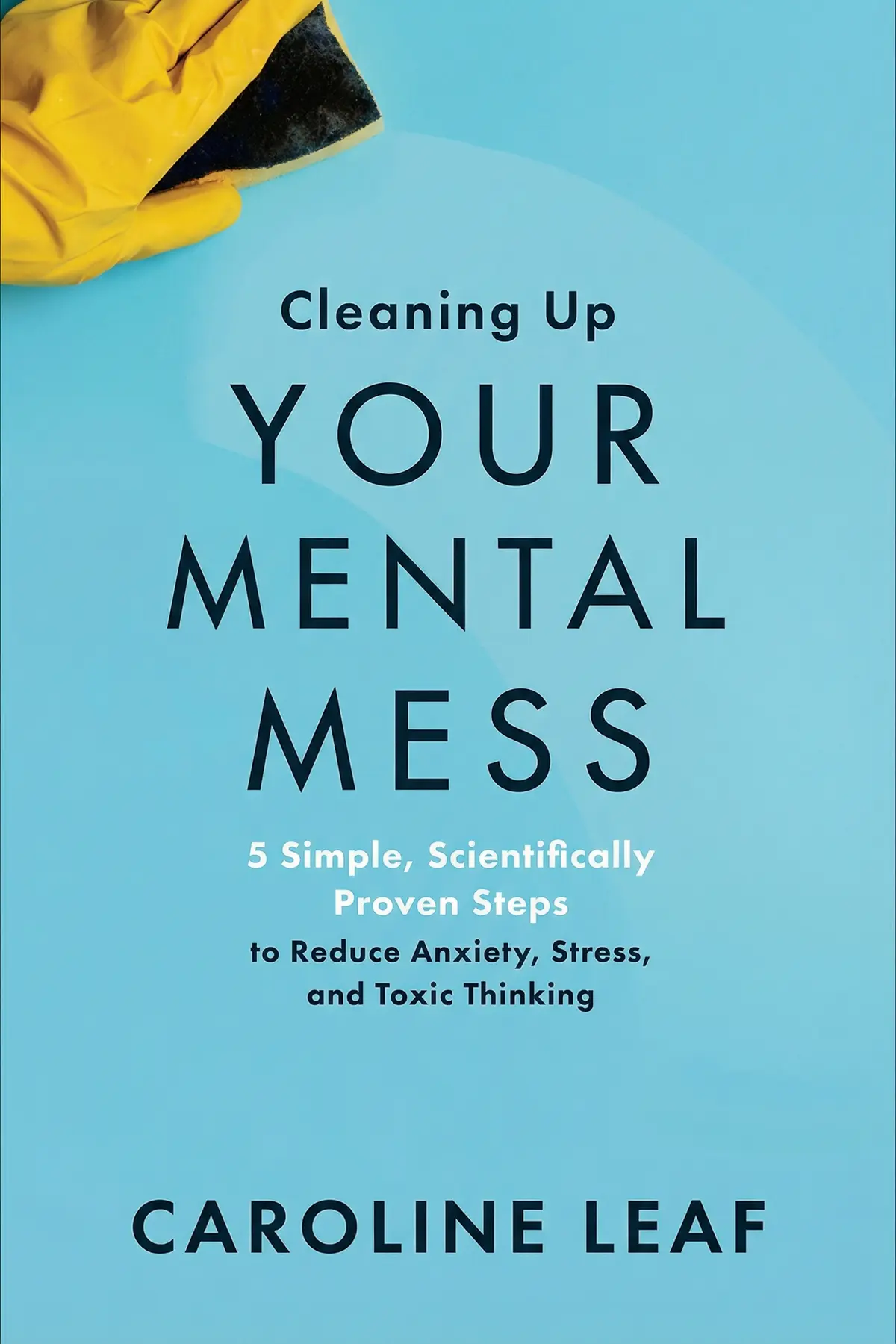
Table of Content
1. Introduction
57 sec
If your head is crowded with worry, self-doubt or thoughts that replay at night, Caroline Leaf’s first claim may help: that mess is a health problem, and like a cluttered house, it can be managed. In Cleaning Up Your Mental Mess, Leaf, a communication pathologist trained in neuropsychology, argues that toxic thinking feeds toxic stress, which wears down the body.
Her answer is a daily practice she calls the Neurocycle. Its five short steps pull a harmful thought into view, take it apart and replace it. The idea she keeps returning to is plain: you cannot control what happens to you, but with a steady method and enough days, you can control how your mind responds. Along the way, you will hear why she says habits need 63 days rather than 21, and how the same steps help with learning, trauma, sleep, food and exercise.
2. Count your thoughts as part of your health
1 min 44 sec
Most health plans cover food, sleep and exercise and stop there. Leaf argues they leave out the one factor that may shape all the others, and she says its effects can reach as far as your children.
3. Reach the thoughts running beneath your awareness
1 min 41 sec
The feeling that something is off before a meeting starts somewhere you cannot see. Leaf maps the three layers of the mind and explains why lasting change has to start in the deepest one.
4. Five steps that turn panic into a plan
1 min 41 sec
A diamond earring vanishes into a bubble bath, and for a moment, panic takes over. What Leaf did in the next minute contains the whole method, and you can repeat it with any thought that keeps returning.
5. Give a new thought 63 days to stick
1 min 41 sec
The popular three-week rule for building a habit may be setting people up to quit too early. Leaf lays out a longer timeline, with clear signs along the way that the change is taking hold.
6. Build a sharper brain by playing teacher
1 min 52 sec
Leaf compares information to food for the brain, and she claims the right way of taking it in can lift mental, emotional and social functioning. The routine ends with a step most learners skip.
7. Heal from trauma without needing answers
1 min 48 sec
After a painful event, most people get stuck on one question that rarely gets answered. Leaf suggests putting it down and offers three ways to change what the experience means for you.
8. Better sleep, food and movement start in your mind
1 min 41 sec
You probably know what you should eat and how much you should move. Leaf argues the gap between knowing and doing sits in your thinking, and she offers a daily hour of wandering to help with sleep.
9. Conclusion
1 min 08 sec
Leaf’s book treats the mind like a home. It gets messy through ordinary living, and it stays livable only if someone tidies it on purpose. Her case is that the tidying can be learned. Embracing a thought, processing it and reconceptualizing it works on a lost earring, an old wound, a hard text or an exercise habit. Repeat those moves long enough and, she argues, the change becomes part of the brain itself.
The practice she supports starts small. Choose a single thought or habit and give it the full 63 days. Run every step for the first three weeks, then reach for the new thought several times a day. Protect the first minutes of each morning too. Leaf warns that waking straight into your problems, the news or social media tends to set a negative tone for the whole day. Before anything else reaches you, pick a direction instead: gratitude, more kindness toward colleagues, or a decision to meet stress calmly.
Life will still bring its crashes. What you can choose is to show up as the first responder rather than the bystander.
About this book
What is this book about?
Everyone's mind gets messy at times. Worry, self-doubt and gloomy thoughts are natural reactions to hard events. Caroline Leaf argues that this mess is more than unpleasant. In her account, toxic thinking produces toxic stress, which affects brain chemistry, immunity and even how genes behave. Her answer is to treat the mind the way you treat your home: something you tidy on purpose. Her tool is the Neurocycle, a practice she says rests on 30 years of research and tested in her own clinical trial. It has three principles, embracing, processing and reconceptualizing, carried out in five steps: Gather, Reflect, Write, Recheck and Active Reach. Leaf sets them on a 63-day timeline with milestones along the way, because she argues that the popular 21-day figure for forming a habit is too short. Readers learn how to bring a buried thought into awareness, take it apart and replace it with a healthier one. The same steps also apply to learning new material, to healing after trauma, and to building better habits around sleep, eating and exercise.
Book Information
Who it's for
Caught in anxious thinking
People caught in loops of worry, self-doubt or anxious thinking who want a daily routine to follow.
Learning hard material
Students and professionals who want a structured way to learn and remember hard material.
Recovering from painful events
Anyone recovering from a painful event, or struggling to make sleep, eating and exercise habits last.
About the Author
Caroline Leaf
Caroline Leaf holds a PhD in Communication Pathology, earned at the University of Pretoria in South Africa with a focus on neuropsychology, and she worked in clinical practice as a communication pathologist. She developed the Geodesic Learning theory and the Switch On Your Brain 5-Step Learning Process, which she has taught to students around the world. Her books include Switch On Your Brain and Think, Learn, Succeed, and she hosts the podcast Cleaning Up the Mental Mess. She speaks to church and secular audiences internationally, linking brain science to spiritual, intellectual and emotional life.
Ratings & Reviews
Ratings at a glance
What people think
Listeners find the book deeply educational and scientifically grounded, with one listener emphasizing the persuasive quantitative data it provides. Furthermore, they view it as a remarkable, life-altering read that supports the development of a healthy mind and can truly rewire your brain. Nevertheless, opinions on its readability and clarity are split; while some find the content accessible and simple to track, others feel it is challenging initially and contains too much technical jumbo. Additionally, several listeners point out that the material can be quite repetitive.
Top reviews
End
Finally, a mental health book that acknowledges change isn't instant or easy. I've always struggled with consistency, but understanding the 21-day and 63-day cycles changed my entire perspective on habit formation. It's not a quick fix; it's a daily practice of mind management. The five steps—gather, reflect, write, recheck, and active reach—are clear once you reach that section of the book. Truth is, this is life-altering information if you actually do the work. The quantitative data she provides gave me the confidence to stick with the routine even when I didn't feel like it. It’s hard work, but Leaf provides a roadmap that is grounded in reality rather than just positive thinking.
Show moreIff
This was exactly what I needed to get my mind right this year. Leaf shows how our thoughts physically impact our biology in ways I never realized. Not gonna lie, the first half is quite dense with scientific explanations, but it provides the foundation needed to trust the five-step process. Using the Neurocycle daily has helped me identify my toxic triggers and actually rewire my response to them. It has helped me reduce my daily anxiety significantly. The book is scientifically proven and offers a compelling look at brain health. I highly recommend it to anyone who feels like their thoughts are spinning out of control. It’s a life-changing guide for anyone willing to commit to the 63-day process.
Show moreLucas
As a self-proclaimed science nerd, I absolutely loved the depth of research here. Most self-help books are too fluffy for my taste, but Leaf provides actual quantitative data that feels scientifically proven. The explanation of how thoughts physically change the landscape of our brains was absolutely fascinating to me. To be fair, it does take quite a while to get to the actual 'Neurocycle' steps, but I think the 'why' is crucial for long-term commitment. You can't just skim this. It requires your full attention. My only gripe is that the writing can be a bit dry in the middle sections. However, the five-step process itself is a game-changer if you’re willing to put in the hard work.
Show moreFinn
Ever wonder why you keep falling into the same toxic thought patterns even when you know better? This book explains the biology behind those ruts with impressive detail. I found the five-step process to be a very structured and logical way to handle stress. It’s definitely heavy on the technical side, so I recommend keeping a highlighter nearby. The concept of 'cleaning up' your mental mess is presented as a hygiene routine for the brain, which really resonated with me. My only complaint is that it can be a bit long-winded at times. You really have to want to learn the science to enjoy the first half. Overall, it’s an awesome resource for building a healthier mind.
Show moreDek
After hearing Caroline on a podcast, I had to pick this up to see the full framework. The book goes much deeper than any interview can. Frankly, it’s a lot of work. You can't just skim this and expect results; it requires 63 days of genuine dedication and mental effort. I wish there were a few more real-life examples of the steps in action to bridge the gap between the theory and the practice. However, the framework itself is scientifically sound and very empowering. It teaches you that you aren't a victim of your biology. You have the tools to change your brain. It’s a bit scientific and long-winded, but the results are worth the effort if you stay disciplined.
Show moreSaengdao
Why did it take 200 pages to get to the actual advice? The book is split into two distinct parts, and the imbalance is striking. Part one is a massive data dump about clinical trials and brain plasticity. While the science is interesting, it becomes overwhelming and repetitive after a few chapters. Part two finally gives you the tools to manage your thoughts, but it feels rushed compared to the massive setup. I agree that we need to take control of our minds, but I didn't need half the book to convince me of that. I just wanted to know how to do it. It's a decent resource, but you’ll need some patience to dig through the technical jumbo.
Show moreNuk
Look, the information is solid, but the delivery is incredibly repetitive. She mentions her research and the 'Neurocycle' constantly before actually explaining the mechanics of the process. At times, it felt like I was being sold a product I had already purchased. That said, once you extract the actual exercises from the jargon, they are very helpful for managing daily anxiety and brain fog. I appreciated the emphasis on writing as a tool for clarity. It's an informative read, but it could have been half as long if she had trimmed the self-promotion. If you can get past the 'research paper' feel of the first few chapters, there is some real value hidden inside these pages.
Show moreMai
Total information overload is the best way to describe this reading experience. I felt like I was reading a medical thesis from a top-tier university rather than a standard self-help book. There is so much jargon and technical data that the practical steps occasionally get lost in the shuffle. If you don't have a background or interest in neuroscience, this is going to be a very difficult and dry read. I did find the 63-day habit timeline very enlightening, though. It explains why my previous attempts at change always failed after a week. It's a useful book, but it requires a lot of 'brain power' just to get through the introduction. It’s helpful, but definitely not light reading.
Show moreRome
The audio narration was a major struggle for me. Caroline Leaf reads it herself, and while she is clearly brilliant, her voice is very monotone and 'doctory' throughout the performance. It made it incredibly hard to stay focused on the complex neuroscience she was trying to explain. By the time she finally got to the actionable five-step process, I was already checked out mentally. It felt like I was sitting in a very long, very dry lecture hall. Personally, I think this works much better as a physical book where you can underline key points. As an audiobook, it’s just a snooze-fest that lacks the emotional resonance needed to keep a listener engaged with such heavy material.
Show moreTum
I really wanted to like this, but I couldn't even finish it. The book reads like a never-ending promotional ad for her research and her app. I waited weeks for this at the library, only to be disappointed by the lack of actual instructions in the first half. By the time I reached chapter three, she was still talking about the 'five principles' without actually explaining what they were! It felt like she was trying to convince me why I needed the book rather than just giving me the tools. If you’re looking for a quick self-help guide, this definitely isn't it. The technical jargon is thick, and the pacing is glacial. It felt more like reading a long-winded academic dissertation than a helpful guide for mental health.
Show moreQuestions about this book
What is the main idea of Cleaning Up Your Mental Mess?
Caroline Leaf argues that toxic thoughts cause toxic stress, which harms the brain and body. Managing your mind therefore belongs in a healthy lifestyle alongside food, sleep and exercise. Her tool is the Neurocycle, a daily practice built on embracing, processing and reconceptualizing thoughts. You repeat it for 63 days to replace one toxic thought with a healthier habit of thinking.
What are the five steps of the Neurocycle?
The steps are Gather, Reflect, Write, Recheck and Active Reach. Gather means noticing your thoughts, feelings and body signals. Reflect means asking why five times to find the root. Write puts it all on paper. Recheck works like editing, looking for a healthier thought or behavior. Active Reach turns that new thought into action, like Leaf patting down bath bubbles to find her lost earring.
Why does Caroline Leaf say habits take 63 days?
Leaf cites a 2010 study at University College London that found habits took about 63 days to form. Her own clinical trial also found structural brain changes at that point. In her plan, you run all five steps daily for 21 days, when the new thought replaces the old one. After that, you practice just Active Reach, a minimum of seven times daily, until day 63.
How can I apply Cleaning Up Your Mental Mess to daily life?
Pick one recurring thought and give it the full 63-day routine. Spend the first few minutes of each morning choosing a direction, such as gratitude, before news or social media reach you. Use the five steps on study material by explaining it aloud as if teaching. Take daily thinker moments, letting your mind wander on a walk or while doodling, to support better sleep.
Does Cleaning Up Your Mental Mess help with trauma?
Leaf suggests letting go of the question of why a trauma happened and focusing on healing. She looks at the trauma’s impact, cause and context. Then she offers three tactics: look for possibilities, picture the future, and remember hardships you have already overcome. When her son was attacked during a school trip, she lobbied for security training, which made later trips safer.
Readers also enjoyed
ADHD an A-Z: Figuring It Out Step by Step
Leanne Maskell






Alcoholics Anonymous
Alcoholics Anonymous World Services

A Liberated Mind: How to Pivot Toward What Matters
Steven C. Hayes
AUDIO SUMMARY AVAILABLE
Listen to Cleaning Up Your Mental Mess in 15 minutes
Get the key ideas from Cleaning Up Your Mental Mess by Caroline Leaf, plus 5,000+ more nonfiction titles.
- 5,000+ titles
- Listen as much as you want
- 7-day free trial
- Cancel anytime









