



A Promised Land
Barack Obama
 English
 ไทย
A marathoner's memoir of being pushed into running as a child, losing faith through injury, doping doubts and illness, and finally winning Boston by choosing her own goals and her own way to train.
54 sec
Many people spend years chasing goals that someone else picked for them, then wonder why success feels empty. In her memoir Choosing to Run, Des Linden shows another route: she only broke through as a marathoner once she stopped running on other people’s terms. Her father pushed her into the sport as a girl, and for years coaches, teams and the Olympic system set the agenda.
Then came a stress fracture at one Olympics, doping doubts at another and an illness that left her drained. In 2018 she won the Boston Marathon anyway, the first American woman to do so in 33 years. Her story makes one claim again and again: every real step forward arrived when she made a choice that was truly hers.
Follow her from an underdressed start at age ten to the finish on Boylston Street, and you get a working test for your own ambitions: whether the race you are running is actually yours.
1 min 31 sec
A ten-year-old who did not want to run won her first race in the wrong clothes. Talent was clear early, but whose dream it was took much longer to settle.
1 min 25 sec
Making the Olympic team should have been pure joy. Instead it came with a friend’s heartbreak and a hard look at contracts, coaches and who really controlled her career.
1 min 28 sec
She lined up at the Olympics with a cracked thigh bone and did not finish. The way back did not come from training harder at home, and that matters for anyone rebuilding after a visible fall.
1 min 32 sec
She ran well at the Olympics and still came home uneasy. What do you do when the contest you trained for stops feeling fair? Her answer was to change the finish line itself.
1 min 35 sec
A trip meant to clear her head left her exhausted and losing her hair. The diagnosis that followed forced a champion to train in a way most athletes would call soft.
1 min 33 sec
New shoes, patchy training, a tense press conference and a storm on the way. On the night before Boston, one conversation changed how she would run the next day.
1 min 32 sec
Rivals were closing and the weather was brutal. The edge that decided Boston was built long before race day, on runs few people ever saw.
1 min 02 sec
It is tempting to read the 2018 win as a reward for toughness. Linden’s story points somewhere else. Toughness put her on the Olympic start line in London with a cracked femur, and it failed her there. What carried her to Boylston Street was judgment: knowing which race was worth running, which signals from her body to trust and whose voice to listen to on the hardest night.
That is something you can practice without ever lacing up a racing flat. If a goal of yours has gone sour, ask whether it is still yours to want, the way she did after Rio. If you are worn out for weeks, treat the fatigue as information before you treat it as weakness. When doubt is loudest before something big, let one person you trust ask you to commit, and then commit.
A ten-year-old who never asked to run ended up alone on the road in Boston, urged on by a cheering crowd, because somewhere along the way she decided the race was hers.
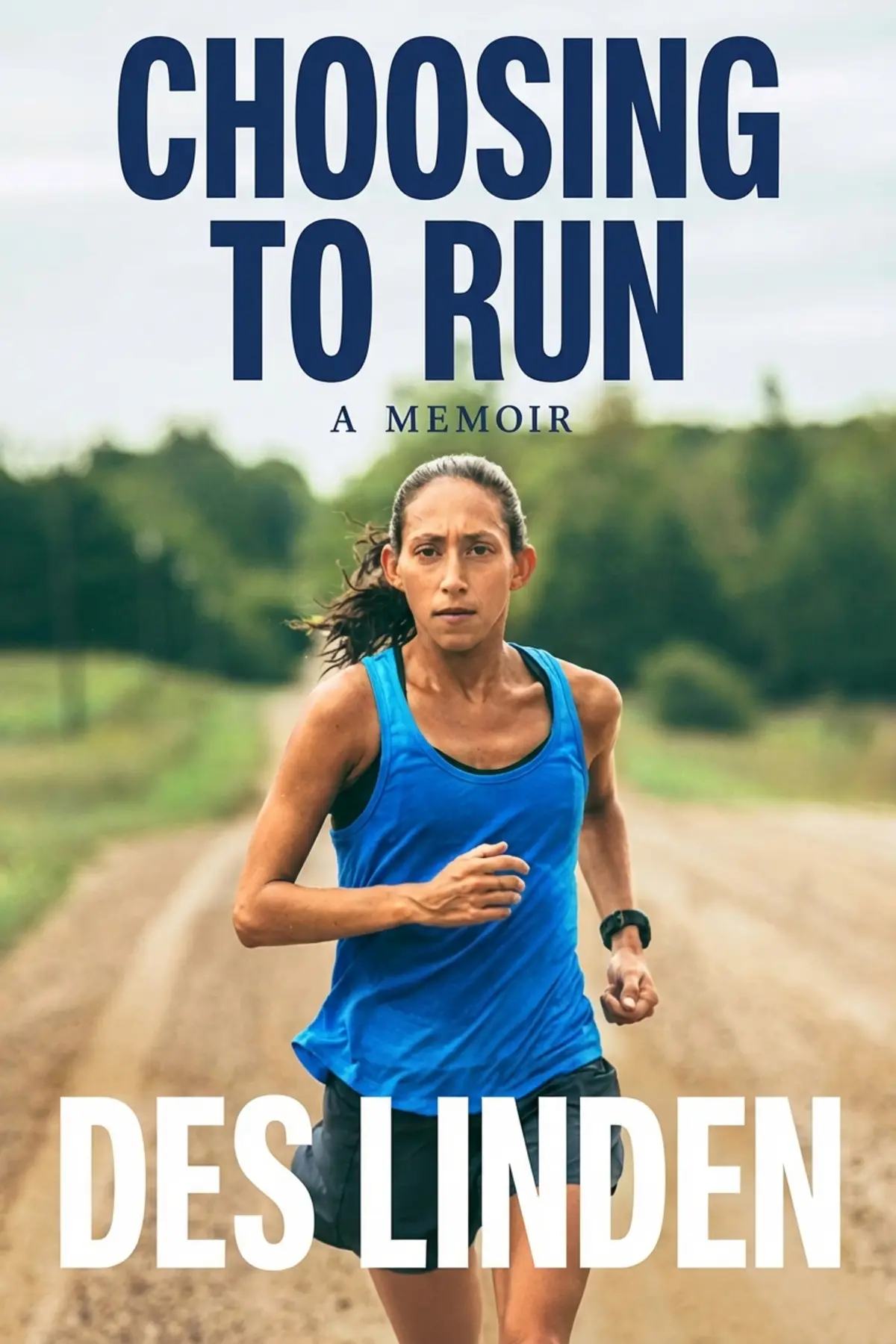
Des Linden did not choose running at first. Her father pushed her into it, and for years coaches, contracts and Olympic selection set much of her agenda. She made two Olympic teams, broke down with a stress fracture in London, felt let down by doping suspicions in Rio and finished fourth in Boston in 2017. In Choosing to Run, Linden tells how she turned that story around. A diagnosis of severe hypothyroidism forced her to train differently, rest more and build a life beyond the track. She chose the Boston Marathon over international titles because it still meant something to her, and in 2018, in severe weather, she won it. Readers get an honest look inside elite distance running and a clear lesson that travels well beyond sport: progress came when Linden made choices that were truly hers, and stalled when she let others decide.
Runners and other athletes who feel burned out or pushed by expectations that are not their own.
Young professionals deciding whether their goals were chosen by them or for them.
Anyone coming back from a public setback, an injury or a draining illness.
Des Linden is an American long-distance runner who won the Boston Marathon in 2018. Her victory ended a 33-year stretch in which no American woman had won the women's race. Choosing to Run is her memoir of the long road to that day, told from inside elite marathoning.

Listeners find this memoir to be an incredible experience with an ideal mix of inspiration, and one review points out that it's packed with quotable wisdom throughout. Moreover, the narrative stretches beyond racing, and listeners appreciate the portrayal of the grueling effort involved. The book is also eloquently crafted and sincere, highlighting the author's blend of internal strength and openness.
Wow, this was exactly the kick in the pants I needed for my current training cycle. Des Linden has this no-nonsense way of articulating the grind that feels so much more authentic than the usual 'just believe in yourself' fluff you find in most sports memoirs. I loved the dual-timeline structure, especially how it kept cutting back to the 2018 Boston Marathon. You know the outcome, but the way she builds the suspense around those brutal, freezing conditions makes you feel like you're right there in the rain with her. The book is filled with quotable wisdom, particularly her 'run the mile you're in' philosophy, which I've started repeating to myself during my long runs. It’s a beautifully written testament to sheer stubbornness and grit. Not every page is about glory; she’s honest about the monotony of the training log and the repetitive nature of injury recovery. That vulnerability makes her win feel so much more earned. This is a must-read for anyone chasing a big dream.
Show moreIs it possible for a book to feel like a cold, rainy day in Massachusetts in the best way imaginable? Des Linden manages to translate her famous 'Keep Showing Up' mantra into a narrative that is both gritty and deeply moving. I opted for the hard copy because I’d heard mixed things about the audiobook narration, and I’m glad I did. The writing is sharp and concise. She avoids the flowery language often found in running books and instead gives us the raw truth about the work. I found the 'The Deepest Well' chapter to be particularly profound—it’s where she really dives into the 'why' behind the miles. Her journey isn't a straight line to the top; it’s a jagged path filled with doubt and physical pain. Seeing her vulnerability paired with that trademark toughness was inspiring. She isn't just a runner; she’s a philosopher of movement. This is easily one of the best sports memoirs I’ve read in years.
Show moreFinally got around to reading about Desi’s journey and I’m blown away by the sheer stubbornness required to reach her level of success. This isn't your typical 'rah-rah' motivational book. Instead, it’s a grounded, realistic look at the life of an elite marathoner who doesn't always love the sport but chooses to do it anyway. That distinction is so important! The chapters regarding her trip to Kenya were eye-opening, even if she stayed a bit of an outsider in her observations. I loved the technical details about her training and the specific challenges of the Boston course. The way she describes the wind and the rain in 2018 makes your bones feel cold. It’s informative, entertaining, and filled with the kind of grit that makes you want to lace up your shoes and hit the pavement immediately. A fantastic read from front to back that showcases her unique personality perfectly.
Show moreThe chapter titled 'The Deepest Well' is worth the price of admission alone. Des Linden has a way of cutting through the nonsense and getting to the heart of what it means to be an athlete. This book isn't just for runners; it's for anyone who has ever faced a long-term goal with uncertainty. I loved the honesty about her health struggles, especially the thyroid issues and the plantar fasciitis. It made her feel human rather than some untouchable elite machine. The dual timeline kept me turning pages late into the night because the suspense of the Boston win was built so perfectly against the backdrop of her previous heartbreaks. It’s a story of redemption, but a very quiet, humble kind of redemption. She shows us that toughness isn't about being loud; it’s about not stopping when things get miserable. Absolutely loved it and found it incredibly enlightening.
Show moreEver wonder what goes through a champion’s head when the weather is miserable and the body wants to quit? This book gives you the answer in spades. Des Linden’s 'Choosing to Run' is a masterclass in mental fortitude. I found myself highlighting so many passages that focused on the philosophy of the long game. The way she describes her win in Boston—not as a fluke of the weather, but as the culmination of years of 'showing up'—is incredibly powerful. The writing is honest and showcases both her toughness and her vulnerability in a way that feels very authentic to who she is. I especially enjoyed the parts about her training at ASU and her early career struggles. It’s a fast, easy read that manages to stay with you long after you close the cover. For anyone who needs a reminder that the hard work is worth it, this is the book for you.
Show morePicked this up after watching the 2018 Boston highlights for the tenth time, and it mostly lived up to the hype. Desi’s voice is distinct—tough, a bit dry, and incredibly focused. I will say, there are sections where it feels a bit like reading a training log, focusing heavily on the injury-recovery-repeat cycle that can be a bit draining to get through. If you aren't a runner, some of the technical bits about plantar fasciitis or thyroid issues might feel a little deep in the weeds. However, the chapters about her time at ASU and running the trails in Phoenix brought back so many memories for me. She doesn't sugarcoat the 'mediocre' days, which I actually appreciated. It isn't always about the runner's high; sometimes it’s just about showing up when you really don't want to. I took off one star because the prose can be a bit clinical at times, but her passion for the sport eventually shines through the technical details.
Show moreAs someone who has dealt with the nightmare of chronic injuries, reading about Des's comeback was incredibly validating and gave me a new perspective on my own setbacks. She captures the mental toll of being an elite athlete whose body isn't cooperating, and her honesty about the thyroid diagnosis was a highlight for me. I’ve seen some people call her tone 'cocky,' but I didn't get that vibe at all. To me, it felt like the quiet confidence required to win a Major. The book oscillates between her life story and that legendary Boston day, which keeps the momentum moving even when the biographical parts get a little slow. To be fair, I did find some of the descriptions of her training in Kenya a bit detached, as if she was trying too hard to be objective rather than emotional. Still, the ending is powerful. It’t a solid, honest look at what it actually takes to be the best.
Show moreLook, I’m a 'mediocre' runner by Des’s standards, but I found so much to relate to in this memoir. The way she talks about the 'mile you're in' is a game changer for my mental game. I did find the audiobook a little difficult to listen to—there were some strange pauses and the audio quality shifted between chapters—so I’d recommend the physical book instead. The story itself is great, though. It’s a perfect blend of personal history and race-day strategy. She’s very honest about the difficult work involved, and she doesn't try to make it sound glamorous. It’s mostly just hard work and showing up. My only real gripe is that I wish she’d spent more time on her life outside of running to give her character more depth, but I suppose for an elite athlete, running IS the life. Overall, it’s a very solid 4-star read that I’ll likely revisit before my next marathon.
Show moreTruth is, I struggled with the pacing of this one despite being a huge fan of Desi. I was looking for more of an emotional exploration of her internal life, but a lot of the chapters felt like a play-by-play of her training logs. While I respect her tenacity and the incredible feat she pulled off in Boston, the writing felt a bit insipid and dry in the middle sections. It’s very much 'I did this race, then I got this injury, then I recovered.' I wanted more of the 'feels' and less of the 'grocery list' of events. Also, the transition between the two timelines was a bit jarring for the first few chapters until I got the hang of it. It’s a decent history of her career, but it lacked the spark I was expecting from someone so charismatic in interviews. If you’re a die-hard running nerd who loves split times and gear talk, you’ll love it, but casual readers might find it a bit technical.
Show moreNot what I expected from an elite athlete's memoir, to be honest. While I admire Des Linden immensely, the book felt a bit superficial in its execution. I was hoping for a deeper dive into her psyche, but instead, I got a lot of clinical descriptions of injuries and race results. It felt like she was holding back the 'real' her behind a wall of training data and professional milestones. The audiobook narration was also a bit of a letdown—it felt disjointed and the pacing was off, which made it hard to stay engaged during the slower chapters. I appreciated the sections on the 2018 Boston win, as those were genuinely exciting, but the rest of the book felt a bit like a slog. It’s a fine book for a fan, but as a memoir, it lacked the emotional resonance I look for in a 5-star read. Just a bit too dry for my taste.
Show moreIt is Des Linden’s memoir of her running career, from being pushed into the sport by her father to winning the 2018 Boston Marathon. Along the way she makes two Olympic teams, withdraws in London with a stress fracture, feels disillusioned by doping suspicions in Rio, finishes fourth in Boston in 2017 and is diagnosed with severe hypothyroidism before her breakthrough win.
Linden’s story suggests that real progress came when she made her own choices: picking her college and coach, negotiating her contracts, choosing Boston over international titles and building a training plan around rest after her diagnosis. Along the Olympic road she met injury, doubt and disillusion, from a stress fracture in London to doping suspicions in Rio. When she turned her focus to Boston on her own terms, she found renewed purpose, and eventually she won.
After waking one night with a weak heartbeat and struggling with fatigue and hair loss on a trip to India, Linden was diagnosed with severe hypothyroidism. Leaving behind the rigid structure of team training, she adopted a more independent, flexible routine that gave real weight to rest and recovery, and she made more room for interests such as books, bourbon tasting and travel.
Ask whether your current goal is still one you believe in, as Linden did when she turned from the Olympics to Boston. Treat long-lasting tiredness as a signal worth checking. Learn the ground of your biggest challenge in detail, the way she ran 20 miles of the Boston course. And when doubt peaks, let someone you trust ask you to commit fully.
It suits runners and athletes who feel driven by other people’s expectations, women in sport dealing with body image or health pressures, and anyone rebuilding after a public failure or an illness. Readers outside sport who are questioning whether their own goals are truly theirs will also find a clear and honest example in Linden’s path.
Barack Obama


Masaji Ishikawa

Ben Macintyre


James Shapiro



Ben Macintyre

AUDIO SUMMARY AVAILABLE
Get the key ideas from Choosing to Run by Des Linden, plus 5,000+ more nonfiction titles.









