

60 Seconds & You’re Hired!
Robin Ryan
 English
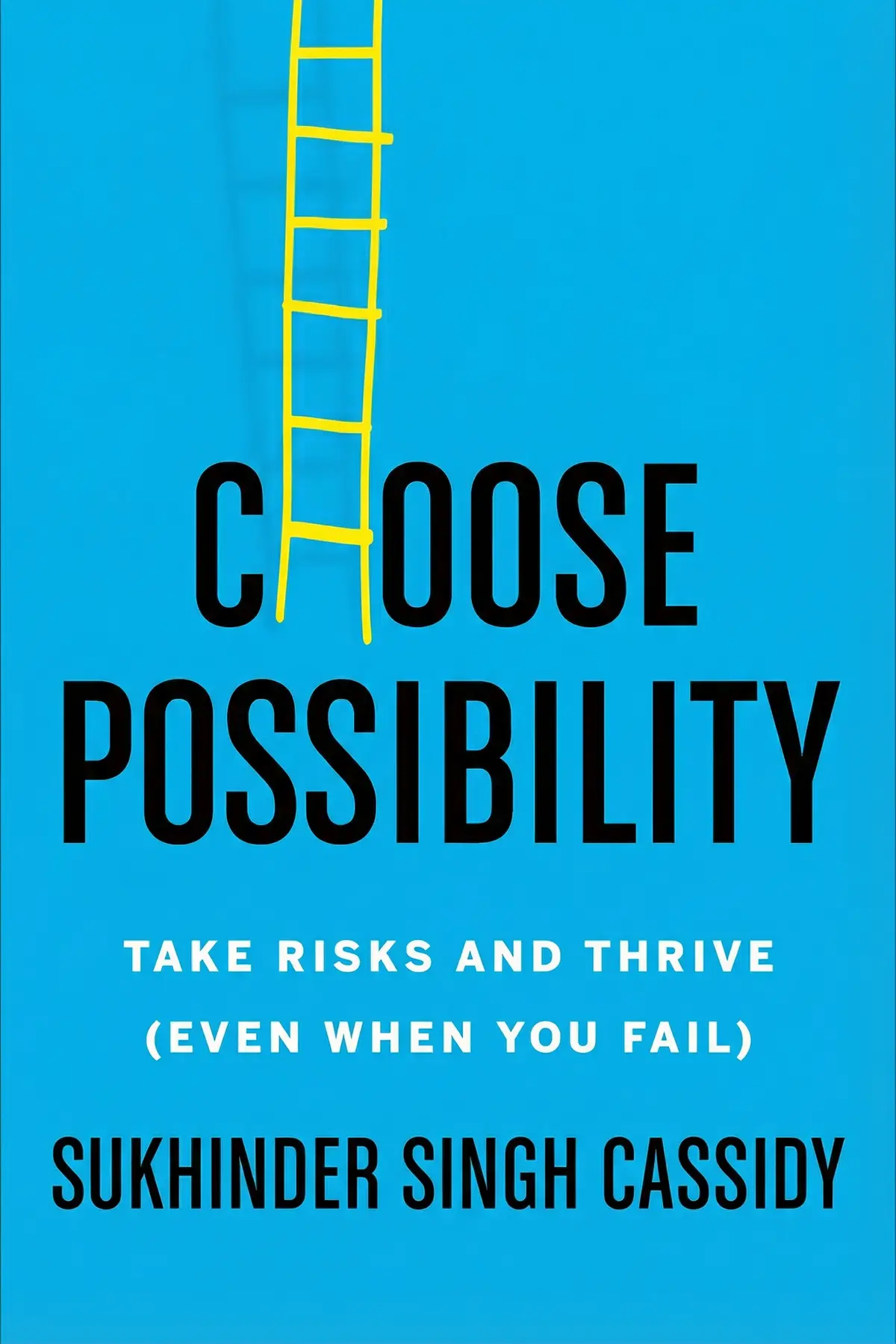
Shows how to stop treating career moves as all-or-nothing gambles and start taking many small, well-weighed risks, with tools for measuring fear, choosing the right people and turning failures into later openings.
1 min 03 sec
If every career decision feels like it could ruin you, small chances may be passing you by while you wait for certainty. In Choose Possibility, Silicon Valley executive Sukhinder Singh Cassidy argues that this fear rests on a mistake about risk itself. Truly make-or-break moments are rare. Most risks are small and everyday: whether to speak up in a meeting, or whether to return a recruiter’s call.
Singh Cassidy, who built Google’s international business and later led StubHub, treats risk as an ongoing practice, a habit built over many small moves. Take many honest bets, keep weighing what you fear losing against what you might miss, and you create your own openings, even when some bets fail. Her own path, from a graduate with no job offers to the top of the tech world, supplies most of the evidence. What follows is a working method for weighing a move, reading the forces around you and failing in ways that pay off later.
1 min 40 sec
A graduate who had planned everything ended a whole year with no job offers at all. What got her moving again was a handful of modest experiments, and a start-up founder later proved the same approach at scale.
1 min 21 sec
A polite rejection letter looked like the end of the road. One reader saw it differently, acted that same evening, and set off a chain of moves that no career plan could have mapped in advance.
1 min 42 sec
A struggling business owner knew she had to change course but could not bring herself to act. A few plain questions, the same ones a record-breaking skydiver lived by, tipped the balance.
1 min 39 sec
She landed a management job at an exciting start-up in the field she loved, and within two days her boss told her she was the problem. The fix came from somewhere far less glamorous.
1 min 43 sec
Talent and hard work get the credit when things go well, so they also take the blame when things go badly. A bank chief who took over in a crisis shows why that habit misreads what happened.
1 min 30 sec
Changing careers midway through life, or relocating to the other side of the country, can seem too big to weigh calmly. Two simple scores bring it down to size, and then a third voice gets its say.
1 min 44 sec
She called it the worst failure of her professional life, and for a while it was. Then the consequences kept arriving, in forms she never expected, and a later company taught her a harder lesson.
1 min 36 sec
Board seats in tech stayed closed to women, and the excuse was always the same. Answering it led to the most meaningful work of her career, and to a lesson first taught by a small-town doctor.
1 min 13 sec
What emerges is a picture of risk as weather, always present, rather than a cliff you face once in a lifetime. Singh Cassidy’s own record shows it: a year without job offers, a train ticket, an awkward start at OpenTV, a lost chief executive post, a company sold after six years of work, and through all of it a career that kept climbing. No single loss was the whole story, so none of them could stop her.
The habit underneath is honesty about fear. Name what you might lose, measure it, ask whether the door swings both ways, and plan your recovery. Then make small bets routine. She points to Eleanor Roosevelt’s advice to do one frightening thing every day. Wins build momentum and losses teach, so either way you grow, and small acts of courage pile up. When a truly bold leap arrives, you will already have practiced it many times in miniature.
And when you hold a little power, pass some of it on, the way a doctor in rural Ontario once turned over a young man’s hands and told him what they could become.
Many capable people stay stuck because every career decision feels like it could ruin them. Sukhinder Singh Cassidy, who built Google's international business and later led StubHub, argues that this fear comes from a mistaken picture of risk. Make-or-break moments are rare. Most risks are small, everyday choices, and a career is shaped by how you handle them over time. Drawing on her own path, from a graduate with no job offers to the top of the tech industry, she shows how to keep several options open, why being physically close to opportunity matters, and how to weigh the fear of losing something against the fear of missing out. She explains why the people you work with matter more than the field, how forces beyond your control shape success and failure, and how to score a large decision before you make it. Readers get practical tools for weighing career moves, a kinder and more accurate way to read their setbacks, and advice on leaving a job well. The book closes with a generous view of power: the kind that grows when you share it.
Graduates and early-career professionals frozen by fear of picking the wrong job.
Mid-career workers weighing a big move, such as a new field, a start-up or a relocation.
Managers and founders who want a fairer way to read setbacks and to share opportunity with others.
Sukhinder Singh Cassidy has spent more than 25 years founding, growing and advising companies. She built Google's international business, co-founded the fintech company Yodlee and later led StubHub, which sold for more than $4 billion in February 2020. She also founded Joyus, a video shopping platform, and theBoardlist, a marketplace that helps diverse candidates get noticed for board and executive roles. She has served on the boards of Ericsson, TripAdvisor and Stitch Fix.
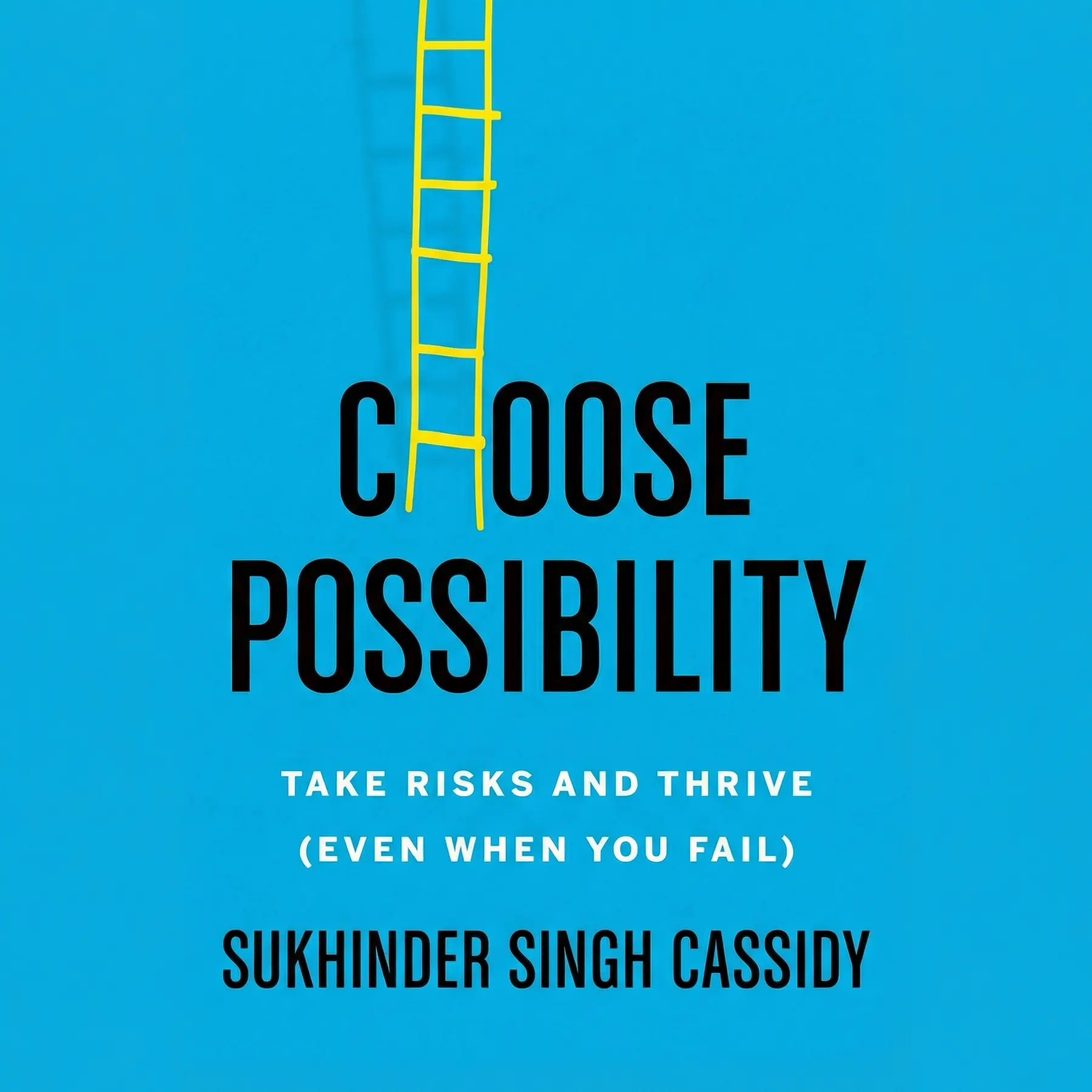
Listeners consider the book to be an excellent read, with one person highlighting how it offers practical steps for turning risk into an asset. They value the caliber of advice, with one listener pointing out that it is perfect for individuals at a career crossroads.
Finally got around to reading this after hearing the author speak, and it really reframed my anxiety around decision-making. I’ve spent years paralyzing myself trying to find the "perfect" next move, but Cassidy argues that we should focus on "thoughtful motion" instead. The concept of choosing possibility rather than a destination is a total game-changer for anyone feeling stuck in their professional life. Not gonna lie, I was worried this would be another "just quit your job" manifesto, but it’s actually very pragmatic about assessing financial fears and market forces. It feels like getting career coaching from someone who has actually been in the trenches and isn't afraid to talk about their "faceplant" moments.
Show moreAs someone who has always been terrified of failure, I found Cassidy’s "risk is a muscle" analogy life-changing. She breaks down the idea that success isn’t about avoiding mistakes, but about how many times you are willing to get up and choose again. The book is incredibly grounded for someone with such a high-profile career. I loved the focus on empowering the people around you and building "career capital" through every decision, even the ones that don't pan out. It’s a very positive, inspirational read that actually gives you the tools to change your mindset. I’ve already recommended this to three colleagues who are feeling burnt out.
Show moreThis is one of the most candid accounts of a high-level career I’ve ever encountered. Sukhinder Singh Cassidy doesn’t just share her wins; she’s incredibly open about the times she stumbled or made the wrong call. That honesty makes the advice feel much more attainable than your typical "how-to-succeed" book. I especially appreciated the visual aids—the flow charts and diagrams really helped solidify the concepts of evaluating tailwinds and headwinds. It’s a very thorough guide for anyone from budding entrepreneurs to mid-life professionals. If you’re feeling stagnant, this book will give you the kick you need to start moving again. Highly recommended for its grounded perspective.
Show moreCassidy offers a refreshing take on career growth that moves away from the typical "straight line" narrative. Instead of the usual advice to pick one goal and stick to it, she argues that a successful career is actually a series of measured experiments. I loved the idea that risk is a muscle we need to build through small, consistent bets. The truth is, most of us are paralyzed by the "Myth of the Single Choice," and this book does a fantastic job of dismantling that pressure. It’s grounded, practical, and full of charts that actually make sense for once. I docked a star because the constant brand-dropping gets a bit exhausting, but the framework itself is top-tier.
Show moreAnyone currently at a professional crossroads needs to check out the section on "choosing possibility" instead of hunting for the perfect move. I found the distinction between the fear of failure (FOF) and the fear of missing out (FOMO) to be particularly insightful—sometimes we only act when our FOMO finally outweighs our FOF. The book is packed with actionable steps that go beyond generic platitudes. I especially liked the emphasis on how our relationships and social networks function as tailwinds. My only gripe is that the narrative can get a bit bogged down in the author's own career twists and turns. Still, it’s a great antidote to traditional, rigid career advice and a must-read for entrepreneurs.
Show moreLook, I didn’t expect a business book to reference Frodo and the Mines of Moria, yet here we are. The way Cassidy uses the "Hero's Journey" to illustrate micro-decisions versus macro-decisions was such a clever touch. It really helped me see that my career isn't defined by one big moment, but by the small, daily choices I make. Personally, I found the chapter on "truth-seeking" and getting candid feedback to be the most practical part of the whole book. It’s a bit long-winded in the middle, and there’s definitely a "hustle culture" vibe that might not be for everyone, but the overall message is empowering. It’s a solid 4-star read for anyone looking to build professional momentum.
Show moreEver wonder why you stay paralyzed in a job you hate? This book identifies the "Myth of the Single Choice" as the culprit, and it was a total lightbulb moment for me. Cassidy’s experience at places like Google and various startups provides a lot of "proof" for her methods, even if it does feel a bit braggy occasionally. In my experience, the best career books are the ones that provide a new lens to view your own mistakes, and "Choose Possibility" does exactly that. It encourages you to stay in "thoughtful motion" and reminds us that inaction is often the biggest risk of all. It’s a very motivating read, even if you have to ignore some of the Silicon Valley gloss.
Show moreWait, is 220 pages supposed to feel this long? I really enjoyed the first half, especially the breakdown of risk as an iterative process rather than one giant leap, but the final section felt like a bit of a slog. There’s a fair amount of name-dropping and Silicon Valley chest-thumping that might turn some readers off. To be fair, the advice on building a social network as a "tailwind" is solid and probably worth the price of admission alone. It’s a decent career guide, but it could have been a much tighter 150 pages without losing the core message. I’ll definitely use some of these frameworks for my annual goals, but I found myself skimming the corporate success stories by the end.
Show moreThe core framework here is brilliant, but I struggled with the sheer volume of Silicon Valley anecdotes. Cassidy is clearly brilliant and her "risk as a muscle" concept is something I’ll take with me, but the constant name-dropping felt a bit like a vanity project at times. Frankly, I could have done with more of the step-by-step processes and fewer pages dedicated to the drama of her various CEO roles. That said, the chapter summaries are excellent and provide a great quick reference for when you're actually facing a big decision. It’s an interesting read, just be prepared to wade through a lot of tech industry "inside baseball" to get to the actual meat of the advice.
Show moreWhile I appreciate the sentiment, it’s hard to ignore that much of this advice assumes a significant financial safety net. The author talks about taking risks as if everyone has the luxury of a Silicon Valley exit to fall back on. To be blunt, many of the strategies here are out of reach for people living paycheck to paycheck or working in fields that don't offer much mobility. The writing style is fine, but the perspective feels somewhat bubbled within the tech elite. If you’re already an executive or an MBA grad, you’ll find some value here. For the rest of us, it’s mostly just interesting stories about big names that don't translate well to a non-corporate reality.
Show moreSukhinder Singh Cassidy argues that most people misunderstand risk. They picture it as a few huge, life-defining decisions, when in fact careers are shaped by many small choices, like speaking up in a meeting or answering a recruiter. By taking many small, reversible risks and facing fears honestly, she says, you build momentum and create your own opportunities, even when some bets fail.
Singh Cassidy suggests naming each worry precisely, such as how much money is at stake, and separating real concerns from wounded pride. Picture the problem in three months, three years and ten, and ask whether the damage could be undone. Then draw up a backup plan. Her sister Nicky used these steps to leave a struggling optometry practice for a promising new job.
Build two scores. Rate the opportunity on your ambitions, your fit with its demands, the headwinds and tailwinds, and the people involved. Then rate the downside: financial harm, damage to reputation or ego, personal loss, and whether the choice is reversible with a recovery plan. Compare the scores, but also listen to your gut and test that feeling against the facts.
It suits graduates unsure where to start, professionals weighing a change of job, field or city, and founders who live with constant uncertainty. It also speaks to anyone who takes failure personally, since Singh Cassidy explains how outside forces shape outcomes, and to leaders who want to use their position to open doors for others, as she did with theBoardlist.
Robin Ryan




Marianne Cantwell
William Vanderbloemen
AUDIO SUMMARY AVAILABLE
Get the key ideas from Choose Possibility by Sukhinder Singh Cassidy, plus 5,000+ more nonfiction titles.









