

14 min 14 sec
Available in: English
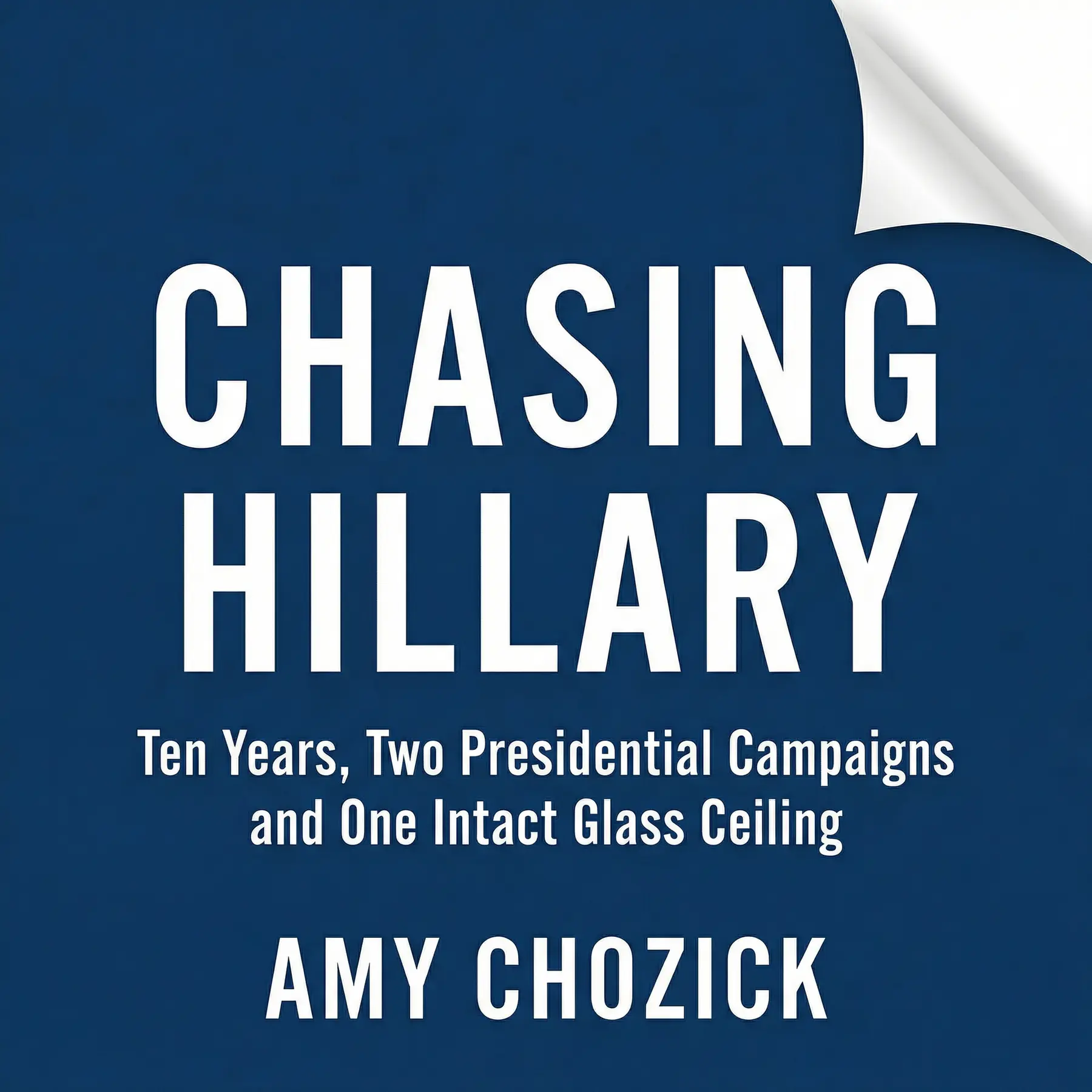
Chasing Hillary: On the Trail of the First Woman President Who Wasn't – A Rollicking and Candid Memoir of the 2016 Election and Journalism
By Amy Chozick
A New York Times reporter's candid memoir of covering Hillary Clinton. It shows how a guarded candidate and a scandal-hungry press fed each other's worst habits, and what Chozick now regrets about her own stories.
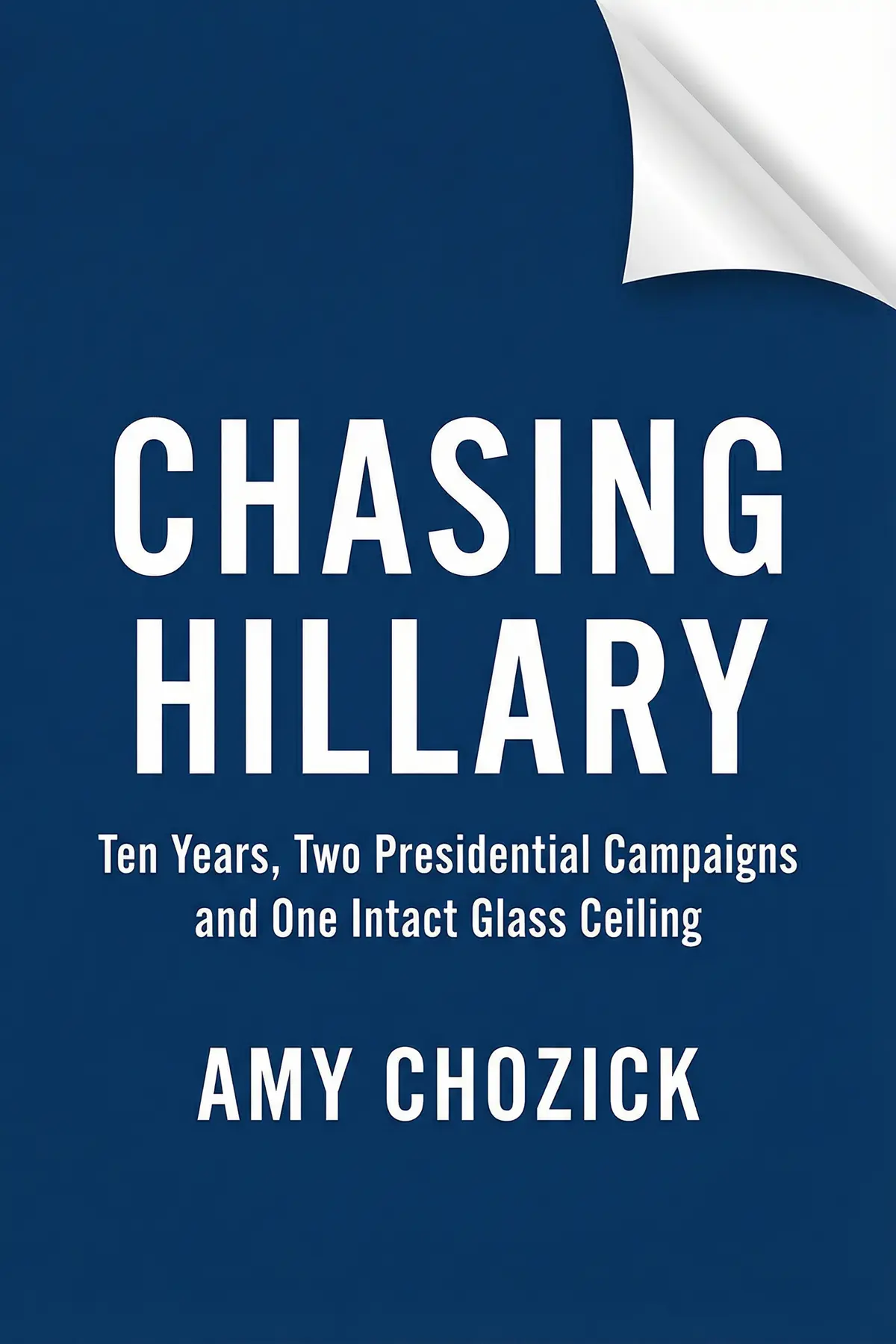
Table of Content
1. Introduction
56 sec
If 2016 looks like the simple story of a weak candidate, Amy Chozick’s memoir will complicate it. In Chasing Hillary, the reporter who led The New York Times’ coverage of Hillary Clinton recalls a frontrunner with a 70 percent approval rating and no serious rival in sight, who still lost. Chozick blames two parties at once: a candidate who hid her humor, activist past and faith from a press she distrusted, and a press corps, the author included, that chased the wrong stories.
The book is a funny, personal memoir about a young reporter who put her own life on hold for a campaign. It is also a confession, with apologies wherever Chozick thinks the coverage earned them, most sharply over stolen emails. Follow her from her first rally to election night and political news starts to read differently, along with a hard lesson about what mutual distrust costs everyone involved.
2. Spot the old grudge behind a cold welcome
1 min 35 sec
A young reporter weighed her fertility against a presidential calendar to land the assignment of her career. She soon learned that her own newspaper had made the Clintons wary long before she wrote a single word.
3. Freezing out reporters backfires, so learn the lesson
1 min 41 sec
A playful magazine illustration turned a whole campaign against its author, and soon reporters were reduced to rolling questions down an airplane aisle on fruit. The freeze-out had consequences neither side expected.
4. A slow drip of answers keeps scandals alive
1 min 48 sec
A late-night tweet and a short press conference were meant to bury a minor story for good. Instead they kept it alive for the rest of the campaign, and the reason has little to do with the emails themselves.
5. Meet the funny, faithful Clinton few voters saw
1 min 45 sec
Wall Street bankers and Sunday congregations saw a candidate who joked sharply and spoke with conviction. Television audiences saw someone else entirely, and Chozick traces the gap partly to how the press once treated her.
6. Tell the story that shows who you are
1 min 26 sec
In 1972, Clinton posed as a housewife at an Alabama school and exposed something its principal never meant to admit. Decades later she refused to talk about it, and only one person in her circle saw what that cost.
7. Find your best voice when you're the underdog
1 min 48 sec
Sanders drew thousands while Clinton lectured small crowds about a canal built in the early 1800s. Then a late-night walk through a Las Vegas hotel showed what she could do once she was finally losing.
8. Test a leak before you trust it
1 min 53 sec
Clinton beat Trump on the debate stage and still lost the news cycle. Then the press made choices about stolen documents that Chozick now counts among her biggest regrets, and she offers a simple test for next time.
9. Conclusion
1 min 22 sec
For months Chozick had warned her editors that the campaign did not feel like a winner, so election night shocked her less than most. She slept about two hours in front of CNN, then covered the concession speech. Clinton wore purple, which Chozick reads as most likely Methodist penitence, and told the room not to lose heart. At the rope line, watching the Guys in tears, the author finally saw them as loyal supporters rather than enemies.
The personal tally is blunt. She let her husband down, postponed a baby and gained twelve pounds. “In the end, we all lost,” she writes. Clinton disliked her, yet nobody fascinated, inspired and infuriated her as much. The book closes with the birth of her son near her deadline, and with a worry that stays: what her stories meant to the 53 percent of white women who voted for Trump.
What lingers is the shape of the feud. Each side’s defensive move became the other’s evidence, until the public saw mostly the fight. So when a story arrives in drips, ask what it is pushing off the page. Before passing on stolen papers, picture that Brooklyn file cabinet. A candidate who hides and a press that hunts can lose the same election.
About this book
What is this book about?
Hillary Clinton entered the 2016 race with a 70 percent approval rating, deep experience and no obvious rival. Amy Chozick, the New York Times reporter who led its coverage of her, was there from the first rumors to the concession speech. Her memoir explains how that frontrunner lost, and why the press deserves part of the blame. Chozick tells it in a friend's voice. There is the young reporter who froze her eggs for the campaign, the mostly male press aides she nicknames the Guys, the plane where reporters rolled questions down the aisle on fruit, and a decades-old feud between the Clintons and the Times. Against that, she shows a Clinton few voters met: funny at private fundraisers, moving in Black churches, brave undercover in 1972 Alabama, and at her best when Bernie Sanders nearly beat her. The book is also a mea culpa. Chozick admits the press obsessed over a private email server and later served Russian intelligence by rushing to publish hacked emails. Readers get an insider's view of the 2016 election and a lasting lesson on what happens when a public figure and the people covering her stop trusting each other.
Book Information
Who it's for
Followed the 2016 election
Readers who followed the 2016 election and want to understand how the frontrunner lost.
Journalists, students, communications staff
Journalists, students and communications staff curious about how candidates and reporters work with and against each other.
Sharing political news
Anyone who shares political news and wants a simple test for leaked documents.
About the Author
Amy Chozick
Amy Chozick was the lead New York Times reporter on Hillary Clinton's 2016 presidential campaign. Before joining the Times in 2011, she spent eight years at The Wall Street Journal, part of that time as a foreign correspondent in Tokyo. She won a Front Page Award for beat reporting and the 2017 William Randolph Hearst Fellows Award, consulted for the Netflix drama House of Cards, and created and executive produced the HBO Max series The Girls on the Bus, based on this book. She has also written for Vogue, Vanity Fair and the Times Magazine.
Ratings & Reviews
Ratings at a glance
What people think
Listeners find this memoir to be an absorbing and skillfully written work, featuring a sharp wit that turns political coverage into an amusing journey. The narrative provides candid journalism alongside a strikingly frank personal story, as one listener notes how it smoothly blends memoir and journalism. They also value the perceptive analysis of the Clinton campaign and its sincere tone, with one listener mentioning how it perfectly captures emotions like elation and disbelief.
Top reviews
Ratree
Wow. Chozick manages to turn a grueling ten-year assignment into a witty, fast-paced adventure that feels surprisingly intimate. I was struck by the vulnerability she displays when discussing her personal sacrifices, specifically that surreal moment at the OB/GYN asking about freezing eggs mid-campaign. While the 'FWP' obsession might feel a bit much for some, it captures the genuine elation and later disbelief that defined that era for many women in the press corps. The writing is incredibly smooth. It blends high-stakes political reporting with the kind of self-effacing humor you’d expect from a close friend. Personally, I think her insights into the 'icy aloofness' of the Clinton camp explain so much about the 2016 outcome. It isn’t just a dry policy book; it’s a heartfelt look at the human cost of chasing power. Even if you think you’ve heard every possible angle on Hillary, this memoir offers a disarmingly honest vantage point that stays with you.
Show morePacharapol
Finally got around to this memoir, and it is a total page-turner that captures the emotional rollercoaster of a decade spent in the Clinton orbit. The writing is incredibly sharp, blending a keen sense of humor with the crushing weight of witnessing a historic loss. I loved the ending where she reflects on the Hillary she wants her child to understand—the one who 'spent her life doing' rather than just the figure who lost. It’s a heartfelt approach that moves beyond the typical dry political autopsy we’ve seen so much of lately. Truth is, Chozick manages to make the reader feel the exhaustion and the stakes of the trail, from the endless flights to the constant threat of being 'scooped.' Some might find her focus on her own life distracting, but I thought it added a necessary layer of humanity to a story that is usually told through data and polling. It’s a masterpiece of campaign reporting that feels disarmingly honest about its own shortcomings.
Show moreMo
Picked this up after seeing a few excerpts, and it really is a seamless merger of personal memoir and professional journalism. Chozick is a talented writer who captures the sheer absurdity of the campaign trail, from the 'joyless' optics to the bizarre interactions with fanatical 'Bernie Bros' on social media. I appreciated her willingness to admit when the New York Times got it wrong, even if some of her excuses for the email obsession feel a little thin in hindsight. The book is at its best when she’s describing the disconnect between the 'Acela Corridor' elites and the voters in the heartland she knew from her Texas upbringing. Look, you don't have to love Hillary to enjoy the way Chozick deconstructs the 'Saint Hillary' persona versus the private, gritty woman she occasionally glimpsed. It’s an authentic, fast-paced account that highlights the massive divide between the press and the politicians they cover. I'd definitely recommend it to anyone who still feels a bit of lingering vertigo from the 2016 results.
Show moreRungrat
As someone who followed the 2016 election obsessively, I found this perspective from the press plane to be uniquely illuminating. Chozick does an excellent job of illustrating the 'Nixonian' paranoia that permeated the Clinton camp, which explains why they were so terrible at managing the press. She describes the rigid hierarchy and the distance Hillary kept from reporters, contrasting it beautifully with the more accessible styles of Obama or even Trump. The book is surprisingly funny, especially when Chozick mocks the snooty arrogance of her own home office at the Times. Gotta say, her description of the 'guys' running the show as a shield for Hillary was eye-opening and felt very authentic to the power dynamics of that time. While the prose is easy-flowing and engaging, there are moments where Chozick’s desire to be liked by the Clintons feels a bit desperate. Still, it’s a valuable piece of the puzzle for understanding how a seemingly pragmatic choice ended in such a shocking defeat.
Show moreFort
The chapter on 'The Guys' was particularly revealing, perfectly capturing the smug, insular nature of the 2016 Clinton campaign. Chozick writes with a 'pithy' style that keeps the pages turning, even when she’s recounting events we all know the ending to. I was particularly interested in her account of how the campaign’s rigidity and 'icy aloofness' prevented them from seeing the populist wave coming until it was too late. While she is clearly a fan of Hillary, she is surprisingly honest about the Times' own failures, including how they handled the email server story. Personally, I found the personal anecdotes about her Texas roots and her marriage to be a welcome relief from the 'joyless' grind of the campaign. It’s a well-rounded account that manages to be both a funny adventure and a sobering reminder of how easily the press can be manipulated. If you want to understand the vibe of that election from the inside out, this is the book to read.
Show moreMonthon
After hearing so much about this book, I was surprised by how much I actually enjoyed Chozick’s 'disarmingly honest' storytelling style. She doesn't pretend to be a neutral observer; instead, she admits her biases and her childhood admiration for the FWP concept. This transparency makes her reporting on the 'Bernie Bros' and the campaign’s internal misogyny feel more authentic, even if it’s uncomfortable to read. The prose is breezy and accessible, making a 300-plus page political book feel like a quick weekend read. I did notice the lack of an index, which is frustrating, but the quality of the narrative arc mostly makes up for it. Look, it’s a book about the struggle of being a woman in a high-stakes, male-dominated field just as much as it is about Hillary. That dual narrative is what makes it stand out from the sea of other 2016 post-mortems.
Show moreThanit
Ever wonder what it’s like to spend a decade living on a press plane while the candidate you cover treats you like a nuisance? Amy Chozick provides a gritty, often hilarious window into that reality, though the 'whiny' tone some critics mention does creep in occasionally. She spends a lot of time on 'The Guys,' that inner circle of protective male advisors who seemed to go out of their way to make her job difficult. Frankly, the book could have used a bit more analytical depth regarding policy and significantly less focus on her own feelings of being snubbed by the campaign. To be fair, the lack of an index in a nonfiction work of this length is a major oversight that makes it hard to use as a reference. However, the anecdotes—like the weird drama over Natalie Portman’s dog—provide a level of 'fly on the wall' detail that few other election books achieve. It’s an engaging read, but it feels more like a personal catharsis than a definitive history.
Show moreBo
Chozick is an undeniably gifted writer, but the self-pitying tone in the latter half of the book gets old fast. She seems to take Hillary’s distrust of the media—a distrust built over twenty years of scandals—as a personal insult against her character. This 'mean girl' dynamic she projects onto the campaign feels a bit reductive for a journalist of her stature. To be fair, she does provide some great behind-the-scenes looks at the 'Acela Corridor' bias and the mistakes made by the Times' editors. However, her treatment of the 'Bernie Bros' and her dismissal of substantive policy critiques in favor of discussing 'likability' feels out of touch. The book is a fun, gossipy read, but it lacks the intellectual rigor I wanted from a deep dive into two presidential campaigns. It’s a decent memoir about being a reporter, but it’s a pretty flawed piece of political analysis.
Show moreNarumon
Truth is, this feels more like a personal diary than a serious political autopsy, but that might actually be its greatest strength. Chozick captures the sheer weirdness of the 2016 cycle, from Natalie Portman’s dog sitting in first class to the 'Charlie Brown dejection' of the press corps. While I found her constant 'whining' about not being liked by Hillary a bit grating, it accurately reflects the bizarre, codependent relationship between the Clintons and the media. The book is at its best when it’s being 'self-effacing' about the mistakes made by the New York Times in their quest for 'fairness.' It’s a fast, engaging read that offers a lot of color, even if it lacks the deep policy analysis some might be looking for. If you want the gossip and the grit of the campaign trail, this is definitely for you.
Show moreSiraporn
Not what I expected from a lead New York Times reporter, and frankly, the bias is just too loud to ignore. Chozick writes with a breeziness that borders on flippancy, often focusing more on her own wardrobe and social life than the serious geopolitical stakes of a presidential run. She makes several glaring factual errors. For instance, the debunked claim about the Clinton campaign funding Jill Stein’s recount really torpedoes her credibility as a journalist. The way she paints every Sanders supporter as a 'Berniebro' caricature felt lazy and dismissive of the genuine policy concerns that drove that movement. I also found it incredibly frustrating that she admits to seeing sexism within the campaign 'Guys' but didn't report on it in real-time when it actually mattered. In my experience, this reads more like a rejected rom-com screenplay than a serious look at why the glass ceiling remained intact. It is gossipy and self-indulgent, and the lack of an index just seals the deal on its superficiality.
Show moreQuestions about this book
What is Chasing Hillary by Amy Chozick about?
It is a personal memoir by the New York Times reporter who led the paper’s coverage of Hillary Clinton in 2016. Chozick describes her years on the beat, her clashes with Clinton’s press aides, the email server saga and election night. She argues that Clinton hid her best qualities from a press she distrusted, and she also criticizes her own profession, especially its handling of hacked emails.
Why does Amy Chozick think Hillary Clinton lost in 2016?
Chozick points to a cycle of distrust. Clinton, wary of the Times since the Whitewater story of 1992 and the Saint Hillary mockery of 1993, kept her humor, faith and activist past private. The press, in turn, fixated on her private email server. Clinton shone as an underdog in Nevada, then retreated again, and in the general election Trump’s provocations crowded her policy message out of the news.
What does Chozick regret about the hacked emails coverage?
She wrote six stories and a blog post based on emails stolen and released through WikiLeaks, and admits she always wanted the byline. Reporters did not yet know Russia was behind the hack, but she concludes the press covered the emails just as Russian intelligence hoped. Her test is to ask whether a newsroom would rush to print papers stolen from a Brooklyn file cabinet.
What can readers learn from Chasing Hillary?
The book offers lessons beyond politics. Releasing bad news in small pieces keeps a story alive, because each admission suggests another is coming. Refusing to talk about your strengths lets others define you, as when Clinton declined to discuss her undercover work against school segregation in 1972 Alabama. And before sharing leaked material, ask how it was obtained and whose purpose its publication serves.
Who should read Chasing Hillary?
It suits readers interested in the 2016 election, journalism or political communication. Aspiring reporters get an honest picture of life on a campaign beat, including its personal costs. Communications staff see how freezing out the press can backfire. Anyone who reads political news gets a sharper sense of why some stories dominate while others, like detailed policy plans, are largely ignored.
Readers also enjoyed
Age of Anger: A History of the Present
Pankaj Mishra

A Promised Land
Barack Obama

Age of Propaganda: The Everyday Use and Abuse of Persuasion
Anthony Pratkanis


A River in Darkness: One Man’s Escape from North Korea
Masaji Ishikawa

A Spy Among Friends: Philby and the Great Betrayal
Ben Macintyre

21 Lessons for the 21st Century
Yuval Noah Harari


AUDIO SUMMARY AVAILABLE
Listen to Chasing Hillary in 15 minutes
Get the key ideas from Chasing Hillary by Amy Chozick, plus 5,000+ more nonfiction titles.
- 5,000+ titles
- Listen as much as you want
- 7-day free trial
- Cancel anytime









