


13 min 47 sec
Available in: English
 ไทย
EnglishไทยCare of the Soul: A Guide for Cultivating Depth and Sacredness in Everyday Life
By Thomas Moore
Thomas Moore shows how to stop treating unhappiness as a defect to repair and start tending your inner life through family stories, regular retreat, renewed rituals, imagination and close attention to your dreams.
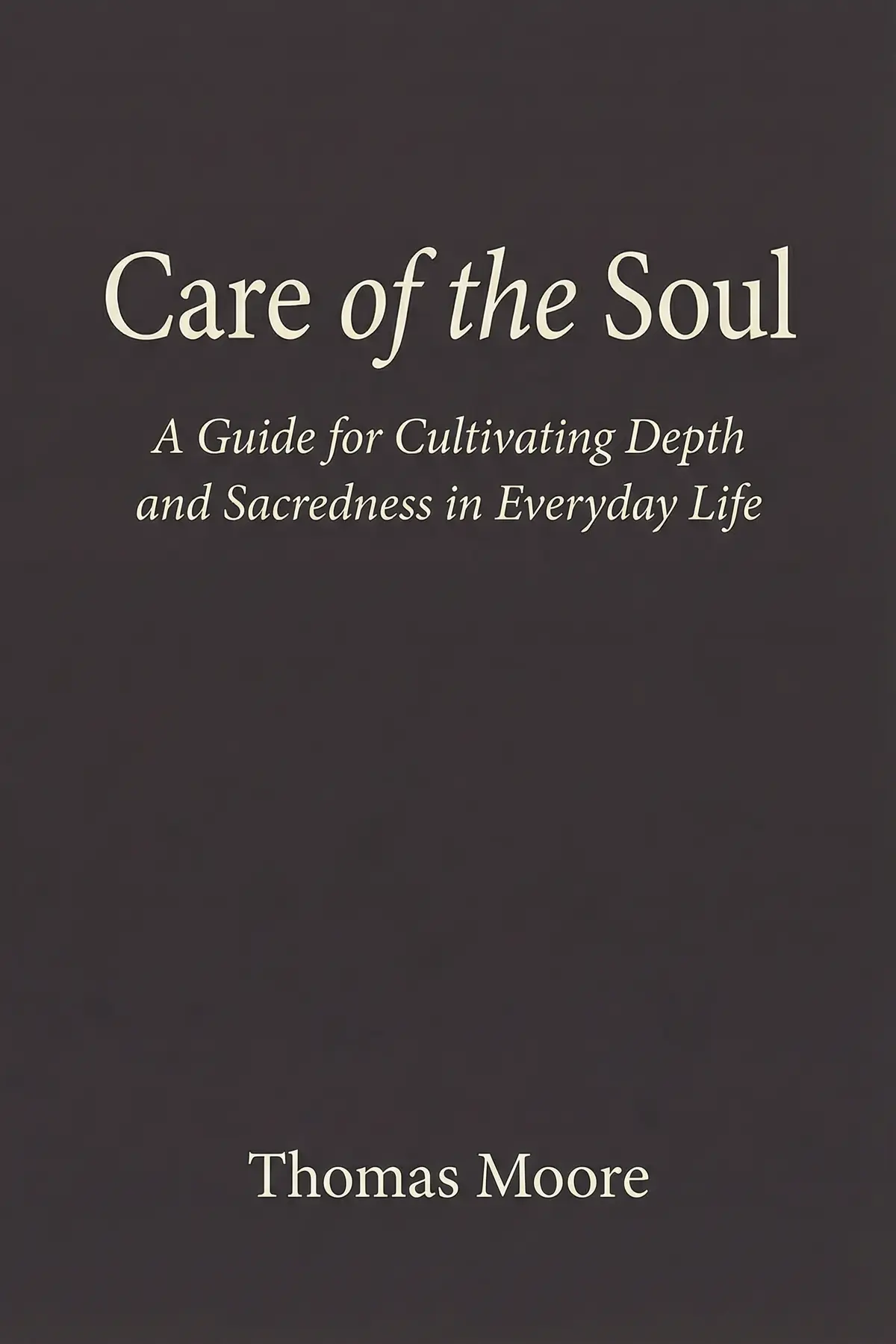
Table of Content
1. Introduction
1 min 05 sec
If you treat every bad mood, family quarrel and sleepless night as a fault to be repaired, the repairs may be wearing you out. In Care of the Soul, former monk and psychotherapist Thomas Moore offers another stance: stop asking how to cure what troubles you, and start asking how to live with it more deeply. The soul, he argues, needs attention more than repair. It grows when we look at our lives as they really are, without judging them, and give that looking a place in ordinary days.
That single shift runs through everything Moore suggests. Family turns from a source of symptoms into the material a life is built from. Time alone becomes a kind of sanctuary. Old rituals, personal myths, shared meals, simple crafts and even strange dreams become ways of hearing what the soul is asking for. What follows is a set of small practices for anyone who feels work and worry have flattened their days, and a better question to ask the next time pain arrives.
2. Tell the story instead of hunting the cause
1 min 53 sec
A young man kept fighting with his mother, who said he was just like the father who had left. His therapist skipped the usual search for a diagnosis and tried something slower, with a surprising effect on how he saw himself.
3. Become the father you were missing
1 min 53 sec
Almost every child lives with a father who is somewhere else, whether at the office or gone for good. An ancient sea voyage shows what that absence asks of us, and why waiting for it to be repaired rarely works.
4. Make peace with holding on and letting go
1 min 57 sec
A goddess stops every crop on earth to get her daughter back, and still receives someone changed. That old myth, along with a forgotten child inside every adult, explains a tension most families feel and few name.
5. Build a small retreat from the noise
2 min 00 sec
After his mother died, Carl Jung built a stone tower as a retreat and kept adding to it for twelve years. You do not need towers or months alone to get what he was after, but you do need something most weeks lack.
6. Turn everyday chores into rituals that feed you
1 min 55 sec
A drive-through burger gives only the sustenance of a meal, while a dinner prepared, set with candles and shared becomes an act of imagination. Moore reads fast food and even some illnesses as clues to what modern routines have lost, and how to get it back.
7. Listen to your dreams before judging them
1 min 43 sec
A model dreamed of two green peas hidden under a plate of white crepes, and a woman named Sylvia dreamed of crayon scribbled all over her typewriter. Their first readings of those dreams were not the most useful ones, and Moore explains why.
8. Conclusion
1 min 21 sec
Moore’s argument comes down to a change of posture. Most of us meet our lives like mechanics, searching for the broken part. He asks us to meet them like storytellers: patient, curious and willing to leave things unresolved. Seen that way, family becomes the soil a life grows from, a stone tower or a cup of tea becomes a refuge, a dinner table becomes a ritual, and a plate of crepes can carry a message.
He does not offer this as a luxury for people with spare time. When the soul is neglected, he warns, the world turns flat and flavorless. We miss wisdom that could steer us away from danger or toward great gifts, and we answer grief with destructive cures and escapes. Even good intentions can lead us astray. Nor is any of this a self-improvement task to check off each day. For Moore, it is the purpose of life.
So begin small. Retell one family story without blaming anyone in it, and keep one regular pause that belongs only to you. Write down the next dream you remember and live with it before deciding what it says. Whatever surfaces, the work stays the same: look at it closely, and let it be what it is.
About this book
What is this book about?
Most of us handle distress like a repair job. We look for the cause, name the symptom and hunt for a cure, whether the trouble is a strained family, a low mood or a restless sense that life has gone flat. Thomas Moore, a former monk and psychotherapist, offers a different approach. Caring for the soul, in his account, means seeing things as they are, observing without judgment and finding a new way to relate to what hurts. He works through three areas. Family stops being a source of damage and becomes the raw material of a life, explored through the father, mother and child energies found in The Odyssey and the myth of Demeter and Persephone. Everyday sacredness, ritual and personal myth answer a modern world of devices, advertising and fast food, and Carl Jung's stone tower serves as his model of retreat. Imagination and dreams give the soul a voice. Readers get a gentler way to look at their past and their pain, along with small practices: telling family stories without blame, protecting a regular pause, reviving childhood rituals and recording dreams without rushing to interpret them.
Book Information
Who it's for
Tired of fixing everything
People worn down by trying to fix every bad mood and family conflict.
Professionals finding life flat
Busy professionals who feel work, screens and fast routines have made life flat.
Hoping to live symbolically
Readers drawn to myth, ritual and dreams who want ways to use them in ordinary days.
About the Author
Thomas Moore
Thomas Moore was born in Detroit, Michigan, in 1940 and has worked as a monk, a musician, a university teacher and a psychotherapist. He holds a Ph.D. in religion from Syracuse University. Care of the Soul, published in 1992, became a New York Times bestseller. He writes and lectures on archetypal psychology, mythology and imagination, drawing on Carl Jung and James Hillman, and he also writes fiction and music. He plays the piano every day as a form of meditation.
Ratings & Reviews
Ratings at a glance
What people think
Listeners find this work exceptionally accessible and perceptive, valuing its blend of psychological richness and spiritual insight. It is characterized as a profound reflection that encourages self-kindness and enhances the meaningfulness of daily life. Listeners commend the caliber of the prose, with one listener highlighting the author's ability to explain complex, mystical subjects briefly. The content quality and visual presentation earn favorable reviews, although some find the terminology challenging to understand.
Top reviews
Laor
After hearing so much praise for Thomas Moore’s work, I finally dove into this soulful treatise and came away changed. It is a masterful job that reframes how we view our inner lives. Instead of looking for a quick fix or a cure for our anxieties, Moore suggests we should foster self-compassion and listen to what our symptoms are trying to tell us. Personally, I found the writing to be incredibly readable and insightful, especially given his background as a former monk. He makes esoteric topics feel concise and accessible without stripping away their inherent mystery. This is not a book to rush through over a weekend. It is an aesthetic experience meant to be savored slowly like a fine wine. My perspective on what it means to be human has shifted entirely after reading this.
Show moreTak
Ever wonder how to actually cultivate a sense of the sacred in a world that feels increasingly materialistic and hollow? Moore provides an incredible answer by showing us how to find the numinous in housecleaning, gardening, and even our failures. I love the idea that we shouldn't try to 'fix' ourselves but rather embrace our contradictions. In my experience, most spiritual books are either too dry or too fluffy, but this hits the perfect middle ground. He prescribes a return to arts, crafts, and meditation as a way to enrich our inner being. The book is deeply profound and challenging, shifting the paradigm of how I approach my own spiritual evolution. It's a must-read for anyone who feels that modern life has become a bit too linear and shallow.
Show moreJackson
The chapter on the 'Gifts of Depression' is nothing short of phenomenal for anyone who has struggled to find meaning in their pain. Moore suggests that we cannot feel true happiness until we have allowed ourselves to feel true pain, which is a total reversal of how our society usually functions. We are so focused on 'feeling happy' that we don't allow for the normal ups and downs of existence. This book balmed my broken soul during a time of loss and reminded me that it is normal to hurt. The writing is artistic and aesthetic, yet it remains very helpful for practical use once you understand the underlying philosophy. I have been recommending this to everyone I know. It is a masterful guide for cultivating depth in a very shallow world.
Show moreChaiwat
Finally got around to reading this classic, and I must say it lives up to the reputation of being a masterful guide to human depth. I loved the anecdote about him playing the piano to relieve grief through a three-hour communion with Bach. It illustrates his point perfectly: the soul needs beauty and ritual more than it needs 'fixing.' The idea that we are not mechanical objects to be repaired is a major relief in our productivity-obsessed culture. Moore’s writing is soulful and fosters a deep sense of self-compassion that I haven't found in other spiritual books. It’s a book I know I will return to for the rest of my life. Each time I open it, I find a new bit of wisdom that makes my everyday life feel just a little more sacred.
Show moreNum
Picked this up during a particularly dark period, hoping for a bit of spiritual balm for my weary mind. The section on the 'Gifts of Depression' was particularly striking to me. Moore argues that we shouldn't just medicate away our pain, but rather dive into the negative feelings to find the root causes. It’s a provocative idea, though I have to agree with some critics that it might be a dangerous DIY approach for those with severe clinical issues. Still, the prose is elegant and the message of finding depth in the mundane is powerful. He treats the soul not as a machine to be repaired, but as a garden to be tended. It’s a beautiful sentiment that makes life experiences feel much more fulfilling and purposeful.
Show moreChai
Look, I appreciated the depth Moore brings to the concept of the soul, especially since he avoids the typical 'quick-fix' mentality found in most self-help. He acts as a sort of Virgil, guiding the reader through the labyrinth of the unconscious with impressive insight. However, the reliance on mythology for analogies can be a bit of an arduous slog if you aren't already familiar with the stories. I found myself having to cross-reference quite a bit, which broke the flow of the reading experience. That said, his background as a monk and a therapist brings a unique authority to the text. The book is wonderful at teaching you how to acknowledge the soul in human vibrational frequencies. Just be prepared for a slow read that demands your full attention and a fair bit of patience.
Show moreYongyut
As someone who enjoys classical literature, I found the way Moore weaves Greek and medieval concepts into modern psychology to be absolutely riveting. He has an impressive background, and his degrees certainly shine through in the complexity of his arguments. I especially liked the idea of animism and seeing our personalities as a collection of separate drives rather than one unified ego. There are some valid concerns about his stance on psychotropic drugs, and I think a few caveats would have been helpful for readers with serious mental health conditions. However, his overall message about diving into the 'underworld' to find wholeness is incredibly compelling. It’s not an easy read, but it’s a worthwhile one for those willing to do the work. The book is a treasure trove of psychological insight.
Show moreTan
To be fair, the subject matter here is quite vague and the prose feels unnecessarily larded with anecdotes from the author's clinical practice. I found the whole Jungian archetype trope to be a bit played out and distracting. It often gets in the way of conveying a coherent message. While the author is clearly brilliant, his heavily anti-scientific bent made me pause several times throughout the chapters. He harks back to medieval concepts like the four humors, which is fine as a metaphor, but it feels a bit dated in a modern context. I appreciated the psychological depth, but I wish the author had been more straightforward with his ideas. It’s an interesting read for fans of mythology, though perhaps too flowery for the average seeker.
Show moreJirapat
This book was incredibly flowery and frustratingly difficult to grasp because the author avoids straightforward explanations at every turn. Truth is, I was looking for a practical guide on how to cultivate ritual and sacredness in my daily routine. Instead, I got a dense philosophical exploration that felt more like a collection of opinions than actual facts. Much of the advice is based on Moore's personal experience as a clinical psychotherapist rather than anything resembling science. It’s light on concrete steps and heavy on vague metaphors that left me feeling more confused than when I started. If you want a checklist or a 'how-to' manual, you should definitely look elsewhere. I struggled to stay engaged when the subject matter stayed so consistently elusive and larded with anecdotes.
Show moreKan
Not what I expected at all, as I was looking for a practical manual on ritual rather than a dense philosophical exploration of mythology. I abandoned it about a third of the way through because the constant references to Greek myths felt like a barrier. If you don't have a deep desire to learn about Daedalus or Narcissus, you're going to have a hard time getting through this. It’s a very 'wordy' book that values poetic language over clear communication. Frankly, it felt like the author was trying too hard to be profound. While I’m sure there is wisdom hidden in here, I didn't have the energy to dig through all the flowery prose to find it. I’m disappointed because the title promised something much more applicable to my daily life.
Show moreQuestions about this book
What is the main idea of Care of the Soul by Thomas Moore?
Moore argues that caring for the soul means relating differently to what troubles us. Instead of treating distress as a symptom to cure, we observe our lives without judgment and accept what is there. He applies this to family, which he sees as the raw material of a life, to daily routines, which he wants filled with sacredness, myth and ritual, and to imagination and dreams, which he treats as the soul’s own voice.
How does Care of the Soul view family problems?
Moore holds that every family is dysfunctional by nature, so treating it as something broken to be fixed is naive and can do harm. He looks at three energies in each person: father, mother and child, drawing on The Odyssey and the myth of Demeter and Persephone. A client named David came to accept his absent father by telling his story, and then had to become his own father.
How can I apply Care of the Soul in daily life?
Moore suggests regular pauses that separate you from modern noise, such as a long walk, journaling, music or tea in silence. He recommends treating meals and crafts like knitting as rituals, and reviving rituals from your childhood in a form that fits your life now. He also advises writing down your dreams and resisting quick interpretations, as Sylvia learned with her crayon-covered typewriter.
What does Thomas Moore say about dreams?
Moore calls dreams the soul’s mythology and treats each remembered dream as a gift. Writing them down, he says, makes them come more often. He warns against jumping to one interpretation. A model named Julia explored a dream of two green peas under white crepes while privately longing for a child, and she soon learned she was pregnant. Imagination, not quick judgment, is his approach.
Featured in
Readers also enjoyed

Aflame: Learning from Silence
Pico Iyer


ADHD an A-Z: Figuring It Out Step by Step
Leanne Maskell






Alcoholics Anonymous
Alcoholics Anonymous World Services
AUDIO SUMMARY AVAILABLE
Listen to Care of the Soul in 15 minutes
Get the key ideas from Care of the Soul by Thomas Moore, plus 5,000+ more nonfiction titles.
- 5,000+ titles
- Listen as much as you want
- 7-day free trial
- Cancel anytime









