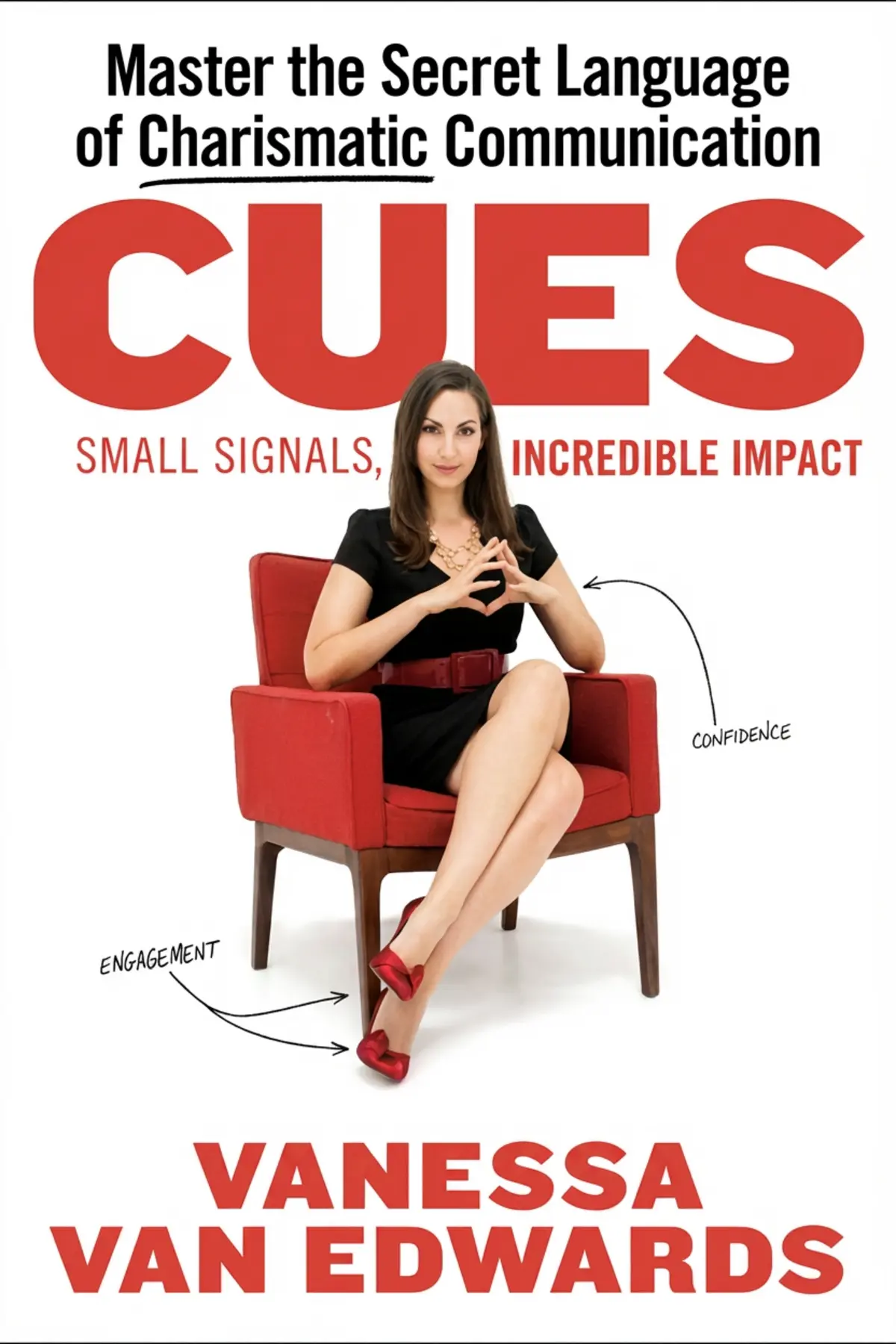
Cues: Master the Secret Language of Charismatic Communication
Vanessa Van Edwards
 English
A practical guide to handling people better. It covers choosing the right settings, making a strong first impression, reading hidden emotions on faces, spotting personality traits, and building connection through stories and requests for advice.
1 min 05 sec
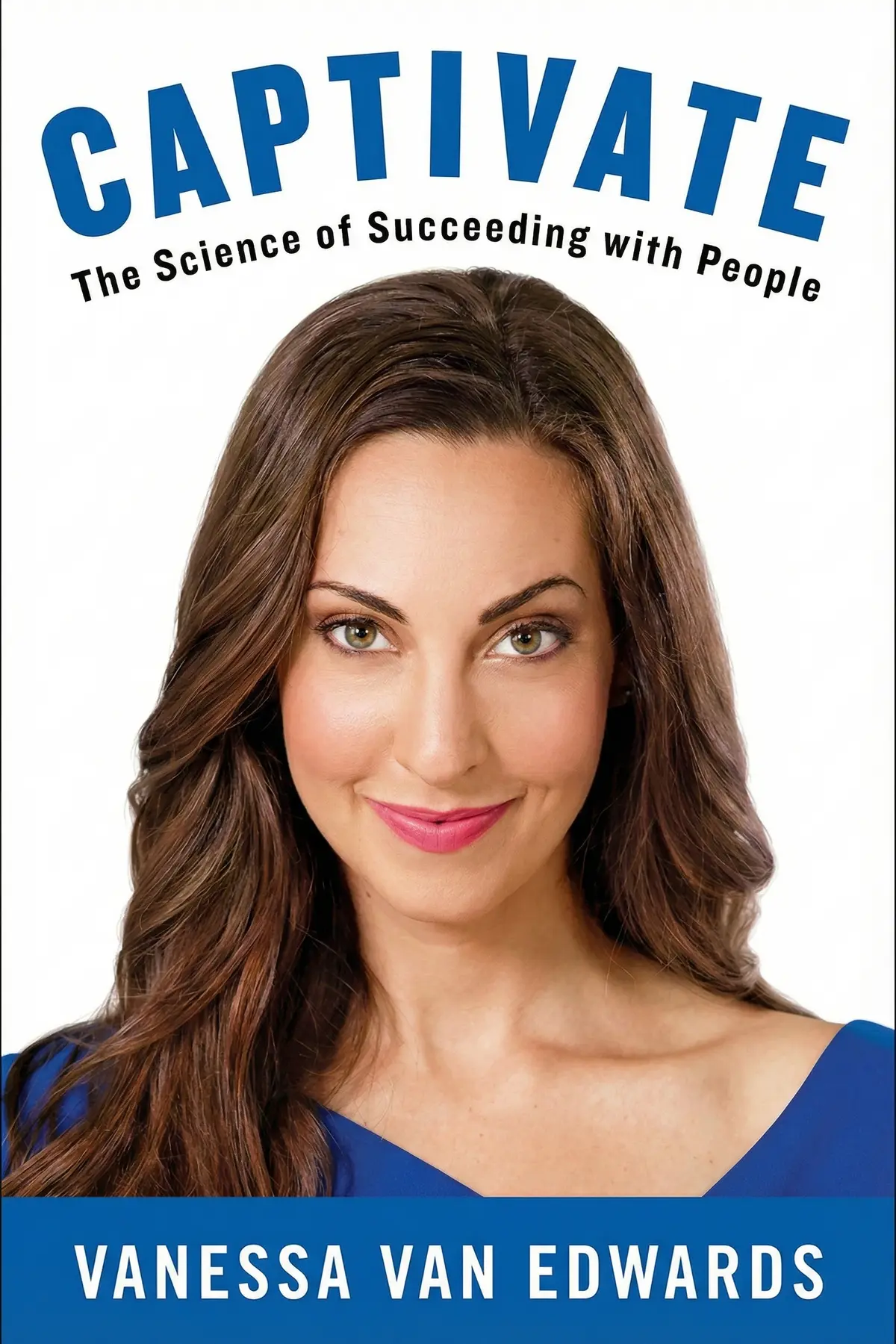
Nearly 87 percent of people in one large survey could pick out a fake smile, so trying to bluff your way through a networking event is a losing plan. That finding comes early in Captivate, where behavioral researcher Vanessa Van Edwards argues that succeeding with people is a skill anyone can learn, not a gift some are born with. She founded a lab called Science of People, and her own trouble with social situations when she was young led her to test behavioral science on herself. More of our contact now shrinks to posts, emails and chats, and she argues that this makes real people skills rarer and so more valuable.
Her case comes down to one claim. You win people over by choosing your setting, sending signals people trust, reading what others actually feel, and connecting through stories and small acts of vulnerability. Along the way come a stance for walking into a room, the brief facial expressions that betray hidden feelings, five personality traits, and a borrowed book that turned a political rival friendly.
1 min 44 sec
Pushing yourself through every awkward party sounds brave, but a survey from the author’s lab suggests it can backfire. The better plan starts with two decisions most people never make before they walk in.
1 min 39 sec
Some people walk into a crowded room and every head turns. Van Edwards insists most of that pull can be learned, and it rests on three signals your body sends before you speak.
1 min 45 sec
A colleague nods along while privately hating your plan. The truth often crosses their face for a split second, and one of these expressions is easily mistaken for a friendly smile.
1 min 37 sec
Two expressions that look nearly identical can tell you whether a coworker already knew bad news. Another can reveal, in an interview, that a candidate will hate the job you are describing.
1 min 52 sec
Trying to reshape a partner or coworker rarely works. Van Edwards suggests a different move: learn to recognize five basic traits early, and you’ll know how someone ticks before you depend on them.
1 min 47 sec
When someone tells a personal story, something strange happens inside the listener’s head. Brain scans show it, and Van Edwards turns it into a simple kit you can prepare before any event.
1 min 33 sec
Benjamin Franklin turned a political opponent friendly without flattery or argument. The move feels backward, yet an experiment from the 1960s found the same pattern with strangers and money.
1 min 04 sec
Captivate begins at the party where you feel out of place and ends at a rival’s bookshelf. Between the two, Van Edwards argues that ease with people is built from small parts you can practice, and that the parts that work best are honest ones. Pretending fails because most people catch a forced smile. What works is choosing your ground, showing open hands and steady eyes, noticing the feelings that flash across a face, and letting stories and small requests draw people toward you.
The easiest changes come first. At your next event, keep your hands in view, stand in the launch stance, and wrap a napkin around your glass so your handshake stays dry. In your next difficult conversation, watch the other person’s face in the instant after you speak, and let a smirk or a flash of surprise tell you what the words did not. And when you want someone to warm to you, stop trying to impress them and ask for their advice.
Franklin did not win over his opponent with an argument or a compliment. He asked to borrow a book and gave it back with thanks.
Many capable people freeze at parties, networking events and first meetings. They don't know where to stand, what to do with their hands or how to keep a conversation going. Vanessa Van Edwards, a behavioral researcher who once struggled socially herself, argues that succeeding with people is a set of skills, and that as more contact moves to posts, chats and email, those skills are becoming rarer and more valuable. Her approach starts with strategy: avoid the social settings you dislike and decide whom you actually want to reach, because her lab's research suggests people spot fakeness easily. She then gives a three-part routine for first impressions, a guide to seven fleeting facial expressions that reveal what people really feel, and the five personality traits known by the acronym OCEAN. The last part is about connection. Van Edwards explains why stories bring two brains into step, how to prepare a small stack of stories for any conversation, and why asking a favor or advice, as Benjamin Franklin once did with a rival, makes people like you more. Readers come away with concrete habits for the next event and the next difficult conversation.
Professionals who dread networking events and want a clear plan for the room.
Managers and recruiters who want to read what colleagues and candidates really feel.
Socially anxious people who want honest techniques for first impressions and easier conversation.
Vanessa Van Edwards is a behavioral researcher and bestselling author. She founded Science of People, a lab that studies human behavior, communication and relationships, and she has taught as a Harvard University instructor. Social situations were hard for her when she was young, so she began testing the latest behavioral science on herself. She has taught people skills at Google, Microsoft and Comcast, spoken at MIT and SXSW, and her work has appeared on CNN and in Fast Company. She also wrote Cues.
Vanessa Van Edwards
Listeners find this book to be a swift yet educational read that is both entertaining and skillfully written. They value the extensive knowledge and actionable tips, particularly noting how it improves daily interactions and private relationships. Listeners describe the book as life-changing, and one listener highlights its worth for improving emotional intelligence. It provides helpful direction for people who feel socially awkward, assisting them in feeling more confident during social gatherings.
Finally got around to reading this after seeing Vanessa’s YouTube channel for months. The transition from video to print is surprisingly seamless, though I did miss her high-energy delivery occasionally. I particularly loved the section on 'thrive locations' because it completely changed how I approach networking events where I usually just hide near the bar. If you want actionable steps rather than vague theories, this is for you. Some of the 'social hacks' felt like common sense, but seeing the science behind why they work made me more confident in applying them. It’s a comprehensive guide for anyone who feels slightly out of place in high-stakes social environments. I've already started using the 'raving introductions' with my colleagues, and the shift in energy is palpable. Truly a life-changing resource for my professional toolkit.
Show moreThis book is basically a field guide for humans. I’ve always felt like I missed the secret memo on how to behave in groups, but 'Captivate' explains the rules of the game clearly. The concept of 'vulnerability as leverage' was a total lightbulb moment for me. I used to think being perfect was the goal, but Vanessa shows how being real actually builds much stronger connections. Every chapter ends with a list of actions, which turned the book into a personal workshop rather than just a passive read. The mix of personal anecdotes and professional research kept me engaged from start to finish. It’s a fun, quick read that packs a punch in terms of practical value. I’ve recommended it to my entire management team to help with our emotional intelligence development.
Show moreVanessa Van Edwards has a way of making complex behavioral psychology feel accessible and, dare I say, fun. I won a copy of this and wasn't sure what to expect, but I was hooked by the second chapter. The 'personality matrix' section helped me understand why I clash with certain family members and how to adjust my communication style to fit theirs. It’s not just about business; it’s about improving every relationship in your life through better understanding. The quizzes are actually quite insightful if you take the time to do them honestly. I especially appreciated the focus on being a 'high-vibe' person and how that influences the energy of everyone around you. This is a must-read for anyone who wants to feel more comfortable and effective in their daily interactions.
Show moreCall it an introvert manifesto if you want, but I call it essential reading for anyone in sales or management roles. The 'Science of People' approach takes the guesswork out of social situations, which is a huge relief for someone as analytical as I am. I’ve stopped trying to 'fake it' and started using her tips on vulnerability to build real rapport with my team. The results were almost immediate; my meetings are more productive and my staff seems more engaged when I use the appreciation tools she suggests. It’s a comprehensive, well-written, and genuinely helpful guide that goes beyond simple 'people skills.' Even if you think you're already good with people, there's a lot of nuanced information here that can help you reach that next level. I’m buying copies for my entire department.
Show moreAs someone who has struggled with social anxiety for years, this felt like a practical roadmap rather than just a motivational speech. Vanessa breaks down human interaction into manageable systems that actually make sense to a logical brain. I appreciated the 'before and after' dialogues because they highlight exactly where I’ve been going wrong in small talk. The focus on micro-expressions helped me realize how much I was missing in everyday meetings at work. It’s not a deep academic text, but it’s incredibly useful for daily life. My only gripe is that some of the photos are tiny and hard to see, which is frustrating when you're trying to learn facial cues. However, the 'fresh questions' technique has already saved me from several awkward silences this week.
Show moreEver wonder why some people just naturally command a room while you're stuck by the snack table? This book answers that question by breaking down the mechanics of charisma into something you can actually learn and repeat. I love how it caters specifically to introverts and logical thinkers who need a 'why' behind social behaviors. The advice on using open postures and searching for similarities was particularly effective during my last trade show. It’s a very modern take on networking that feels much more authentic than the old-school 'salesy' techniques I've tried before. While some parts felt a bit redundant if you follow her blog, having it all organized in one place is great. It’s an informative read that I’ll likely revisit before my next big conference.
Show moreThe chapter on reading facial micro-expressions was worth the price of the book alone for me. Understanding the difference between a fake smile and a genuine one has changed how I interact with my clients during negotiations. Vanessa’s writing style is very conversational and easy to digest, which makes it a perfect book for a long flight. I did find the constant reminders to visit her website a bit distracting, but the digital bonus material is actually quite good. It’s a well-written guide that focuses on empowering the reader rather than just giving them a script to follow. My social confidence has definitely seen a boost since I started implementing the 'raving introductions' and storytelling tips. It’s a solid 4-star read for anyone looking to level up their people skills.
Show moreLook, if you've already read Cialdini or Carnegie, a lot of this will feel like a refresher course, but with a modern twist. The 'hacks' are updated for the digital age and the current professional climate, which makes them feel more relevant than 80-year-old advice. I found the section on 'The 5 Love Languages' crossover a bit redundant, but the way she applies it to the workplace is clever. The book is structured beautifully with clear takeaways and actionable challenges at the end of each segment. It’s a quick read, but I’d suggest taking it slow to actually practice the techniques in the real world. Despite the slightly vacuous slang, the core message about genuine connection is very strong. It’s a practical handbook for the socially hesitant.
Show moreTo be fair, there is some solid advice buried under a mountain of marketing speak and repetitive sections that could have been edited down. The book is definitely helpful for 'schmoozing' at cocktail parties, but it feels a bit shallow when it comes to deep, long-term relationships. I found the 'Triple Threat' first impression tips useful, yet I couldn't help but feel that some of the science was a bit thin. Much of the data comes from her own Twitter polls rather than peer-reviewed studies, which makes me question the 'science' part of her brand. It’s an easy read and certainly better than nothing if you're awkward, but don't expect a masterclass in psychology. It’s a decent introductory text for introverts, but it lacks the weight of the classics in this genre.
Show moreMaybe I’m just too cynical, but the constant buzzwords like 'leveling up' and 'social hacking' really grated on my nerves after the first few chapters. The book feels like it was written for people who have never had a conversation in their lives, which makes the tone feel a bit condescending. There are way too many links to external websites and poorly formatted quizzes that break the flow of the reading experience. To be fair, the section on micro-expressions was somewhat interesting, but it felt like a shallow summary of Paul Ekman’s much better work. It’s repetitive and reads more like a long-form marketing pitch for her 'Science of People' brand than a serious book on psychology. If you want real depth, stick to Dale Carnegie or Robert Cialdini instead of this intellectual lightweight stuff.
Show moreCaptivate argues that people skills can be learned. Van Edwards, founder of the Science of People lab, shows how to choose social settings that suit you, make a strong first impression with hands, posture and eye contact, read seven microexpressions, recognize the Big Five personality traits, and build connection through prepared stories and requests for advice. Her view is that genuine skill beats faking it, because people easily spot fakeness.
The triple threat is Van Edwards’ tool for first impressions, built on three nonverbal signals. Keep your hands visible, because hands reveal intentions. Use the launch stance: shoulders back and down, head and chest slightly forward and up, arms loose. She suggests meeting the other person’s gaze for roughly 60 to 70 percent of a conversation, a figure she takes from body-language expert Allan Pease.
Following the work of psychologist Paul Ekman, Van Edwards names seven emotions: sadness, disgust, surprise, fear, happiness, contempt and anger. These flash across a face before a person can control them. Contempt, a one-sided smirk, is easily mistaken for a smile, so context matters. Fear and surprise both widen the eyes, but in fear the brows pull together, while in surprise they move apart and the jaw drops further.
The Franklin effect is the finding that asking someone for a favor or advice can make them like you more. Benjamin Franklin borrowed a book from a political rival and returned it with a thank-you note, and the rival grew friendlier. In a late 1960s experiment by Jon Jecker and David Landy, participants asked to return research money rated the researchers as more likable.
Go to settings that suit you and decide in advance whom you want to meet. Keep your hands visible, stand in the launch stance and wrap a napkin around your glass to keep your handshake dry. Prepare a story stack: a simple opener, one personal story, and a question that hands the conversation back. Ask someone for a recommendation to make the connection warmer.










AUDIO SUMMARY AVAILABLE
Get the key ideas from Captivate by Vanessa Van Edwards, plus 5,000+ more nonfiction titles.