Get Your Sh*t Together: A No F*cks Given Guide
Sarah Knight
 English
 ไทย
A blunt, funny method for handling stress and crisis: recognize how you are freaking out, find the fear underneath, rate how real and close it is, and act only where you have control.
58 sec
When a work crisis lands or a family argument flares, most of us lose hours worrying about things we cannot change. In Calm the F*ck Down, self-help author Sarah Knight argues that staying calm rests on one skill: telling apart what you can control from what you cannot. Stress and fear will still arrive, she says, because they come with being human. What you can improve is how you handle them once they show up.
Knight’s method has three steps, acknowledge, accept and address, and each one returns to a single question: can I control this? Calm does not mean feeling no stress; it means spending your limited time, energy, money and goodwill only on the parts of a problem you can change. Along the way she offers a storm scale for rating worries, a test for setting goals you can reach, and a way to tell a snake from a garden hose before you start shouting.
2 min 02 sec
Two people can fall apart over the same setback in completely different ways. Knight sorts nearly every meltdown into a handful of types, and each one comes with its own small first aid you can use in minutes.
2 min 06 sec
Vague dread feels endless, and it tends to freeze people right when they need to move. Knight’s first step shrinks it to something with edges, and then lets your feelings run loose for a while on purpose.
2 min 07 sec
Anxiety treats a faint rumor and a certain disaster as the same emergency. Borrowing from weather forecasters, Knight offers a two-part rating that tells you which threats to drop, which to prepare for and which to brace against.
1 min 53 sec
When something goes wrong, the first instinct is to ask why and find someone at fault. Knight thinks that instinct steals the very energy you need, and she replaces it with a goal you can actually reach.
1 min 54 sec
Every crisis quietly draws on a set of personal accounts, and none of them is bottomless. Knight shows how to see those reserves clearly, and why a pregnant wife makes the perfect lesson in what comes first.
1 min 14 sec
Knight’s book is loud and full of swearing, yet its core is a calm piece of accounting. Stress will keep coming; she never pretends otherwise. What changes is where your limited reserves go. Every tool she offers, from the four faces to the storm scale to the RIO, is a way of separating real problems you can act on from the endless what ifs that only drain you.
That is why her version of calm still has room for feelings. You are allowed to let the puppies run, to cry into the popcorn chicken, to admit you are furious. Calm is what happens after, when you come back and decide what deserves your effort.
The practice starts small. The next time your chest tightens, name the face of the freakout and the fear beneath it. Ask the question Knight keeps returning to, can I control this, and rate the threat for likelihood and timing. If it is real and close, write down a realistic best outcome, then spend your time, energy, money and goodwill on reaching it and on nothing else.
Before reacting, check whether that dark coil is really a snake or just a garden hose. Keep your strength for the snakes.
Everyone gets overwhelmed sometimes, by a sudden work crisis, a tense moment in a relationship or simply too much piling up at once. Sarah Knight does not promise to make worry, sadness or anger disappear. She argues that these feelings come with being human, and that what you can improve is how you respond once they arrive. Her method rests on one skill: separating what you can control from what you cannot. She builds it into three steps, acknowledge, accept and address. Along the way she offers a hurricane-style scale for rating how likely a threat is, a way of judging how soon it will hit, a test for setting a realistic goal, and the idea of freakout funds: the time, energy, money and goodwill every crisis draws on. Readers get a short, practical routine they can run in the middle of a bad day, told in Knight's candid, swearing, humorous voice, and a clearer sense of which problems deserve their effort.
Professionals who spiral over work crises and lose evenings to what ifs.
People who freeze, snap or avoid when stress hits and want a quick routine for the moment.
Readers who like practical advice delivered with humor and strong language rather than gentle reassurance.
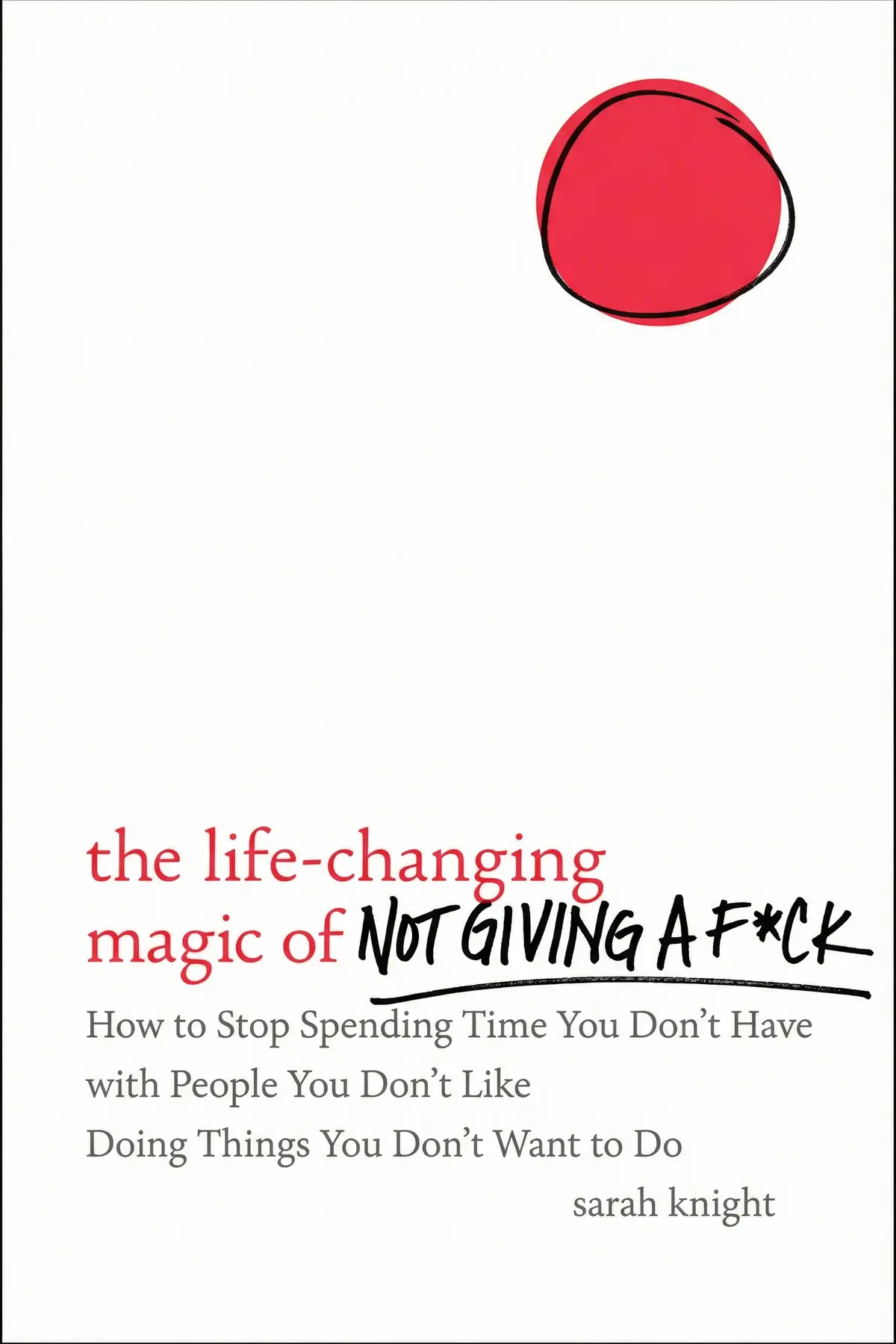
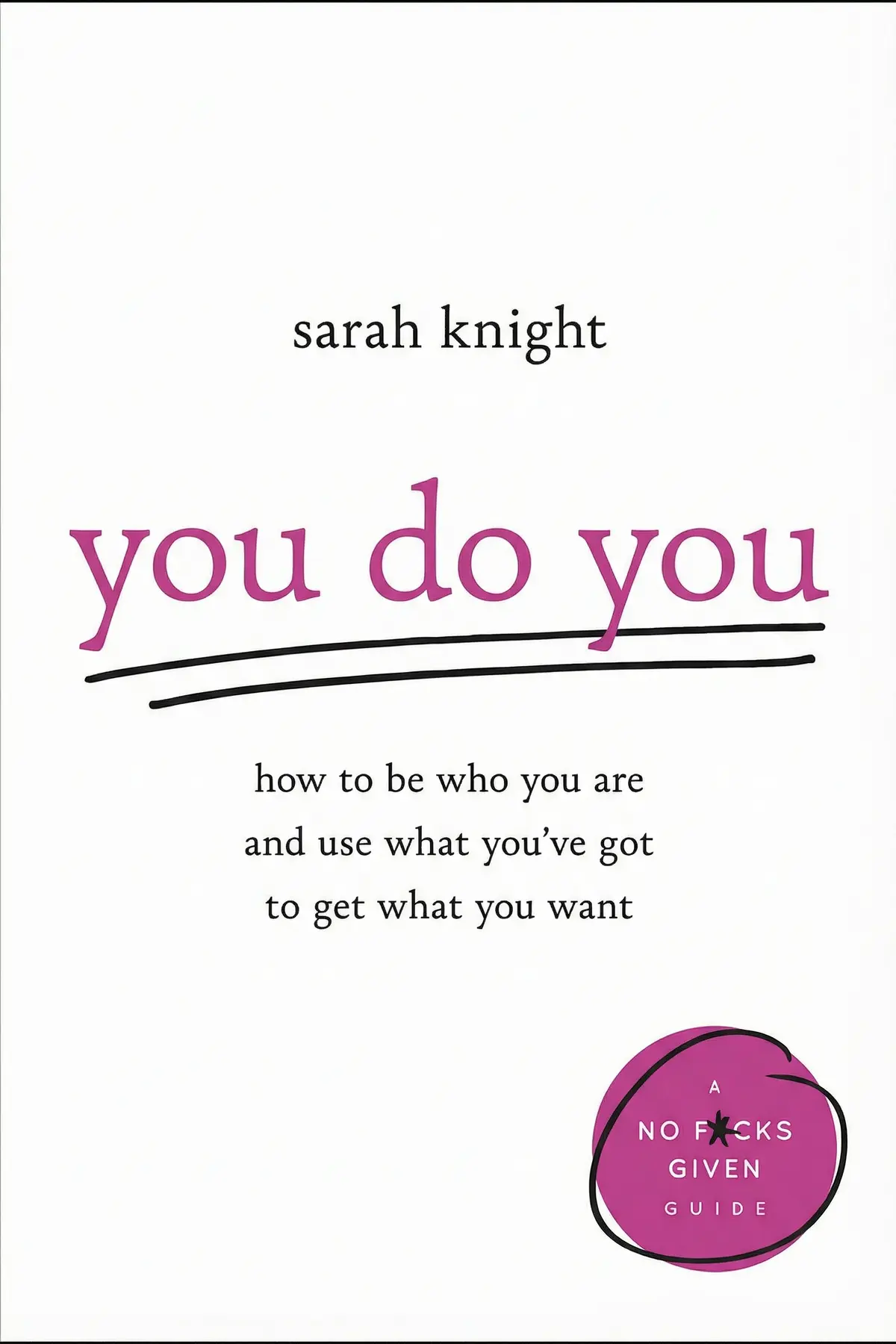
Sarah Knight writes self-help and personal development books in a candid, humorous voice. Her No F*cks Given Guides series includes the title that begins with The Magic of Not Giving a F*ck, along with Get Your Sh*t Together and You Do You. She has also given a TEDx Talk called The Magic of Not Giving a F*ck. Her books mix plain talk with jokes, and they aim to help readers handle everyday stress and get on with their lives.

Listeners find this book very accessible and amusing, noting its sharp wit and useful tips for managing everyday obstacles. Opinions are divided on how well it handles anxiety—though some find the techniques beneficial, others claim it actually heightened their stress levels. Several listeners feel the purchase was not worth the expense.
Sarah Knight is basically my spirit animal at this point. I've read 'The Life-Changing Magic of Not Giving a F*ck' and 'Get Your Sh*t Together,' but this one feels the most relevant to my current state of mind. It’s a breath of fresh air compared to those dry, clinical self-help books that usually just make me more bored and anxious. She’s raw, honest, and hilariously blunt about how to handle a literal sh*t storm. I love the concept of the 'anxiety thermometer' and the focus on controlling only what is actually within my reach. It’s like having a best friend give you a reality check while you're in the middle of a meltdown. While some critics say it’s basic, I think the simplicity is the point. This book gave me the permission I needed to stop overthinking every tiny detail and just get on with my life.
Show moreWow, I didn't expect to laugh this much while learning how to manage my spiraling thoughts! I listened to the audiobook version, and Knight's narration is full of energy and wit. The logic is simple: if you can't fix it, stop worrying. The 'what-if' exercises provide a great starting point for anyone who needs to lower their stress levels without taking life too seriously. I’ve already recommended it to several of my high-strung coworkers. It's funny, resourceful, and full of strategy.
Show moreEver wonder why you're stressing over things you can't even change? This book attempts to answer that with a healthy dose of logic and a lot of four-letter words. I found the 'acknowledge and accept' approach very grounded and relatable for my daily life. It’s practical advice for everyday challenges, like being late for a college presentation or dealing with a broken phone. While it might be too basic for some, I think most people could benefit from her straight-to-the-point strategy. It’s entertaining, fast-paced, and honestly quite validating to hear someone else talk about their freakouts so openly. It’s not a medical cure, but as a resource for finding a little levity in a stressful world, it definitely hits the mark. Like a best friend who tells you the truth you need to hear.
Show moreIs it a bit much? Yes. Does Sarah Knight use the f-word like it's punctuation? Absolutely. But honestly, this was exactly the kind of kick in the pants I needed this week. I tend to spiral over small things, and her 'Four Faces of Freaking Out' gave me a framework to look at my stress logically. It’s a practical action plan for when your brain runs away. Some parts are redundant, but overall it’s a solid tool for my arsenal.
Show moreFinally got around to finishing this and I actually feel more prepared for the work week. I struggle with being a perfectionist, and Knight’s 'no-f*cks' philosophy helps me categorize my freakouts so I can stay productive. Not every problem is a five-alarm fire. The writing style is very conversational and punchy, which makes it easy to digest when you're already feeling overwhelmed. I will say, the political commentary felt a little out of place and might alienate some readers, but I didn't mind it personally. It’s a great literary pep talk that reminds you that you have more control over your reactions than you think. Definitely worth a read if you enjoy her specific brand of dark humor and need a nudge to stop spiraling.
Show moreAfter hearing so much buzz, I finally dove into this 'anti-guru' guide to see what the fuss was about. It’s a very quick read and I did find myself chuckling at her description of the 'orange howler monkey' currently in office. However, the advice is essentially just a very long, swear-heavy version of the Serenity Prayer. Change what you can, accept what you can't, right? It’s not revolutionary, but sometimes you need someone to yell common sense at you in a loud voice. My biggest gripe is the repetition; she hammers home the same three points for nearly 300 pages. It's a decent beach read if you want a laugh, but don't expect it to provide a deep medical solution for your mental health struggles.
Show moreThe tone is definitely an acquired taste, and I wasn't always in the mood for the snark. If you can get past the constant swearing and the author's frequent reminders that she’s a professional writer, there is some sensible advice buried here. It’s mostly about learning to triage your problems so you aren't wasting energy on things that don't matter. Look, it’s not astonishing, but it is relatable. I think it would be more effective as a workbook because the prose gets quite waffly in the middle. I enjoyed the bits about @PepitoTheCat, but I was definitely 'waffled out' by the time I reached the final chapter. It's an okay read, just a bit bloated for what it is.
Show moreI really wanted to like this since the previous books in the series were actually somewhat helpful for my productivity. However, the narration here felt incredibly self-involved and distracted from the core message. Knight spends a lot of time talking about her own life and even asking for five-star reviews within the text, which is a bit of a turn-off. The examples she uses—like worrying about a tarantula or missing a flight—felt very trivial compared to the deep-seated, crippling anxiety many people face daily. It felt like she was trying too hard to maintain her 'anti-guru' persona while offering very little in terms of actual new tools. It's mildly funny at times, but the shtick is wearing thin and the advice is just too basic to be useful for someone with GAD.
Show moreFrankly, if you've ever been to a single therapy session, you can probably skip this one. Knight has zero credentials in mental health, and it shows. Most of the 'strategies' she suggests are just basic CBT techniques that have been repackaged with more profanity for a younger audience. I also found her tone a bit condescending at times, especially when she uses those 'I don’t mean to be critical, but...' disclaimers before dismissing common anxiety struggles. While I appreciate her personal vulnerability regarding her own panic attacks, the advice felt too superficial for anyone dealing with more than just 'first-world problems.' It felt more like a performance than a helpful guide. I'm disappointed because her first book was much better and felt more original.
Show moreThis book was a total waste of time and money for me. It felt like the author was getting paid per F-word, which made it nearly impossible to focus on the actual advice. I kept waiting for some profound psychological insight, but instead, I got 'make a plan' and 'assess the situation.' Seriously? That is just basic common sense packaged as revolutionary self-help. It’s incredibly repetitive and could have easily been condensed into a short blog post or a single infographic. If you have real, clinical anxiety, being told to just 'calm the f*ck down' in a snarky tone is actually quite irritating rather than helpful. I ended up skimming the last fifty pages just to be done with it. To be fair, she’s a good writer, but the content here is thinner than a pancake.
Show moreSarah Knight argues that you cannot stop worry, sadness or anger from appearing, but you can handle them better. The key skill is separating what you can control from what you cannot. Her three steps, acknowledge, accept and address, help you name the real fear, judge how likely and how soon it is, and then spend your limited time, energy, money and goodwill only where action helps.
Knight uses the term freakout funds for the resources every crisis draws on: hours, stamina, cash and social goodwill. They are limited, so spending them on things you cannot change is both exhausting and wasteful. Treating them like a budget helps you triage, saving your reserves for problems where your effort will actually make a difference.
The probometer is a personal scale, modeled on hurricane categories 1 to 5, for rating how likely a feared event is. Category 1 or 2 worries are possible but unlikely and can be let go. Categories 3 and 4 call for preparation, not panic. Category 5 means it is certainly coming, so you brace yourself. Knight pairs this with a timing check: outlying, imminent or already here.
Start by naming which face your freakout wears: anxiety, sadness, anger or avoidance. Find the specific what if underneath and ask whether you can control it. Rate it for likelihood and timing. If it needs action, take stock of the real situation, define a Realistic Ideal Outcome, deal with the most urgent part first, and avoid spending energy on blame.
It suits people who get overwhelmed by everyday stress or sudden crises and want a short, practical routine instead of theory. Anyone who freezes, lashes out or avoids problems will find a quick fix for each reaction. Readers sensitive to strong language should know that Knight writes with frequent swearing and plenty of jokes.


Richard Wiseman

Leanne Maskell





AUDIO SUMMARY AVAILABLE
Get the key ideas from Calm the F*ck Down by Sarah Knight, plus 5,000+ more nonfiction titles.