

11 min 53 sec
Available in: English
Burnout Immunity: How Emotional Intelligence Can Help You Build Resilience and Heal Your Relationship with Work
By Kandi Wiens
Shows how two learnable emotional intelligence skills, awareness and regulation, help you spot burnout early, calm your body's stress response, and recover from chronic work stress or avoid it in the first place.
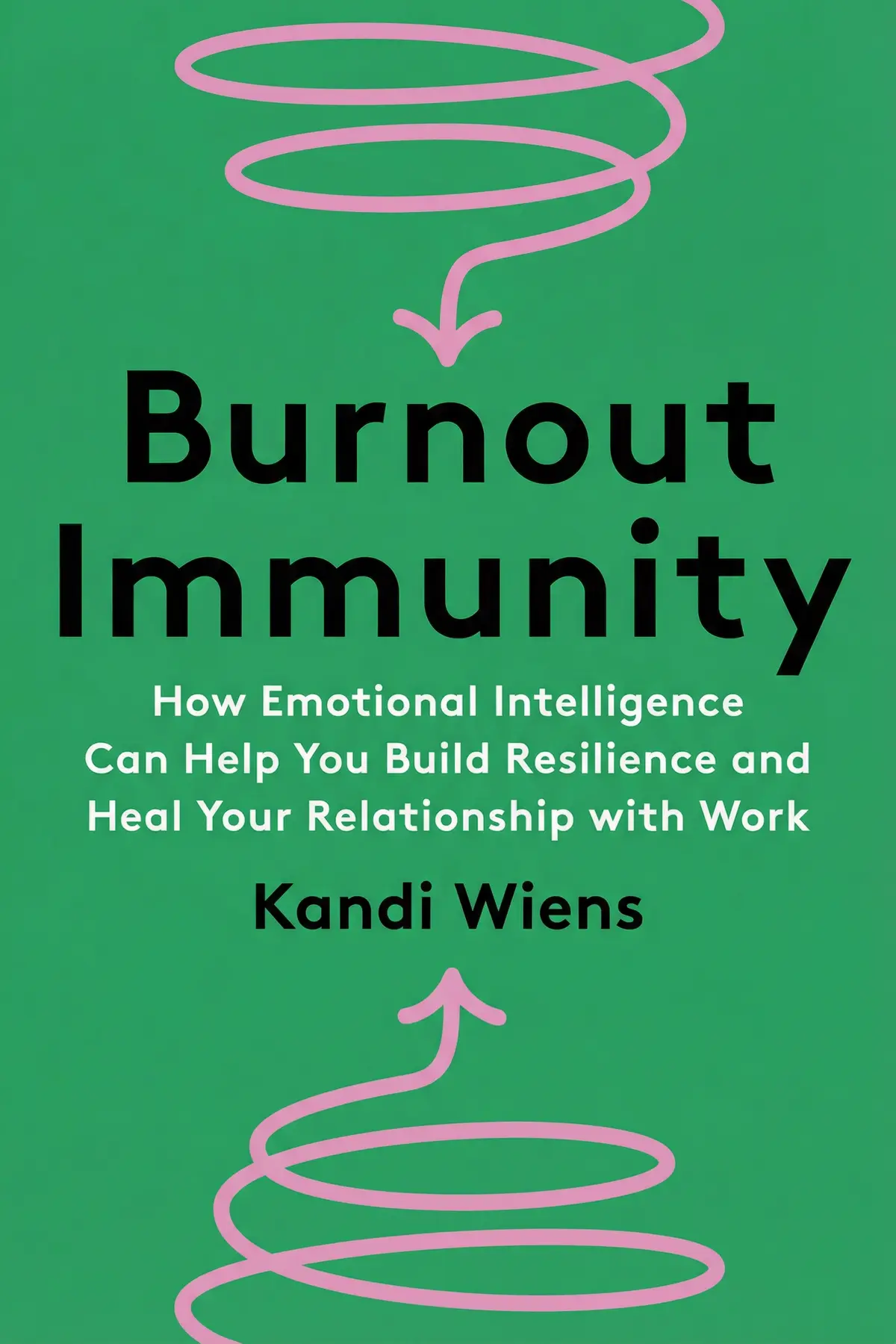
Table of Content
1. Introduction
1 min 04 sec
If work leaves you drained every evening and more cynical every month, Kandi Wiens has a hopeful finding: in her research, leaders working under severe stress showed no sign of burnout at all, and what they shared was emotional intelligence. In Burnout Immunity, Wiens, a researcher and coach at the University of Pennsylvania, argues that this protection is not a gift some people are born with. Anyone can learn it, whatever their upbringing, schooling or industry.
Her case rests on two skills. Awareness lets you notice burnout coming, in yourself and in the place you work. Regulation lets you calm the body’s stress response before it does lasting harm. With both, burnout stops being something that simply happens to you and becomes something you can see and steer.
Ahead are the three warning signs to watch for, a set of honest questions to ask about your job, and a way to meet a stressful moment as a challenge your body can handle.
2. Spot the three signs of burnout early
1 min 27 sec
A researcher who studies stress ended up on bedrest in her early forties, at risk of a stroke. Her wake-up call shows how burnout can build for years while looking like ordinary tiredness.
3. Emotional intelligence is a skill anyone can build
1 min 32 sec
Some leaders in brutally stressful jobs show no trace of burnout. The trait they share has nothing to do with background or industry, and that makes it available to almost anyone willing to practice.
4. Spot burnout even when you love your job
1 min 40 sec
Nearly everyone believes they know themselves well, yet a large study found most are wrong. That gap explains why even people who adore their work can be the last to see burnout coming.
5. Read your workplace before it wears you down
1 min 43 sec
Sometimes the place, and not the person, is what drains the energy. A short set of questions about recognition, values and support shows where your job is wearing you down, and what to protect first.
6. What chronic stress does inside your body
1 min 34 sec
A snake and a stick on a hiking path set off the same alarm in your body. When that alarm never switches off, the cost shows up in places you might not expect.
7. Turn a stress threat into a challenge
1 min 44 sec
The same stressful meeting can drain you or sharpen you, depending on a choice made in the moment. Wiens shows how to make that choice through practice, and what to prepare on calmer days.
8. Conclusion
1 min 09 sec
Burnout Immunity makes a hopeful argument about something that usually feels like fate. Wiens nearly learned too late that years of chasing other people’s goals could show up as a dangerous blood pressure reading. Her research points to an alternative built from skills: seeing clearly what is happening inside you and around you, and calming the body before stress turns into damage. Those skills are open to anyone.
Begin with an honest look at the three signs, exhaustion, cynicism and a sense of falling short, and do not dismiss them because you enjoy your job. Look at your workplace through the questions Wiens asks, then protect one boundary on your calendar. And when the next alarm goes off, recall a time you came through something similar, and meet it as a challenge.
Wiens also leaves room for limits. Some seasons bring more than anyone can carry, even when the change is a good one. In those moments she advises going easy on yourself, putting regenerative self-care first and reaching out for help. Immunity can be built afterward. First, get the support that lets you stand.
About this book
What is this book about?
Burnout tends to creep in through exhaustion, cynicism and a nagging sense of doing poor work, often before anyone gives it a name. Kandi Wiens knows this personally. In her early forties, dangerously high blood pressure put her on bedrest and made her see years of chasing other people's goals for what they were. As a researcher, she later found leaders under severe job stress who showed no burnout at all, and the trait they shared was emotional intelligence. Her argument is that this protection can be learned by anyone, regardless of upbringing, education or industry. The book rests on two skills. Awareness, of yourself and of others, helps you notice warning signs and the parts of your workplace that clash with your values. Regulation helps you manage the adrenaline and cortisol your body releases under pressure, chiefly by treating stressful moments as challenges instead of threats. Readers get practical steps: questions for auditing a job, self-care, boundaries, ways to spread positive energy and a routine for reframing stress, along with honest advice on when leaving is the healthier choice.
Book Information
Who it's for
Professionals feeling drained
Professionals who feel drained, cynical or ineffective at work and want to recover before their health suffers.
High performers who overextend
High performers who love their jobs but keep overextending themselves.
Hoping to spot stress
Team leads who want to notice stress early, in themselves and in the people around them.
About the Author
Kandi Wiens
Kandi Wiens is a senior fellow at the University of Pennsylvania, where she directs a master's in medical education and a certificate in health professions education and serves as academic director of the PennCLO Master's Program. She teaches in graduate and executive education and belongs to the 2024 Thinkers50 Radar group. As a researcher and coach, she studies burnout and helps leaders apply emotional and social intelligence so they can do good work without burning out.
Ratings & Reviews
Ratings at a glance
What people think
Listeners find the writing highly accessible and value the actionable techniques provided for managing stress. One listener highlights how the author connects self-awareness to the prevention of burnout.
Top reviews
Kek
Finally got around to reading this after seeing it recommended by a colleague, and the timing couldn't have been better. Burnout Immunity doesn't just offer temporary fixes; it provides a roadmap for restructuring how you engage with your professional life through Emotional Intelligence. I loved the emphasis on 'regenerative self-care' and the idea that our emotions are literally contagious in a workplace setting. Wiens writes with a clarity that makes complex psychological research feel incredibly accessible for the average worker. The strategies for reframing stress as a motivator rather than a soul-crushing weight have already started helping me manage my weekly deadlines. It’s rare to find a business book that feels this empathetic and human-centric. This is definitely a must-read for anyone in a high-stress industry who wants to protect their mental health long-term.
Show moreEye
Wow, this was exactly what I needed to read as I transition into a new leadership role. Managing my own stress while also being responsible for the well-being of a team is a huge challenge, and this book provided a clear framework for doing both. The insight that high EI is the common thread among 'burnout immune' leaders was a total lightbulb moment for me. I’ve started using the mindfulness and regulation techniques Wiens suggests, and the difference in my daily energy levels is already noticeable. Truth is, most business books are dry and clinical, but this felt like a conversation with a very smart mentor. It emphasizes that we have more agency over our stress response than we think. If you’re feeling overwhelmed, don't just keep pushing—read this and learn how to actually protect your peace.
Show moreKet
Picked this up during a particularly grueling month at the office, and while it didn’t provide a magic wand, the focus on Emotional Intelligence was a fresh angle. Kandi Wiens argues that we can’t always change our environment, but we can definitely change how our nervous system reacts to it. I’ve read my fair share of productivity books, but this one felt more grounded in actual human psychology rather than just 'grind harder' rhetoric. The '3 Rx' framework—Recover, Reconnect, and Reimagine—is simple enough to remember when you’re too tired to think straight. To be fair, some of the advice about getting more sleep and setting boundaries is stuff we’ve all heard a million times before. However, the way she links self-awareness to preventing that hollowed-out feeling makes the common-sense tips feel more actionable. It’s a solid, practical guide for anyone who feels like they’re running on empty.
Show moreAmy
After hearing Kandi Wiens on a podcast, I was curious about how she’d translate her research on high-stress leaders into a book for everyone. The result is a very practical, workbook-adjacent guide that focuses heavily on how our internal regulation affects our external performance. I found the examples involving police officers and other high-stakes professionals fascinating, although I wish there were more variety in the industries represented. The core message—that self-awareness is the foundation of resilience—is handled with a lot of nuance. She doesn't just tell you to 'be more aware,' she gives you the actual prompts to figure out where your values and your company’s culture might be clashing. Look, it’s not going to solve every workplace problem, but it gives you a much better toolkit for surviving them. I’d recommend getting a physical copy so you can actually do the assessments.
Show moreLeah
As someone who has struggled with chronic fatigue for years, I appreciated the compassionate tone Wiens brings to this subject. She clearly understands that burnout isn't just about being tired; it's about a total loss of efficacy and a growing sense of cynicism toward your work. The focus on EQ as a tool for healing was something I hadn't explicitly considered before. By learning to recognize the early signs of a stress response, I've been able to implement her 'Recover' strategies before hitting a total wall. To be fair, the book can feel a bit repetitive in the middle chapters, but the overall message is empowering. It moves the conversation away from 'fixing' the employee and toward understanding the interaction between the person and the environment. It’s a helpful resource for anyone feeling the blur between work and home life.
Show moreSelin
The chapter on setting boundaries was worth the price of the book alone. It’s one thing to hear 'just say no,' but Wiens explains how to do it without jeopardizing your career or your relationships. I specifically liked the suggestion of adding 'no contact' times to the calendar to safeguard deep work and mental recovery. Her research-backed approach makes the advice feel much more legitimate than your average Instagram wellness post. While some of the 'regenerative self-care' tips felt a bit like filler, the sections on cognitive reframing were genuinely insightful. It’s a quick read, written in a style that respects the reader's time and intelligence. In my experience, even small shifts in how we view stress can have a massive ripple effect on our health. Definitely a book I'll be keeping on my desk for quick reference.
Show moreElias
Not what I expected, but in a good way. I thought this would be another book about time management, but it’s actually a deep dive into how our emotional intelligence dictates our resilience. Wiens does a great job of breaking down the three main symptoms of burnout: exhaustion, cynicism, and inefficacy. Realizing that I was ticking all three boxes was a huge wake-up call for me. The book doesn’t just leave you in the hole, though; it offers the '3 Rx' method to start digging your way out. I gotta say, the focus on 'reimagining' your relationship with work was particularly powerful for me. Some of the examples felt a little repetitive, and I agree with others that 'immunity' might be a strong word, but the core strategies are undeniably useful. It’s a very grounded, realistic take on a very modern problem.
Show moreEllie
Is there anything truly revolutionary in these pages? Frankly, if you’ve spent any time researching wellness or workplace psychology, you’ve likely encountered most of these concepts before. Wiens does a great job explaining why some leaders thrive in high-pressure environments while others crumble, pointing specifically to their high EQ scores. I appreciated the distinction between seeing stress as a threat versus a challenge, but I found myself skimming through the parts about basic self-care. Does anyone in 2024 really need a book to tell them that eating well and doing yoga helps with stress? The author’s personal story is compelling, and her research into highly stressed professionals like police officers adds some much-needed weight to the theory. It's a decent refresher for the exhausted professional, even if it feels a bit repetitive at times.
Show moreHang
Ever wonder why some people seem totally unfazed by the same deadlines that keep you up at night? This book attempts to answer that by looking at Emotional Intelligence as a preventative measure against chronic stress. It’s a well-organized read, and I liked how it broke down the physiological response to stress, explaining how cortisol and adrenaline play into our burnout levels. That said, I felt like the book hovered on the surface of most topics. The advice to 'reframe stress as a challenge' is helpful, but it's something you can find in almost any TED talk from the last decade. Personally, I found the section on social awareness and spreading positive energy to be the most useful part of the text. It's a solid 3-star read—useful for a flight or a weekend, but maybe not life-changing.
Show moreEvelyn
The title 'Burnout Immunity' feels like a bit of a marketing gimmick. Not gonna lie, I was expecting some deep, evidence-based secrets, but what I got was a collection of very standard advice wrapped in a new package. The author talks about Emotional Intelligence as a shield, which sounds great in theory, but in practice, it boils down to 'take a deep breath' and 'set boundaries.' If your boss is toxic or your workload is objectively impossible, no amount of EQ is going to make you 'immune' to the fallout. I finished the book a few days ago and I’m already struggling to remember any specific takeaway that changed my perspective. It’s not a bad book, just a very basic one that might be better suited for someone who has never read a self-help book before. The writing style is fine, but it lacks the depth I was hoping for.
Show moreQuestions about this book
What is the main idea of Burnout Immunity?
Kandi Wiens argues that emotional intelligence protects people from burnout, and that anyone can learn it. In her research she found leaders in severely stressful roles with no signs of burnout, and emotional intelligence was what they shared. The book focuses on two skills: awareness of yourself and others, and regulation of the body’s stress response, especially by treating stressful moments as challenges instead of threats.
What are the signs of burnout according to Kandi Wiens?
Wiens describes three: exhaustion and a lack of energy, cynicism or negativity about your job, and a sense of being ineffective or underperforming. She treats burnout as the result of chronic workplace stress. She also warns that it is easy to miss, because people who love their work can burn out by constantly overperforming, and a large study found that most people overrate their own self-awareness.
How do you reframe stress as a challenge?
When something triggers stress, Wiens suggests first acknowledging how you feel, then recalling that you have come through similar situations before and telling yourself you can handle this one. In calmer periods, take stock of the resources and supportive people you can draw on. She cautions that mindsets change slowly, so it takes practice before your body stops treating every pressure as a threat.
Can emotional intelligence help if my workplace is toxic?
Wiens is direct here. If a workplace is toxic or abusive, or is damaging your mental or physical health, she advises starting an exit plan right away, getting help if you need it and pursuing a healthier career path. Even in that situation, she says, emotional intelligence practices can still help you as you make the change.
Who should read Burnout Immunity?
It suits professionals who feel exhausted, negative or ineffective at work, and also high performers who enjoy their jobs but keep overextending. Managers benefit from its attention to social awareness and to noticing stress in colleagues and leaders. Its tools are small and practical, from blocking no-contact times on a calendar to recalling past successes before a stressful moment.
Featured in
Readers also enjoyed



ADHD an A-Z: Figuring It Out Step by Step
Leanne Maskell






A Bigger Prize: How We Can Do Better Than the Competition
Margaret Heffernan
AUDIO SUMMARY AVAILABLE
Listen to Burnout Immunity in 15 minutes
Get the key ideas from Burnout Immunity by Kandi Wiens, plus 5,000+ more nonfiction titles.
- 5,000+ titles
- Listen as much as you want
- 7-day free trial
- Cancel anytime









