

14 min 16 sec
Available in: English
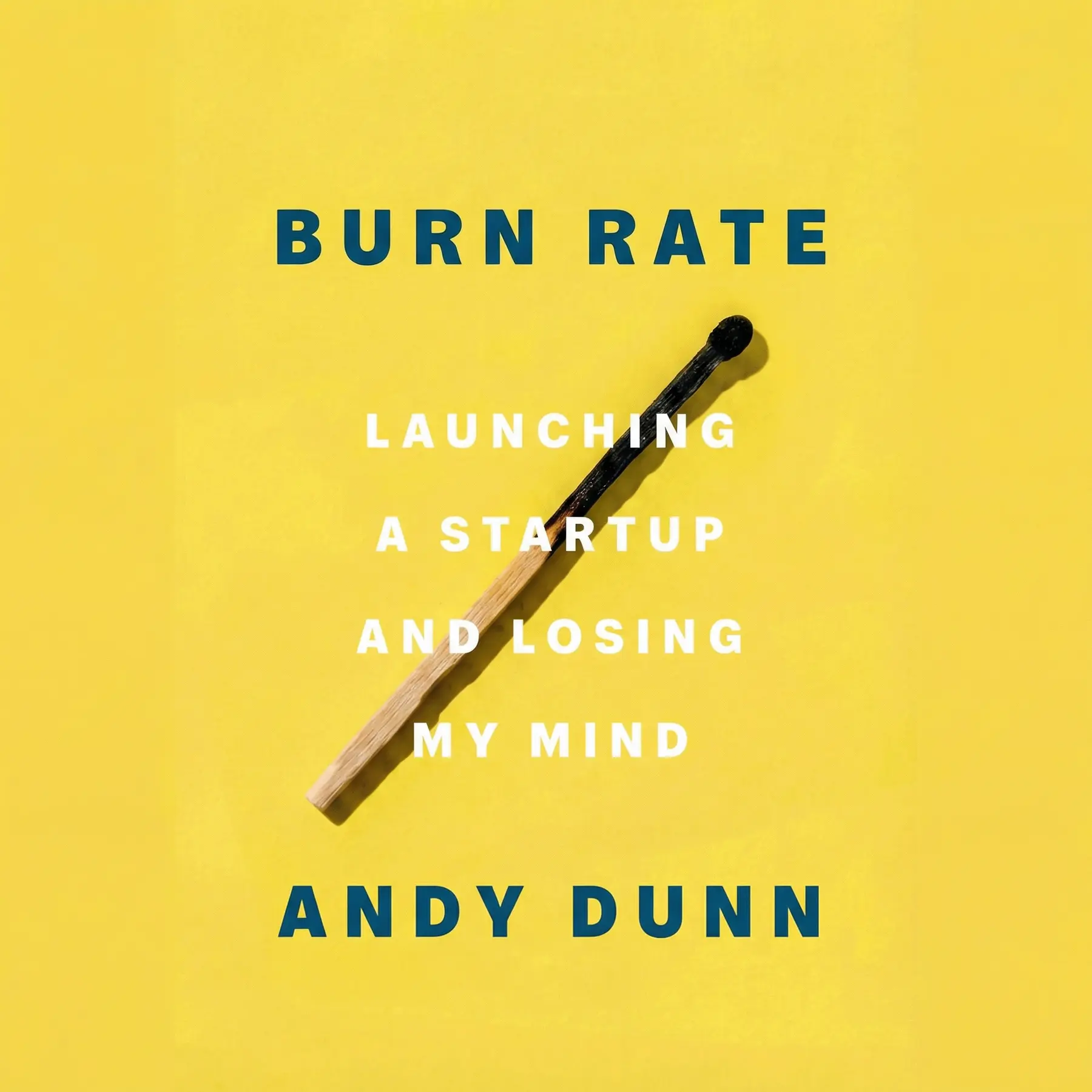
Burn Rate: Launching a Startup and Losing My Mind
By Andy Dunn
Andy Dunn built the menswear company Bonobos while hiding bipolar disorder for 16 years. He shows how the illness can drive a founder and also wreck one, and why naming and treating it openly finally helped him.
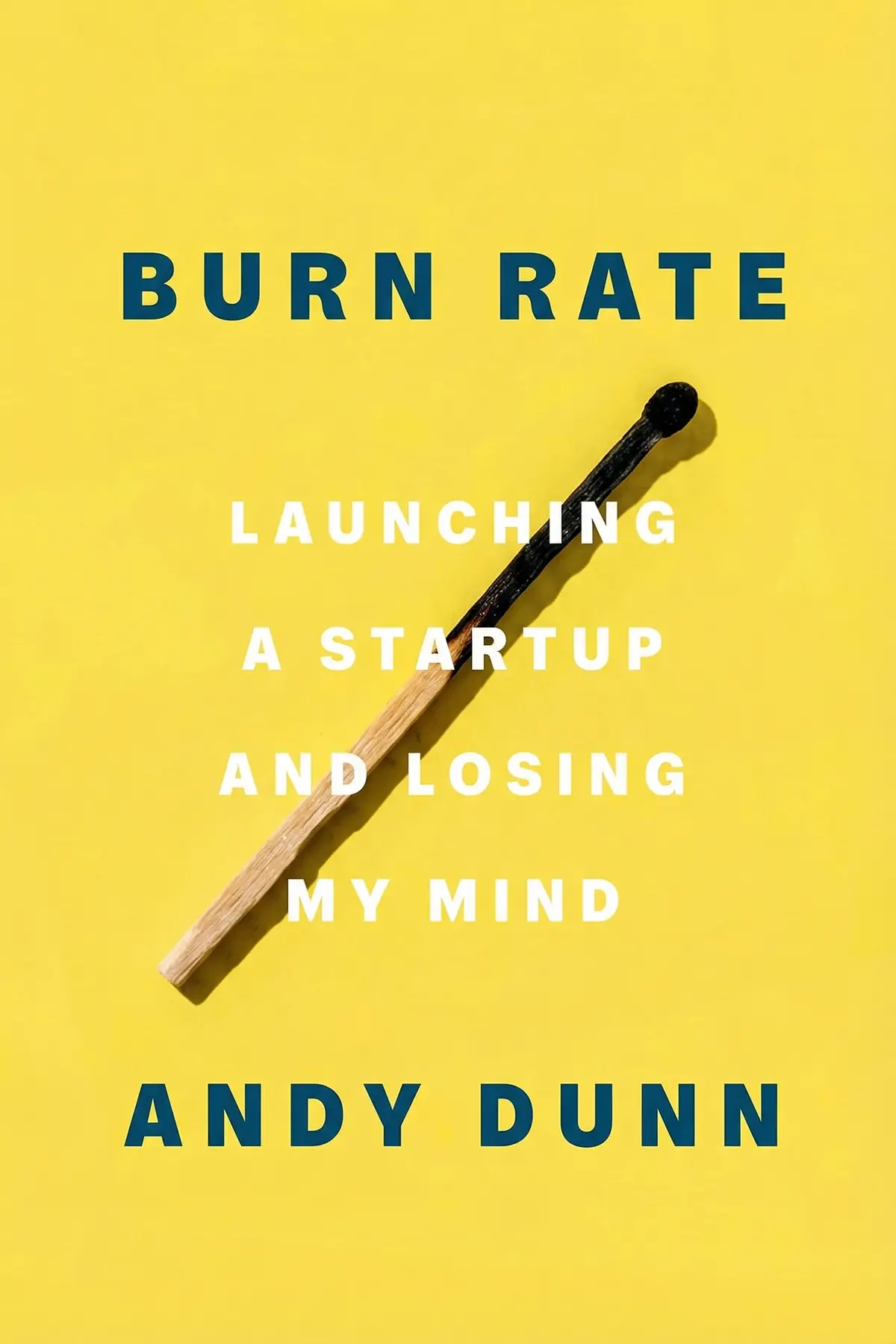
Table of Content
1. Introduction
1 min 05 sec
If you work beside someone who seems unstoppable, or you are that person, Andy Dunn’s story is worth hearing. In Burn Rate, the cofounder of Bonobos, a menswear startup that sold for $310 million, reveals that he hid bipolar disorder from colleagues, partners and himself for 16 years. About 3 percent of people have the condition, and among entrepreneurs the figure may reach 20 percent. Dunn’s explanation is uncomfortable: the energy, confidence and big vision of hypomania look a lot like what investors want in a founder.
His memoir comes down to one argument. The illness that helped him build a company nearly destroyed him, and it loosened its grip only when he stopped hiding it and treated it like any other disease. Along the way you learn to read the signs that a high is turning dangerous, why silence makes everything worse, and what honest treatment looked like for him. The story includes suicidal thoughts and violence, so listen with care.
2. Tell a productive high from a dangerous one
1 min 38 sec
A college student who is in love, full of ideas and barely sleeping looks like he is having the best year of his life. Dunn explains why that picture can hide the first stage of a serious illness.
3. What silence does to a frightening diagnosis
1 min 40 sec
Dunn’s family was full of medical professionals, yet after his first breakdown nobody said a word about it. That kindly meant silence turned out to be the most expensive choice of all.
4. Spot the struggle behind a confident founder
1 min 49 sec
Nerve, stamina and big ideas are what investors hope to see in a founder. In Dunn’s early New York years, those same traits sat alongside days spent in bed and dark thoughts at thirty thousand feet.
5. Stop blaming your job or partner for your struggles
1 min 54 sec
Dunn fought his cofounder, fired the friend who told him to stop burning cash and saved the company with a single risky meeting. In one rare calm moment, he finally noticed what linked all of it.
6. Let one person see the whole picture
1 min 38 sec
Fifteen years after his first manic episode, Dunn walked off a plane in Las Vegas convinced he was God, and he still gave a conference speech that he believed went well. His turning point came later, at his lowest, in China.
7. Untreated mania lands on the people you love
1 min 43 sec
A door code, a stranger’s name and a Broadway musical all became signs to Dunn on the night his illness stopped being private. What followed put him in a hospital, then in a police cell.
8. Treat it like diabetes and keep it treated
1 min 40 sec
Dunn told his whole company the truth just as a sale was taking shape. The response surprised him, and so did what it took to stay well afterward: a new doctor, a protected night’s sleep and a new reason to keep going.
9. Conclusion
1 min 09 sec
Burn Rate is a founder’s memoir, but its deeper subject is what secrecy costs. Dunn’s illness gave him the nerve to rescue a company with a declined credit card and a $300,000 meeting. It also put him on a plane wishing for a crash, sent him around a Las Vegas restaurant trying to give away his watch, and finally put him in a cell after he hurt the woman he loved. What separated those outcomes was whether anyone, Dunn included, was allowed to name what was happening.
The practical lessons are modest and real. A sudden rise in energy, especially with lost sleep, is information to act on, the way Monica acted when she made her brother rest. A diagnosis needs to be talked about, not tiptoed around. Language matters too: Dunn points out that saying someone is bipolar, instead of saying they have bipolar disorder, is like calling a patient cancer.
Manuela’s mother said it most simply when she compared his condition to diabetes. It is something you have and something you treat, and it no longer has to run your life in secret.
About this book
What is this book about?
Andy Dunn cofounded Bonobos, the online menswear company Walmart bought for $310 million. For most of that time he was hiding a diagnosis of bipolar disorder that he received in college. Burn Rate is his account of those 16 years of denial. It covers manic episodes in which he believed he was a prophet, depressions that kept him in bed for days, and one severe crisis that ended with him hurting his partner and her mother and spending time in a hospital and then in jail. Dunn writes from inside the illness. He explains how hypomania can look exactly like the drive investors want from a founder, and how depression can hide behind a charming public face. He also shows how a family's silence turned a diagnosis into a secret he kept for 16 years. Readers learn to tell a productive high from a dangerous one and to spot depression in someone who seems fine. They also see what recovery looked like for Dunn: honesty at work, the right medication, therapy, and a partner's mother who likened his condition to diabetes.
Book Information
Who it's for
Founders and executives
Founders and executives whose drive sometimes feels hard to control, or who hide low periods behind a confident face.
Managers and team leads
Managers and team leads who want to recognize when a colleague's high energy or withdrawal signals something serious.
Loving someone with bipolar
Families and partners of someone with bipolar disorder who want to understand it from the inside.
About the Author
Andy Dunn
Andy Dunn is an American entrepreneur. He met Brian Spaly while studying for an MBA at Stanford, and in 2007 the two cofounded the menswear brand Bonobos. Dunn was its CEO until Walmart bought the company in 2017. He then led Walmart's group of direct-to-consumer brands until January 2020. He has also worked as an angel investor, run the venture capital firm Red Swan and backed more than 80 startups.
Ratings & Reviews
Ratings at a glance
What people think
Listeners find this memoir a vital narrative regarding mental health that helps progress the public conversation on the issue. The writing is polished and the storytelling is meticulously structured to share experiences with profound depth, creating a relatable journey full of genuine emotion. Listeners call it an authentic piece of entrepreneurial storytelling, and one listener remarks that it is a mandatory read for those in tech. Listeners value the book's candidness and grit, with one review highlighting its first-hand account of bipolar disorder.
Top reviews
Anchalee
This book isn’t your typical tech memoir about scaling a brand to a nine-figure exit. Instead, Andy Dunn provides a visceral, sometimes uncomfortable, look at the reality of building Bonobos while battling untreated bipolar disorder. We often glorify the 'manic founder' archetype, but Dunn strips away that glamour to show the wreckage left in the wake of a mental health crisis. The narrative is fast-paced and reads like a confession, balancing high-stakes boardroom meetings with the terrifying silence of a psychiatric ward. While his immense privilege—the ability to hire top-tier lawyers and expensive specialists like Dr. Z—is clear, it doesn’t diminish the bravery required to share such a private struggle. I found the writing style to be punchy and direct, though it occasionally felt a bit like a series of LinkedIn posts stitched together. Overall, it’s a powerful contribution to the conversation around founder wellness and a must-read for anyone in the startup ecosystem.
Show moreChamp
Picked this up on a whim after seeing it mentioned in a tech newsletter, and I couldn't put it down. The vulnerability Andy Dunn shows regarding his diagnosis is nothing short of heroic in a culture that demands founders be indestructible. He captures the 'up' states of hypomania perfectly—the feeling of being a demi-god who can conquer the retail world—only to crash into the reality of a jail cell or a hospital bed. Not gonna lie, the chapter about the Walmart acquisition was fascinating, not just for the business details, but for the emotional toll it took on him during a period of relative stability. To be fair, the narrative can feel a bit self-absorbed at times, but that’s the nature of a memoir, isn’t it? It’s a raw, pulsating account of survival that every leader needs to read to understand the human cost of the 'hustle' culture that dominates our industry.
Show moreDuangjai
Wow, what a rollercoaster. I’ve read a lot of memoirs, but few are as transparent as this one. Dunn manages to articulate the internal mechanics of a bipolar mind with such clarity that you almost feel the racing thoughts yourself. The book successfully bridges the gap between a high-stakes business narrative and a deeply personal medical journey. While some might find the details of his manic episodes repetitive, I thought they were crucial for illustrating the cyclical nature of the illness. He doesn’t shy away from the 'monsters' he had to face, even when they made him look bad, like when his co-founder was left in tears after a confrontation. The fact that he built a brand as successful as Bonobos while dealing with this albatross is a testament to his resilience. It’s an essential piece of entrepreneurial storytelling that doesn't sugarcoat the damage done to those around him. Truly an eye-opening read.
Show moreSamuel
After hearing Andy Dunn on a podcast, I knew I had to check this out. The book is an open-hearted, unflinching look at a life lived in the extremes. It’s rare to find a business leader willing to admit to such vulnerability, especially regarding a condition as stigmatized as bipolar disorder. The way he describes the internal pressure to perform while his mind was fracturing is something that will stay with me for a long time. I loved the way he brought the reader into the early days of Bonobos, showing the gritty reality of a startup before the big Walmart payout. To be fair, he did catch a lot of breaks that others wouldn't, but he acknowledges his many privileges throughout. This is more than just a business book; it’s a survival guide for the modern era. Highly recommend for anyone looking for a real, raw story about resilience and recovery.
Show moreWan
Ever wonder what’s actually happening behind those glossy “founder success” stories? Dunn reveals the chaotic truth of his journey, showing how a billion-dollar vision can coexist with a mind that is literally breaking apart. The book does an excellent job of weaving the growth of Bonobos with the escalating severity of his episodes. Truth is, I was occasionally put off by the author’s tendency toward hyperbole and the way he sometimes 'storifies' moments that probably felt a lot messier in real life. Some of the decisions he made, like impulsively firing staff or the 6-week CEO debacle, were hard to read about without cringing. However, the level of transparency here is rare in the business world, and for that alone, it deserves a spot on your shelf. It’s a cautionary tale as much as it is an inspirational one, highlighting the fine line between genius-level drive and clinical mania.
Show moreSaovapa
Not what I expected, but perhaps exactly what I needed to read. Most business books are filled with survivor bias and empty platitudes, but this is a gritty, first-hand account of a mental health crisis. Dunn's writing is functional and moves the story along quickly, focusing heavily on the internal sensations of his mania. Look, there are moments where the privilege is a bit blinding; most people experiencing a psychotic break don't have the resources to keep their CEO title or hire elite lawyers. But the honesty regarding the shame and stigma he felt is universal. I appreciated the way he described the 'red flags' he ignored early on, as it provides a roadmap for others who might be struggling. My only gripe is that the middle sections about Bonobos’ internal politics dragged a little too much compared to the intensity of the personal revelations. It's a solid 4-star read that opens up a much-needed dialogue.
Show moreNikolai
As someone who has worked in the NYC startup scene for years, this hit close to home. We’ve all seen the flashy, impulsive CEO types, but we rarely get to see the clinical reality behind that behavior. Dunn is incredibly open about how his bipolar disorder fueled both his creative brilliance and his most destructive choices. Frankly, the parts where he describes the 'ride the dragon' feeling of hypomania were terrifying because they’re so often rewarded in Silicon Valley. I do wish he had spent more time acknowledging the systemic issues in mental health care rather than just his own journey with high-end doctors, but I understand this is a personal memoir. The pacing is excellent, though some of the 'storification' makes it feel a bit like a movie script rather than real life. Still, it’s a refreshing departure from the usual idolization of entrepreneurs who pretend to have it all figured out.
Show moreJoseph
Finally got around to reading this, and it’s a heavy one. Dunn is a skilled writer who knows how to craft a compelling arc, though at times it does feel like an extended blog post stretched to book length. The core of the story—the intersection of mental health and high-pressure leadership—is incredibly relevant today. Personally, I found the descriptions of his time in jail and the subsequent legal battles the most grounding parts of the book. It’s easy to get lost in the glamorous world of fashion and big exits, so those moments of harsh reality were necessary. I agree with other reviewers that the title is a bit of a bait-and-switch; it’s more about the 'burn rate' of a human soul than a company’s cash flow. Despite that, the raw emotion and honesty make it worth the time. It provides a much-needed perspective on the hidden costs of the startup dream.
Show moreCaleb
The chapter on his diagnosis was particularly striking. Dunn doesn't just list symptoms; he describes the 'paternal idealism' and the crushing expectations that contributed to his mental state. It's a thoughtfully crafted narrative that shares his experiences in great detail, making the struggle feel relatable even if his billionaire lifestyle isn't. Truth is, the middle of the book drags a bit when it focuses too much on the minutiae of the apparel business. I also found myself wishing there was more discussion on the lack of affordable care for people who aren't wealthy CEOs. He has his 'Dr. Z,' but what about everyone else in America? Still, his bravery in disclosing his fight with bipolar disorder is commendable. It advances the public dialogue on a topic that is too often ignored in the boardroom. A solid 4 stars for the honesty and the well-written prose.
Show moreBank
I walked away from this one feeling incredibly conflicted. On one hand, the author is a gifted storyteller who manages to make the fashion-tech world feel as thrilling as a thriller novel. On the other hand, the title 'Burn Rate' is quite misleading if you’re looking for a tactical manual on startup finance or operations. It’s almost entirely a memoir about bipolar disorder, and while that’s an important topic, the way he treated his employees during his episodes was genuinely distressing to read. He recounts firing people capriciously and causing emotional damage that a simple 'I’m sorry' in a book can’t really fix. In my experience, memoirs by successful people often gloss over the wreckage they leave behind, and while Dunn is honest about his actions, he doesn't always seem to fully grasp the weight of his privilege in escaping legal consequences after his arrest. Good, but definitely not what I expected going in.
Show moreQuestions about this book
What is Burn Rate by Andy Dunn about?
It is Andy Dunn’s memoir of cofounding Bonobos, the menswear company Walmart bought for $310 million, while hiding bipolar disorder for 16 years. He describes manic episodes in which he believed he was a prophet, depressions that kept him in bed for days, and a final crisis that led to violence, a hospital stay and an arrest. The book argues for treating mental illness openly and without shame.
What is the difference between hypomania and mania in Burn Rate?
Dunn describes hypomania as an exaggerated version of reality: high energy, confidence, rapid ideas and little need for sleep, which can make a person very productive. Mania invents its own reality. The filter between thought and speech disappears, everything looks like a sign, and a person may go days without sleeping or eating. In his case, that line would be crossed more than once.
Why are entrepreneurs more likely to have bipolar disorder?
The book notes that about 3 percent of people have bipolar disorder, and that among entrepreneurs the figure may be as high as 20 percent. Dunn suggests that hypomania brings creativity, productivity, confidence, optimism and vision, the traits business success seems to demand. His own fundraising successes ran on that energy, but left untreated, the same illness nearly cost him his company, his relationship and his freedom.
What helped Andy Dunn manage his bipolar disorder?
After his arrest, Dunn told everyone at work about his diagnosis. He found a psychiatrist, Dr. Z, whose mix of medication evened out both highs and lows without making him feel dull. He and his partner Manuela saw a relationship therapist. He also learned that losing even one night of sleep could set off a crisis, and that therapy, check-ins and openness had to continue.
How can I apply the lessons of Burn Rate?
Treat a sharp rise in energy, especially when sleep disappears, as a warning sign rather than good news. Talk openly with anyone recovering from a mental health crisis instead of avoiding the subject. Say that someone has bipolar disorder, not that they are bipolar, and think of mental illness the way Manuela’s mother did: like diabetes, something to treat and live with.
Featured in
Readers also enjoyed

A Life Decoded: My Genome: My Life
J. Craig Venter


A Long Way Gone: Memoirs of a Boy Soldier
Ishmael Beah

All Creatures Great and Small
James Herriot


A Promised Land
Barack Obama


A River in Darkness: One Man’s Escape from North Korea
Masaji Ishikawa

A Spy Among Friends: Philby and the Great Betrayal
Ben Macintyre
AUDIO SUMMARY AVAILABLE
Listen to Burn Rate in 15 minutes
Get the key ideas from Burn Rate by Andy Dunn, plus 5,000+ more nonfiction titles.
- 5,000+ titles
- Listen as much as you want
- 7-day free trial
- Cancel anytime









