

Ali: A Life
Jonathan Eig
 English
A practical guide to undoing what long hours of sitting do to the body. It uses simple self-tests and small daily habits for floor sitting, hips, walking, breathing, food and sleep.
1 min 01 sec
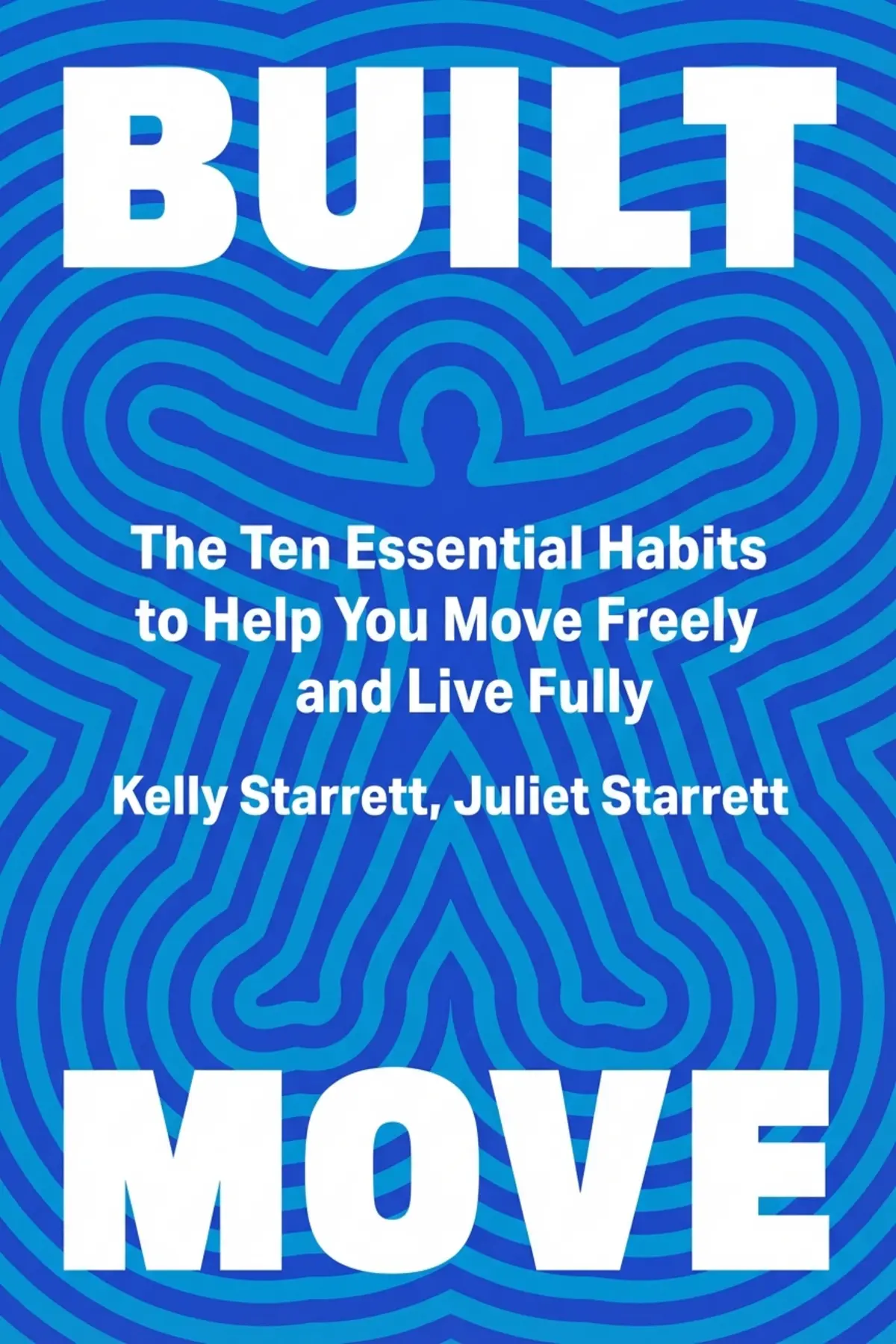
If your knees complain on the stairs and your back tenses every time you reach for something on the floor, the cause may be simpler than it feels. In Built to Move, physical therapist Kelly Starrett and former whitewater world champion Juliet Starrett argue that a body which spends its days in chairs slowly forgets the movements it was designed for. Relearning them, they say, takes no gym, no yoga mat and no special diet.
Their word for what we have lost is mobility: moving the way nature built us to move. Each habit in the book begins with a simple test you can do at home and then gives a daily practice to fix what the test shows. The idea running through all of it is plain. Measure a few basics, and small daily habits on the floor, on foot, in your breath, on your plate and in bed will give back the ease that sitting took away. By the end you will have six tests to try tonight and a clear first fix for each one.
1 min 36 sec
Children drop to the ground and bounce back up all day without a thought. For many adults the same simple move has become a struggle, and the authors treat it as a revealing sign of how the body is aging.
1 min 47 sec
Hours of sitting hold one joint in the same shape all day, and most people never notice what they have lost. A simple test against a wall shows how limited your hips are, and it doubles as the cure.
2 min 02 sec
A hard workout every morning feels like protection against a day at the desk. The authors argue that even that cannot make up for hours of sitting, and they point to a far gentler habit worth building: walking.
1 min 56 sec
Breathing happens on its own, so few people ever check how well they do it. A one-minute test with a clock and a pinched nose reveals far more about your energy than most would expect.
1 min 55 sec
Vegan, Paleo or Keto: the arguments never end. The authors sidestep the whole debate with two numbers you can track over a typical day.
1 min 51 sec
Some people wear short nights like a badge of honor. A tiny group really can manage on very little sleep, but the odds that you belong to it are slim, and the cost shows up everywhere else.
1 min 02 sec
What makes Built to Move persuasive is how ordinary its demands are. There is no program to buy, no equipment and no perfect diet. The Starretts ask you to notice what a life shaped by chairs has taken from your body and to give it back a little each day. Each test turns a vague worry about stiffness into a number you can watch change, and each fix fits inside a normal day.
A good place to begin is tonight. Try the Sit-and-Rise test and the Couch Test, write down both scores, and swap some chair time for floor time while you watch or read. Tomorrow, count your steps and get up before you have been sitting for thirty minutes. In the morning, give two minutes to slow breaths through the nose. Keep the authors’ warning in mind as you go: some tests may feel uncomfortable, but none should hurt.
The authors are not chasing perfection. They want a body that can do what it was built to do, and they want you to look after it with as little fuss as possible.
Stiff hips, sore knees and a back that tenses at every bend are so common that many people treat them as a normal part of adult life. Kelly and Juliet Starrett disagree. A physical therapist and a former whitewater world champion, they argue that modern days spent in chairs and in front of screens slowly take away the movements the human body was designed for. Getting those movements back, they say, needs no weightlifting, yoga or strict diet. Their key word is mobility, and their method is built around everyday habits, each paired with a test you can do at home. You sit down to the floor and rise without your hands, kneel against a wall to check your hips, count your steps, time a breath hold, weigh your vegetables and add up the hours you really sleep. Every test gives you a score and then a daily practice to improve it. Readers get a clear picture of where their body stands and a short list of habits that fit into an ordinary day, from 30 minutes of floor sitting to a fistful of protein on every plate.
Desk workers who sit for most of the day and feel stiff, sore or tired in their hips, back and knees.
People who exercise hard but still spend long hours in a chair.
Anyone who wants simple home tests and small daily habits in place of a full fitness program.
Kelly Starrett is a Doctor of Physical Therapy who has advised athletes and coaches in professional leagues, as well as military units and corporations. He also wrote Becoming a Supple Leopard, Ready to Run and Deskbound. Juliet Starrett was a US national and world champion in extreme whitewater racing and later won a Master Division world title. Together they co-founded San Francisco CrossFit and The Ready State, and Juliet co-founded the nonprofit StandUpKids. Before that she worked as a lawyer.
Listeners find this to be an accessible guide that offers direct information about wellness, making it a vital read for everyone. They like how it blends movement naturally into daily routines, and one listener notes it is not intimidating or muddled. The book gets positive reviews for its readability, with listeners describing it as effortless to follow, while one highlights its simple, measurable plan. Listeners value the health improvements, with one mentioning how it boosts fitness and another noting its particular importance for seniors.
Finally got around to reading this, and it’s a total game changer for how I view my daily routine. Instead of obsessing over a grueling one-hour gym session, Kelly and Juliet Starrett show you how to sprinkle movement into the gaps of your day. I’ve started standing on one leg while brushing my teeth and sitting on the floor while watching TV, and my hips already feel significantly less locked up. The book is incredibly approachable, stripping away the complex jargon found in their previous work like Supple Leopard. It focuses on ten simple habits that are measurable and, most importantly, actually doable for a busy parent. Truth is, the sections on sleep and breathing were just as impactful as the physical mobilizations. I love that they prioritize 'adding' healthy behaviors rather than just taking things away. It makes the whole lifestyle shift feel sustainable rather than restrictive. If you want to be a durable human as you age, this is your manual.
Show moreEver wonder why your body feels so creaky even if you hit the gym three times a week? This book explains it perfectly. It isn't about exercise; it's about movement. The Starretts break down how modern life effectively 'casts' our bodies into stiff, immobile shapes. I found the chapter on the 'big toe' and its role in walking to be absolutely fascinating. Who knew a tiny digit could affect your entire gait and back health? The tone is encouraging and never feels like a lecture. I especially liked the 800-gram fruit and vegetable challenge mentioned in the nutrition section. It's such a simple, measurable goal that doesn't involve calorie counting or fad diets. For a senior like me, the balance tests were a wake-up call. I realized I was much more of a fall risk than I thought. This is essential reading for anyone over fifty who wants to keep their independence and stay active.
Show moreThis book arrived at the perfect moment in my life. After a nasty fall while walking my dogs, I was feeling fragile and worried about my long-term mobility. Kelly and Juliet provide a sense of hope that you can actually 'rebuild' your body's durability at any age. I love the idea of becoming a 'durable adult.' The 10 essentials are so logical—things like being able to get up off the floor without using your hands. I failed that test on day one, and it was a massive wake-up call! Since then, I’ve been following the roadmap, and I can already feel a difference in my lower back and knees. The writing style is warm and conversational, making it feel like you have a personal trainer in your ear. It’s not about being perfect; it’s about being better than you were yesterday. I’m starting the 21-day challenge tomorrow and can’t wait to see the results.
Show moreKelly and Juliet have done it again, but this time they’ve made their brilliance accessible to everyone. This isn't just a book for CrossFitters; it's a book for anyone with a body. I appreciate the focus on 'lifestyle' habits over 'exercise' habits. The distinction is important because it removes the barrier to entry for people who hate the gym. The chapter on sleep was particularly enlightening for me. I never realized how much my sleep quality was linked to my perception of physical pain. Not gonna lie, I was a chronic icer before this, so stopping that was a big mental shift, but my recovery times actually seem faster now. It’s a straightforward, measurable plan that doesn't leave you feeling overwhelmed. If you only buy one health book this year, make it this one. It’s a comprehensive guide to living a more mobile, pain-free life.
Show moreAfter hearing the authors on a podcast, I knew I needed to grab a copy of Built to Move. I’ve been struggling with stiffness and general lethargy, and this book provided the exact 'why' behind those feelings. The 10 habits are brilliant because they are so simple to track. My favorite part is the emphasis on hip extension and glute strength; I didn't realize how much my 'desk posture' was wrecking my ability to walk properly. The book is packed with tiny nuggets of wisdom, like why jumping is good for your internal organs and why you should avoid anti-inflammatories for minor aches. It’s a very quick read, but I find myself going back to specific chapters as a reference. Frankly, it’s refreshing to read a health book that isn't focused on weight loss or looking a certain way, but rather on how your body actually functions and feels.
Show moreAs a long-time follower of The Ready State, I was curious to see how they would condense their knowledge for a mainstream audience. The result is a solid, readable guide that serves as a fantastic primer for anyone not already deep into the world of mobility. They cover everything from the importance of hip extension to why you should ditch your flip-flops for shoes with a back. My only real gripe is that for those of us who have followed Kelly for years, some of this feels like a repeat of his earlier content. To be fair, though, the 21-day challenge at the end provides a great structure for implementation. The advice on avoiding ice for injuries was a bit of a shocker, but the logic they provide is surprisingly compelling. It’s a very practical book, even if the '24-hour duty cycle' they suggest feels a bit ambitious for someone with a standard 9-to-5 and a long commute.
Show moreLook, I’m not an athlete, I’m just an office worker who is tired of feeling like a pretzel by 3:00 PM. This book gave me exactly what I needed: a low-effort roadmap to feeling better. The authors argue that sitting is basically a slow-motion disaster for your circulation and metabolism, which sounds scary, but they provide easy fixes. I’ve started taking their advice on 'movement snacks' throughout the day, and the brain fog has definitely lifted. One minor annoyance was the QR codes for the videos. Most of them just felt like advertisements for their paid content or equipment, which was a bit frustrating when I just wanted to see the proper form for a stretch. Still, the written descriptions are decent enough to follow. It’s a very accessible book that doesn't require you to buy a bunch of expensive gear, which I really appreciated. Definitely worth a read if you feel stuck at a desk.
Show morePicked this up because I’ve been dealing with nagging plantar fasciitis for months and was willing to try anything. The section on footwear alone was worth the price of the book. I didn't realize how much my slippers were contributing to my foot pain until they explained the mechanics of how the foot pushes off the ground. Built to Move is structured around ten habits, and they are all very digestible. I like that they don't demand you change your whole life overnight. Instead, they suggest small tweaks like nasal breathing or increasing your protein intake. Gotta say, the anecdote about Conor McGregor losing because he breathed through his mouth felt a bit like bro-science, and I rolled my eyes at that part. However, the actual stretches and the focus on 'internal organ movement' through jumping were very interesting. It’s a 4-star read that offers a lot of common-sense health advice that we often ignore.
Show moreThe concept is solid, but the execution felt a bit out of touch with reality for the average person. I appreciate the focus on 'The 10 Essential Habits,' but their example daily schedule is frankly laughable. It assumes you have a helper to get the kids ready while you workout for an hour and that your commute is basically a leisurely stroll. I checked some of the studies they cited regarding sitting time, and they didn't quite seem to support the rigid 'six-hour limit' the authors insist upon. Also, why is there no mention of how to adapt these movements for people with actual physical disabilities? It felt like it was written for people who are already relatively fit but just a bit stiff. On the positive side, the instructions for the mobilizations are clear, and the emphasis on glute strength is a good reminder for anyone with lower back pain. It’s an okay starting point, but take the 'scientific' claims with a grain of salt.
Show moreI really wanted to like this given the hype, but it felt incredibly generic to me. If you’ve read any health book in the last five years, you already know that you should sleep more, eat veggies, and sit less. I found the lack of rigorous scientific evidence for some of their more 'revolutionary' claims quite disappointing. They make huge leaps from small studies to set rigid targets that just aren't realistic for most people. For instance, the 24-hour duty cycle they propose is totally disconnected from the life of a blue-collar worker or a single parent. It’s very 'middle-class fitness' focused. Also, as someone who previously subscribed to their website, I didn't find any new mobilizations here that weren't already available elsewhere for free. It’s basically a simplified, watered-down version of their earlier work. If you are totally new to fitness, you might get something out of it, but otherwise, you can probably skip this one.
Show moreKelly and Juliet Starrett argue that modern life, especially long hours of chair sitting, makes the body forget the movements it was designed for. They focus on mobility, meaning moving the way nature built us to move. Each habit comes with a simple home test and a daily practice, covering floor sitting, hip extension, walking, breathing, nutrition and sleep. None of it needs a gym or a strict diet.
Stand barefoot, cross one leg in front of the other, lower yourself to a cross-legged seat on the floor and stand back up the same way, ideally without your hands. Start at ten points and subtract one each time you lose your balance or need support. Three to six means work to do, seven to nine is good, and ten is the goal. Sitting on the floor 30 minutes a day helps raise your score.
They suggest aiming for 8,000 to 10,000 daily steps and recommend averaging your count over three days to see where you stand. Researchers estimate hunter-gatherers walked 12,000 to 17,000 steps daily. The authors also advise sitting no more than about 30 minutes at a time, citing a 2010 American Cancer Society study that linked more than six hours of daily sitting to a higher risk of early death.
The authors say no single diet matters as much as two components: micronutrients and protein. They recommend eating 800 grams of unprocessed fruit and vegetables a day, fresh, cooked, canned or frozen, plus protein at 0.7 to 1 gram for each pound of body weight, more for active athletes. A practical rule is to put a fistful of protein, such as fish, meat or beans, on every plate.
It suits office workers and anyone who sits for long hours and feels stiff or sore, including people who already exercise but still spend most of the day seated. The authors warn that some tests may feel uncomfortable but should not cause pain. Readers who want a few clear habits and home tests instead of a demanding fitness plan will find it especially practical.
Jonathan Eig





Elisabeth Rosenthal




AUDIO SUMMARY AVAILABLE
Get the key ideas from Built to Move by Kelly Starrett, plus 5,000+ more nonfiction titles.









