
13 min 43 sec
Available in: English
 ไทย
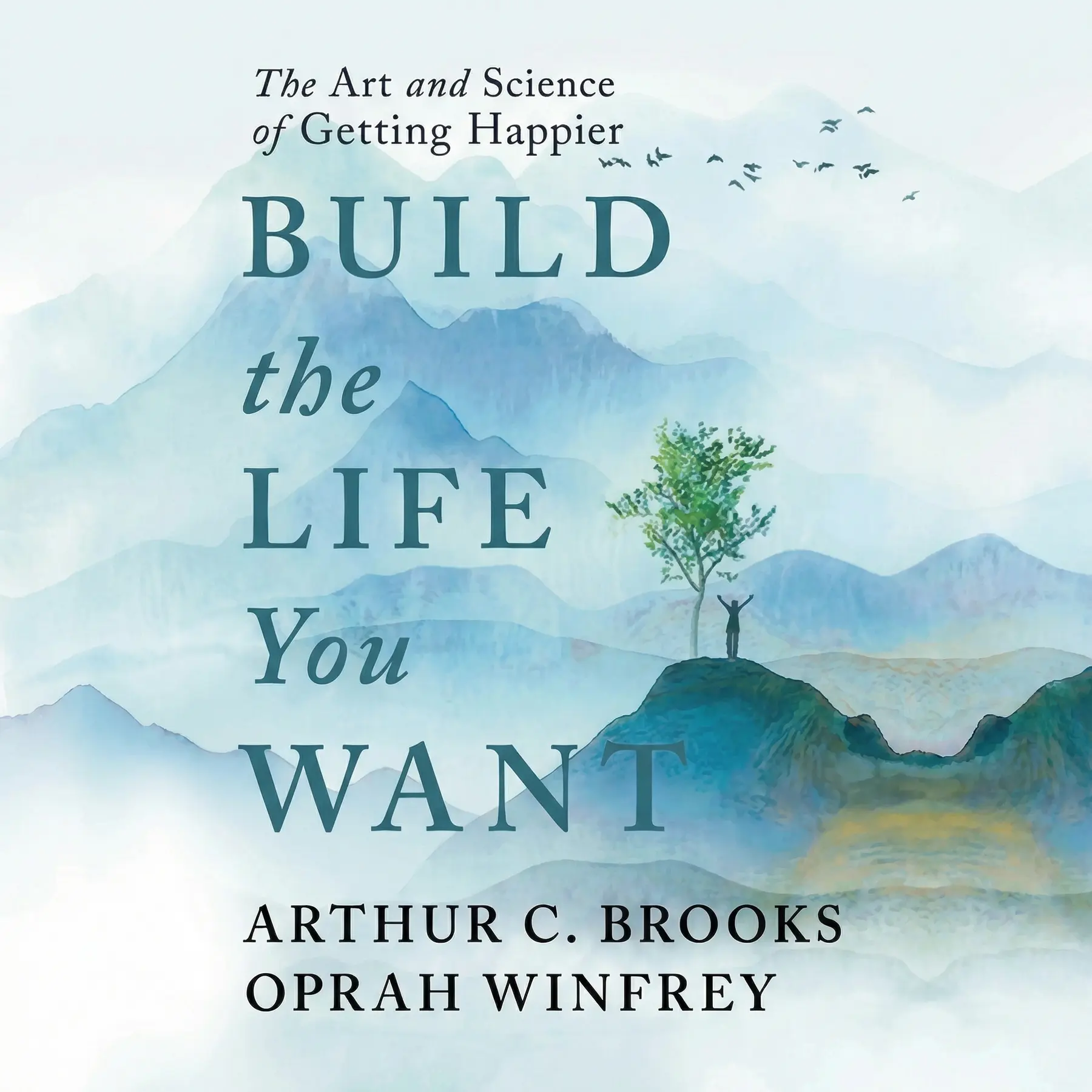
EnglishไทยBuild the Life You Want: The Art and Science of Getting Happier
A practical guide to growing happier now: manage your own emotional reactions, then strengthen four supports in your life (family, friendship, meaningful work and a sense of something larger) so they keep you steady through hard times.
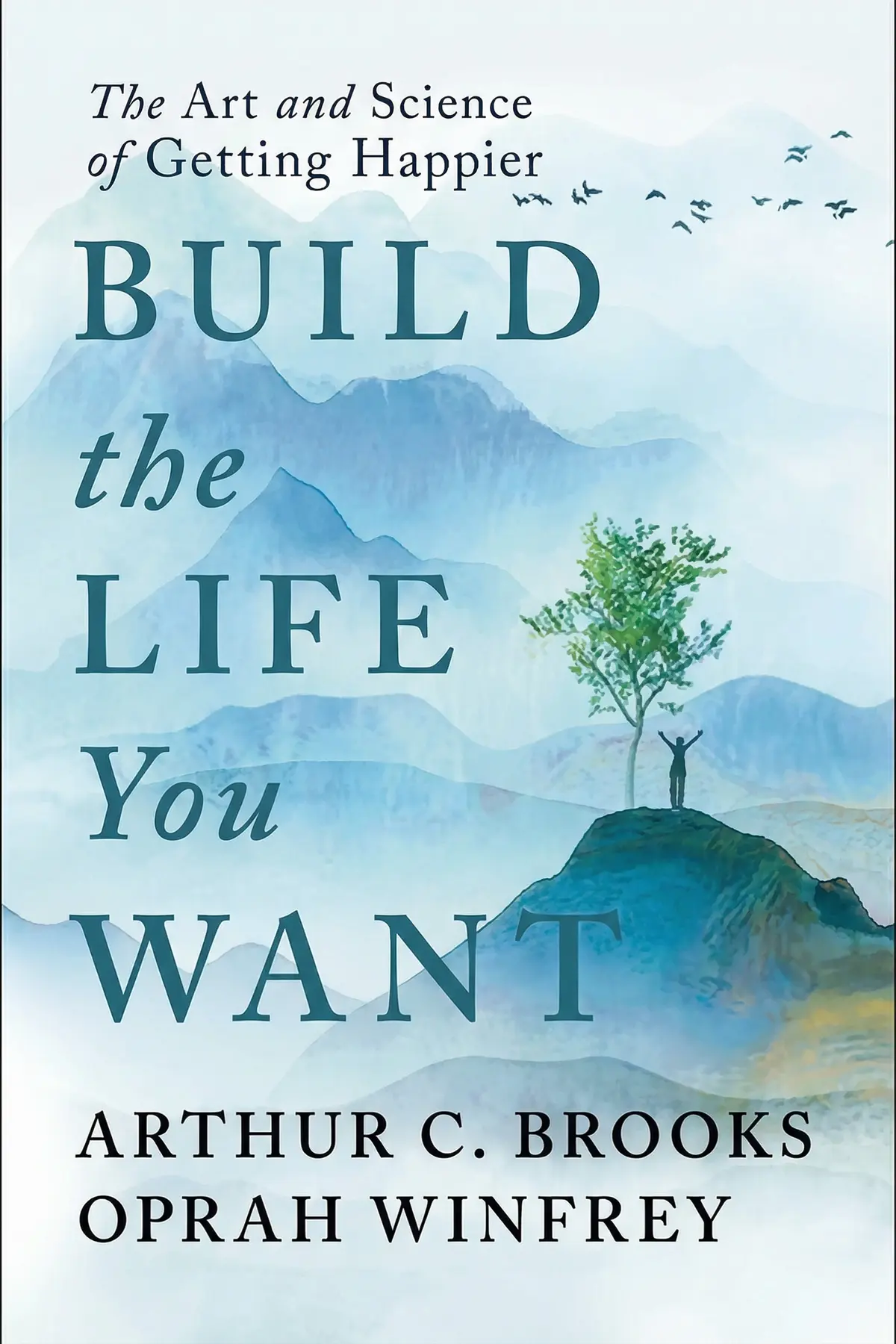
Table of Content
1. Introduction
1 min 11 sec
Many people treat happiness as a reward that will arrive later, once the right job, partner or bank balance falls into place. In Build the Life You Want, Vanderbilt professor Arthur C. Brooks and talk show host Oprah Winfrey argue that the real obstacle is much closer to home. It is you, and how well you manage your own emotions.
When feelings run the show, people reach for quick comforts such as money, attention, shopping or long nights of streaming, and those comforts leave them empty. The authors’ case is that happiness can be built at any stage of life, whatever is going wrong, by taking charge of your reactions and strengthening four pillars: family, friends, meaningful work and something larger than yourself. Pain does not disappear. The pillars keep you standing when it comes.
Ahead are practical moves for each pillar: how to argue with family without building resentment, where to find friends who are more than useful contacts, how a bored accountant found a better life, and two free habits that bring awe back into an ordinary week.
2. Stop waiting for life to hand you happiness
2 min 03 sec
Most of us can name exactly what stands between us and a happier life. The authors argue that the very act of making that list is what keeps people stuck, and they point to a different place to look.
3. Turn family conflict into a closer bond
2 min 05 sec
Most people avoid fights with the people they love most, and the authors think that habit does more harm than the fights themselves. They also name a different force that sets the mood of a home.
4. Find friendships that actually nourish you
1 min 55 sec
You can be surrounded by people all week and still feel alone. The authors explain why so many adult friendships leave us hungry, and where the more satisfying kind usually begins.
5. Match your work to who you really are
1 min 55 sec
An accountant kept getting raises and kept feeling flat. A talk with his wife helped him pinpoint what he actually enjoyed, and that realization led him to a very different line of work.
6. Make the job you already have more satisfying
1 min 34 sec
Not everyone can walk away from a job that feels flat. The authors describe two ways to make work feel better without changing jobs: making room for learning and growth, and serving others.
7. A daily dose of awe, no religion required
1 min 50 sec
Most days shrink to the size of our own worries. The authors offer a way to step back that costs nothing but time, and it works whether or not you believe in anything at all.
8. Conclusion
1 min 10 sec
The promise of Build the Life You Want is modest and demanding at once. It does not ask for the perfect family, the perfect job or the perfect anything. It asks you to take responsibility for your reactions, your perspective and your choices, because those are the parts of happiness within your reach. Hard times still arrive. The difference is that you meet them standing on four pillars, with no need to wait for rescue.
Brooks and Winfrey close by inviting a regular check: whether your ties to family and friends run deep, whether your work gives you more than a paycheck, and whether anything in your week still fills you with awe.
Start where it is easiest. The next time someone at home is irritable, invite them into something they love instead of telling them to cheer up. Replace one text this week with a phone call to a friend. And on some clear night, leave the phone in another room and spend a few minutes looking at the stars.
Happiness, in this book, is a structure. You build it with your own hands, one pillar at a time, and the first beam can go up tonight.
About this book
What is this book about?
Many people treat happiness as a reward that comes later, once the right job, partner or income arrives. While they wait, they dull the gap with shopping, endless streaming or nonstop work. Arthur C. Brooks and Oprah Winfrey argue that this waiting keeps people stuck, because the main obstacle is not outside them. It is how they manage their own emotions. The authors describe three ingredients of happiness: purpose, enjoyment and satisfaction. They show how to stop chasing counterfeits such as money, status and attention, and how to build four pillars that supply the real ingredients: family, friends, meaningful work and spirituality in a broad, belief-free sense. Each pillar comes with concrete moves. Readers learn how to handle family conflict without resentment, how to lift a gloomy mood at home, why some friendships nourish while others only trade favors, and how one unhappy accountant found more joy behind the wheel. There are two ways to make a job you cannot leave more satisfying, and two free daily practices that bring awe and perspective back. The pain of life does not vanish, but the pillars keep you standing.
Book Information
Who it's for
Waiting to be happy
People who keep postponing happiness until the next job, partner or raise arrives.
Lonely at work
Professionals who feel busy and surrounded by people yet lonely and flat at work.
Wanting spirituality without religion
Anyone curious about mindfulness and awe who wants a spiritual practice without joining a religion.
About the Author
Arthur C. Brooks
Arthur C. Brooks is an American author and academic who holds a professorship at Vanderbilt University, has taught at Harvard and served as the 11th president of the American Enterprise Institute. He has written sixteen books, writes a column for The Free Press and hosts the podcast Office Hours with Arthur Brooks. Oprah Winfrey grew up in poverty, started in radio as a high school student and later hosted The Oprah Winfrey Show nationally from 1986 to 2011. She launched Oprah's Book Club, founded the Oprah Winfrey Network and received the Presidential Medal of Freedom in 2013.

Ratings & Reviews
Ratings at a glance
What people think
Listeners find this work enlightening, as it merges academic research with life experiences and personal narratives. They also value its motivational tone, seeing it as an empowering manual for fostering happiness that is simple to follow. Furthermore, the text provides actionable techniques for handling life’s obstacles and helps people select healthier emotions. Listeners celebrate the high quality of the prose, and one listener points out how effectively Brooks and Winfrey collaborated.
Top reviews
Maria
Finally got around to this collaboration, and the balance between Oprah’s warmth and Arthur Brooks’ data-driven approach is nearly perfect. Most self-help books lean too far into "vibes" or too far into dry academia, but this one hits the sweet spot. The emphasis on building a life of purpose through four specific pillars—faith, family, friends, and work—gave me a concrete roadmap to follow. I loved the idea that we can actually rewrite our personal narratives by focusing on gratitude and hope. This isn't about ignoring the bad stuff; it's about taking the wheel and being the boss of your own reactions. The prose flows smoothly, and the motivational value here is genuinely high. Not gonna lie, I started implementing the "gratitude list" immediately. If you’re looking for a guide that feels both urgent and reachable, this is the one you need to pick up.
Show moreKai
Ever wonder why some people just seem "naturally" happier even when things go wrong? This book explains that it isn't luck—it's a deliberate architecture of the soul and mind. I found the section on "envy weeds" to be particularly convicting. We spend so much time comparing our insides to other people's outsides, and Brooks provides a scientific basis for why that’s so destructive. The collaboration between Winfrey and Brooks works surprisingly well; she brings the human element while he provides the structural integrity. It’s a book about the "art and science" of life, and it lives up to that subtitle. I felt motivated to look at my relationships with much more intentionality after finishing this. This is more than just a book; it’s a toolkit for anyone who wants to cultivate deep, lasting satisfaction. Every chapter felt like a step toward a more fulfilling version of myself.
Show moreMo
After hearing Arthur Brooks discuss his research on a podcast, I decided to give this a try. The book is remarkably well-structured, blending scientific data with actionable life advice. I particularly appreciated the focus on metacognition—the idea that we can observe our thoughts rather than being controlled by them. Brooks does the heavy lifting with the neuroscience, while Oprah adds a layer of emotional resonance through her section introductions. Is it groundbreaking? Not entirely, as many of these concepts exist in Stoicism or basic CBT. However, the way they package the "four pillars" of family, work, friendship, and faith makes the path to happiness feel much more attainable. Frankly, it’s a refreshing change from the toxic positivity often found in this genre. It’s an empowering guide that reminds us that happiness isn't a destination we reach, but a skill we practice every single day.
Show moreNitaya
The chapter on treating emotions as "alerts" rather than objective realities completely changed my perspective on my own anxiety. Instead of fighting every negative feeling, the authors suggest we simply listen to what the alert is trying to say and then let it pass. This concept of emotional management is backed by some really solid research. I found the sections on work particularly insightful, especially the distinction between work as an addiction and work as a source of earned success. The writing is clear and easy to understand, even when Brooks dives into the more technical aspects of brain function. My only real gripe is that Oprah’s parts felt a bit short. I wanted more of her personal vignettes to balance out the data-heavy chapters. Still, it’s an insightful read that provides practical strategies for navigating life's inevitable challenges without losing your mind in the process.
Show moreIsabella
Picked this up because I’ve been struggling with finding meaning in my career lately, and the "work" pillar really resonated. The authors explain that work should be a service to others, which is a powerful shift in perspective. To be fair, some of the advice regarding family conflict felt a bit idealistic, especially when dealing with truly toxic dynamics. Brooks suggests we shouldn't let politics or values separate us from family, which feels a bit tone-deaf in our current climate. Despite that, the practical strategies for choosing better emotions are excellent. The writing quality is superb, and it’s very easy to read a few pages before bed and reflect on your day. It’s an empowering guide that encourages you to stop waiting for life to change and start designing it yourself. I’d recommend it to anyone who feels like they’re stuck on a treadmill of dissatisfaction.
Show moreEleanor
This book manages to bridge the gap between ancient philosophy and modern neuroscience quite well, which is no small feat. I was especially drawn to the discussions on the Roman Stoics and how their wisdom aligns with what we now know about brain function. The idea that happiness is a byproduct of a well-lived life, rather than the goal itself, is a distinction more people need to hear. In my experience, the four pillars—faith, family, friendship, and work—provide a very stable foundation for self-reflection. While some might find Brooks' perspective on faith a bit narrow, he does acknowledge that spirituality can take many forms. The book is easy to understand and the writing is clean, lacking the annoying jargon that ruins many self-care guides. It’s a helpful, insightful read for those who want to understand the "why" behind their feelings while getting practical tips to improve them.
Show moreElise
Arthur Brooks handles the heavy lifting here while Oprah provides the soul, creating a guide that feels both intellectual and deeply personal. I loved the concept of "metacognition" and how it allows us to distance ourselves from our initial, often irrational, emotional reactions. The book is filled with practical strategies for navigating life's hurdles, like using humor and hope to neutralize negativity. While the authors are clearly coming from a place of significant privilege, the core psychological principles they discuss are universal. I did think the section on family was a bit weak, as it glosses over the reality of truly abusive relationships in favor of "forgiveness." However, the overall message of taking control of your own narrative is incredibly empowering. It’s a well-written, easy-to-read book that offers a lot of value to anyone willing to do the inner work required for a happier life.
Show moreSuda
As someone who prefers hard science over self-help fluff, I had mixed feelings about the execution of this book. On one hand, Arthur Brooks provides a very methodical, research-based framework that avoids the usual clichés of the "happiness" industry. On the other hand, the tone is often quite dry and can feel a bit like a college lecture. I appreciate the deep dive into the dACC and social anxiety, but there were moments where the momentum just stalled. Truth is, Oprah’s involvement feels a bit like a "wraparound" as one other reviewer put it. Her name is on the cover, but she only shows up for a few pages at a time to introduce new sections. It’s a decent primer if you’ve never read about Stoicism or cognitive behavioral therapy. However, if you're already familiar with those fields, you won't find much here that hasn't been covered more engagingly elsewhere.
Show moreNoppadol
To be fair, the writing is smooth and the concepts are well-explained, but a lot of this felt like common sense dressed up in lab coats. Call your friends, focus on your faith, and don't work too much—did we really need a whole book to tell us that? I found the parts about the prefrontal cortex interesting, but it didn't necessarily feel "life-changing." Frankly, Brooks can be a bit repetitive with his "methodical" approach, and I occasionally found my mind wandering during the more academic sections. That said, it’s a nice reminder to be mindful of our thought patterns. It’s not a bad book by any means, but it’s definitely not the revolutionary manual the marketing suggested. If you’re a fan of Arthur Brooks’ column in The Atlantic, you’ll know exactly what to expect. It's a solid, middle-of-the-road self-help book that serves as a good refresher for basic mental hygiene.
Show moreMalee
Wow, this was a massive letdown for anyone living in the real world. While Brooks is a talented writer, the advice feels incredibly detached from the struggles of the average person who isn't a billionaire. It’s easy to talk about choosing your emotions or ignoring political differences in your family when you have a massive financial safety net. To be fair, the science of the prefrontal cortex is interesting, but it doesn't pay the bills or fix systemic issues. Oprah’s contributions felt more like a marketing gimmick than a core part of the book’s philosophy. Looking back, the tone was a bit too "ivory tower" for my liking. If you enjoy dry, academic takes on happiness that ignore material reality, you might like it. For everyone else, it’s just another collection of platitudes dressed up in fancy terminology that doesn't offer much for the working class.
Show moreQuestions about this book
What is the main idea of Build the Life You Want?
Arthur C. Brooks and Oprah Winfrey argue that happiness does not depend on outside circumstances. The main obstacle is how people manage their own emotions. Once you take charge of your reactions, you can build four pillars that supply purpose, enjoyment and satisfaction: family, friends, meaningful work and spirituality. Pain still comes, but the pillars keep your happiness standing.
What are the four pillars of happiness according to Arthur Brooks and Oprah Winfrey?
The four pillars are family, friendship, meaningful work and spirituality. Family gives a sense of purpose, deep friendships bring support and enjoyment, satisfying work provides intrinsic rewards beyond pay, and spirituality, which the authors define broadly and without any required faith, restores perspective and a sense of awe.
How can I be happier at a job I cannot leave?
The authors suggest two strategies. The first is earned success: find room to learn and grow, for example by improving a process, picking up a new skill or raising your own standard. The second is service: look for ways to help others through your work, even something as small as making a colleague smile. Both raise satisfaction without changing employers.
What does the book say about friendship?
It separates transactional friendships, where someone gains something, from nourishing ones that have nothing to do with work, money or ambition. The authors point to a 2021 survey in which the count of Americans reporting just a friend or two they feel close to had doubled since 1990. They advise meeting people through hobbies, charities or places of worship, aiming for at least one deep friend besides a partner, and calling instead of texting.
Do you need to be religious to follow the book's advice on spirituality?
No. Brooks and Winfrey say spirituality here has nothing to do with particular beliefs. It means seeing yourself as part of a larger web of being. They recommend two free practices: daily mindfulness, which they link to lower anxiety and better memory, and regular time in nature, whether a forest walk, a local park or your own yard.
Featured in

Readers also enjoyed

59 Seconds: Change Your Life in Under a Minute
Richard Wiseman





A Guide to the Good Life: The Ancient Art of Stoic Joy
William B. Irvine


A High-Performing Mind: Strengthen Your Mind and Live Your Best Life
Andrew D. Thompson


Abundance: The Inner Path to Wealth
Deepak Chopra
AUDIO SUMMARY AVAILABLE
Listen to Build the Life You Want in 15 minutes
Get the key ideas from Build the Life You Want by Arthur C. Brooks, plus 5,000+ more nonfiction titles.
- 5,000+ titles
- Listen as much as you want
- 7-day free trial
- Cancel anytime









